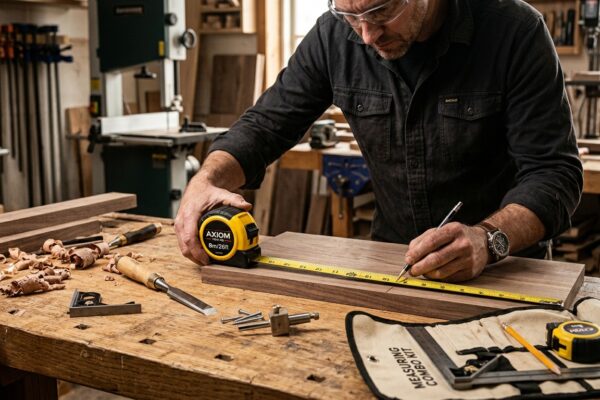
Best Laser Levels for DIY – Cross-Line, 360-Degree, and Self-Leveling Options
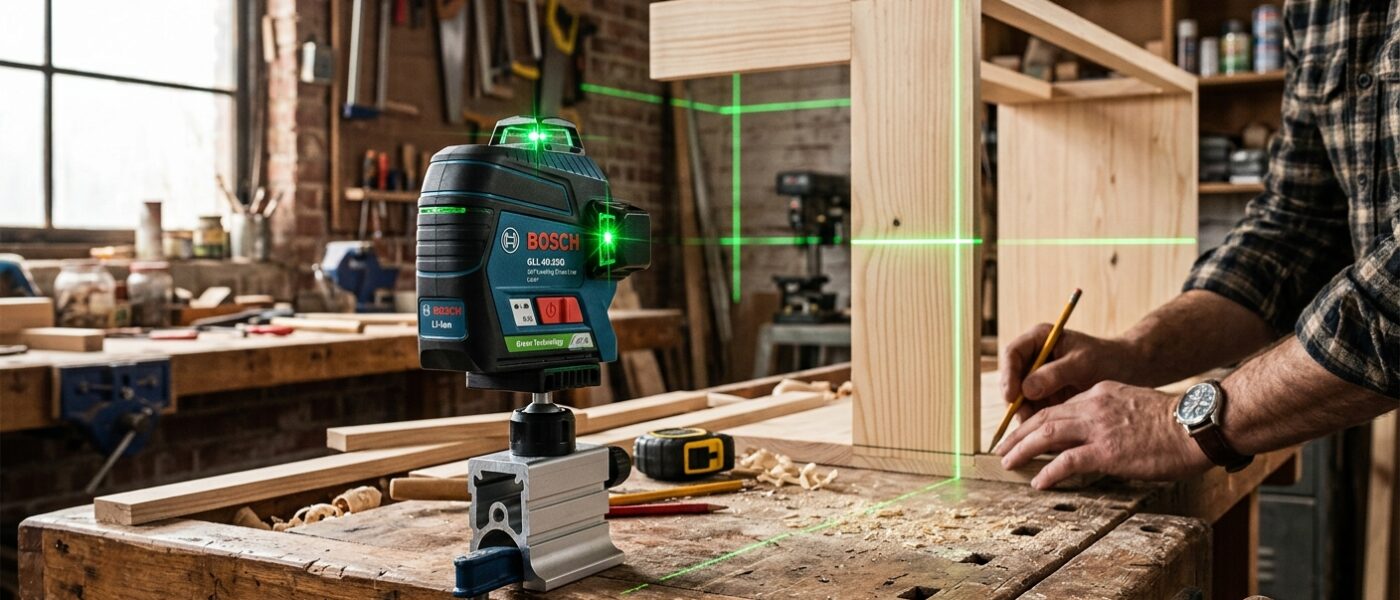
Bosch GLL 40-20G green laser is the most visible, fastest-leveling cross-line laser for indoor use
Laser levels have replaced string lines and bubble levels for many layout tasks – they’re faster to set up, work without a second person, and project lines that extend across entire rooms simultaneously. Whether you’re installing crown molding, aligning kitchen tile, or hanging a gallery wall of picture frames, a laser level cuts layout time dramatically. This guide covers the best options for DIYers.
How We Evaluate Laser Levels
We tested laser levels for beam brightness and visibility at the rated distance, self-leveling accuracy and speed, battery life, mode range (horizontal, vertical, cross, plumb points), tripod compatibility, and overall ease of use. A laser level that drifts out of calibration or whose beam you can’t see in daylight wastes your time and produces incorrect layouts.
Top Picks
Bosch GLL 40-20G – Best Overall Cross-Line Laser
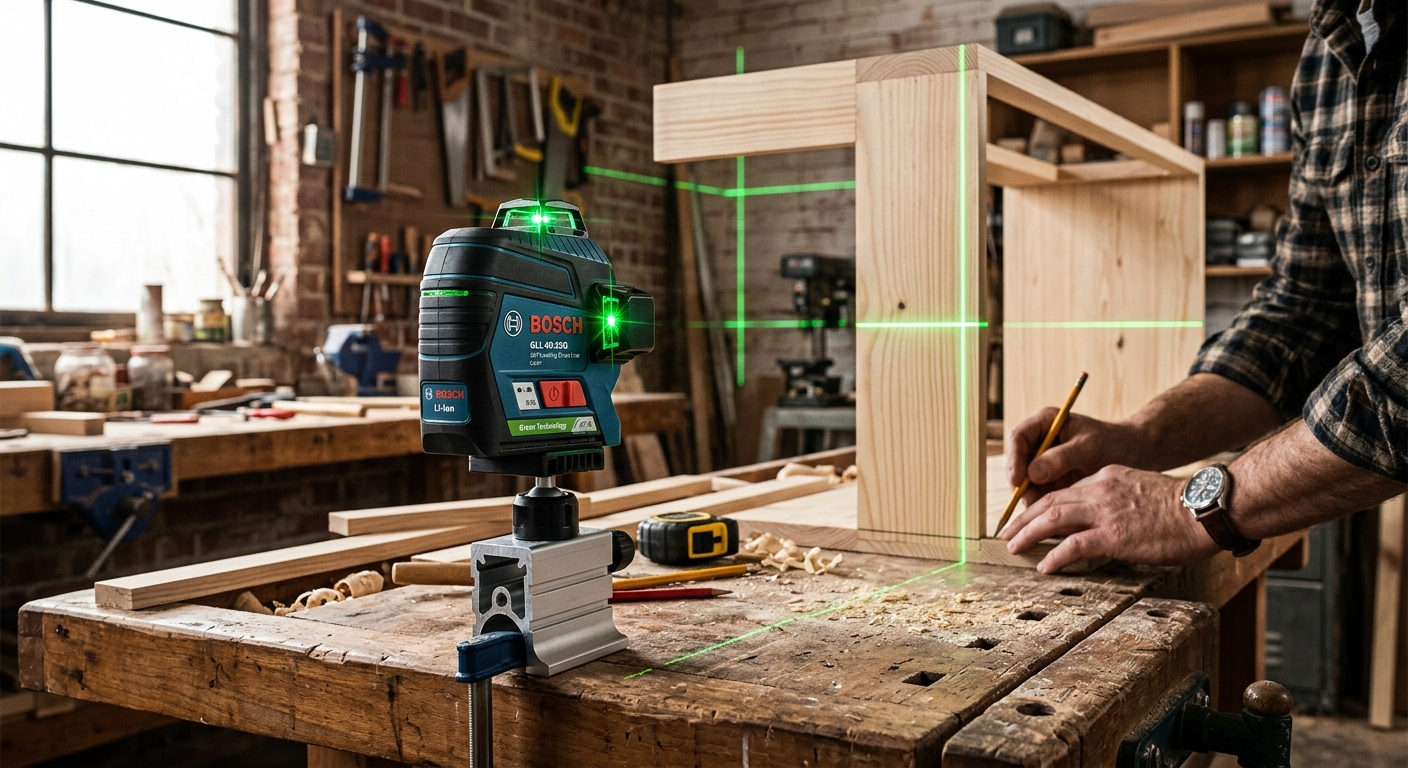
The Bosch GLL 40-20G projects a bright green cross-line (horizontal and vertical simultaneously) that’s visible up to 40 feet in normal indoor lighting. Green lasers are significantly more visible than red lasers in daylight and lit rooms. The self-leveling pendulum settles in under 4 seconds, the magnetic bracket clips to metal studs and standard tripods, and the out-of-level alarm flashes before you lay out on an uncorrected plane. Best in class for indoor layout work.
- Pros: Green laser highly visible, 40-foot range, self-leveling under 4 seconds, magnetic mount, out-of-level alarm
- Cons: Limited to 40 feet (not for large commercial spaces), green laser drains batteries faster than red
DeWalt DW088LG – Best for Bright Conditions
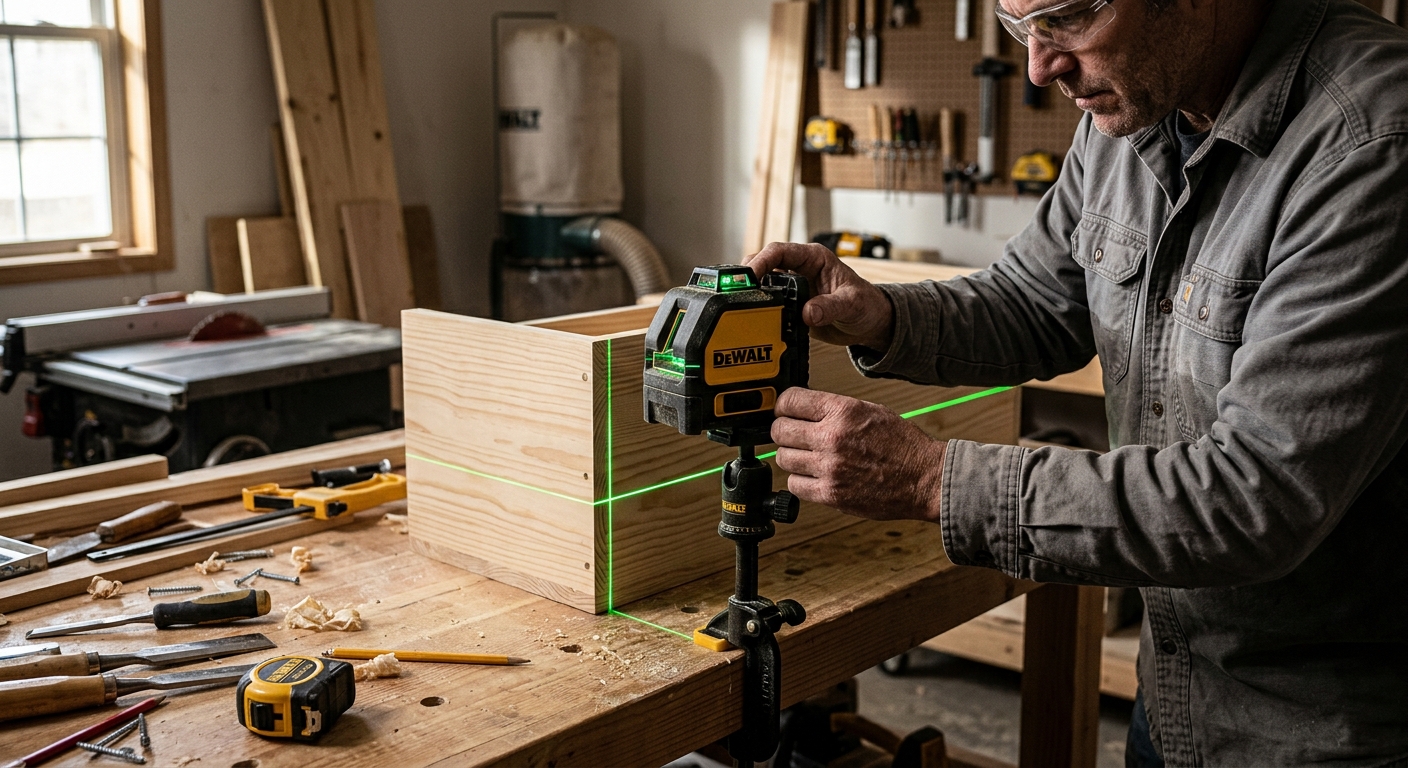
DeWalt’s green cross-line laser reaches 100 feet indoors and up to 165 feet with the included detector. The self-leveling range extends to 4 degrees and the out-of-level warning activates if tilted beyond that. The rotating base allows angling the cross-line for non-perpendicular layouts, and the magnetic bracket handles both vertical and horizontal base mounting. Stronger battery life than competing green lasers.
- Pros: 100-foot visible range (165 with detector), rotating base, strong battery life, works outdoors with detector
- Cons=>More expensive than entry-level lasers, heavy for a small tool
PLS 60521N PLS180 – Best Value Multi-Line Laser
The PLS180 projects a full 180-degree horizontal and vertical line simultaneously – unusual at this price point. It self-levels and works with the PLS detector for outdoor use. The magnetic pivoting base allows floor, wall, and ceiling mounting without a tripod. For tiling, wainscoting installation, and any layout that needs lines covering a wide angle, the PLS180 provides exceptional coverage per dollar.
- Pros: 180-degree line coverage, self-leveling, works with detector outdoors, magnetic pivoting base, good value
- Cons: Red laser (less visible than green), less accurate at extremes of 180-degree arc
Huepar 621CG 3D Laser Level – Best 360-Degree
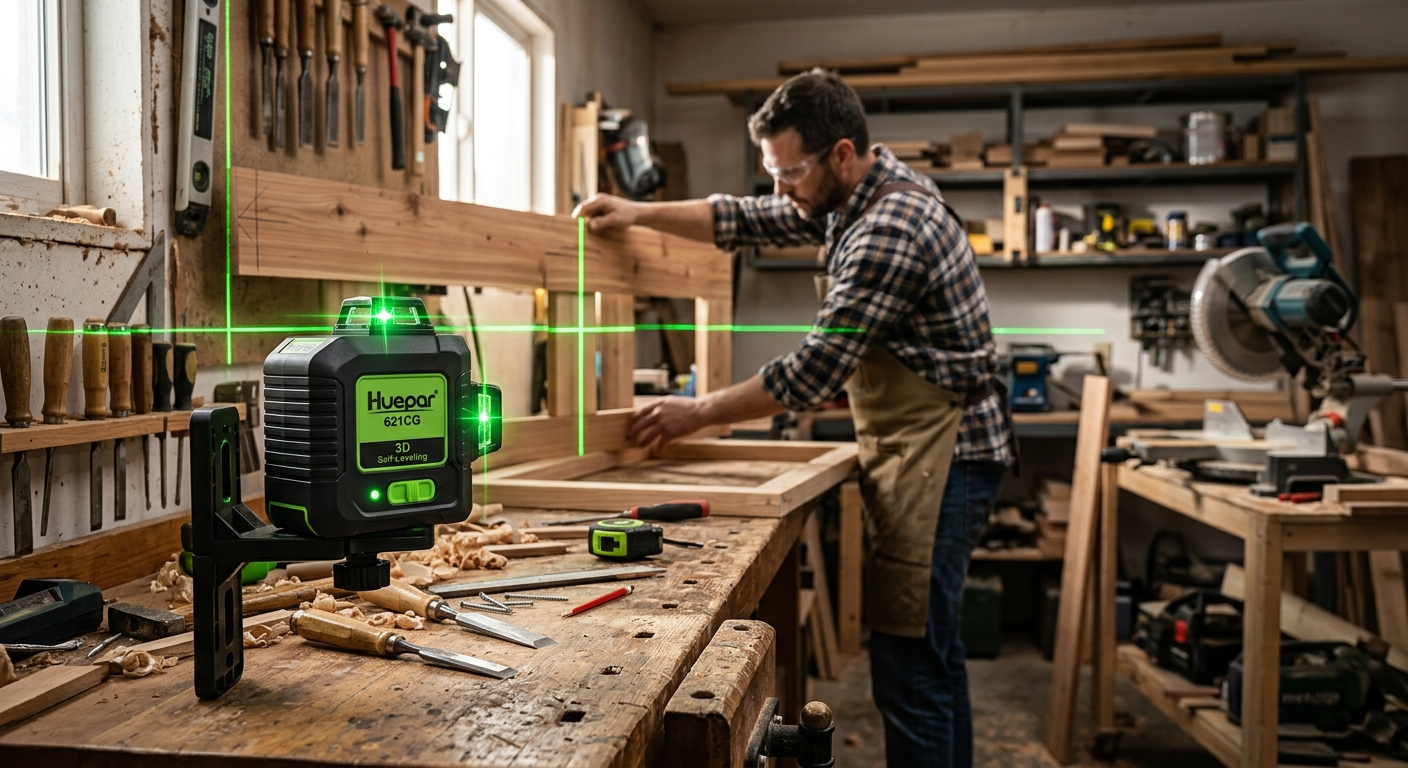
Three-dimensional laser levels project horizontal and vertical lines covering 360 degrees simultaneously – useful for full-room layout, framing, or any project where you need reference lines on all four walls at once. The Huepar 621CG’s green beam is bright, the self-leveling is reliable, and the pulse mode extends range with a detector. At under $100, this capability would have cost $500 five years ago.
- Pros: 360-degree horizontal and vertical coverage, green beam, pulse mode for outdoor use, good value
- Cons: Not as bright as single-line lasers at extreme distance, tripod required for best use, complex interface
Black+Decker BDL220S – Best Budget Entry
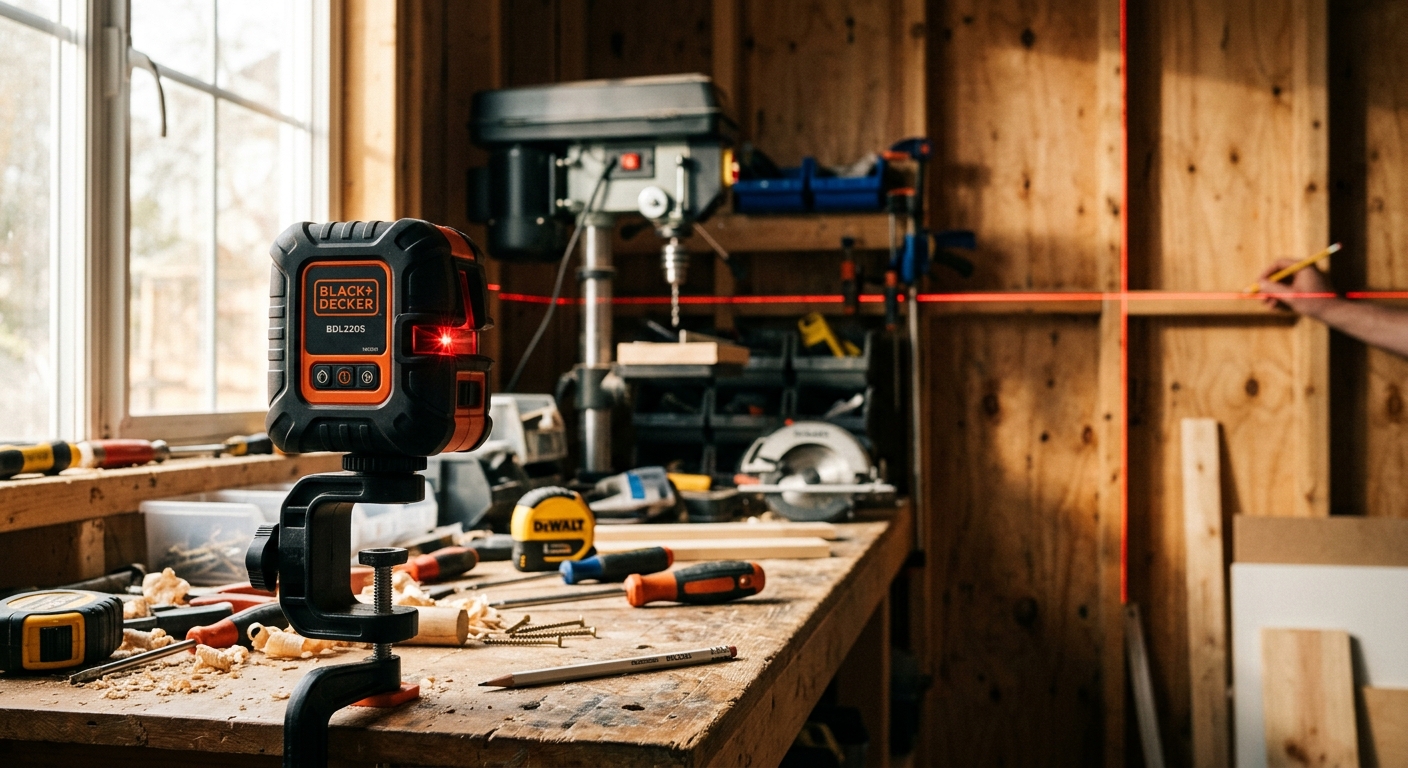
For homeowners who need a laser level occasionally – hanging pictures, installing shelving, aligning backsplash tile – the Black+Decker BDL220S projects a laser line at 20 feet with a built-in level and plumb bob. It sticks to walls with the included mounting bracket and handles typical room layout without requiring a tripod or self-leveling mechanism. Simple, affordable, and surprisingly capable for light DIY tasks.
- Pros: Very affordable, no tripod needed, simple to use, adequate for light DIY, includes mounting accessories
- Cons: Manual leveling (not self-leveling), short range, not accurate for large-format layout
Frequently Asked Questions
Red vs green laser – which is better? Green is 4x more visible to the human eye than red. In lit rooms, green lasers are dramatically easier to see. Red lasers cost less and use less battery. For most DIY work, green is worth the premium.
Do I need a self-leveling laser? For any layout that needs to be truly level, yes. Manual lasers require a bubble vial to level the tool – easy to get slightly wrong. Self-leveling models compensate automatically within their range (typically 3-5 degrees).
What’s a laser receiver/detector? A handheld sensor that detects the laser beam outdoors or in bright conditions where the beam is invisible to the naked eye. Essential for excavation, foundation work, and exterior grading.
How accurate are laser levels? Most quality laser levels are accurate to ±1/8 inch at 30 feet. At shorter distances, accuracy is proportionally higher. Cheap laser levels can be off by 1/4 inch or more at 20 feet – enough to ruin an installation.
Bottom Line
The Bosch GLL 40-20G earns Best Overall for its green beam visibility, fast self-leveling, and magnetic mount that works with metal framing. Upgrade to the DeWalt DW088LG for outdoor work or spaces larger than 40 feet. The Huepar 360-degree model is surprisingly capable for full-room layout at an accessible price. Own a laser level and you’ll find uses for it on every project.
Affiliate Disclosure: DIY Arsenal participates in the Amazon Associates Program and other affiliate programs. When you purchase through links on this site, we may earn a small commission at no additional cost to you. We only recommend products we have personally tested and genuinely believe in.