Best Hearing Protection for Woodworking and Power Tools
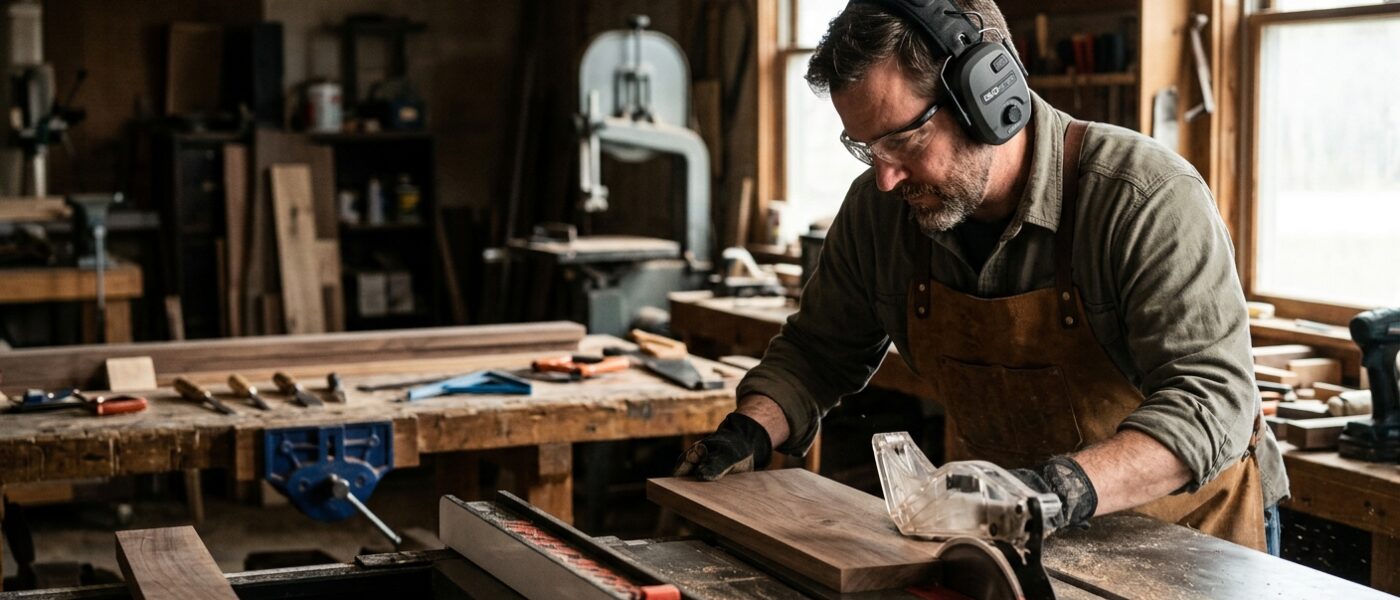
The Howard Leight Impact Sport gives you electronic pass-through hearing at an incredible price and is the recommended first earmuff for any shop; stock Moldex 6800 foam plugs at every workstation as a backup.
As an Amazon Associate, we earn from qualifying purchases.
Power tools generate noise levels that cause permanent hearing damage – not in years, but in minutes at close range. A table saw runs at 100 to 110 dB, a circular saw at 88 to 96 dB, and even a shop vacuum exceeds 85 dB, which OSHA identifies as the threshold where hearing protection becomes necessary. The insidious thing about noise-induced hearing loss is that it happens gradually and painlessly, and by the time you notice the ringing that does not go away (tinnitus), the damage is irreversible. This guide covers the hearing protection that actually gets worn because it is comfortable enough to keep on.
Types of Hearing Protection
Earplugs
Foam earplugs are rolled between your fingers, inserted into the ear canal, and expand to fill the canal, blocking sound. Properly inserted foam plugs provide the highest noise reduction rating (NRR) of any hearing protection – typically 30 to 33 dB. The challenge is proper insertion technique and the discomfort of all-day wear. Reusable silicone earplugs offer less noise reduction (22 to 27 dB) but are more comfortable for extended wear.
Earmuffs
Cup-style protectors that cover the entire ear. Easy to put on and take off quickly – a major advantage when you need to communicate between cuts. NRR typically ranges from 22 to 31 dB. Modern earmuffs with electronic pass-through allow normal conversation and ambient sound while still blocking damaging impulse noise – the best solution for workshops where you need to talk while working.
Electronic Hearing Protection
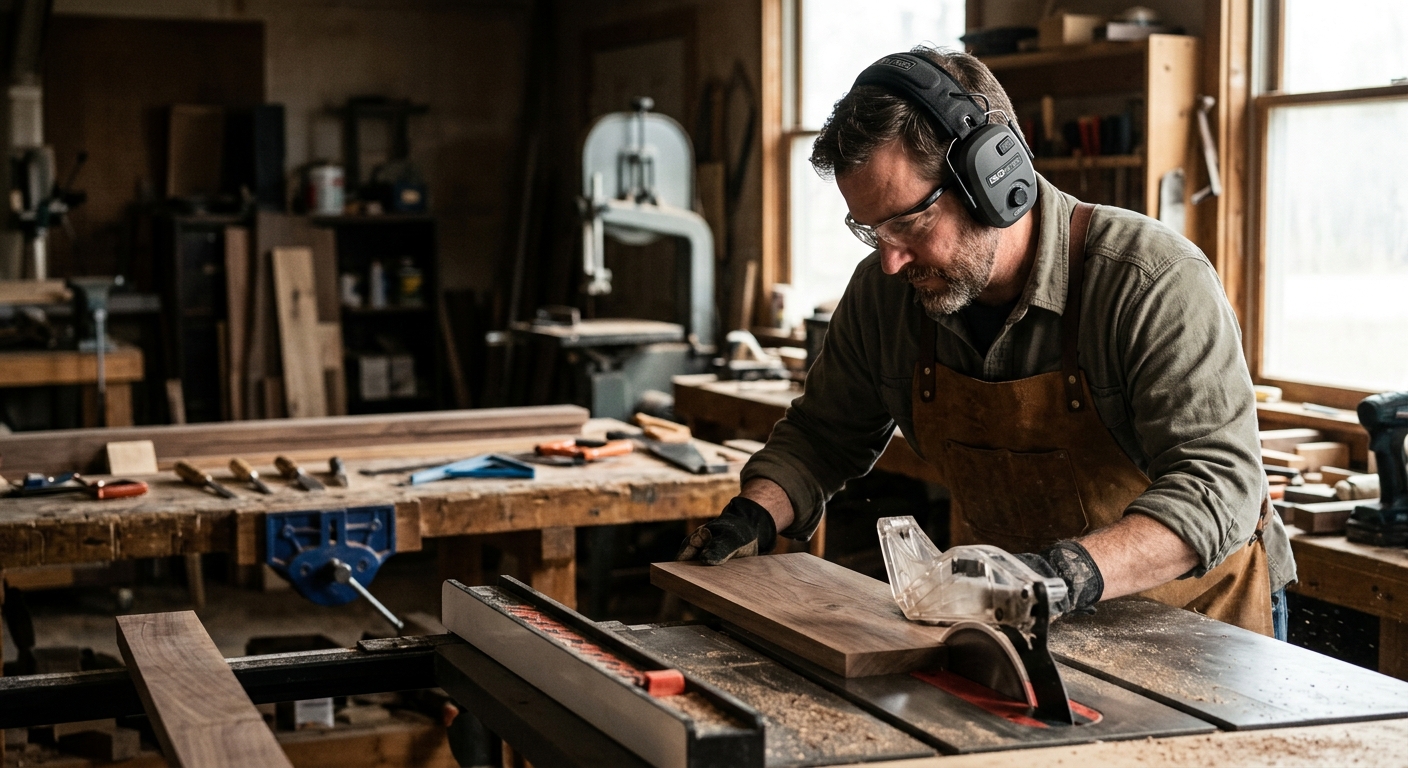
Earmuffs with built-in microphones and speakers that amplify quiet sounds (so you can hear normal conversation) while automatically cutting off when loud noise exceeds a safe threshold. The best of both worlds: you hear your work environment normally, but tool noise is blocked. Widely used by hunters (for gunshot protection) and increasingly popular in workshops.
Understanding NRR
The Noise Reduction Rating (NRR) is printed on all hearing protection sold in the US. To estimate actual protection in decibels, use this formula: (NRR – 7) / 2. So a product rated NRR 33 provides approximately 13 dB of protection in real-world use – significantly less than the rated value because insertion fit and seal quality are never perfect in practice.
Key Features to Look For
Comfort for Extended Wear
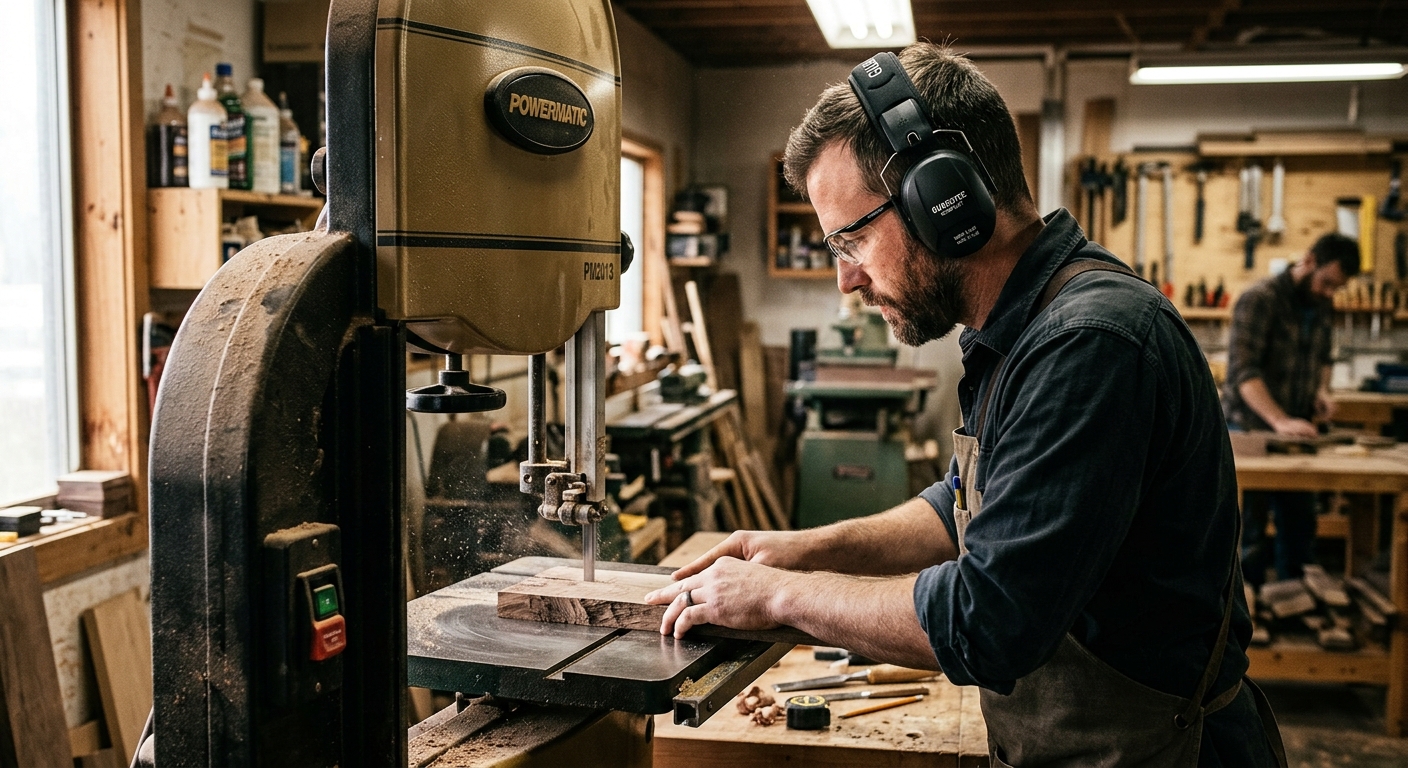
The best hearing protection is the hearing protection you actually wear. Thin foam cushions and tight headbands cause discomfort after 30 minutes, leading to the habit of “taking them off for a second” – when the actual cutting is happening. Look for wide, plush cushions and adjustable headbands.
NRR Rating
For woodworking and power tools, target NRR 25 or higher. NRR 30+ for circular saw and table saw work. Electronic models should still provide NRR 22 or better when active protection engages.
Low-Profile Headband (Earmuffs)
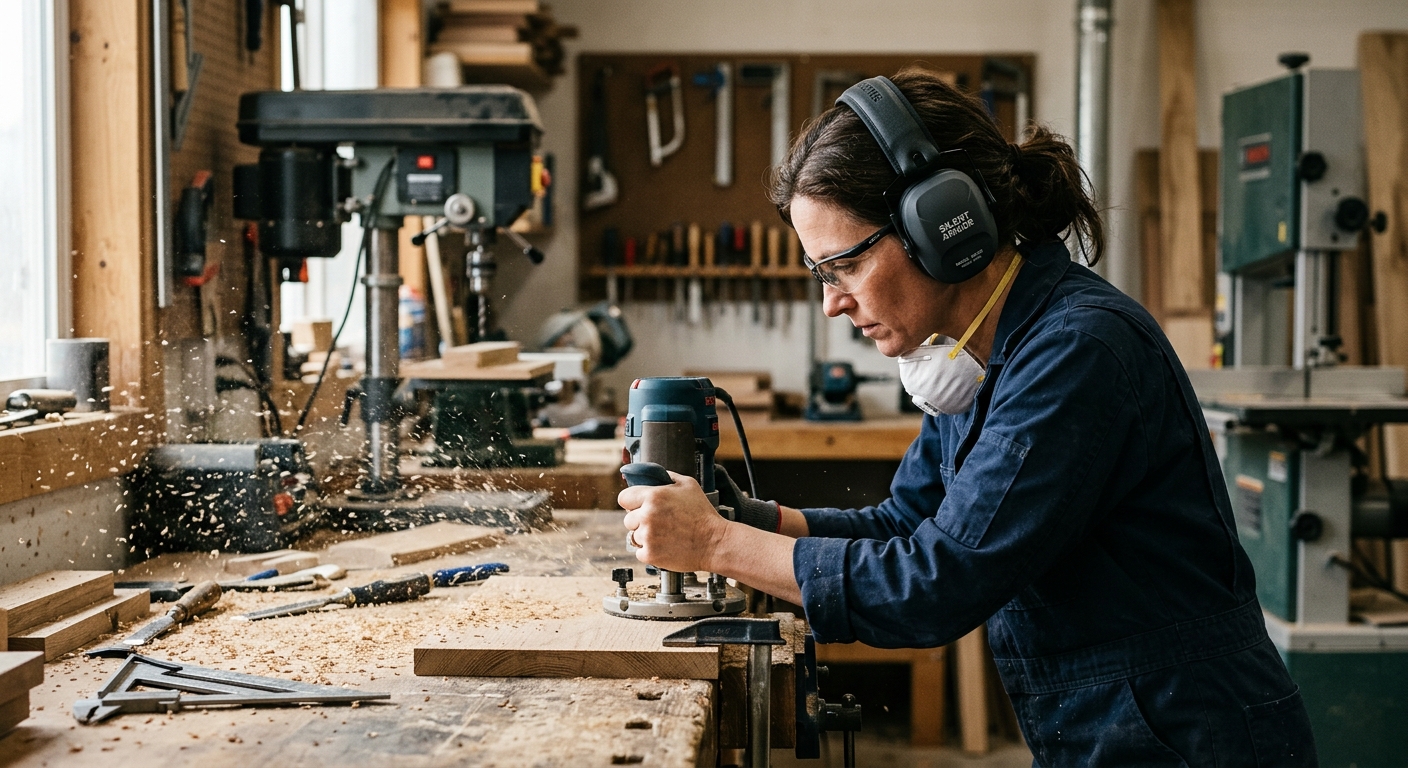
Tall earmuffs interfere with safety glasses, face shields, and hard hats. Low-profile cups allow better compatibility with other PPE.
Portability
Folding earmuffs compress for storage in a tool bag. Non-folding models are bulky and easy to leave behind.
Our Top Picks
1. Howard Leight R-01526 Impact Sport Electronic Earmuffs
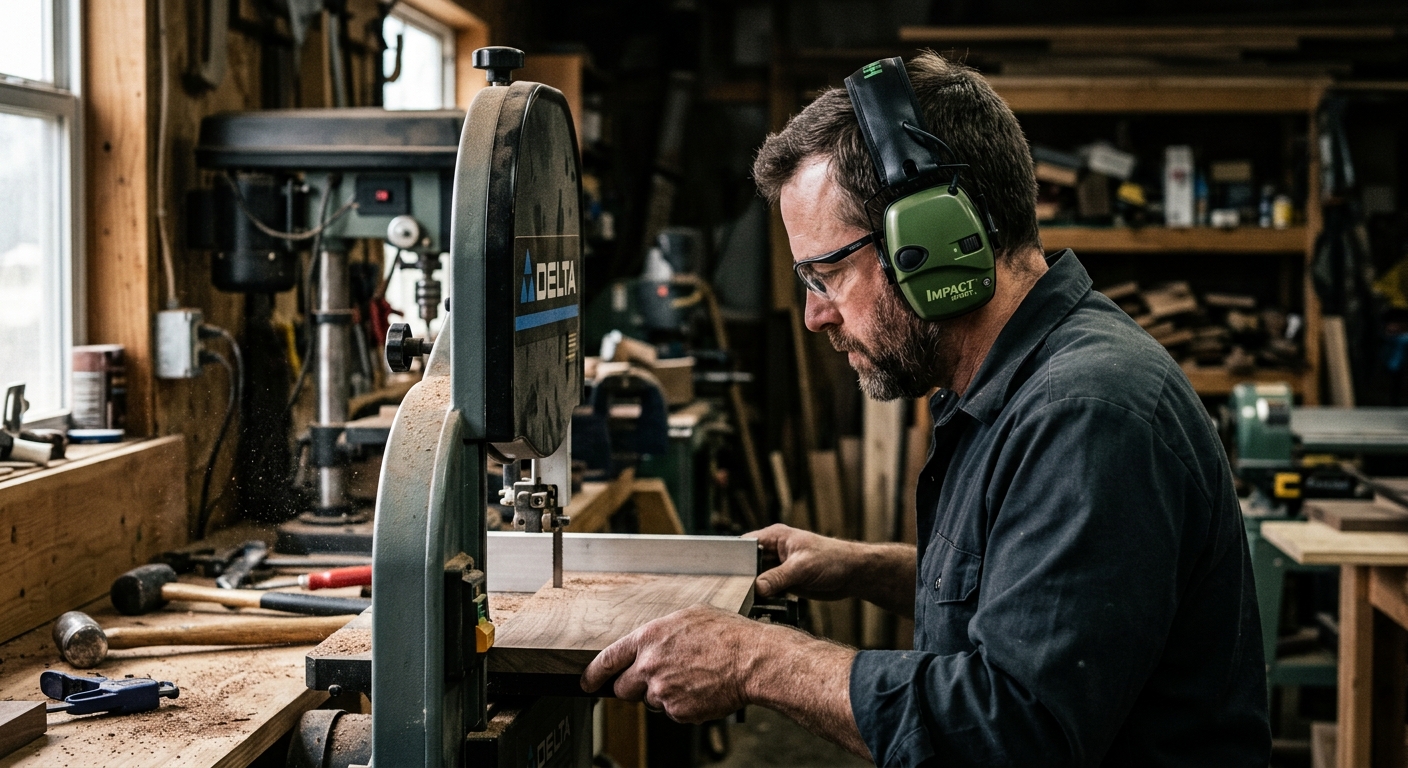
The most popular electronic hearing protection in the workshop category. The Impact Sport amplifies ambient sounds at safe levels (82 dB cap) and automatically cuts off when gunshot-level impulse noise is detected. NRR 22, comfortable low-profile design, folds flat for storage, and connects to phones via 3.5mm input. Priced remarkably low for what it offers.
2. 3M PELTOR X5A Over-the-Head Earmuffs
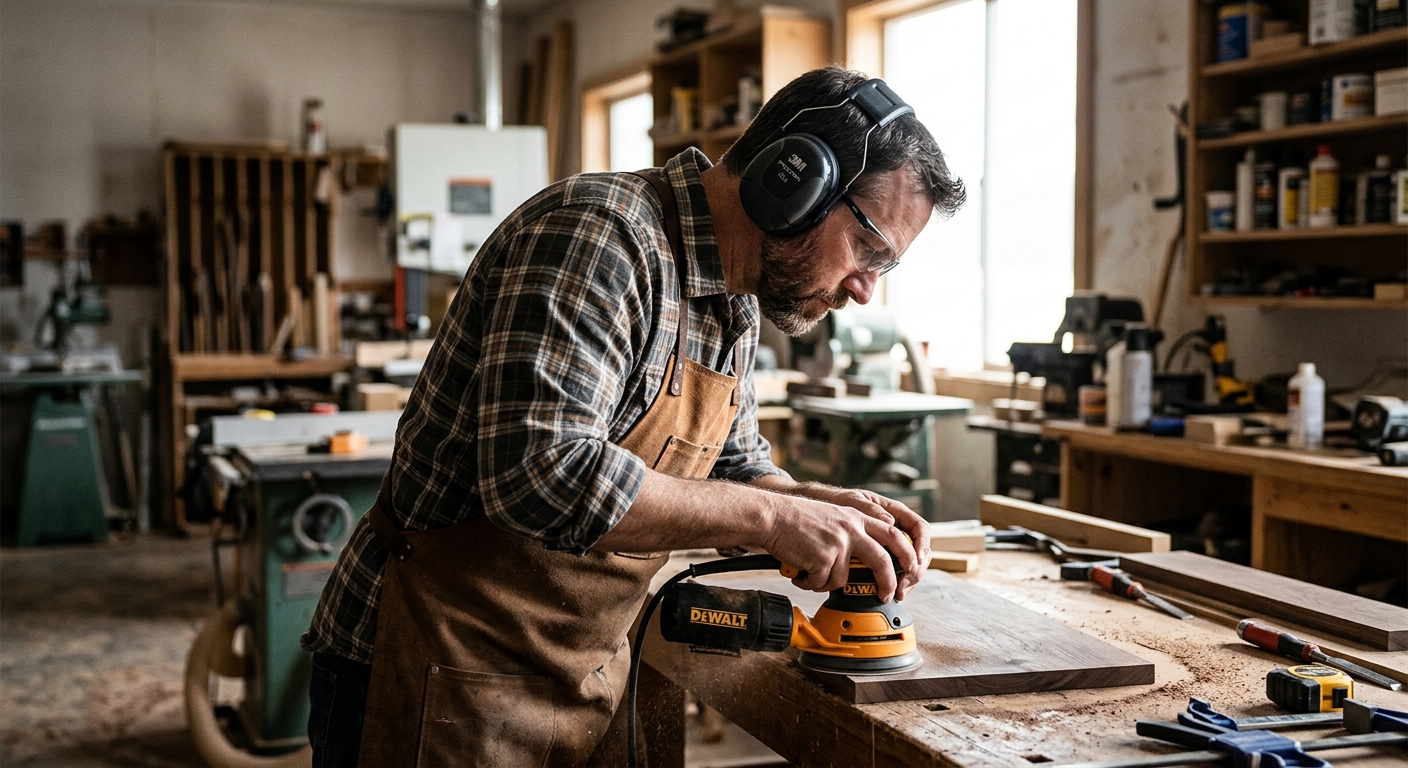
When maximum noise reduction is the priority, the PELTOR X5A delivers NRR 31 – among the highest available from an over-ear muff. Deep cups reduce low-frequency sound (like router and table saw noise) more effectively than shallower designs. The trade-off is bulk. The right tool for loud shop environments.
3. Decibel Defense Professional Safety Earmuffs
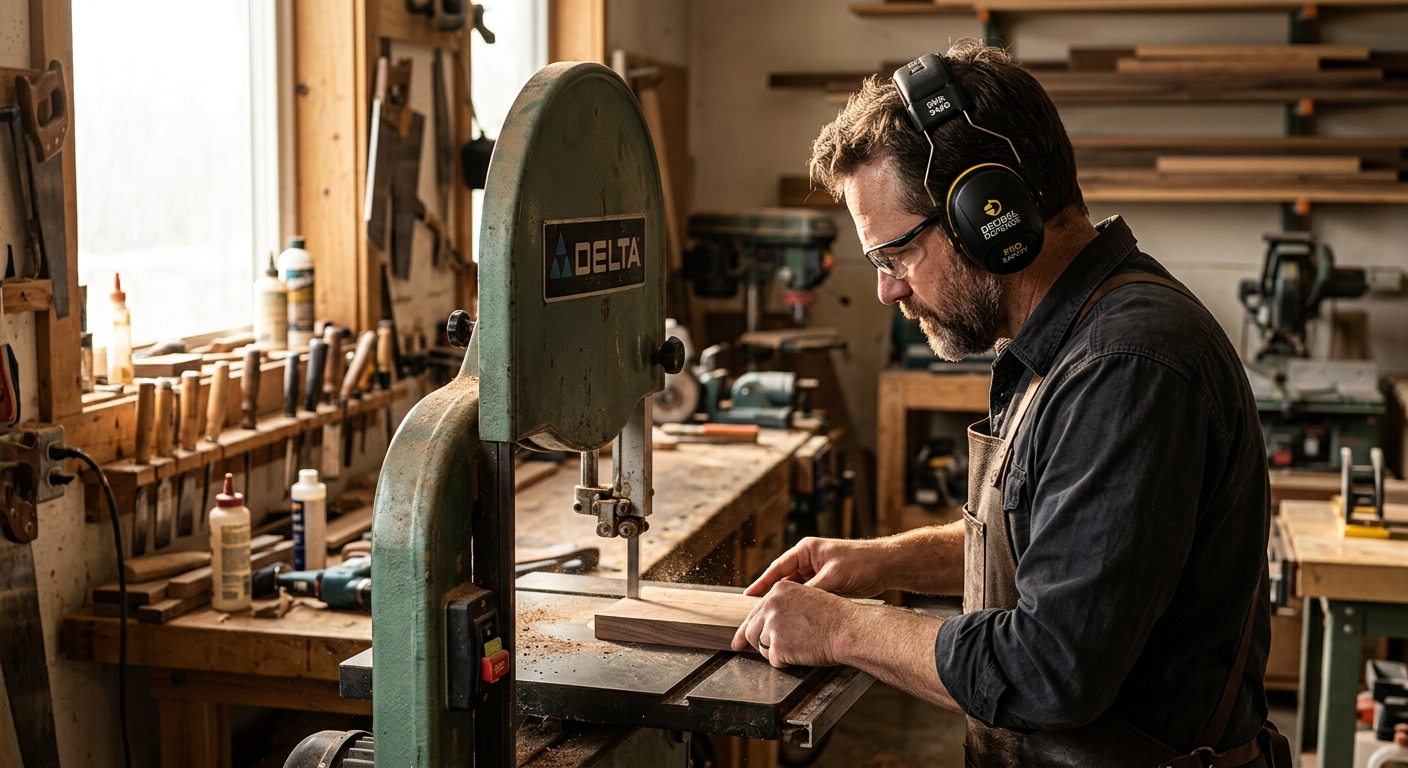
An NRR 37 rating makes these the highest-rated earmuffs widely available to consumers. Exceptional attenuation for those working near very loud machinery. Comfortable enough for extended wear and adjustable for a wide range of head sizes.
4. Moldex 6800 Foam Earplugs (200-Pack)
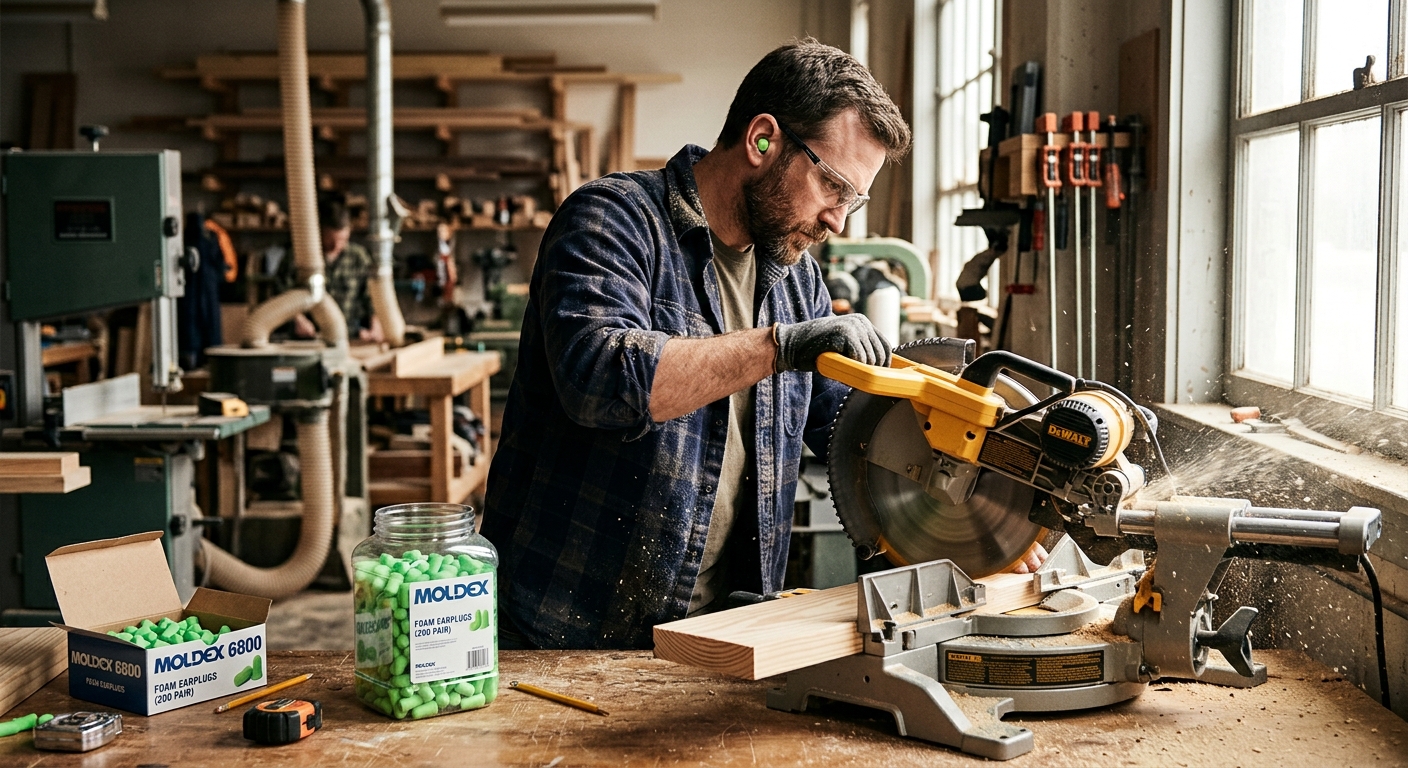
The best foam earplug for the shop. NRR 33, smooth tapered shape that inserts reliably, and soft enough for all-day comfort once properly inserted. The value proposition of bulk foam earplugs is unbeatable – hundreds of uses for under $20. Keep a box at every workstation.
5. 3M WorkTunes Connect AM/FM Hearing Protector
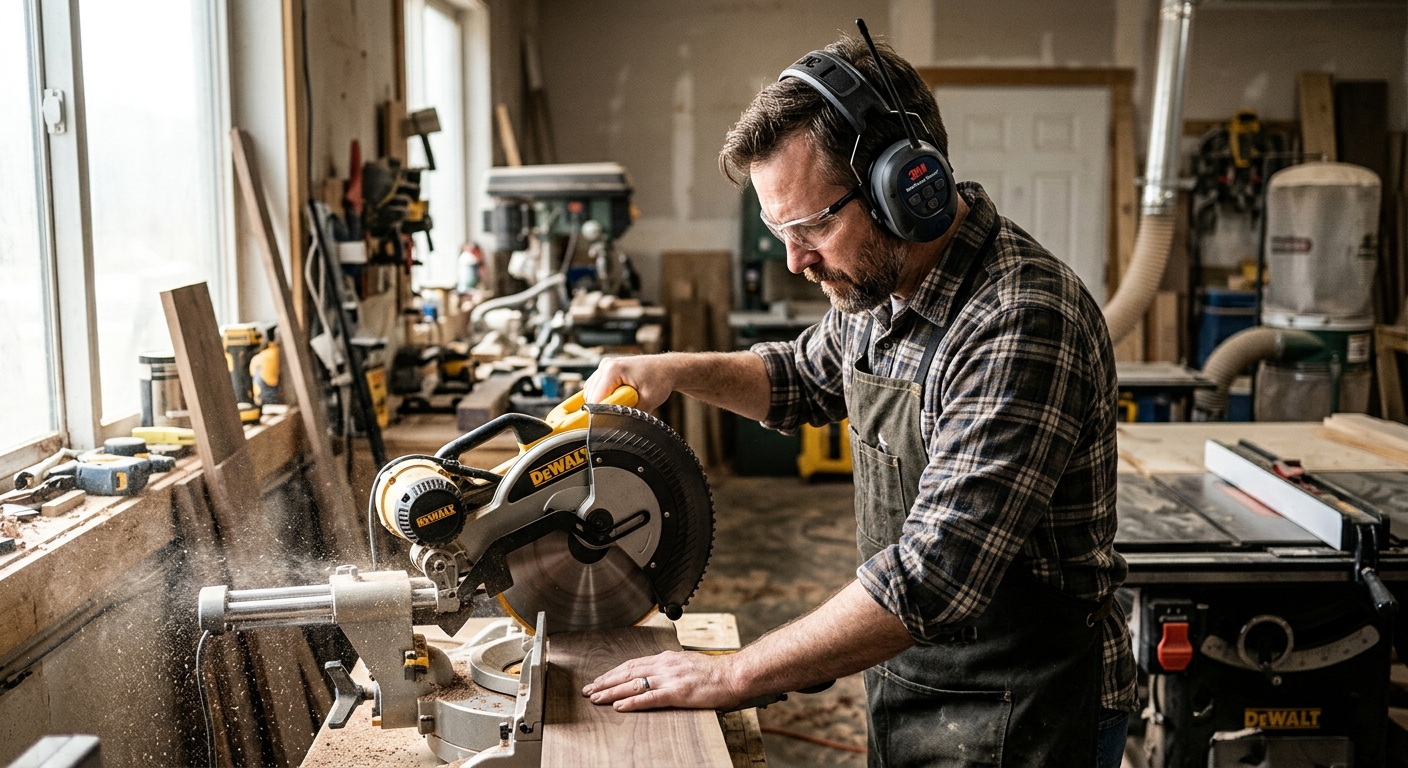
For those who like music while working: the WorkTunes Connect delivers NRR 24 earmuff protection with Bluetooth connectivity so you can stream audio without compromising hearing protection. The music masks tinnitus between cuts without removing protection.
What to Avoid
- Fashion earmuffs: Consumer-grade “noise-canceling” headphones are not rated for industrial hearing protection. They will not provide adequate attenuation at tool noise levels.
- Earplugs worn at the entrance of the ear canal: They must be inserted completely into the canal to work. Partial insertion reduces protection by 50% or more.
- Any hearing protection with a rating below NRR 22 for power tool work.
FAQ
Do I need hearing protection for hand tool woodworking?
Generally no – hand planes, chisels, and hand saws produce noise well below damaging levels. Add hearing protection when you use any power tool, including a shop vacuum.
Can I double up earplugs and earmuffs?
Yes, and this is recommended for extremely loud environments like routers in enclosed spaces, concrete cutting, or pneumatic tools. The combined NRR is not additive – the formula is: higher NRR + 5 dB. Still, the additional protection is meaningful for the loudest operations.
How often should I replace foam earplugs?
Disposable foam earplugs should be replaced after each use or when visibly dirty. Reusable silicone plugs can be washed and reused many times – replace when they lose their flexibility or seal quality.
Affiliate Disclosure: DIY Arsenal participates in the Amazon Associates Program and other affiliate programs. When you purchase through links on this site, we may earn a small commission at no additional cost to you. We only recommend products we have personally tested and genuinely believe in.