Best First Aid Kits and Fire Safety Equipment for the Home Workshop
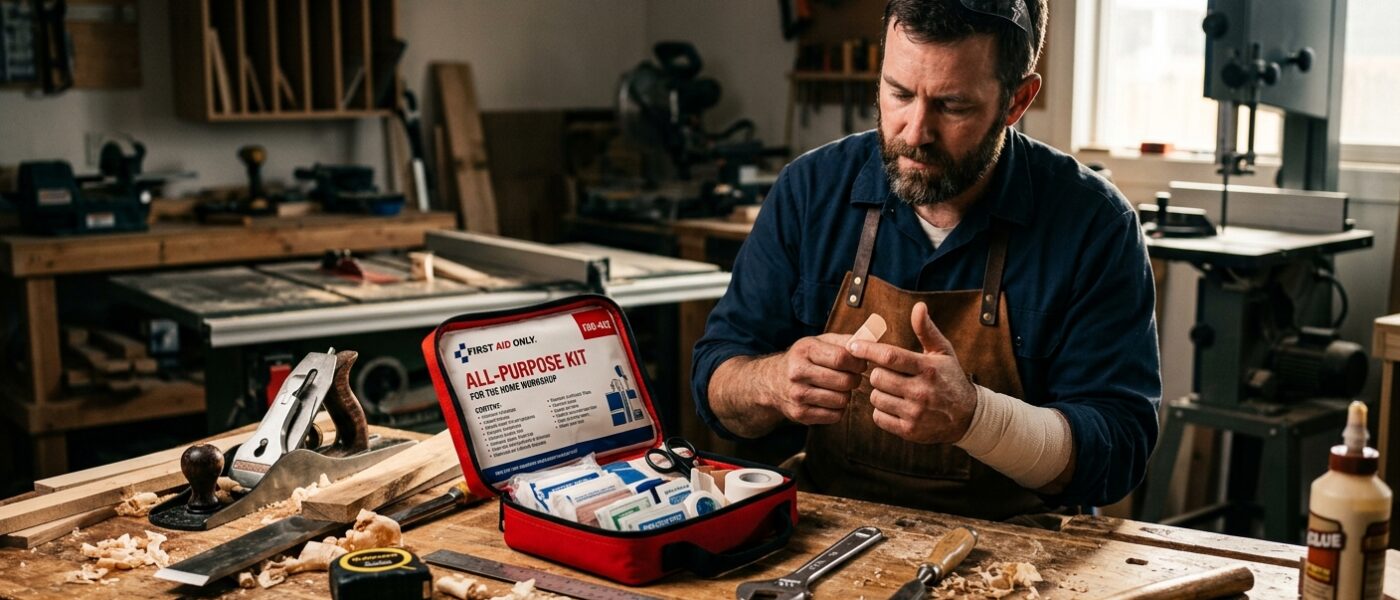
First Aid Only 299-piece kit provides complete workshop injury coverage with ANSI Class A compliance
First aid kits and fire safety equipment complete the safety setup for any workshop or job site. Cuts, burns, splinters, and eye splashes happen in the best-managed shops – having the right supplies immediately available reduces severity and recovery time. This guide covers the best first aid kits for workshops, along with fire extinguishers, CO detectors, and the other safety equipment every DIY space needs.
How We Evaluate Workshop Safety Equipment
We tested first aid kits for completeness of wound care supplies, burn treatment capability, eye wash availability, packaging quality and accessibility, and ANSI compliance. For fire extinguishers, we evaluated type (ABC vs K), size, ease of use, and certification. We also assessed CO detectors for sensitivity, response time, and reliability.
Top Picks
First Aid Only FAO-442 All-Purpose Kit – Best Overall First Aid Kit
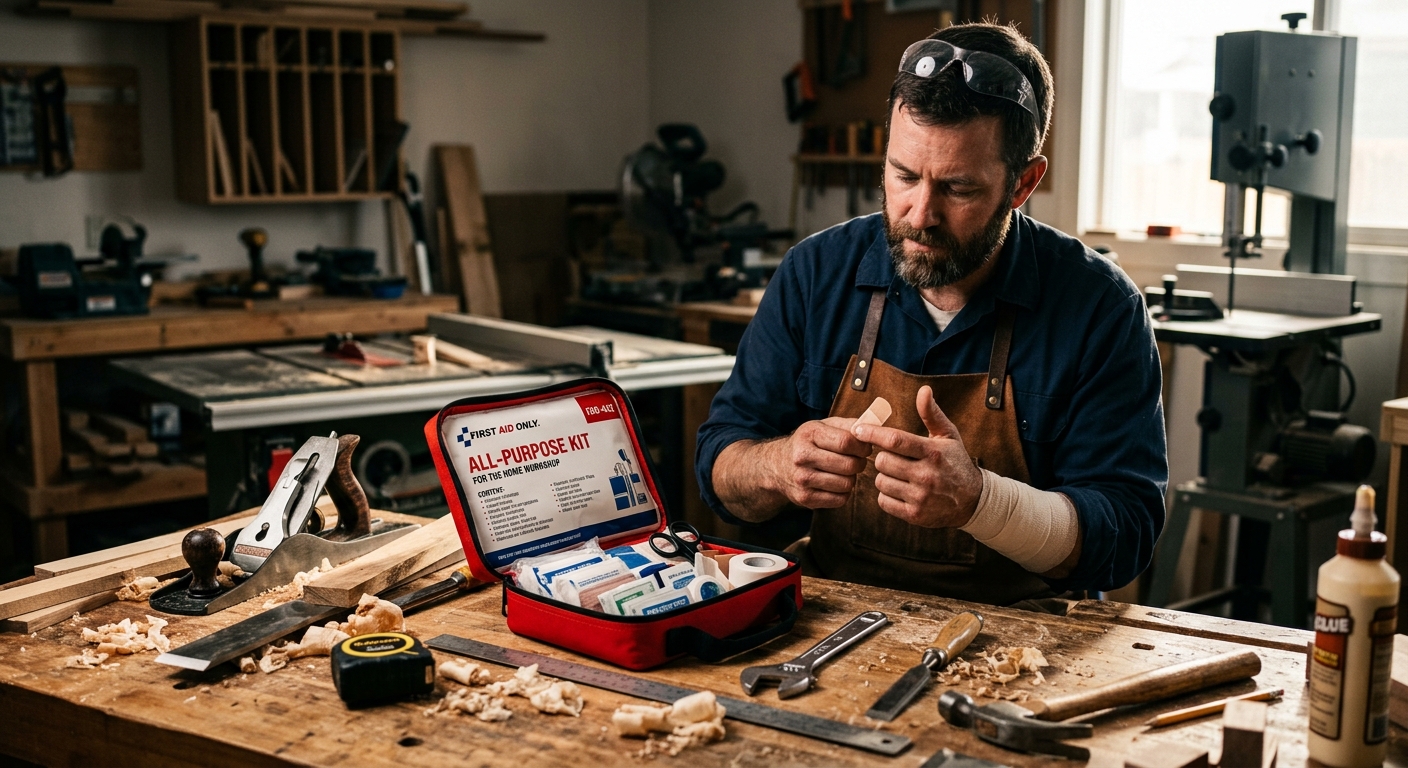
The First Aid Only 299-piece kit covers the full range of shop injuries: adhesive bandages in multiple sizes, gauze pads and rolls for larger wounds, antiseptic wipes, antibiotic ointment packets, burn treatments including gel packets, cold packs, eye wash station, and trauma supplies. The hard plastic case organizes everything visibly and protects supplies from dust and moisture. ANSI Class A compliant for workplace first aid. Refill packs are available to restock specific supplies without replacing the full kit.
- Pros: 299 pieces for complete coverage, eye wash included, burn treatment, ANSI Class A, refillable, durable case
- Cons: Larger kit than basic home use requires, needs periodic inspection to replace expired items
Kidde Pro 210 Fire Extinguisher – Best Workshop Fire Extinguisher
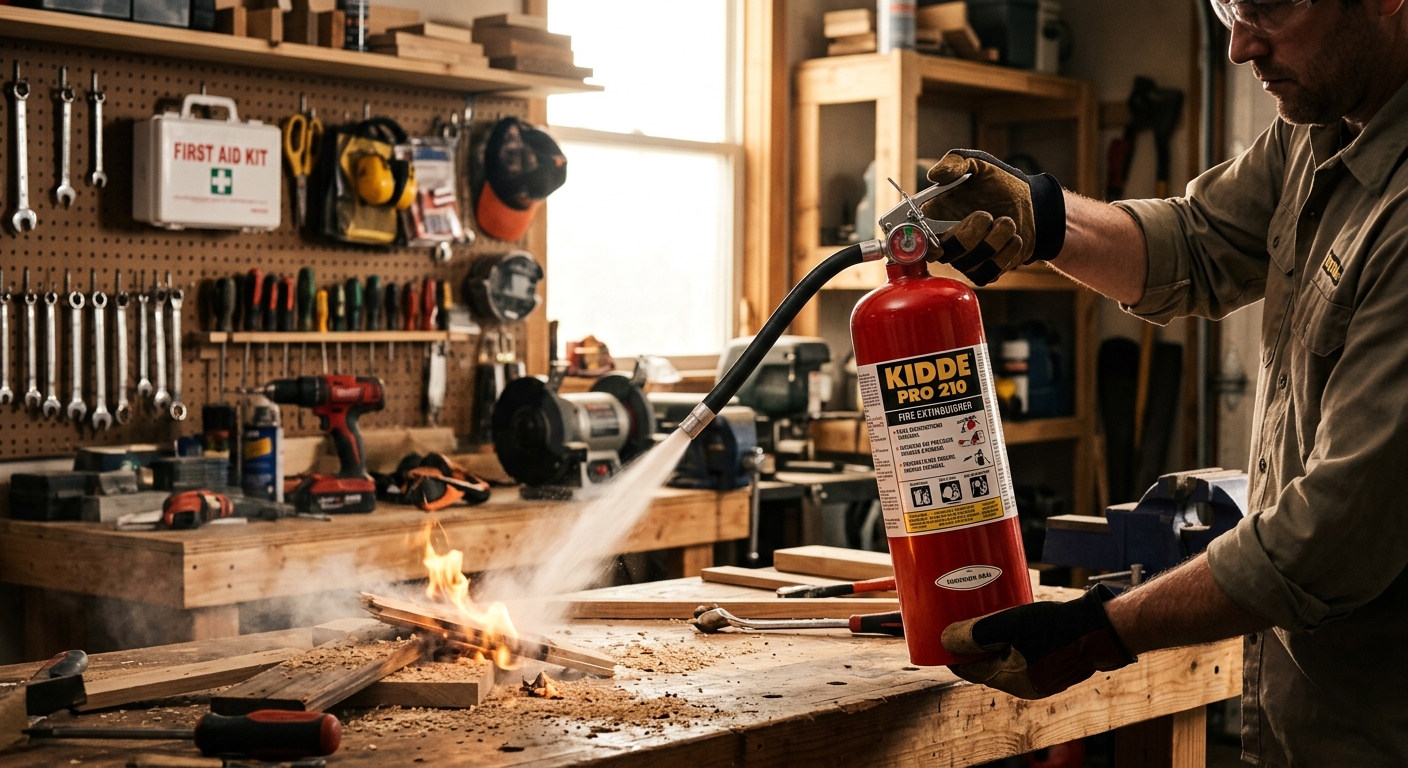
Every workshop needs a fire extinguisher within reach of the exit. The Kidde Pro 210 is an ABC-rated dry chemical extinguisher that handles ordinary combustibles (wood shavings, paper), flammable liquids (finishing solvents, gasoline), and electrical fires. The 4-lb size is large enough for a real fire start without being too heavy to handle under stress. Mount it on the wall at eye level near the exit and check the pressure gauge monthly.
- Pros: ABC rating covers all workshop fire types, 4-lb size handles real fire starts, pressure gauge, wall mounting bracket included
- Cons’:’Requires annual inspection and professional recharge after use or every 6 years, dry chemical makes a mess
Kidde KN-COSM-BA Combination CO/Smoke Detector – Best Combination Detector
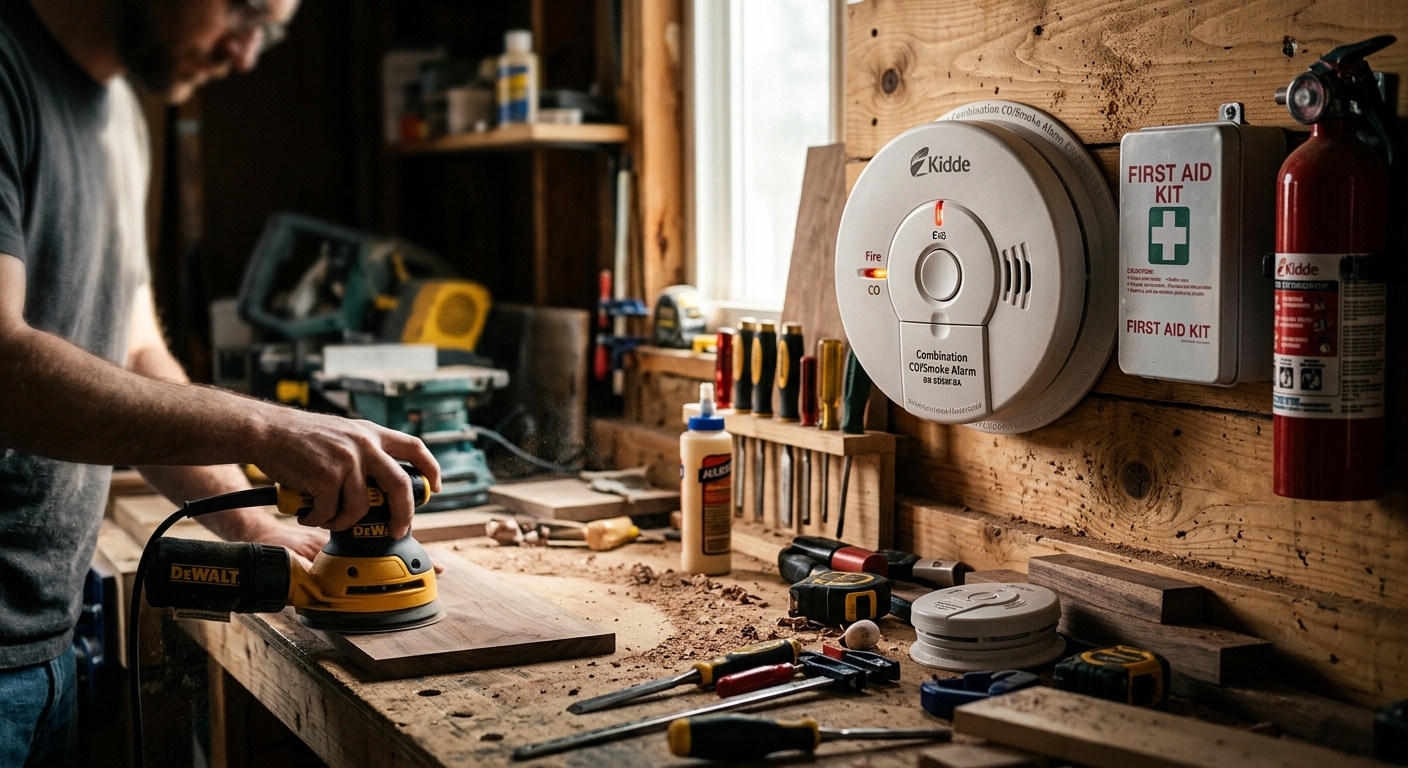
Workshops with combustion tools (generators, gas compressors, propane heaters) need CO detection in addition to smoke detection. The Kidde combination detector covers both hazards with separate alarm tones, electrochemical CO sensing that meets UL 2034 standards, and a 10-year sealed battery. Mount one in every enclosed workspace where combustion equipment runs. A CO detector costs less than a hospital visit for carbon monoxide poisoning.
- Pros: Combined CO and smoke, 10-year battery, UL 2034 CO standard, separate alarm tones, compact
- Cons’:’Replace entire unit after 10 years (sealed battery), not for use directly in dusty shop environments (mount adjacent)
Safetyware ANSI Eye Wash Station – Best Eye Wash for Shops
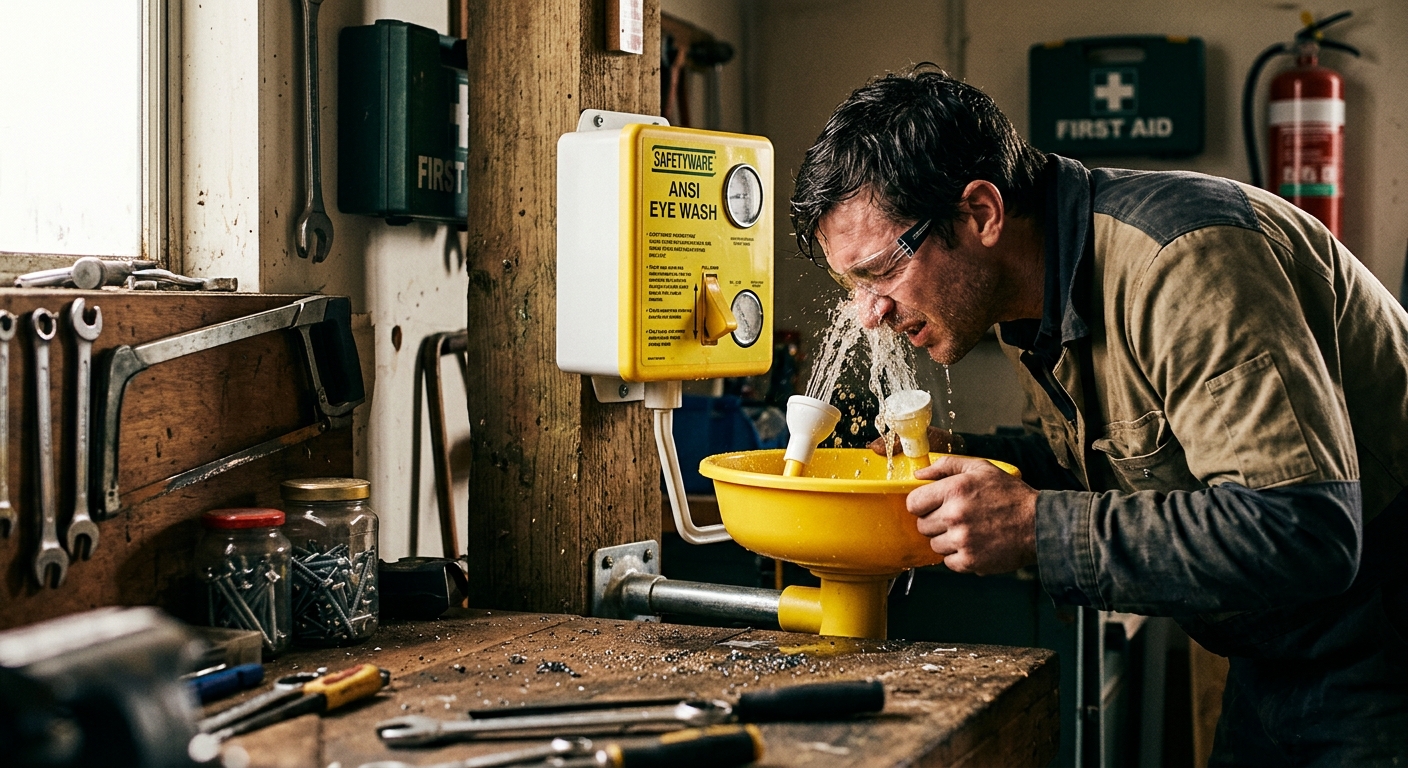
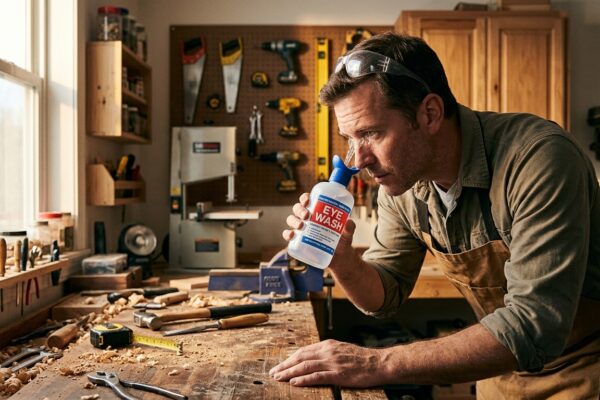
Eye wash stations provide immediate decontamination for chemical splashes and dust contamination. The portable squeeze bottle type (available from Safetyware and others) provides a 1-liter saline wash that flushes the eye for 15 seconds minimum – the ANSI Z358.1 first response standard. Mount one at eye level near chemical storage and any grinding stations. Sterile saline is better than tap water; replace the bottle annually or after any use.
- Pros: Immediate decontamination for eye splashes, saline is better than tap water, portable, visible mounted location
- Cons’:’Must be replaced annually (sterility), inadequate alone for severe chemical burns (still requires medical attention)
Klein Tools 98002 First Aid Kit – Best Compact Trade Kit
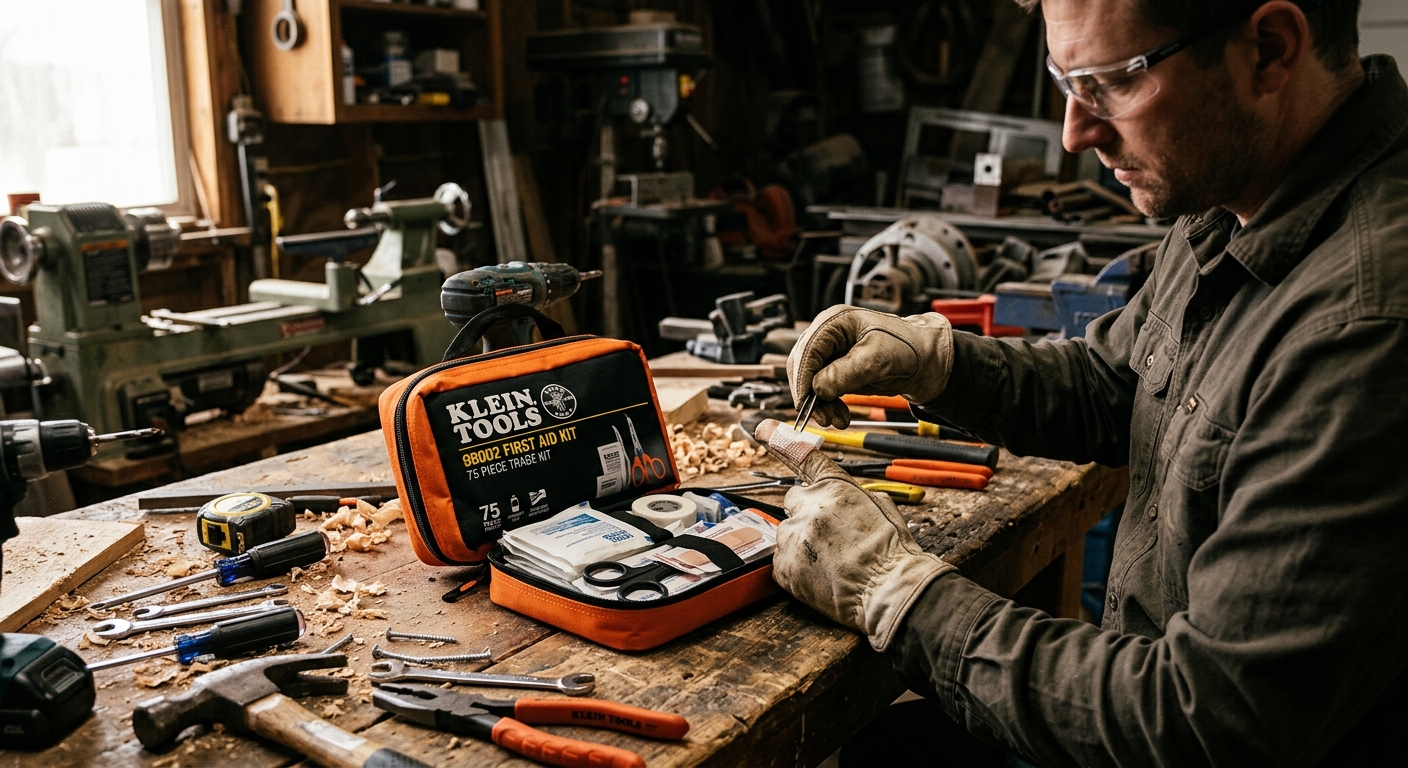
Klein’s 88-piece compact first aid kit is sized for a tool bag or truck box – it handles job-site first aid without the bulk of a full cabinet kit. The zipper pouch covers cuts, scrapes, minor burns, eye wash, and basic pain management. Every tradesperson should carry a compact kit in their work vehicle. The Klein kit is well-stocked for the size and uses quality supplies rather than the low-end items in some budget kits.
- Pros: Compact for tool bag or truck, 88 pieces cover common injuries, quality supplies, easy zipper access
- Cons’:’Too small for large shop, requires supplementing for severe wound care
Frequently Asked Questions
What class fire extinguisher do I need for a wood shop? ABC dry chemical is the standard recommendation – it covers wood, solvent fires, and electrical fires simultaneously. If you also store cooking oils or do metal grinding, consider a larger Class K (kitchen) or Class D (metal) extinguisher as a second unit for those specific hazards.
How many first aid kits do I need? At minimum one within 3 minutes of any work area. ANSI recommends one Class A kit per 100 workers or per floor. For a home shop, one well-stocked kit mounted visibly near the main exit is sufficient.
What should I do immediately after an eye injury? Irrigate with the eye wash immediately and continuously for 15 minutes minimum. Do not rub the eye. After irrigation, seek medical evaluation even for apparent minor injuries – chemical injuries especially require professional assessment.
Does my workshop need a smoke detector? Yes – and a CO detector if you run any combustion equipment (gas powered tools, propane heaters, or even wood-burning fires nearby). Sawdust and finishing chemicals create rapid fire conditions that make early detection critical for escape.
Bottom Line
The First Aid Only 299-piece kit earns Best Overall for complete coverage of workshop injuries at a price that makes it easy to justify. Pair it with a Kidde Pro 210 fire extinguisher and a combination CO/smoke detector for complete workshop safety. These three items are the minimum safety infrastructure that should be in place before any serious power tool work begins.
Affiliate Disclosure: DIY Arsenal participates in the Amazon Associates Program and other affiliate programs. When you purchase through links on this site, we may earn a small commission at no additional cost to you. We only recommend products we have personally tested and genuinely believe in.