Best Fire Extinguishers for the Garage and Workshop
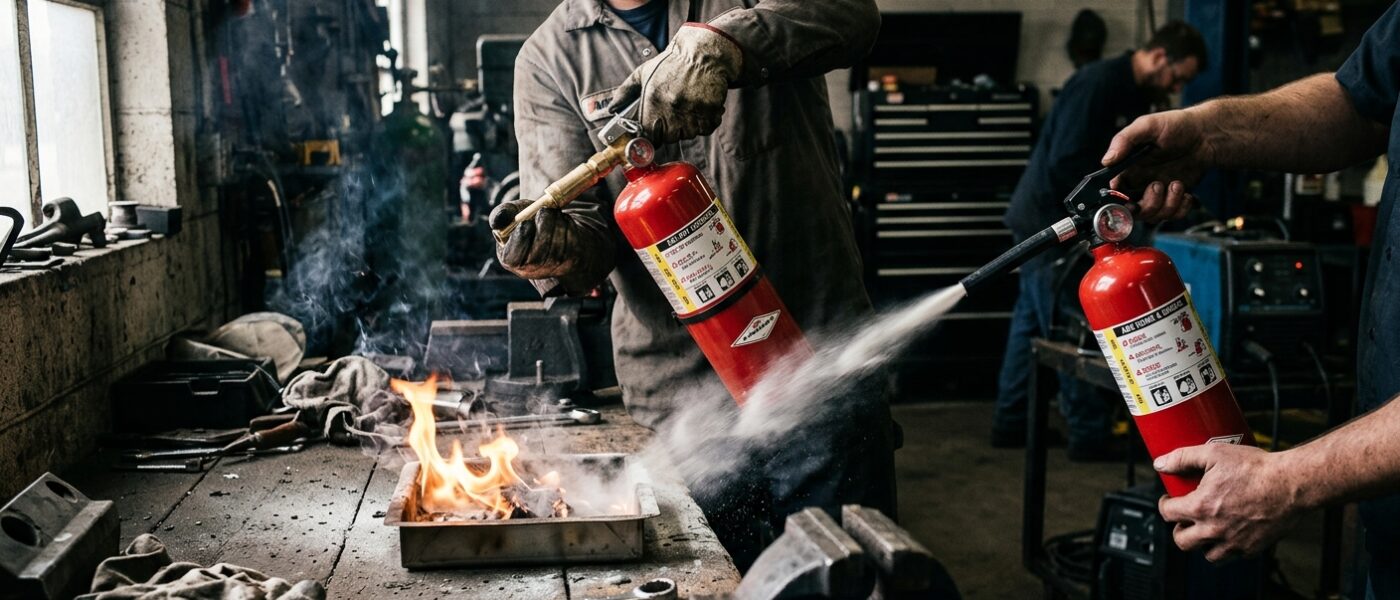
The Amerex B500 is the professional-grade standard for garage and workshop use; the Kidde PRO5 is an excellent and widely available alternative for homeowners who want solid protection at a lower price.
As an Amazon Associate, we earn from qualifying purchases.
A fire extinguisher is one of the few tools in the shop that you buy hoping never to use – and the only one where not using it correctly in the first 30 seconds can be catastrophic. Garages and workshops combine fuel (sawdust, wood shavings, rags soaked in finish), ignition sources (power tools, friction, sparks from grinding), and the compressed spaces that let fires build quickly. Having the right fire extinguisher mounted in the right location is one of the most important safety decisions a shop owner makes.
Fire Extinguisher Classes
Fire extinguishers are classified by the type of fire they suppress:
- Class A: Ordinary combustibles – wood, paper, cloth, most plastics. The primary hazard in a woodworking shop.
- Class B: Flammable liquids – gasoline, oil, solvents, paint thinner, lacquers. Critical in any shop where finishing products or fuel is stored.
- Class C: Energized electrical equipment. Important for garages with power tools and electrical panels.
- Class D: Combustible metals. Unlikely in a home shop.
- Class K: Cooking oils and fats. For kitchens, not shops.
For a workshop or garage, a multi-class extinguisher rated ABC is the standard choice. It covers wood/paper fires, flammable liquid fires, and electrical fires in a single unit.
Extinguisher Size and Capacity
Extinguisher capacity is measured in pounds of dry chemical agent. Common sizes:
- 2.5 lb: Vehicle, toolbox, or very small space. Limited discharge time (8 to 10 seconds). Not adequate for a full-size garage.
- 5 lb: Small garage, workshop, kitchen. 10 to 15 seconds discharge. A reasonable minimum for a home shop.
- 10 lb: Full-size garage and workshop. 13 to 18 seconds discharge. The recommended size for any serious shop environment.
- 20 lb: Large shop, commercial garage. Extended discharge and range. Overkill for most home shops but the right choice for dedicated woodworking spaces.
Key Features to Look For
UL Rating
The UL (Underwriters Laboratories) rating on an ABC extinguisher shows suppression capacity: 1A-10B:C means it can suppress a 1.25-gallon equivalent wood fire and a 10-square-foot flammable liquid fire. For a workshop, look for a minimum rating of 2A-10B:C; 3A-40B:C or higher is better.
Metal vs. Plastic Valve
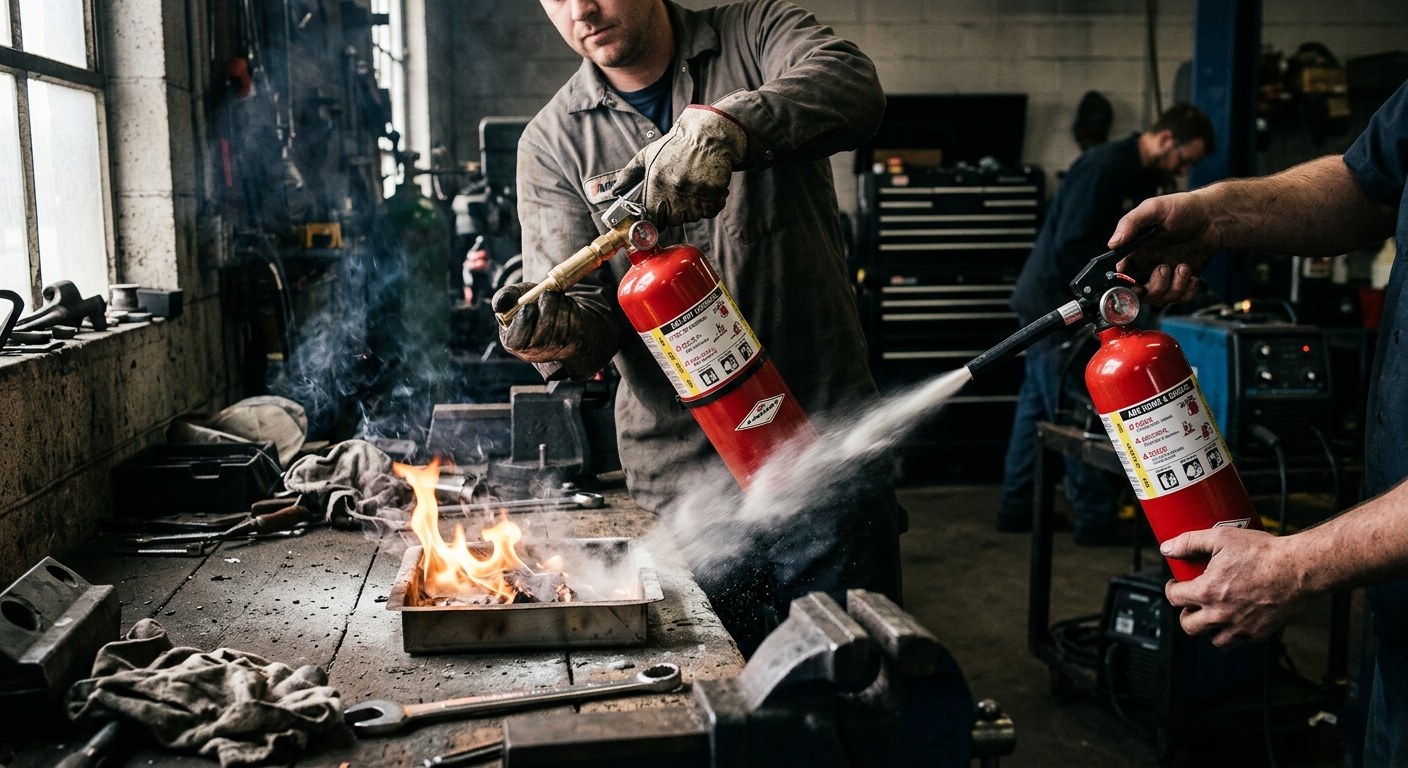
Metal valves are more durable and resist cracking in temperature extremes (garages get very hot in summer and very cold in winter). Plastic valves on cheap extinguishers degrade and may fail when needed most.
Pressure Gauge
All extinguishers should have a visible pressure gauge. The needle should be in the green zone. Check it monthly – extinguishers lose pressure slowly over years even without use.
Mounting Hardware
A wall bracket is essential. An extinguisher stored in a corner or on a shelf is inaccessible in an emergency when you are moving fast in a smoke-filled space. Mount it at eye level, near the exit, so you can grab it on the way in to fight the fire or on the way out to evacuate.
Our Top Picks
1. Amerex B500 (5 lb ABC Dry Chemical)
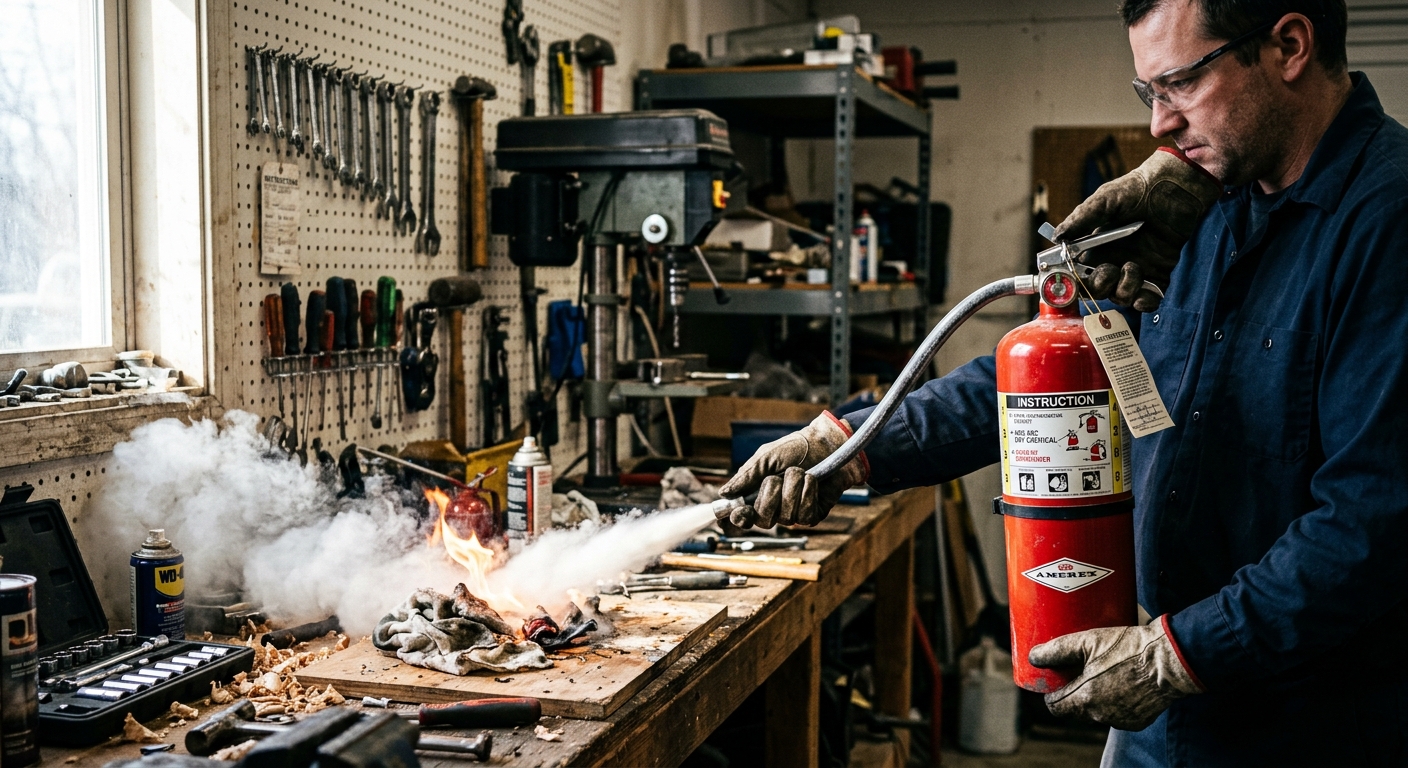
The most recommended fire extinguisher for professional environments. Amerex is a commercial-grade manufacturer used by fire departments and industrial facilities. All-metal valve, aluminum cylinder, and a full 5-year warranty. The B500 includes a wall bracket and its high UL rating (3A-40B:C) makes it appropriate for full-size garages. This is the extinguisher to choose if you want professional-grade protection.
2. Kidde 21005779 (5 lb ABC)
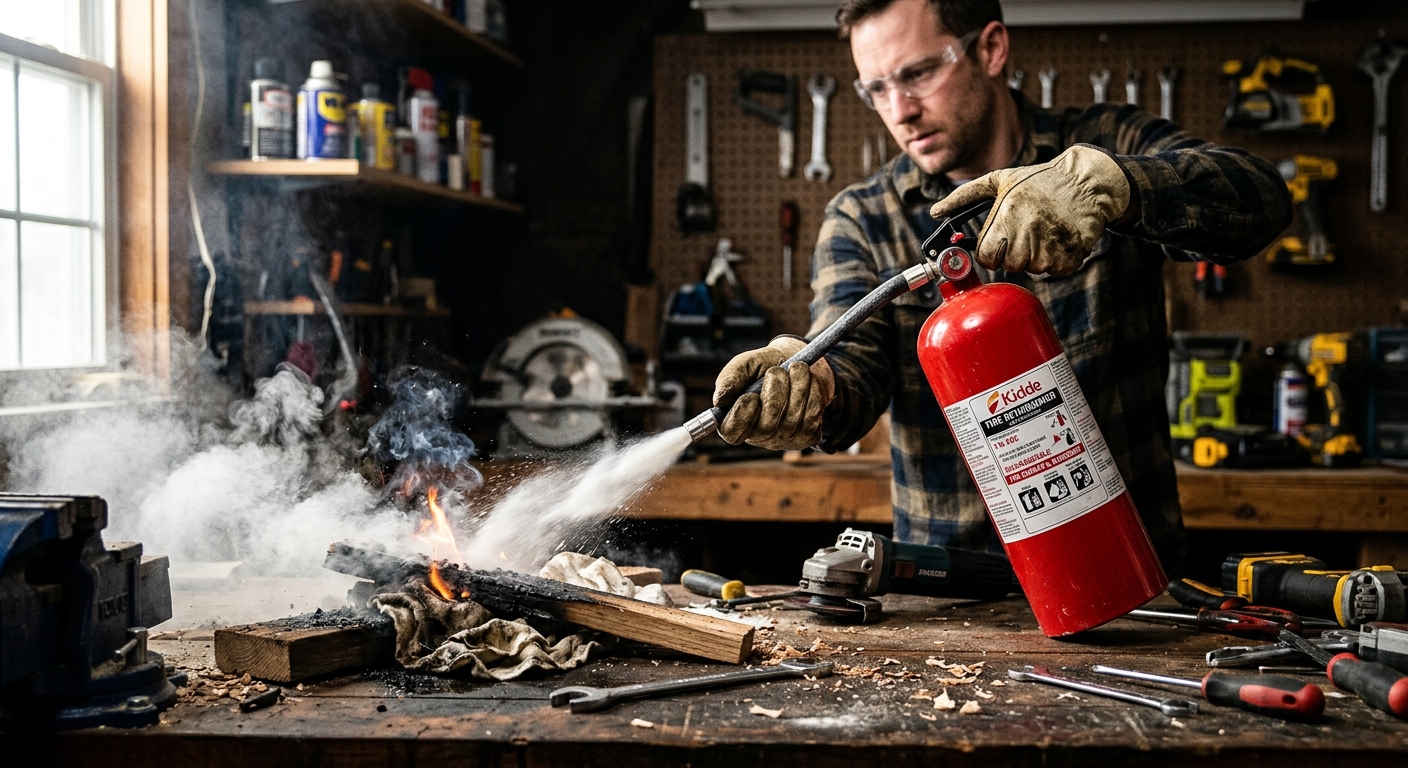
The most widely available consumer-grade ABC extinguisher. Available at every hardware store, includes a wall bracket, and is rechargeable. The plastic valve is a slight downgrade from Amerex, but the Kidde is more than adequate for home garage use and is priced extremely accessibly. An excellent starting point for any shop.
3. First Alert PRO5 (5 lb ABC)
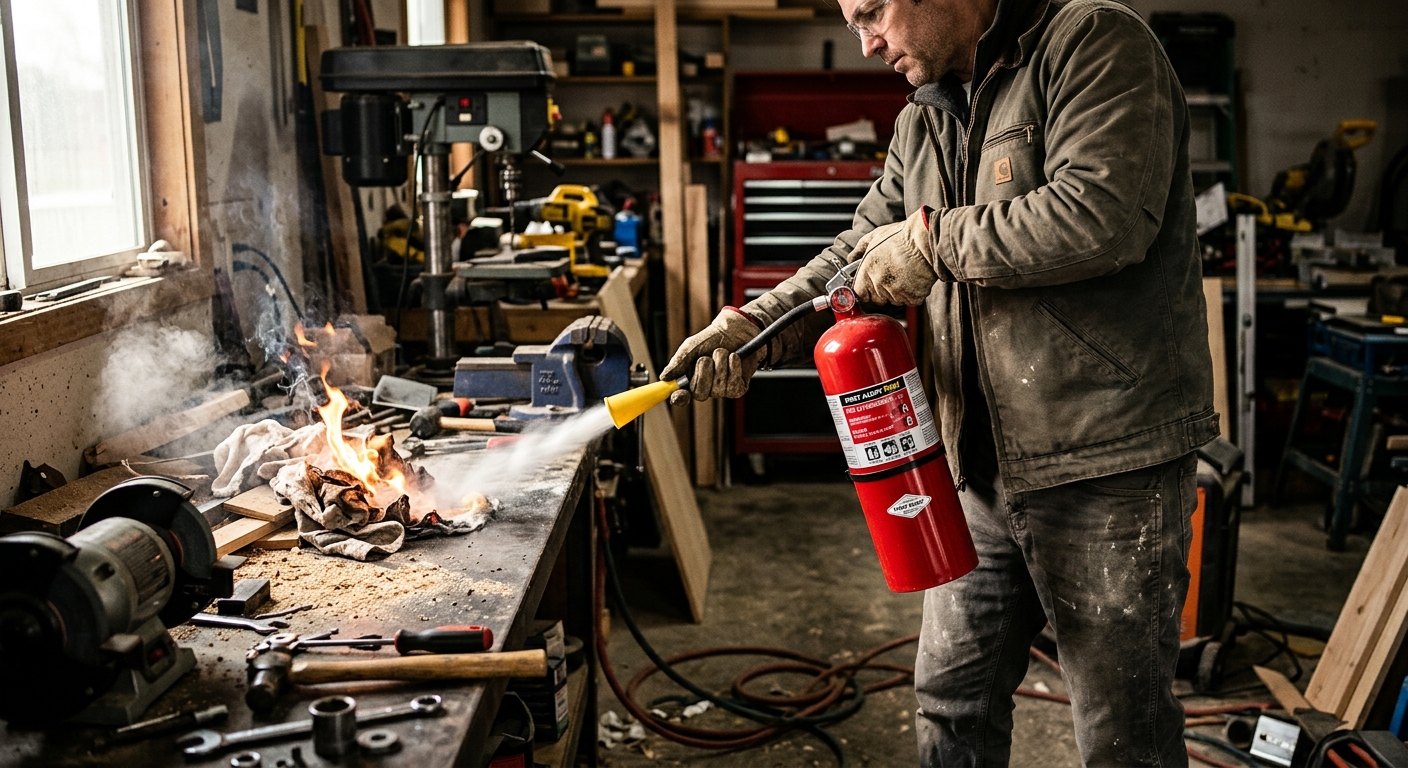
First Alert’s professional-rated model with a metal valve, rechargeable cylinder, and a 40B:C UL rating. A step above the standard Kidde while still widely available at hardware stores. A good choice for those who want better build quality without going full commercial-grade.
4. Amerex B441 (10 lb ABC)
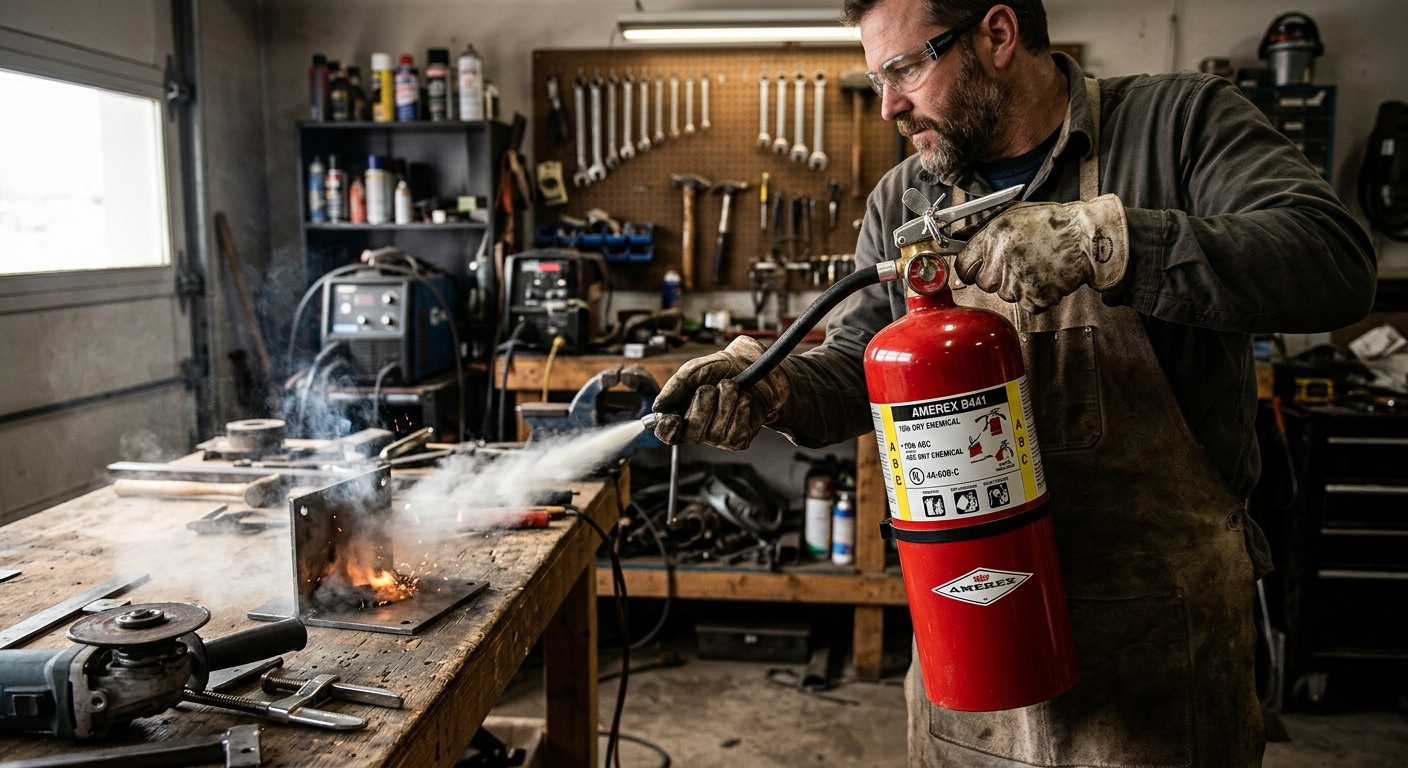
For larger shops and garages: the Amerex 10 lb delivers twice the suppression capacity of the 5 lb in the same commercial-grade package. If your shop is larger than a one-car garage or you store significant quantities of flammable finishing products, this is the correct size. Mount one near the door and one near the finishing area.
5. Kidde 466112 CO2 Extinguisher (5 lb)
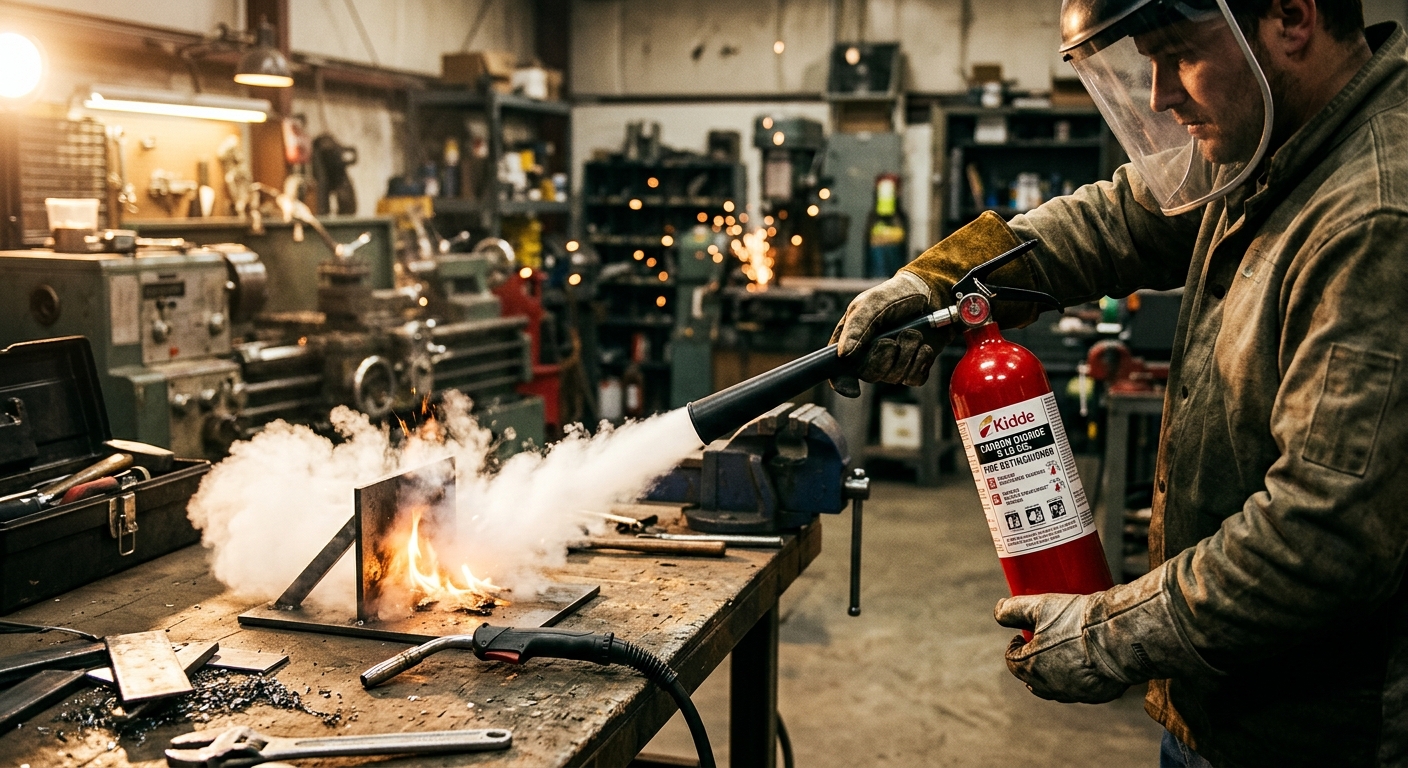
A CO2 (Class BC) extinguisher for areas with sensitive electronics, CNC equipment, or server rooms. CO2 leaves no residue and does not damage electronics or finished work. The right supplement (not replacement) for ABC coverage near a computer workstation or high-value electronics.
What to Avoid
- Single-use non-rechargeable extinguishers for your primary coverage: These cannot be recharged after partial use. If you discharge any amount in a false alarm or minor fire, the extinguisher is spent and must be replaced.
- Extinguishers stored more than 30 feet from any hazard point: The rule of thumb is to mount an extinguisher within 30 feet (10 meters) of any potential ignition source.
- Outdated extinguishers: Check the inspection tag. Extinguishers must be professionally inspected annually and hydrotested every 6 to 12 years depending on type.
The PASS Method
If you need to use an extinguisher, remember PASS:
- Pull the safety pin.
- Aim the nozzle at the base of the fire, not the flames.
- Squeeze the handle steadily.
- Sweep the nozzle from side to side at the base of the fire.
If the fire is not going out or spreading despite your efforts, evacuate immediately and call 911. A fire extinguisher is for small, contained fires only.
FAQ
How many extinguishers should I have in my shop?
A minimum of one 5 lb ABC extinguisher for a one-car garage. For a two-car garage or dedicated woodworking shop, mount a 10 lb near the main door and a 5 lb near the finishing area (where flammable liquids are stored). Never let any point in the shop be more than 30 feet from an extinguisher.
When should I replace a fire extinguisher?
After any discharge. When the pressure gauge reads below the green zone. After 12 years for non-rechargeable units (manufacturer recommendation). Rechargeable units can be professionally serviced and refilled.
Can I use a fire extinguisher on an electrical fire?
ABC dry chemical extinguishers are safe on energized electrical equipment. CO2 extinguishers are preferred for sensitive electronics. Never use water on electrical fires.
Affiliate Disclosure: DIY Arsenal participates in the Amazon Associates Program and other affiliate programs. When you purchase through links on this site, we may earn a small commission at no additional cost to you. We only recommend products we have personally tested and genuinely believe in.