Best Dust Masks and Respirators for Woodworking, Drywall, and Finishing
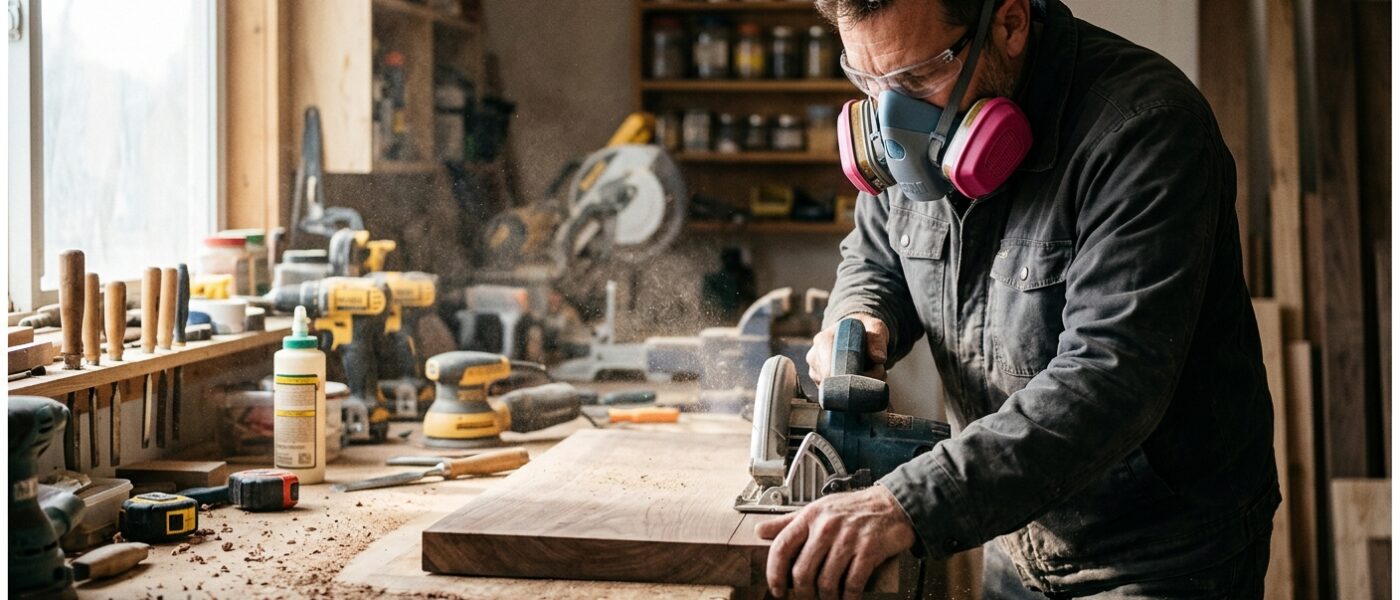
3M 7500 silicone half-face respirator provides professional filtration with all-day comfort
Dust masks and respirators protect your lungs from the particles that can’t be seen with the naked eye – fine wood dust, silica from concrete and stone, mold spores, solvent vapors, and chemical fumes. Many of the most hazardous materials in the workshop (MDF dust, pressure-treated wood particles, finishing solvents) have no visible warning signs. This guide covers the best respiratory protection for DIYers across dust masks, half-face respirators, and full-face options.
How We Evaluate Respiratory Protection
We tested respirators for filtration efficiency (N95, N99, N100, P100), comfort and breathability during extended wear, seal quality against different face shapes, filter replacement cost, and compatibility with other PPE (safety glasses, hearing protection). A respirator that’s uncomfortable to breathe through gets removed – and removed means zero protection from the particles you’re generating.
Top Picks
3M 7500 Series Half Face Respirator – Best Overall
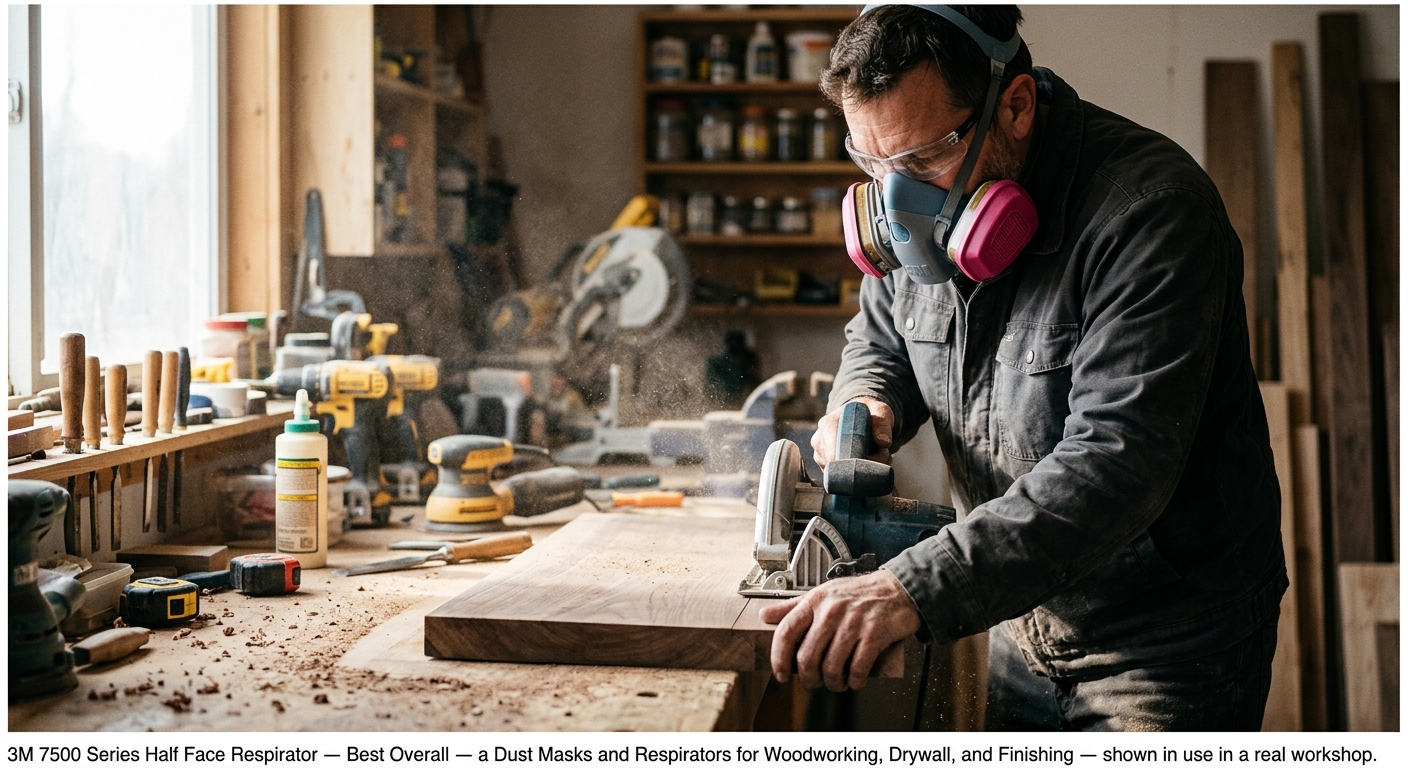
The 3M 7500 half-face respirator is the most comfortable professional respirator available, with a silicone face piece that seals more effectively and comfortably than rubber alternatives. Pair it with 2097 P100 + organic vapor combination cartridges for comprehensive protection from both particles and finishing vapors. The low-profile design provides better visibility than competing respirators. Used by professional finishers and woodworkers as their daily driver mask.
- Pros: Silicone face piece seals comfortably, accepts P100 and OV combination cartridges, low profile, professional-grade filtration
- Cons: Cartridges add to ongoing cost, bulkier than dust masks, requires fit testing for optimal protection
3M Aura 9205+ N95 – Best Disposable N95

When you need N95 protection without the bulk of a half-face respirator, 3M’s Aura 9205+ is the benchmark disposable. The three-panel design creates more interior space than flat-fold masks, reducing the sensation of breathing against the filter material. The moldable nosepiece seals effectively, and the straps hold position during active work without pressure point discomfort. For sanding, drywall work, and general fine dust, this is the best single-use N95 available.
- Pros: 3-panel design more breathable, excellent seal, comfortable for extended wear, widely available
- Cons: Single-use (or limited reuse) means ongoing cost, not for solvent vapors (particulate only)
Moldex 2730 N95 – Best Flat-Fold N95

Moldex’s flat-fold N95 compresses completely flat for tool bag storage – you can carry dozens in a jacket pocket. The filtration efficiency exceeds N95 requirements in testing, the foam nosepiece provides comfort for glasses wearers, and the exhalation valve (2733 version) significantly reduces heat and moisture buildup during active work. Preferred by tradespeople who need a compact mask they’ll actually keep on them.
- Pros: Flat-fold for compact storage, exhalation valve option, comfortable foam nosepiece, reliable seal
- Cons: Exhalation valve version not appropriate where you’re protecting others from your exhalation
3M 6503QL Quick Latch Respirator – Best for Intermittent Use

The Quick Latch half-face respirator solves the biggest frustration with half-face respirators: removing them during breaks. The quick-release latch drops the face piece away from the face with one hand – you leave it around your neck rather than removing straps, and it re-seals in one click when you resume work. For shop environments where you alternate between dusty and non-dusty tasks, the Quick Latch is the practical solution.
- Pros: One-hand quick release, stays around neck during breaks, re-seals instantly, accepts all 3M 6000-series cartridges
- Cons’:’Cartridge cost accumulates, less comfortable than 7500 silicone face piece over full days
Trend AIR/PRO – Best Powered Air-Purifying Respirator
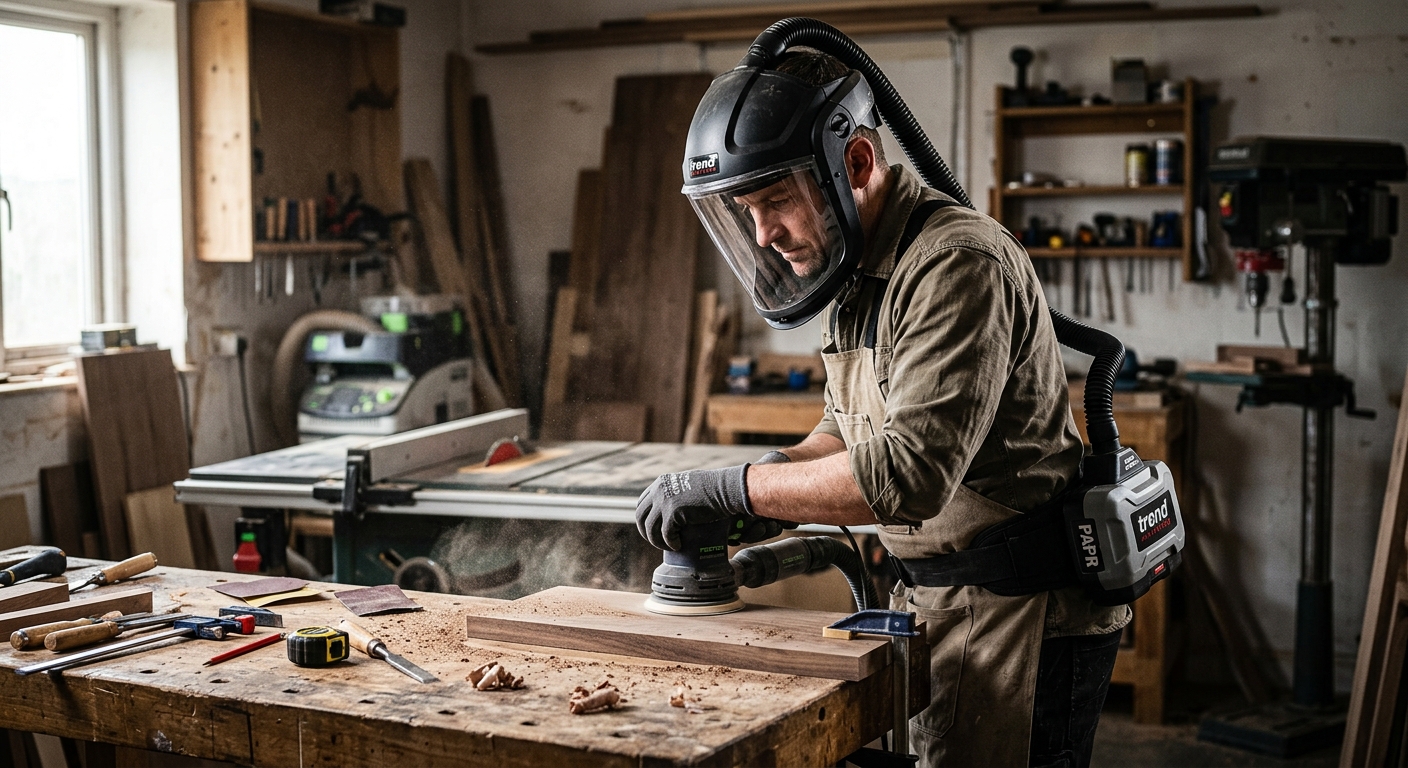
Powered Air-Purifying Respirators (PAPRs) use a battery-powered fan to pull air through HEPA filters and deliver it to a face shield or hood – completely eliminating the breathing resistance of passive respirators. Trend’s AIR/PRO is a woodworking-specific PAPR with face shield, neck seal, and HEPA filtration achieving P100-equivalent protection. For woodworkers with breathing difficulties, beards that prevent mask seal, or those doing all-day finishing work, a PAPR is transformative.
- Pros: Zero breathing resistance, beard-compatible (no face seal needed), full face shield, HEPA filtration, all-day comfort
- Cons’:’Expensive, battery adds weight, bulkier than face masks, charging required
Frequently Asked Questions
What’s the difference between N95, P100, and OV cartridges? N95 filters 95% of airborne particles. P100 filters 99.97% of particles (HEPA equivalent). OV (Organic Vapor) cartridges adsorb solvent and finishing vapors. For painting and finishing, use a P100+OV combination cartridge for both particles and vapors.
Is wood dust actually dangerous? Yes – wood dust is classified as a potential carcinogen. Fine dust from hardwoods, particularly walnut and oak, can cause nasal and lung damage with repeated exposure. MDF and particle board dust contains formaldehyde resins that add chemical hazard. A respirator is necessary for sanding and routing, not optional.
Can I use a dust mask for spray painting? No – standard dust masks and N95 respirators don’t filter solvent vapors. Vapors from oil-based finishes, lacquers, and automotive paint require organic vapor cartridges in a half-face or full-face respirator. Using a dust mask while spraying lacquer provides no protection from vapor inhalation.
How do I know when to replace cartridges? OV cartridges should be replaced when you can smell vapors through the respirator – breakthrough indicates the activated carbon is saturated. P100 cartridges last until they feel clogged (breathing resistance increases significantly). Never use expired cartridges.
Bottom Line
The 3M 7500 earns Best Overall for its silicone seal comfort and cartridge flexibility that covers everything from wood dust to finishing solvents. For disposable N95 protection in normal woodworking, the 3M Aura 9205+ is the clearest recommendation. Never skip respiratory protection for sanding, routing, or finishing work – the particles you can’t see are the ones that accumulate in your lungs over years.
Affiliate Disclosure: DIY Arsenal participates in the Amazon Associates Program and other affiliate programs. When you purchase through links on this site, we may earn a small commission at no additional cost to you. We only recommend products we have personally tested and genuinely believe in.