Best Drain Cameras and Sewer Scopes for Homeowners
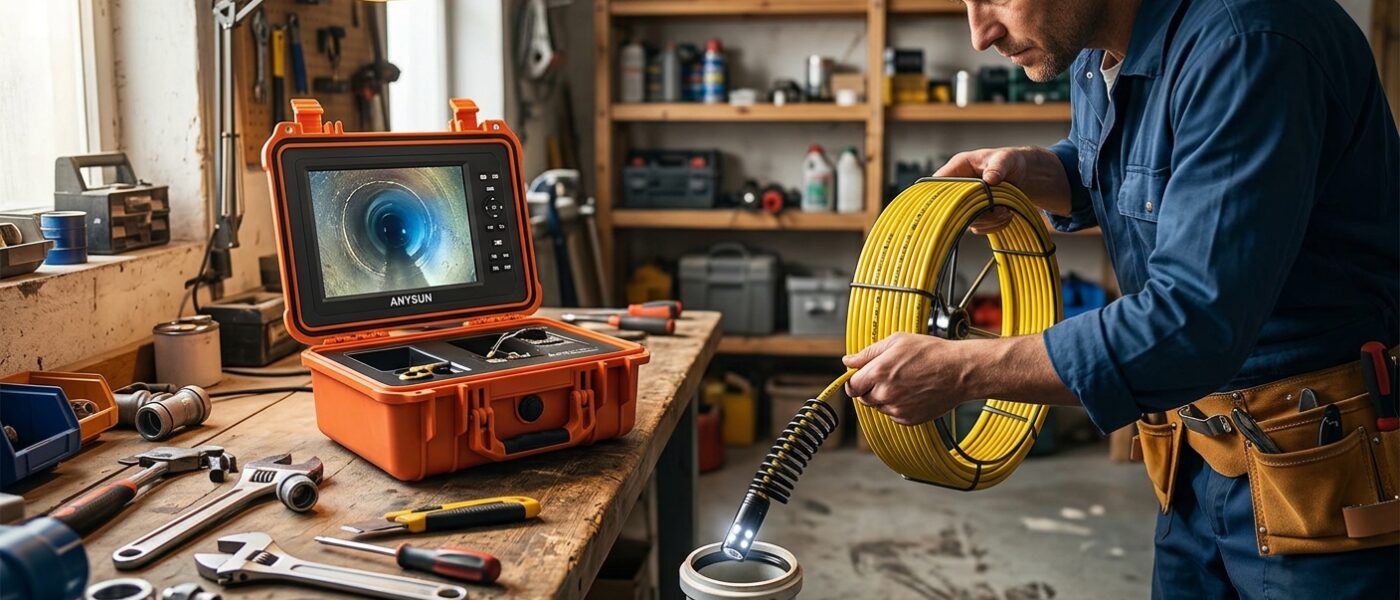
A sewer camera with 100-foot cable and SD recording eliminates recurring inspection fees. Match cable length to your main line run and prioritize IP67 waterproofing.
As an Amazon Associate, we earn from qualifying purchases.
What’s Lurking in Your Sewer Line?
Sewer scope inspections used to mean calling a plumber and paying $150-$300 to watch someone else look at your pipes. Homeowner-grade sewer cameras have changed that calculus – for $80-$250 you can own a camera that handles most residential inspection tasks and eliminate recurring scope fees entirely. More importantly, you get footage you control, can review repeatedly, and can share with contractors without relying on their interpretation of what they saw.
Key Features to Look For
- Push cable rigidity: Sewer cameras use semi-rigid cables – stiff enough to push 50-100 feet without kinking, flexible enough to navigate bends. Cables that are too limp fold up inside the pipe; too stiff and they won’t navigate 90-degree bends in the drain.
- Camera head IP rating: IP67 minimum for any sewer application – the head will be submerged in standing water and pushed through debris. IP68 offers more protection depth but most homeowner applications don’t require it.
- Resolution: 1080p has become the standard on quality homeowner cameras. Anything below 720p makes it hard to distinguish debris buildup from actual cracks or root intrusion.
- Self-leveling head: More expensive cameras include a self-leveling mechanism that keeps the image right-side-up as the cable rotates. Without it, you’re mentally correcting an image that may be spinning as you push. Very useful for first-time users.
- Transmitter/locator compatibility: A built-in sonde transmitter allows a locator device to pinpoint the camera’s underground position. Essential if you’re trying to identify where to dig or where to direct a plumber for spot repair.
Top Picks
Anysun Sewer Camera with 100 Foot Cable
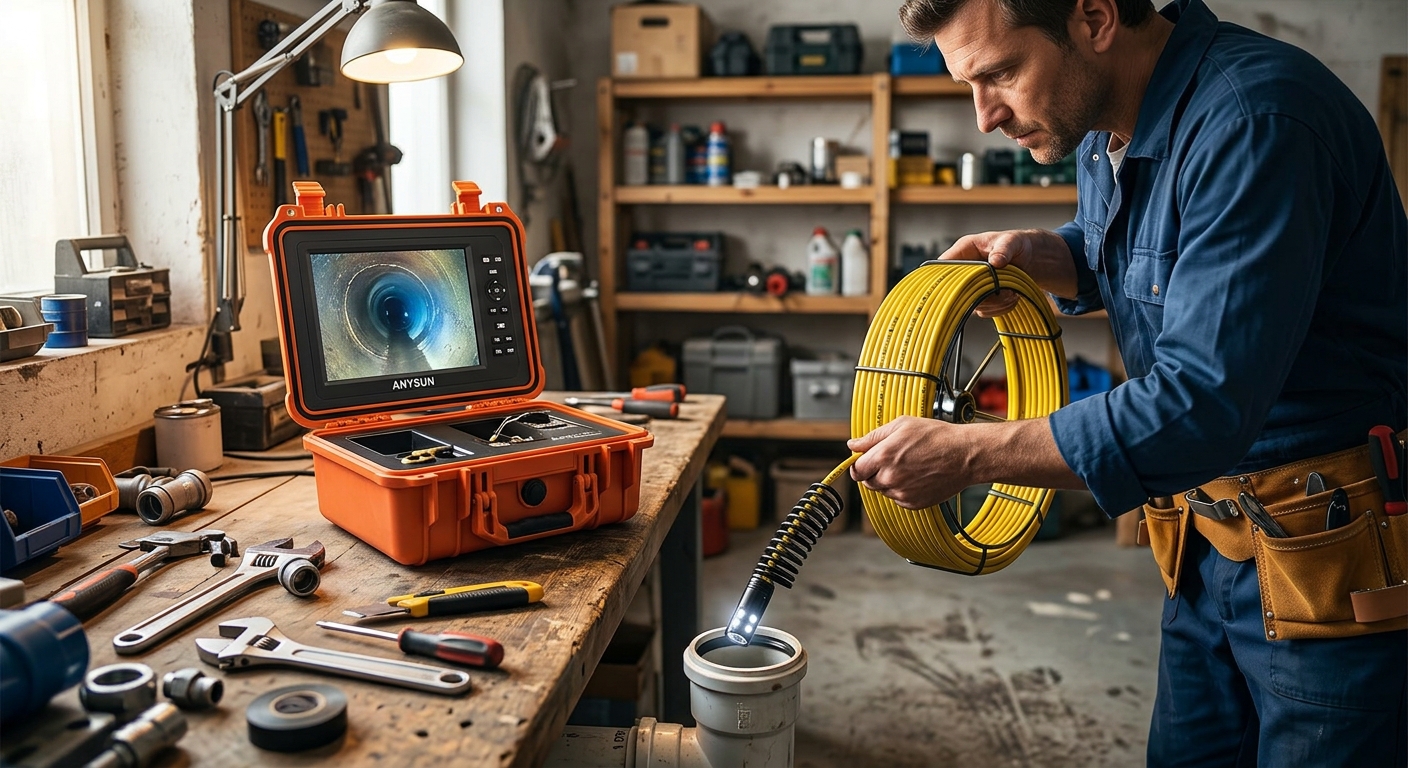
One of the best value options in the homeowner sewer camera market. The 23mm waterproof head produces 1080p footage, the 100-foot cable handles typical residential main lines, and the 4.3-inch LCD monitor shows real-time footage with date/time stamp. The cable stores neatly on an integrated reel. Recording to SD card is straightforward. For basic inspection – clogs, root intrusion, pipe condition – this camera delivers professional-grade information at a fraction of the professional fee.
Ridgid SeeSnake Compact C40
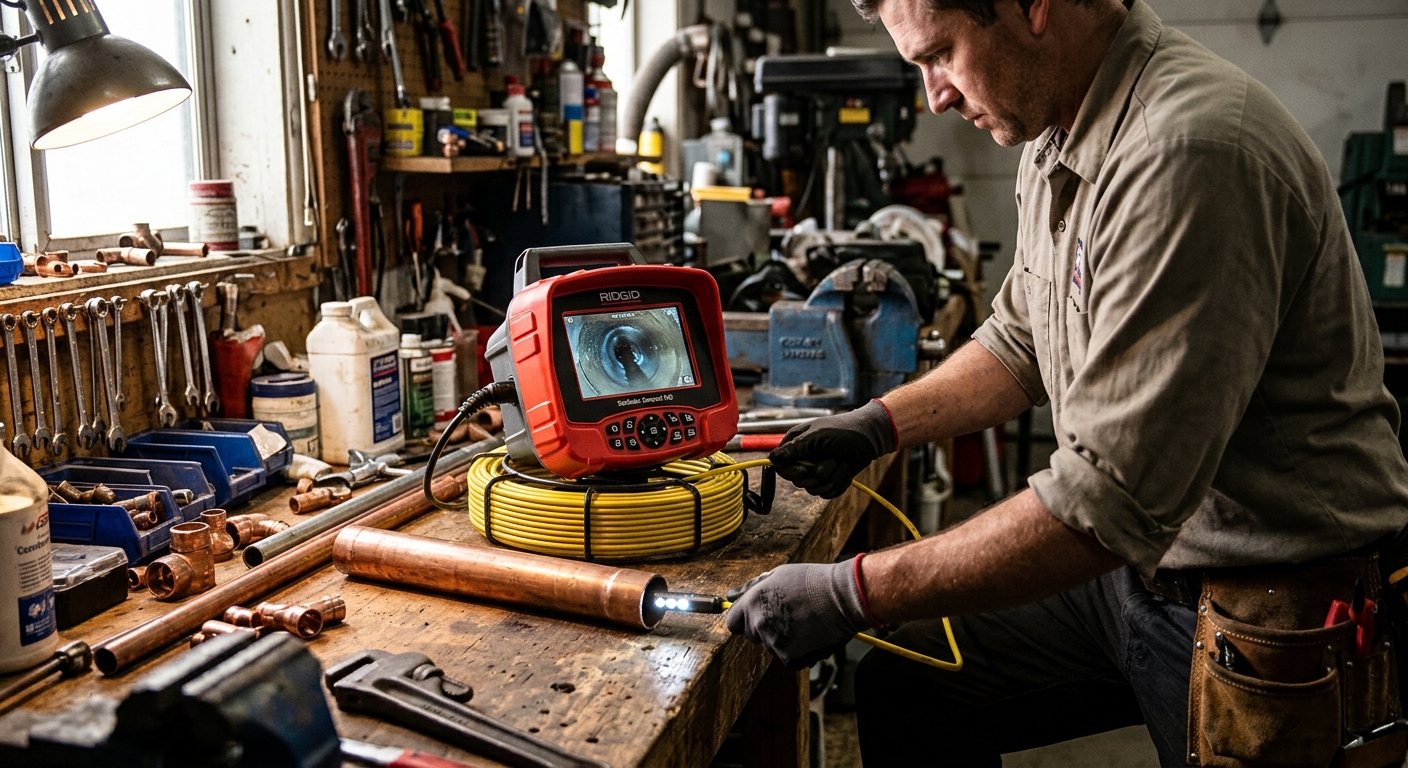
A professional-grade compact camera that bridges homeowner and contractor use. The 30mm head handles pipes from 2″ to 6″ and the self-leveling mechanism keeps footage orientation consistent. Built for durability – the cable jacket is designed for repeated use without cracking. If you’re maintaining a property or inspecting pipes regularly, the C40’s build quality justifies its higher cost over consumer-grade options.
Teslong TS100 Sewer Inspection Camera
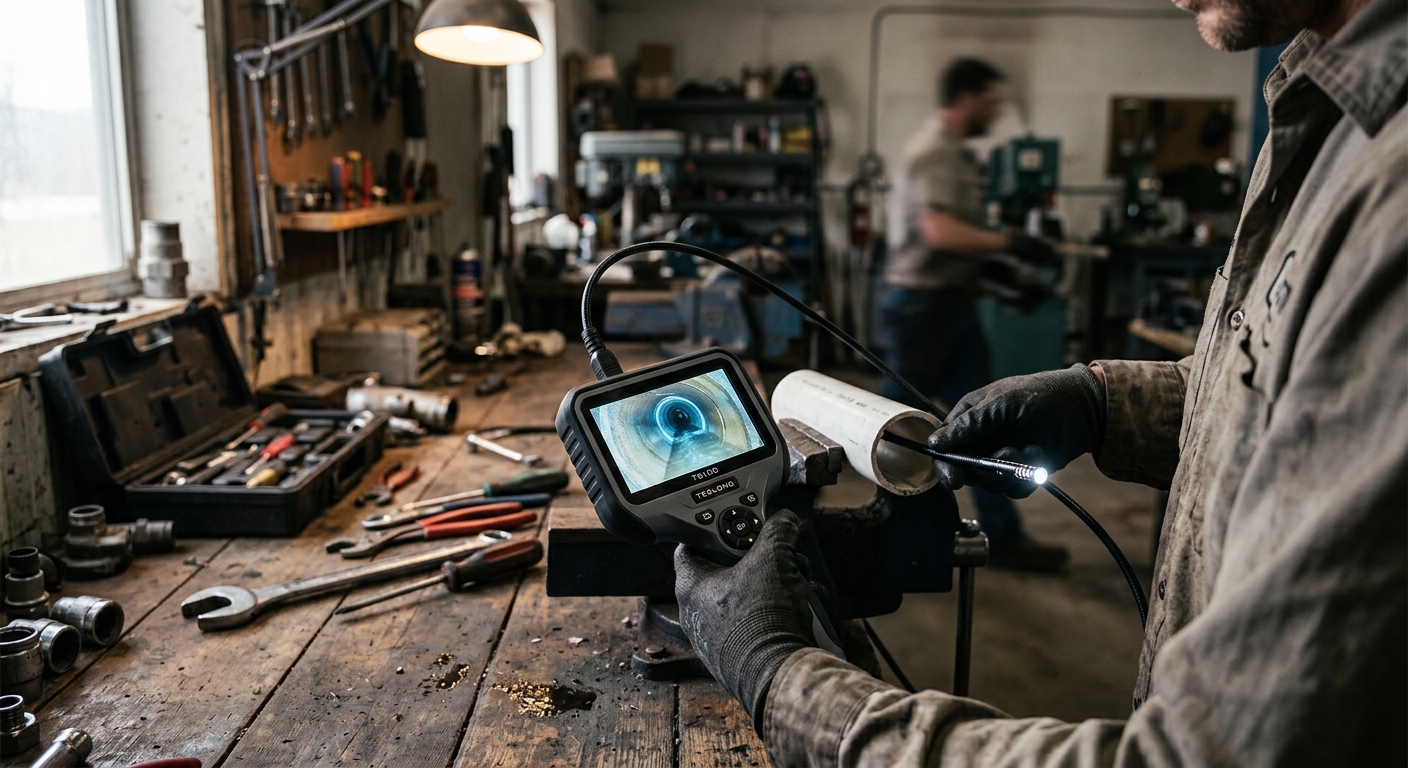
Teslong’s TS100 is a solid mid-range option with a 1-inch waterproof head on a 100-foot cable. The accompanying app (iOS and Android) provides real-time viewing and recording without a dedicated screen – a cost savings that works well if you have a modern smartphone and a way to prop it while working. The LED ring is adjustable and the image quality is genuinely useful for diagnosis. A good pick if you prefer smartphone integration over a built-in display.
REED Instruments R9000 Pipe Inspection Camera
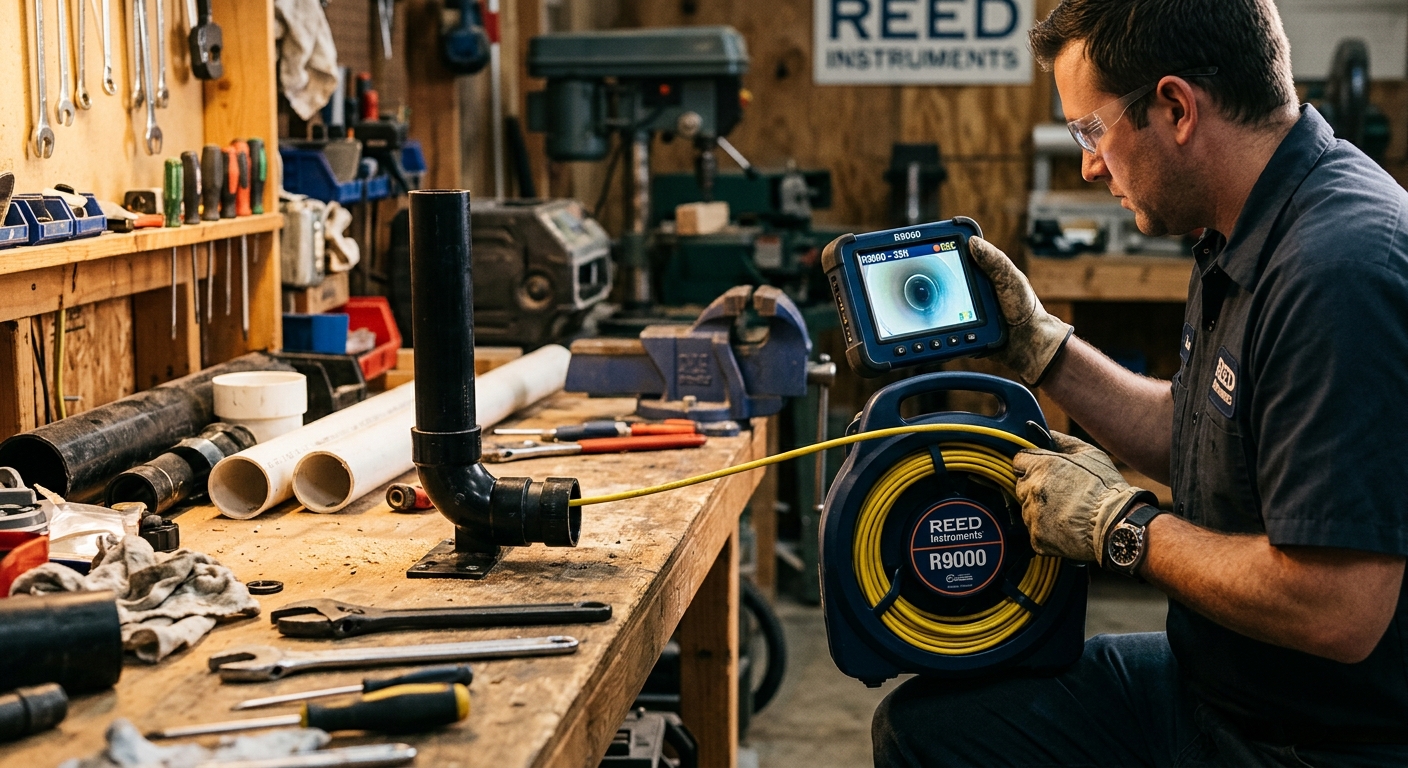
A step up in documentation capability with built-in Wi-Fi streaming and a rugged 7-inch color monitor. The included locator beacon transmits at 512Hz, compatible with most professional locating devices. If you work alongside contractors or need to hand them precise underground location data, the REED’s locator capability saves significant time and cost in excavation estimates.
Frequently Asked Questions
What size pipe can a homeowner sewer camera inspect?
Most homeowner cameras with 23-30mm heads work best in 2″ to 4″ pipes – covering sink drains, tub drains, and residential main sewer lines. Pipes larger than 4″ (rare in residential) require cameras with wider-angle lenses or larger heads to see the full pipe diameter clearly.
How do I access my main sewer line for inspection?
Most homes have a main cleanout access – typically a 3″ or 4″ threaded cap at ground level near the foundation or in the basement floor. Remove the cap carefully (pressure may be present if there’s a blockage), allow any standing water to settle, then insert the camera. If you can’t find a cleanout, the toilet is a secondary access point after removing the toilet from the flange.
Can I use a sewer camera to diagnose slow drains?
Yes, and it’s one of the most valuable applications. Slow drains caused by grease buildup, root intrusion, pipe sag (belly), or scale accumulation all look distinctly different on camera – which determines whether the fix is a chemical treatment, mechanical snaking, hydro-jetting, or pipe replacement. Knowing before you call the plumber lets you describe the problem precisely and avoid being upsold on unnecessary work.
Affiliate Disclosure: DIY Arsenal participates in the Amazon Associates Program and other affiliate programs. When you purchase through links on this site, we may earn a small commission at no additional cost to you. We only recommend products we have personally tested and genuinely believe in.