Best Carbon Monoxide and Smoke Detectors for the Workshop

The Kidde Nighthawk with digital ppm display is the best workshop CO monitor because it shows actual concentrations before the alarm threshold is reached; add a Nest Protect if you want smartphone alerts when the shop is unoccupied.
As an Amazon Associate, we earn from qualifying purchases.
Carbon monoxide is the silent killer of the workshop. Colorless, odorless, and tasteless, CO builds to lethal concentrations before you realize anything is wrong. Gas-powered equipment – generators, pressure washers, compressors, concrete saws, and even a gas water heater or furnace in the adjacent utility room – can produce CO in quantities that cause unconsciousness and death in an enclosed space within minutes. CO detectors save lives, and in most jurisdictions they are legally required in occupied spaces adjacent to garages and utility rooms.
Carbon Monoxide Sources in the Workshop
- Gas-powered generators (the most common cause of CO poisoning fatalities in DIY settings)
- Gas-powered pressure washers, compressors, and concrete saws
- Vehicle exhaust in attached or adjacent garages
- Gas-fired heating equipment (furnaces, unit heaters, water heaters) in the same or adjacent space
- Propane torches in enclosed spaces (combustion in a poorly ventilated space)
- Charcoal grills – never used indoors
Key Features to Look For
Sensor Technology
Electrochemical sensors are the professional standard in CO detection. They are sensitive to low CO concentrations, respond quickly to rising levels, and have a defined service life (typically 5 to 7 years). Metal oxide semiconductor (MOS) sensors are less expensive but require more time to stabilize and are more prone to false alarms. Biomimetic sensors are durable but less sensitive at low concentrations. Electrochemical is the preferred choice for workshop and home use.
Sensitivity and Alarm Thresholds

UL 2034 (the standard for residential CO alarms in the US) specifies minimum alarm thresholds that allow exposure to moderate CO concentrations for extended periods before alarming – intentionally conservative to prevent false alarms from brief exposures. For workshop use near combustion sources, a detector with low-level display (showing actual ppm concentration) provides earlier warning. OSHA PEL for CO is 50 ppm as an 8-hour TWA; residential UL 2034 alarms may not trigger until 70 ppm for 4 hours.
Combination CO and Smoke Detection
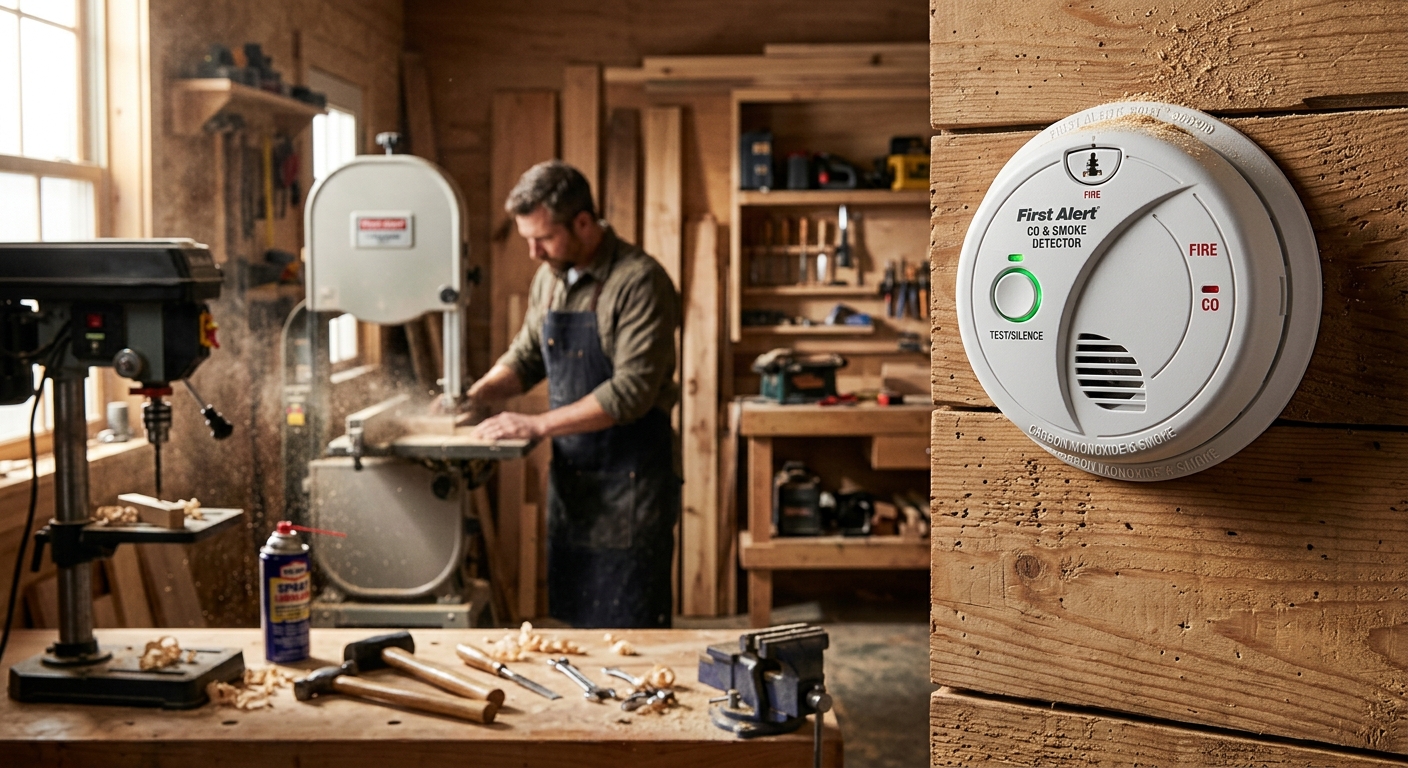
Combination smoke and CO detectors provide both fire and CO protection in one unit, reducing the number of devices and battery replacement events. The most practical choice for most homeowners if the detector is placed appropriately for both functions.
Digital Display
A digital CO display (in ppm) allows you to see actual CO levels rather than simply waiting for the alarm threshold. This early warning allows you to investigate and ventilate before concentrations reach dangerous levels.
Our Top Picks
1. Kidde 900-0076-01 Nighthawk CO Detector (Plug-In with Digital Display)
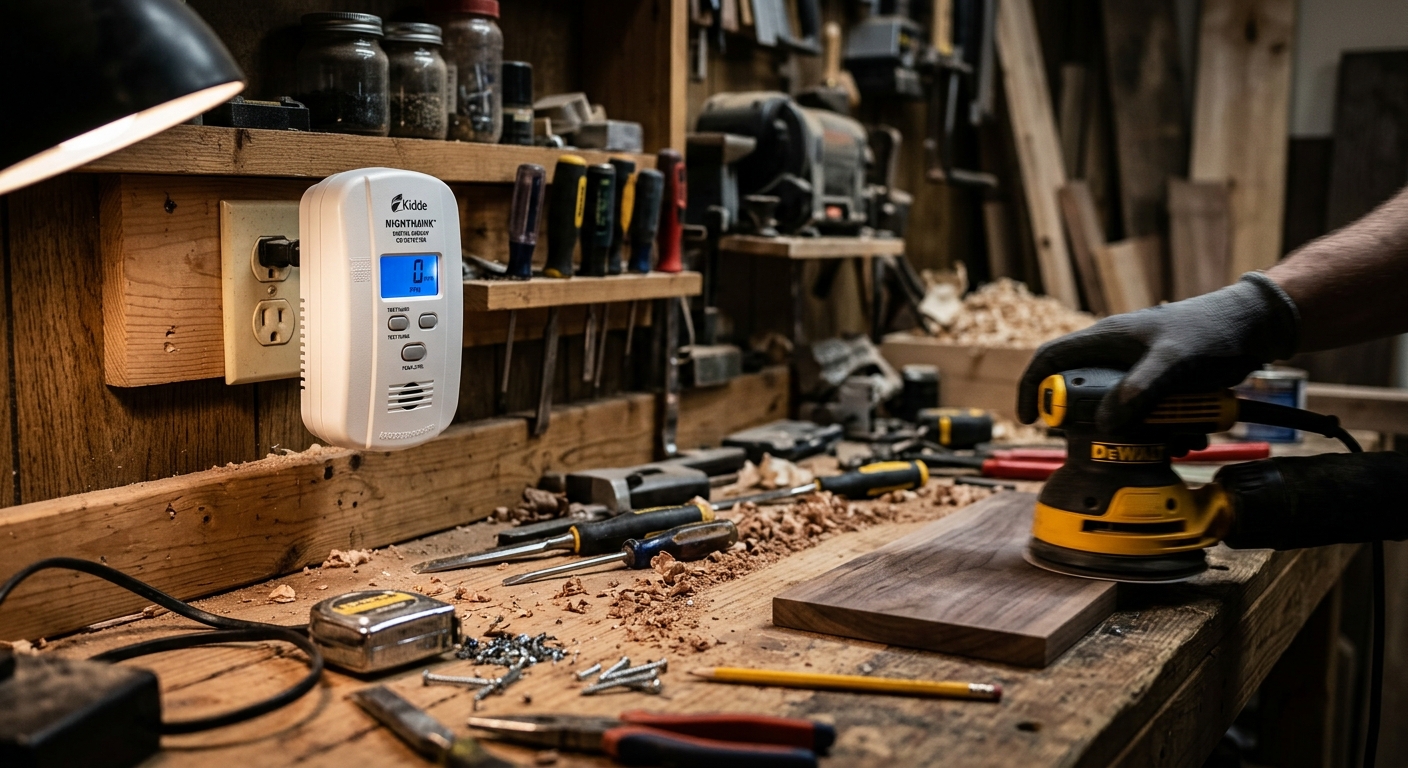
The Nighthawk displays actual CO concentration in ppm continuously – an important advantage over alarm-only detectors that give no warning until the UL 2034 threshold is reached. The plug-in format with battery backup is convenient and reliable. An excellent choice for placement in a garage or workshop where you want to monitor CO levels during any combustion work.
2. First Alert CO710 Combination Smoke and CO Detector

First Alert is the most recognized smoke and CO detector brand in North America. The CO710 combines an ionization smoke alarm with an electrochemical CO sensor, digital CO display, and voice alerts that distinguish between smoke and CO emergencies. Battery powered for placement anywhere.
3. Nest Protect (Smoke and CO)

Google Nest Protect is the premium connected smoke and CO detector. Wi-Fi connected, it sends alerts to your smartphone when it detects smoke or CO – you get notified of a CO event in your workshop even when you are not in the building. The “Heads Up” spoken warning before the full alarm provides earlier warning. The most capable home CO detector available if you want smart home connectivity.
4. Kidde Carbon Monoxide Detector (KN-COPP-B-LPM)

A straightforward battery-operated CO detector with a digital display showing ppm. Compliant with UL 2034, rated for residential use, and available at hardware stores everywhere. The simple choice for adding CO protection to a workshop or garage at the lowest reasonable cost.
5. Klein Tools ET110 CO Meter

A professional CO measurement instrument for contractors and HVAC technicians who need to diagnose CO sources, measure flue gas CO concentrations, and verify that a workspace is safe before starting combustion equipment. Measures 0 to 1000 ppm with alarm thresholds – beyond a simple alarm, a real measurement instrument.
Where to Place CO Detectors
- At least one on each level of the home
- Within 10 feet of every sleeping area
- In or immediately adjacent to an attached garage (CO from vehicles accumulates here first)
- In a workshop with any combustion equipment, especially generators
- Near gas-fired heating equipment
FAQ
Can I run a generator in my garage with the door open?
No. Even with the garage door fully open, generator exhaust can accumulate to lethal CO concentrations inside an attached garage and migrate into the home. OSHA and CPSC guidelines require operating generators at least 20 feet from any door, window, or vent. No exceptions.
How do I know when a CO detector needs replacement?
Most CO detectors have a service life of 5 to 7 years (check the manufacture date on the back of the unit). Many models include an “end of life” chirp that signals replacement time. Do not rely on a CO detector that has passed its service life – the electrochemical sensor degrades and the detector will not alarm reliably at dangerous CO levels.
What should I do when a CO alarm sounds?
Immediately evacuate everyone from the building. Do not stop to investigate. Call 911 from outside. Do not re-enter until emergency responders have cleared the building and identified and corrected the CO source.
Affiliate Disclosure: DIY Arsenal participates in the Amazon Associates Program and other affiliate programs. When you purchase through links on this site, we may earn a small commission at no additional cost to you. We only recommend products we have personally tested and genuinely believe in.