Best Anti-Fatigue Mats for Garage and Workshop Standing Areas
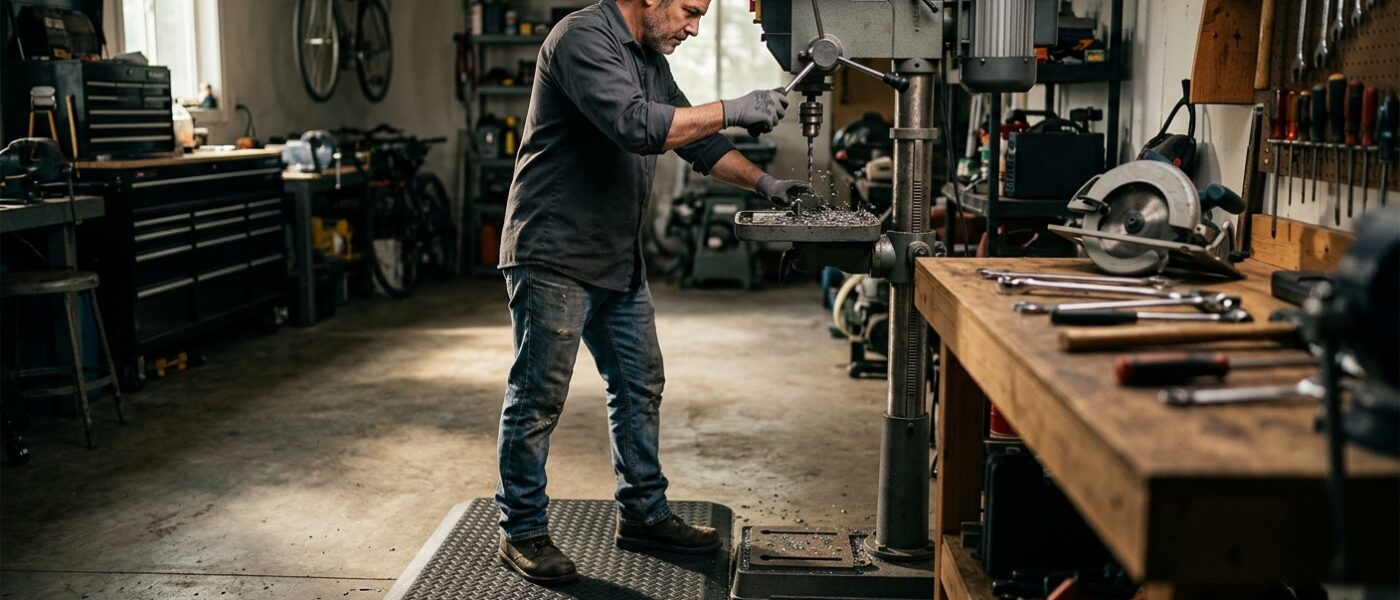
3/4-inch EVA foam anti-fatigue mats immediately reduce workbench fatigue with beveled edges that prevent trips
Anti-fatigue mats and floor coverings transform the experience of working in a shop or garage. Standing on concrete for hours causes leg fatigue, back pain, and foot problems that accumulate into chronic issues over time. The right mat not only reduces fatigue but also provides traction, insulates against cold concrete, and protects dropped tools and workpieces. This guide covers the best anti-fatigue mats for workshops, garages, and job sites.
How We Evaluate Anti-Fatigue Mats
We tested mats for fatigue reduction (measured by time-to-discomfort on concrete vs mat), surface traction in dry and oily conditions, resistance to oil, solvent, and chemical spills, ease of cleaning, durability under rolling cart and tool-stand feet, and stability (do edges curl? Do mats slide?). A mat that curls at the edges creates a trip hazard, which is worse than no mat at all.
Top Picks
Tapecase Anti-Fatigue Mat – Best Overall Shop Mat
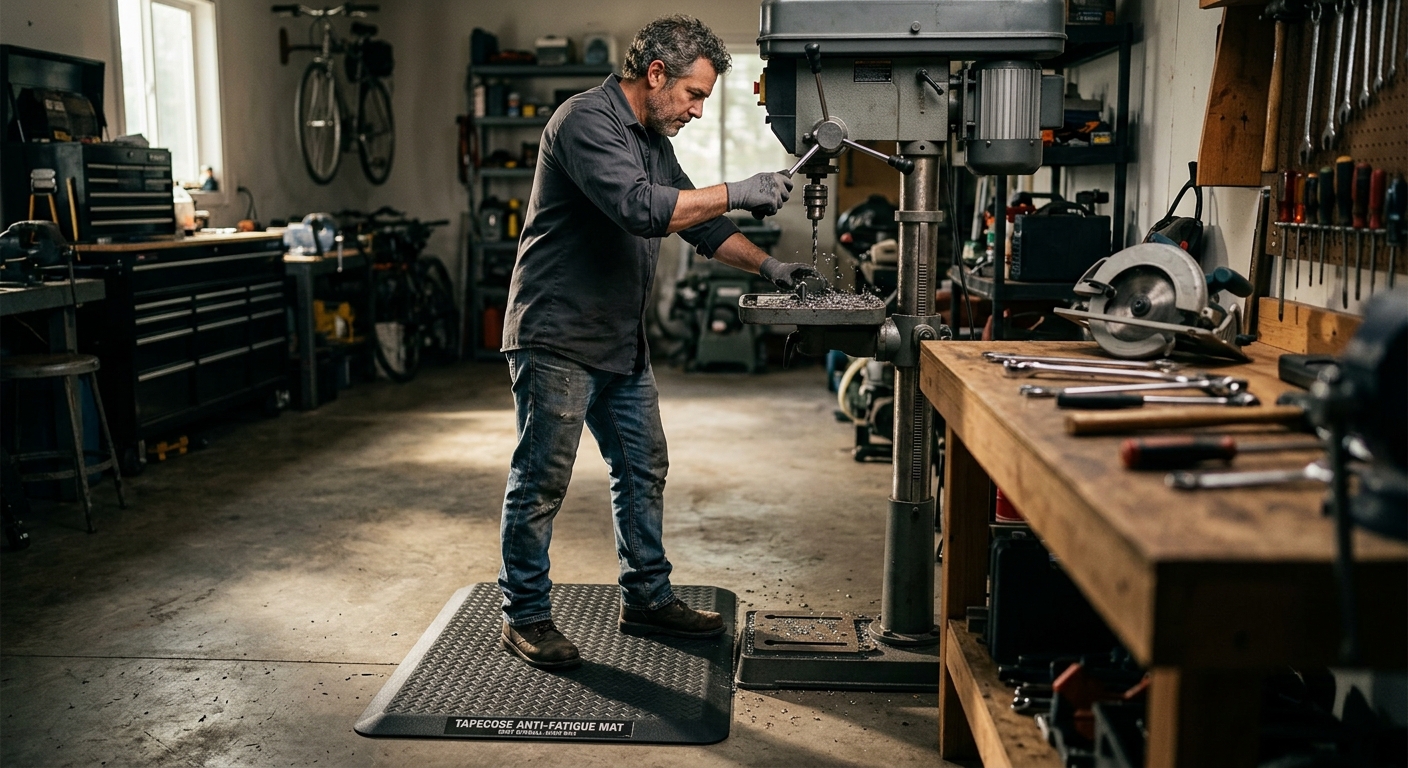
Dense EVA foam anti-fatigue mats are the workshop standard. At 3/4-inch thickness, quality EVA foam provides significant fatigue reduction without the instability of thicker softer foams. The beveled edges prevent trip hazards, the textured surface maintains traction in most conditions, and the closed-cell foam resists oil and solvent absorption. For a standing workbench, assembly area, or lathe station, a 2×3-foot mat makes all-day work significantly more sustainable.
- Pros: 3/4-inch EVA foam, beveled edges prevent trips, textured traction surface, oil-resistant closed cell, affordable
- Cons: Not rated for vehicle traffic, compresses over years of use, can shift on smooth concrete without anchoring
Armor All Garage Floor Mat – Best Garage Floor Coverage
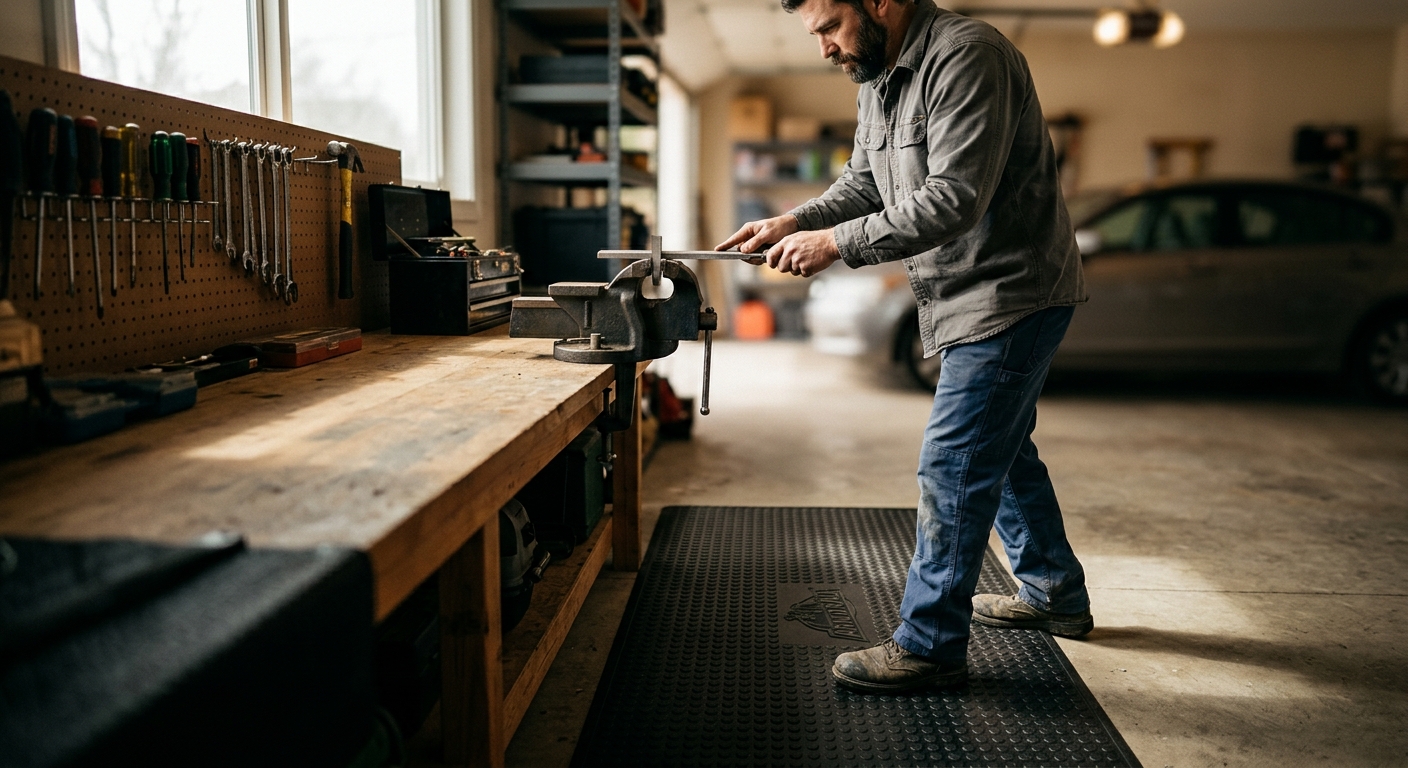
For garages that double as workshops, an interlocking tile system covers the entire floor efficiently. Armor All’s polypropylene tiles click together without adhesive, drain through the perforated surface, and can be cut to fit around obstacles. The raised pattern lifts your feet and tools off direct concrete contact, provides drainage for wet vehicles, and protects the concrete surface from oil drips. Reusable and repositionable as needs change.
- Pros: Full-floor coverage, interlocking without adhesive, draining perforated surface, protects concrete, repositionable
- Cons’:’Harder surface than foam (less fatigue relief), pattern collects dirt, individual tiles can pop up under heavy loads
Rhino Mats TUF Diamond-Plate Mat – Best for Wet/Oily Areas
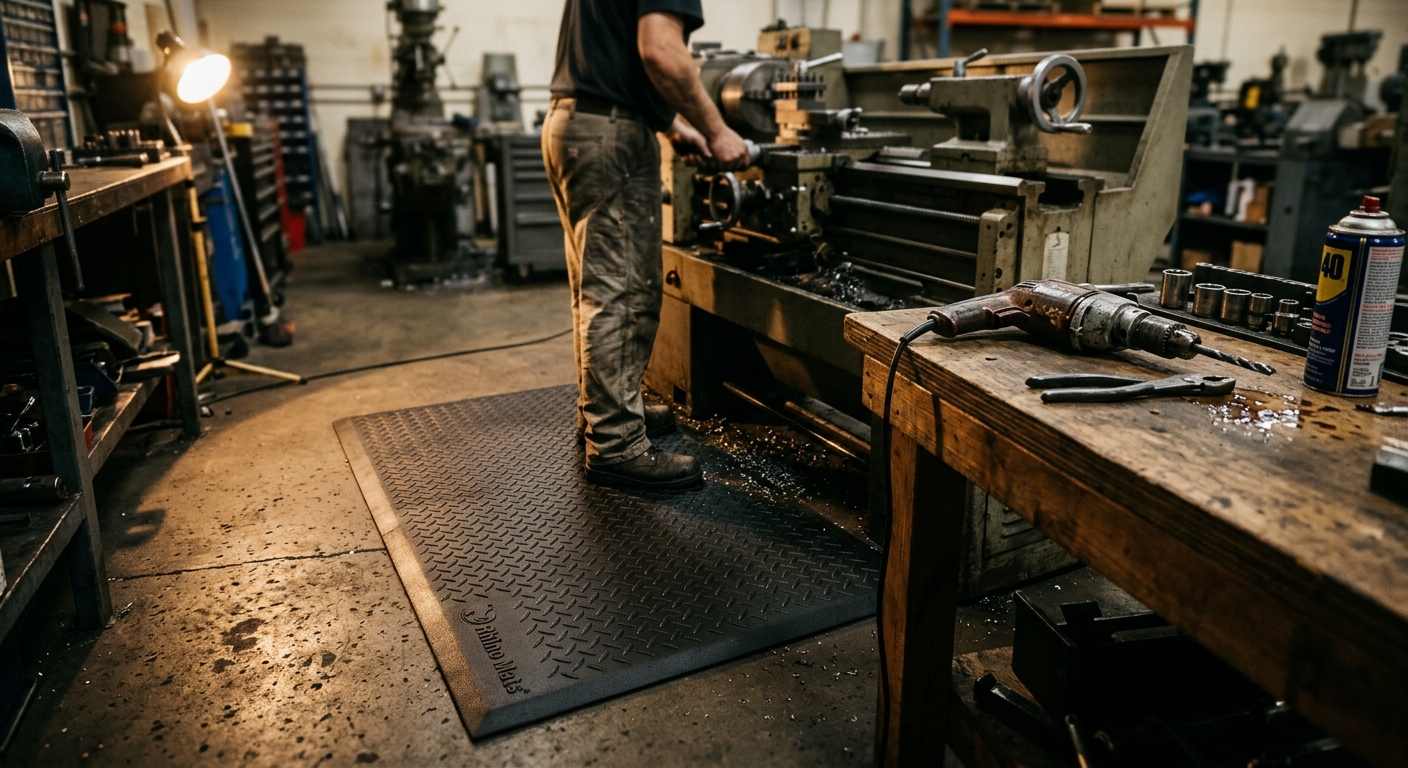
Rubber diamond-plate mats are the standard for machine tool areas where oil, coolant, and metal chips are present. The raised diamond pattern keeps feet above fluid pooling, the nitrile rubber compound resists oil and most solvents, and the mat is heavy enough to stay in place under machine stand feet. For lathe, milling machine, and grinder areas, rubber diamond plate is the appropriate surface – foam mats absorb oils and become slip hazards.
- Pros: Oil and solvent resistant, raised diamond keeps feet above fluids, heavy stays in place, nitrile rubber durability
- Cons’:’Less comfortable than foam for sustained standing, harder to cut to size, heavier to move
Duck Brand Heavy Duty Floor Protector – Best for Workbench Areas
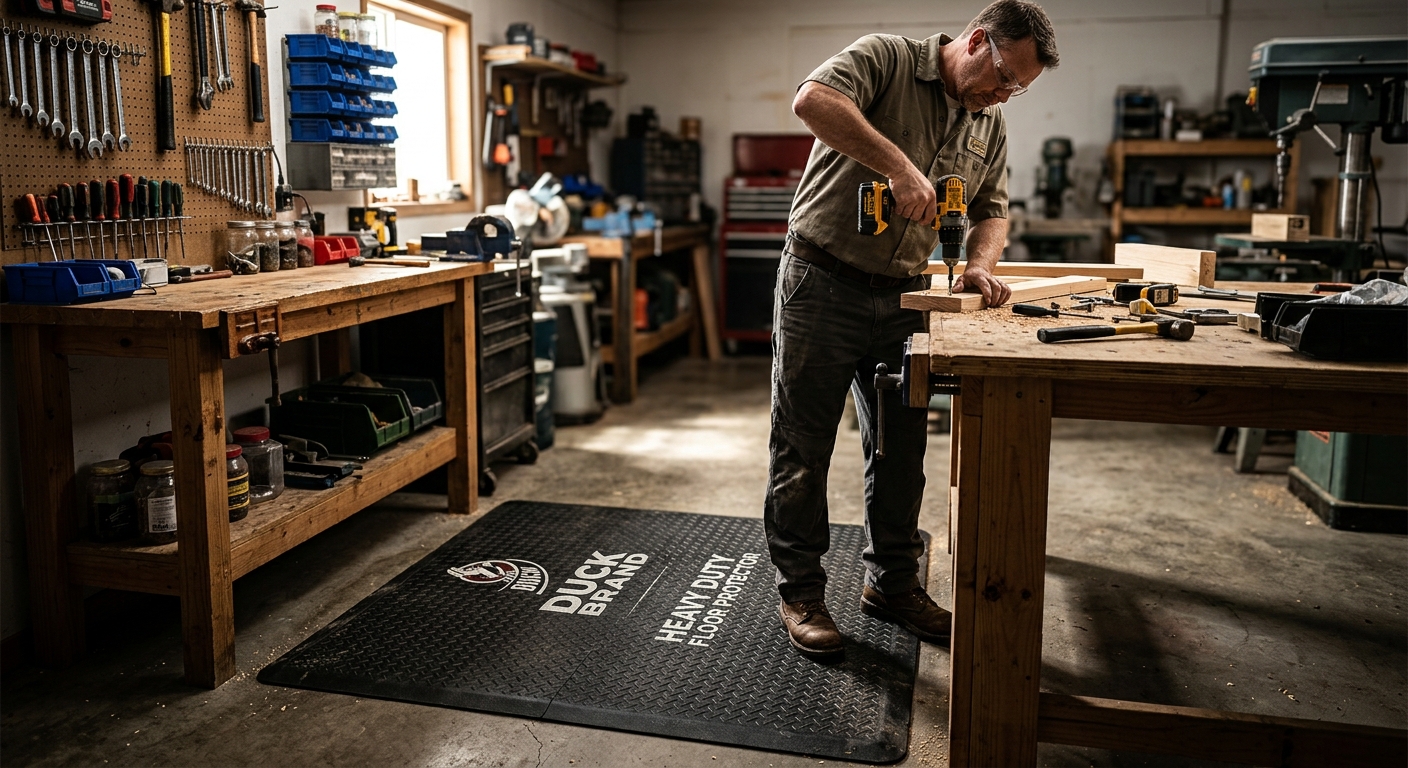
Vinyl runner mats provide a softer alternative to rubber in areas where oil isn’t an issue. The cleated bottom grips concrete without sliding, the cushioned surface provides fatigue relief, and the 2.5-foot width covers a workbench station area. For woodworking bench areas where you’re standing for long periods doing hand work, a vinyl runner is comfortable and easy to clean of sawdust.
- Pros: Cushioned vinyl, cleated back grips concrete, easy sawdust cleanup, comfortable for sustained standing
- Cons’:’Not oil-resistant (absorbs oils that contact surface), less durable than rubber under heavy traffic
Sky Solutions Anti-Fatigue Mat Comfort Cushion – Best for Concrete Garage
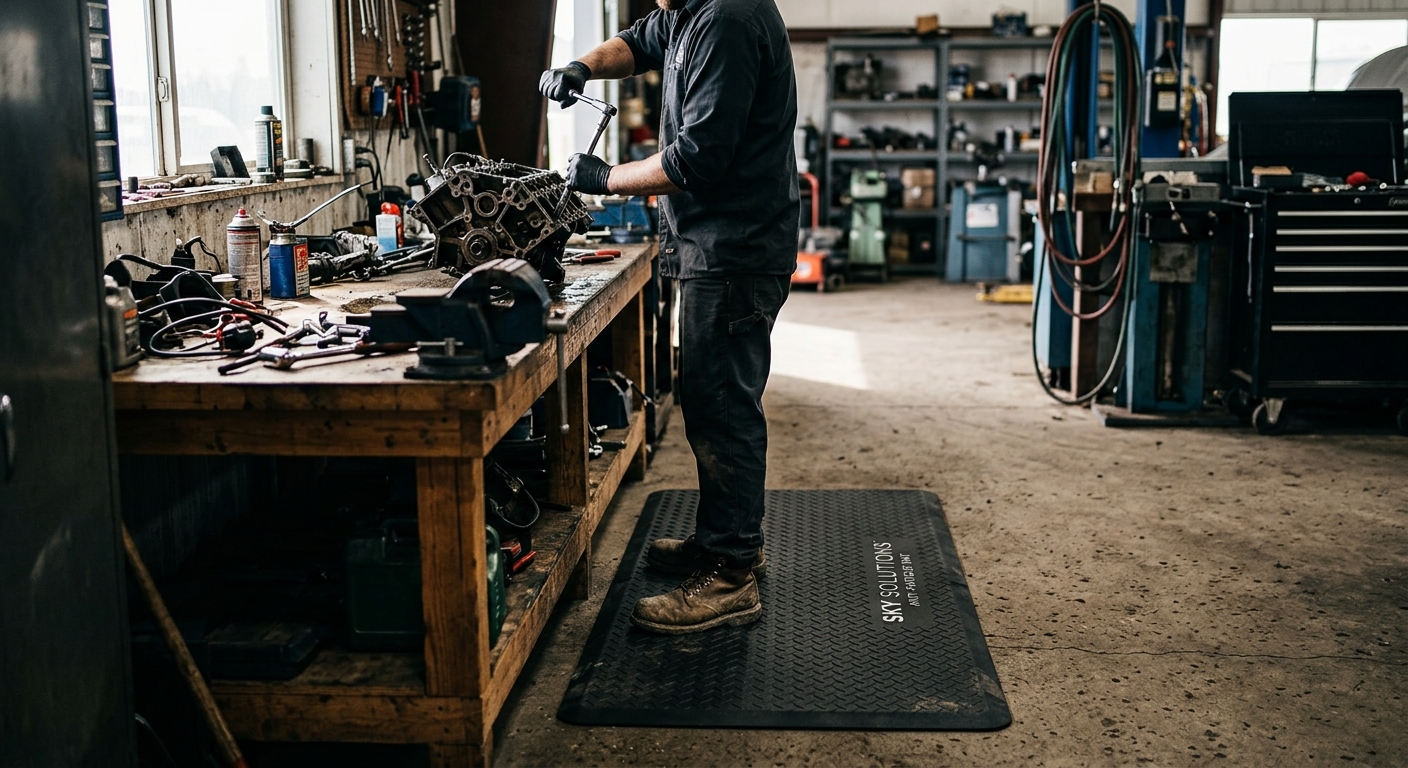
Sky Solutions’ thick 3/4-inch anti-fatigue mats are the most reviewed option for home garage and workshop use. The density is adequate for sustained standing, the non-slip bottom prevents sliding, and the tapered edges reduce trip risk. The closed-cell foam structure resists oil spills from surface contact, though sustained oil soaking will still penetrate over time. At an accessible price and available in multiple sizes, these are the practical recommendation for most home workshop setups.
- Pros: Popular and proven, 3/4-inch thickness, non-slip back, tapered edges, multiple sizes available
- Cons’:’Foam compresses faster than rubber, surface oil resistance limited to spills (not soaking)
Frequently Asked Questions
How thick should an anti-fatigue mat be? 3/4 inch is the sweet spot for most workshop use – thick enough for real fatigue reduction, firm enough to stand on without instability. Thicker foam (1 inch +) can feel unstable under foot during active work. Thinner than 1/2 inch provides minimal benefit.
Can anti-fatigue mats go under a workbench? Yes – position the mat where you actually stand, not under the bench legs. The mat should cover your standing area completely. Leave a gap at the bench base so the bench legs sit on concrete for stability rather than on the mat (which could compress unevenly).
How do I keep anti-fatigue mats from sliding? For foam mats: double-sided carpet tape at corners, or rubber gripper tape. For rubber mats: they’re typically heavy enough to stay in place. Avoid waxed concrete surfaces – even rubber mats slide on wax.
Do anti-fatigue mats actually help? Yes – controlled studies show reductions in lower back pain, leg fatigue, and foot discomfort with anti-fatigue mats vs bare concrete. The effect is most significant for sustained standing over 2 hours. For intermittent work, the benefit is reduced but still present.
Bottom Line
EVA foam 3/4-inch anti-fatigue mats earn Best Overall for most workshop standing areas – the fatigue reduction at workbenches and assembly areas is immediate and significant. For machine tool areas with oil and coolant exposure, use rubber diamond-plate mats instead. Full garage coverage with interlocking tiles is the most versatile solution for a garage that serves multiple purposes. Your feet and back will thank you within the first week.
Affiliate Disclosure: DIY Arsenal participates in the Amazon Associates Program and other affiliate programs. When you purchase through links on this site, we may earn a small commission at no additional cost to you. We only recommend products we have personally tested and genuinely believe in.