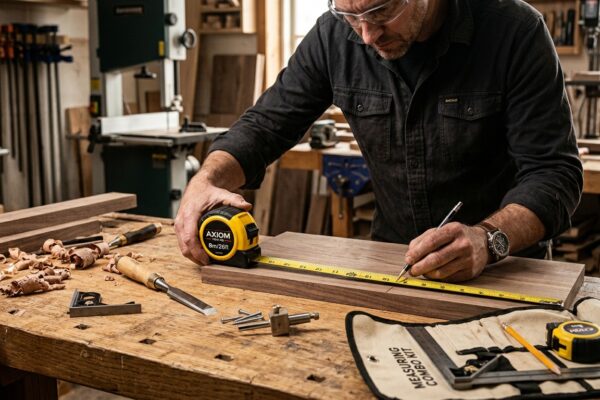
Best Angle Finders and Bevel Gauges for Accurate Miter and Bevel Cuts
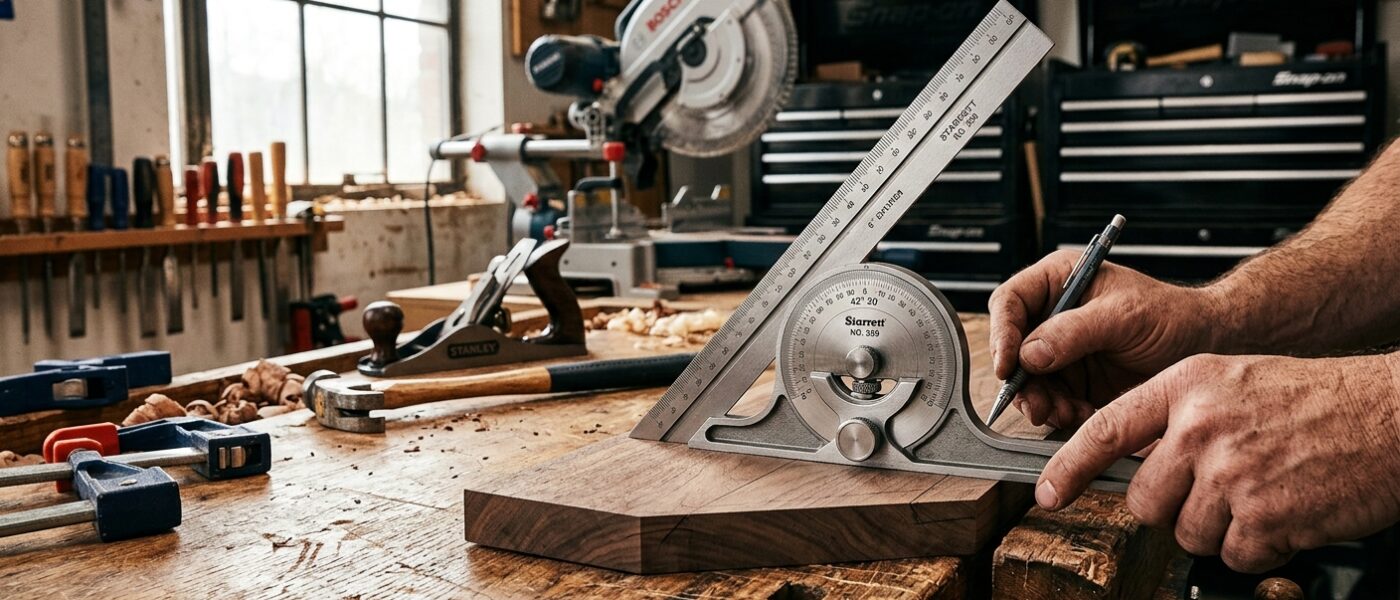
General Tools 822 reads angles between any two surfaces instantly without calculating or converting
Angle finders and bevel gauges solve one of the most common DIY frustrations: cutting the correct angle to fit an existing condition. When you’re matching baseboard miters at a non-90-degree corner, fitting stair stringers, or duplicating a roof pitch, you need to measure the actual angle – not guess or calculate from drawings. This guide covers the best tools for angle measurement and transfer.
How We Evaluate Angle Finders
We tested angle finders for measurement accuracy, display readability, locking mechanism quality, range of angles covered, ease of transferring angle to saw settings, and overall build durability. A bevel gauge that slips after locking or a digital angle finder with 2-degree error margins defeats the purpose of measuring angles in the first place.
Top Picks
Starrett 359 Bevel Protractor – Best Overall
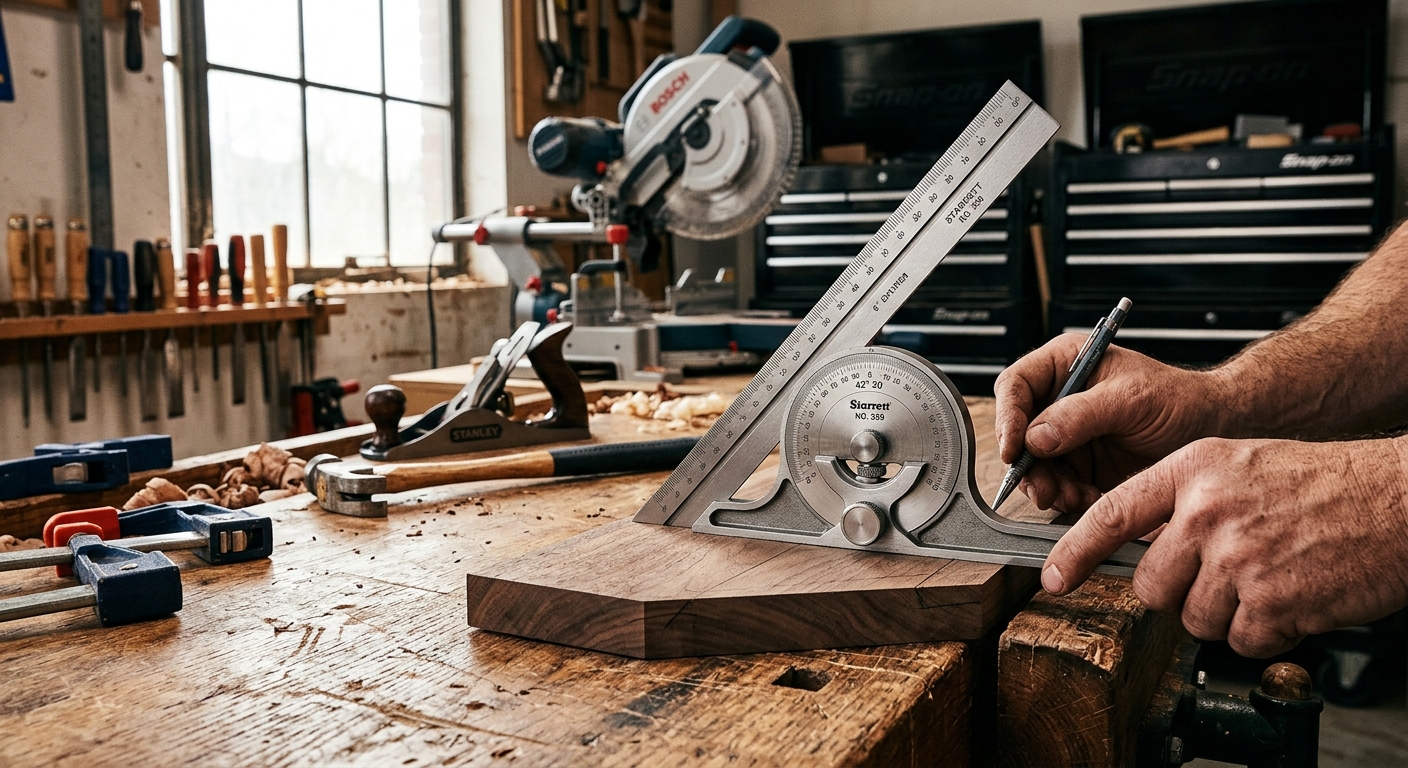
Starrett’s cast iron bevel protractor reads angles from 0 to 180 degrees with a vernier scale that resolves to 5 arc-minutes (1/12 of a degree). The blade locks securely with the lever on the head, and the precision-ground reference surfaces register accurately against workpiece edges and faces. The blade is graduated in 1/16-inch increments for simultaneous linear layout. Machinist quality at a price serious woodworkers can justify.
- Pros: Machinist precision, 5 arc-minute resolution, secure blade lock, 0-180 degree range, blade doubles as ruler
- Cons: Expensive, requires reading a vernier scale (learning curve), overkill for rough carpentry
Wixey WR300 Digital Angle Gauge – Best Digital for Table Saws
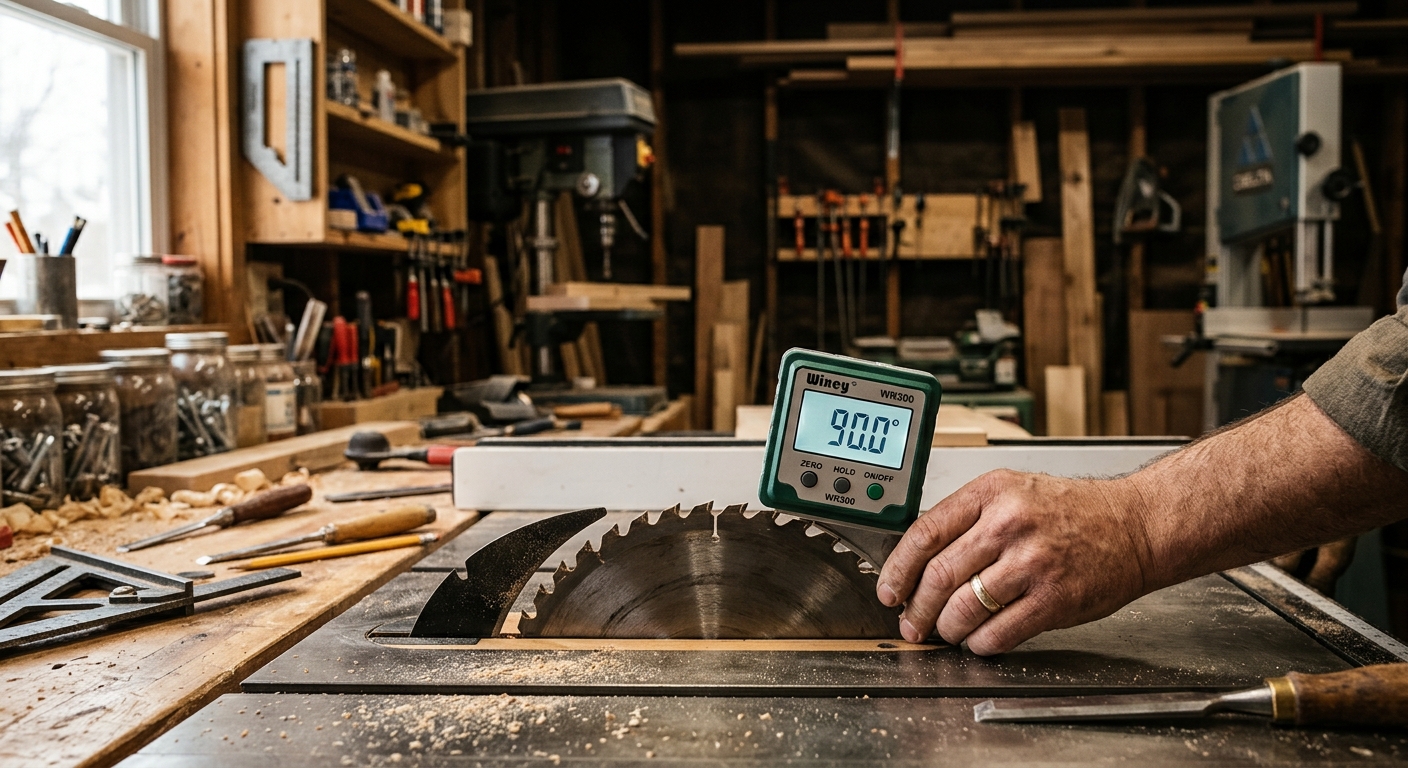
The Wixey WR300 magnetic digital angle gauge attaches to any magnetic surface – table saw blades, miter saw fences, router tables, band saw tables – and displays the angle digitally to 0.1 degrees. It’s the fastest way to set blade tilt accurately. Calibrate it on a reference surface, transfer to your blade, and you’re cutting. Takes 5 seconds per bevel angle setup instead of 30 seconds with the saw’s built-in scale.
- Pros: Magnetic attachment, 0.1-degree digital display, fast setup, works on any machine with magnetic surfaces
- Cons’:’Battery dependent, magnetic base can shift if bumped, not useful for measuring angles on workpieces directly
General Tools 822 Digital Angle Finder – Best for Measuring Work Angles
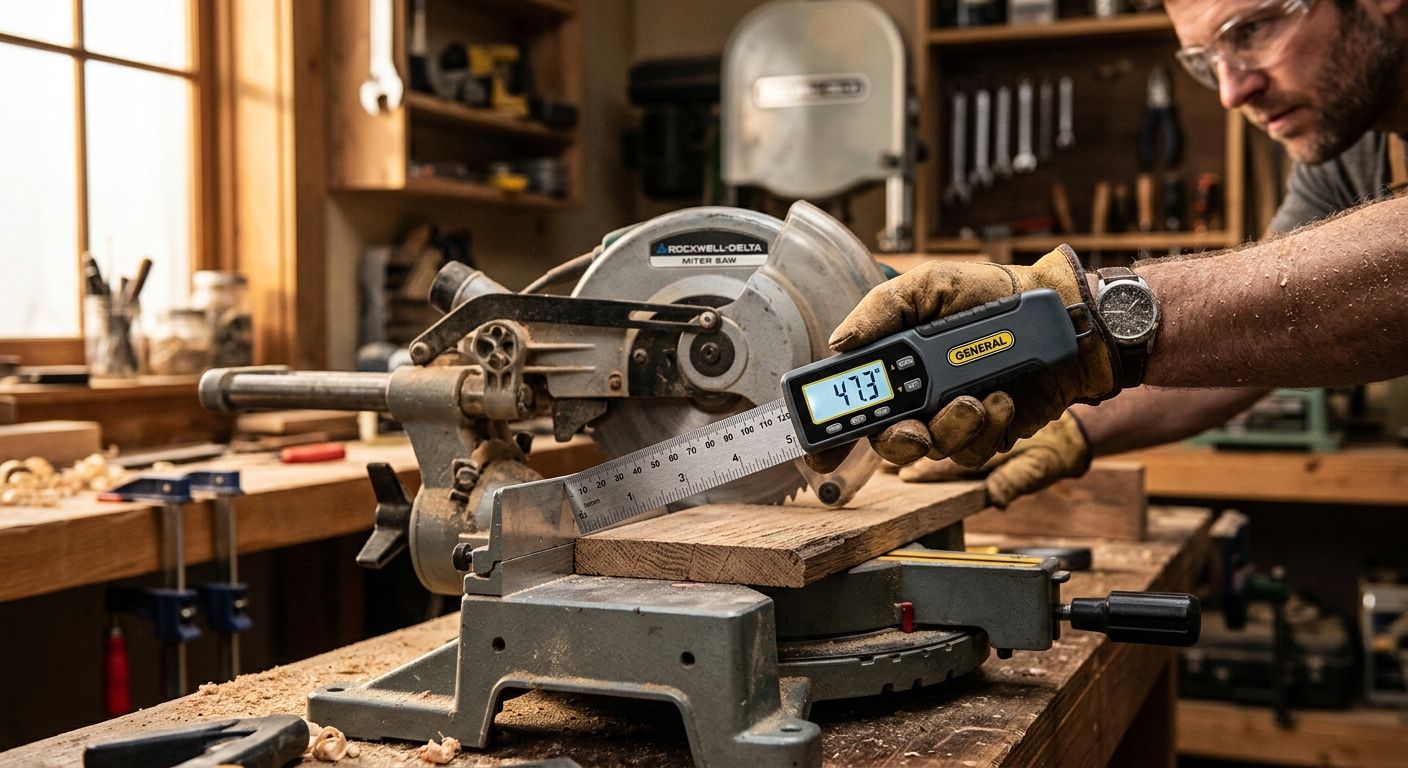
General Tools’ digital angle finder has two articulating blades that open to any angle while the digital display shows the reading in degrees. You place the blades against the surfaces forming the angle – an inside corner, a roof pitch, a stair angle – and read the result directly. The angle hold button locks the reading so you can transfer it to your saw without the display shifting. Simple, practical, and accurate to 0.2 degrees.
- Pros: Direct angle reading between any two surfaces, hold button, 0.2-degree accuracy, simple interface, no reference surface needed
- Cons’:’Not as precise as Starrett bevel protractor, hinge can loosen over time, battery needed
Shinwa Sliding T-Bevel – Best Manual Bevel Gauge
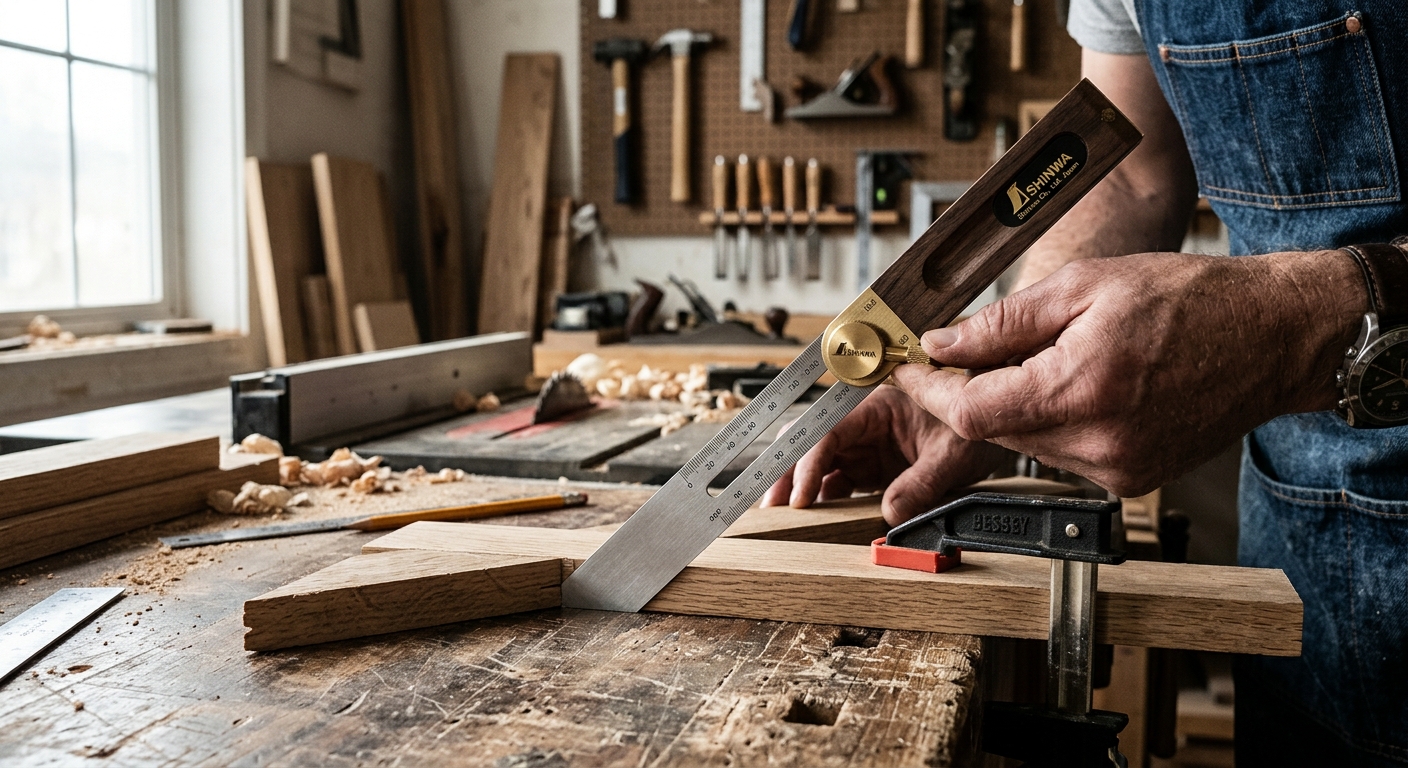
A sliding T-bevel (also called a bevel gauge or false square) is the traditional tool for transferring an existing angle to a saw setting. You set the blade against the angle on your workpiece, lock it, carry it to the saw, and set the blade or fence to match. Shinwa makes precise, smooth-locking T-bevels with rosewood handles that woodworkers trust for joinery layout. Simple, reliable, and requires no batteries or displays.
- Pros: Direct angle transfer without reading numbers, no batteries, comfortable rosewood handle, smooth lock, durable
- Cons: Can’t display the exact angle in degrees, requires careful transport without disturbing the setting
Calculated Industries 7434 Scale Master – Best for Complex Angle Calculation
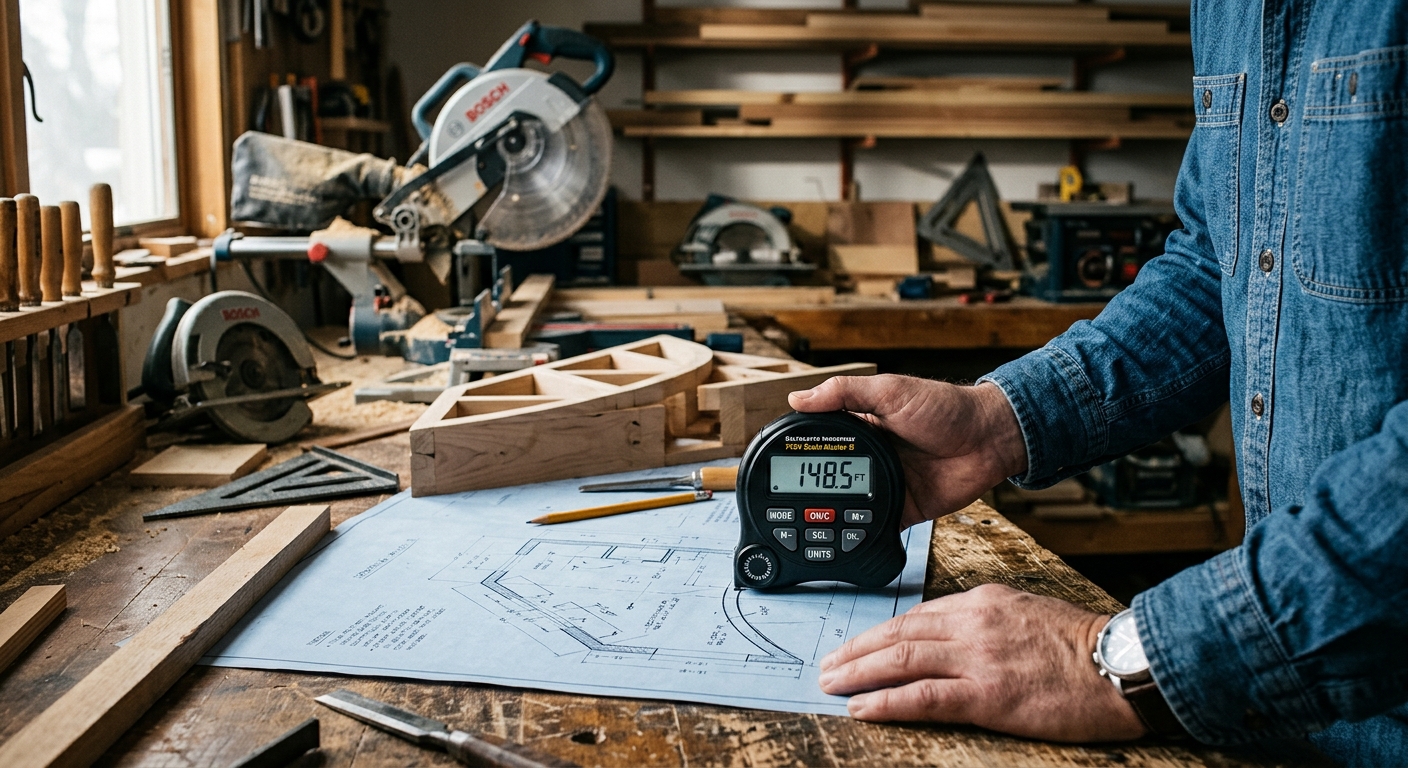
When you need to calculate compound miter angles – the combination of miter and bevel required to cut crown molding at a non-90-degree corner – the Scale Master handles the math. Enter the corner angle and spring angle of the crown, and the calculator returns the exact miter and bevel settings for your saw. Invaluable for crown molding installation where trial-and-error wastes expensive molding.
- Pros: Solves compound miter problems instantly, handles crown molding calculations, various construction calculations built in
- Cons’:’Specialized tool, expensive for what it does, smartphone apps can replicate much of the functionality for free
Frequently Asked Questions
How do I find the angle of an existing corner? Place a T-bevel blade against one surface, swing the other blade to contact the second surface, lock, and read the angle with a protractor. Or use the General Tools digital angle finder directly – much faster.
What’s the difference between miter angle and bevel angle? Miter angle rotates the cut in the horizontal plane (left-right tilt of the saw table). Bevel angle tilts the cut in the vertical plane (the saw blade tilt). Crown molding requires both simultaneously (compound miter).
How do I transfer a bevel gauge setting to my miter saw? Hold the T-bevel against the saw’s fence and adjust the miter angle until the bevel blade lies flat against the fence face. Lock the saw at that setting. This gives you the exact angle without converting to degrees.
Are digital angle finders accurate? Quality digital finders (Wixey, General Tools) are accurate to 0.1-0.2 degrees – better than most craftspeople can detect in a fit-up. Cheap digital finders can be off by 1 degree or more, which is visible at any length.
Bottom Line
The General Tools 822 earns Best Overall for everyday angle measurement – place the blades against any two surfaces and read the angle immediately. Add a Wixey WR300 if you use a table saw or band saw regularly. The Starrett bevel protractor is the precision choice for woodworkers doing demanding joinery. Together, these three tools solve every angle challenge from stair layout to crown molding installation.
Affiliate Disclosure: DIY Arsenal participates in the Amazon Associates Program and other affiliate programs. When you purchase through links on this site, we may earn a small commission at no additional cost to you. We only recommend products we have personally tested and genuinely believe in.