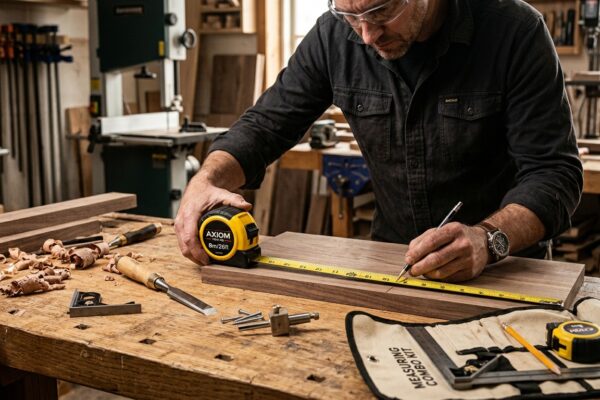
Best Speed Squares and Digital Protractors for Framing and Layout
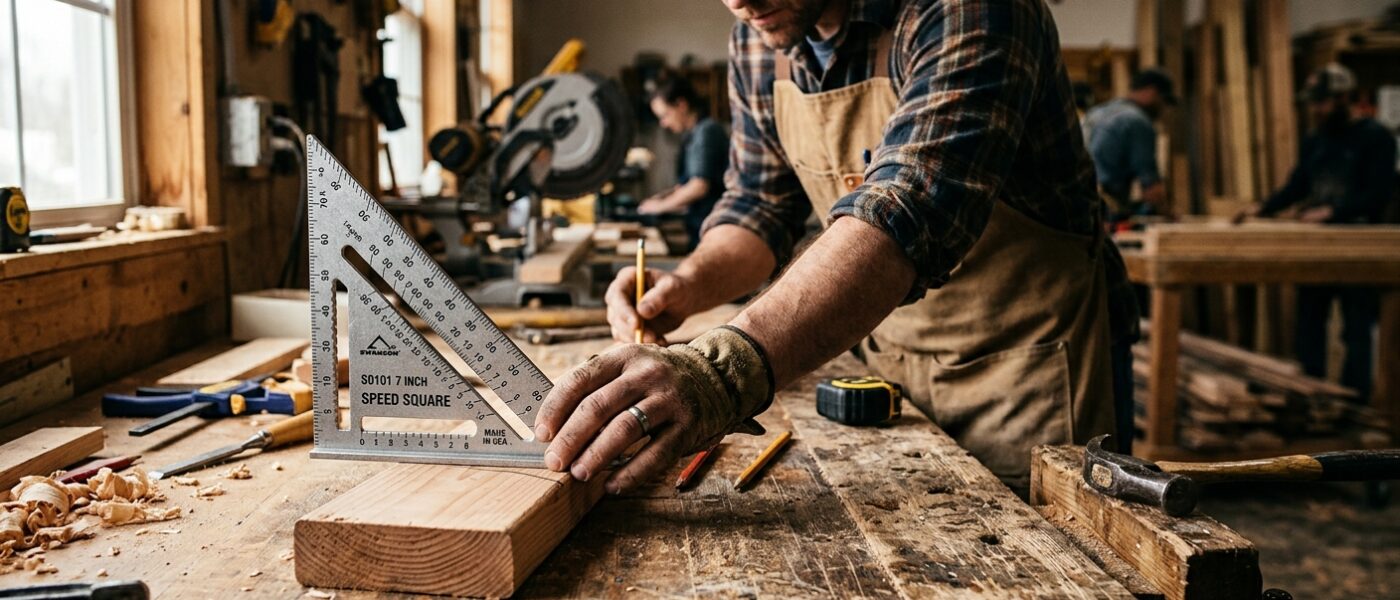
Swanson Speed Square is the century-old standard that every framer and DIYer reaches for daily
Speed squares, framing squares, and layout rules serve overlapping but distinct purposes – understanding which tool to reach for and when is the mark of a confident DIYer. This guide covers the remaining essential layout tools: speed squares in various sizes, digital protractors, and the slope finders that make roof and drainage work significantly faster. Together they complete a comprehensive measuring toolkit.
How We Evaluate Speed Squares and Protractors
We tested speed squares for true 90-degree and 45-degree accuracy, ease of use as a saw guide, degree scale accuracy and readability, durability of material (aluminum vs plastic vs stainless), and additional features. For digital protractors, we checked accuracy, display readability, and whether the locking mechanism holds under measurement transfer. Every square eventually gets dropped – durability is a real consideration.
Top Picks
Swanson S0101 7-Inch Speed Square – Best Overall Speed Square

The original Swanson Speed Square has been made in the USA since 1925 and remains the job-site standard. The 7-inch aluminum triangle marks perpendicular and 45-degree lines instantly, the pivot point holds against board edges for consistent marks, and the degree scale reads hip/valley rafter pitches and common rafter layouts. The lip on one side registers against the board edge for accurate crosscut guiding. A lifetime tool for $14 – no workshop is complete without one.
- Pros: Made in USA, rafter pitch scale, 90 and 45 degree marks, saw guide function, extremely durable, inexpensive
- Cons: Limited to 90 and 45 degree marks without the degree scale, only 7-inch size standard
Swanson T10777 12-Inch Speed Square – Best Large Speed Square
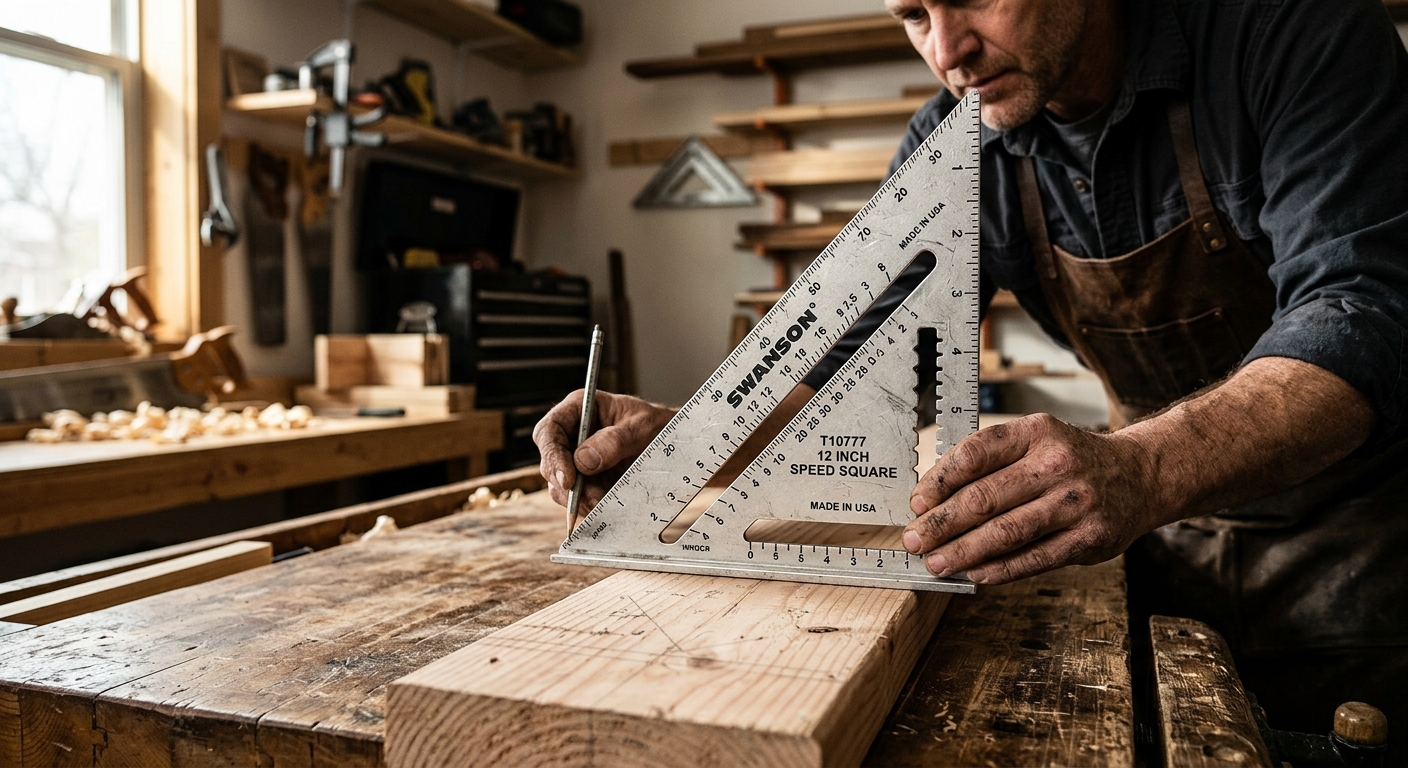
The 12-inch speed square handles wider stock than the 7-inch model – marking across a full 2×12 with the edge registration, guiding longer saw cuts more accurately, and scribing lines on sheet goods more efficiently. The extra reach is particularly useful for rafter layout on wide lumber and for marking large tiles. Aluminum construction, same rafter tables as the 7-inch, same lifetime reputation.
- Pros: Wider reach for large stock, same rafter table capability, aluminum, accurate 90 and 45 degrees, saw guide
- Cons’=>’Heavier and bulkier than 7-inch, redundant if you own a good framing square
Empire 2791 Digital Protractor/Level – Best Digital Speed Square
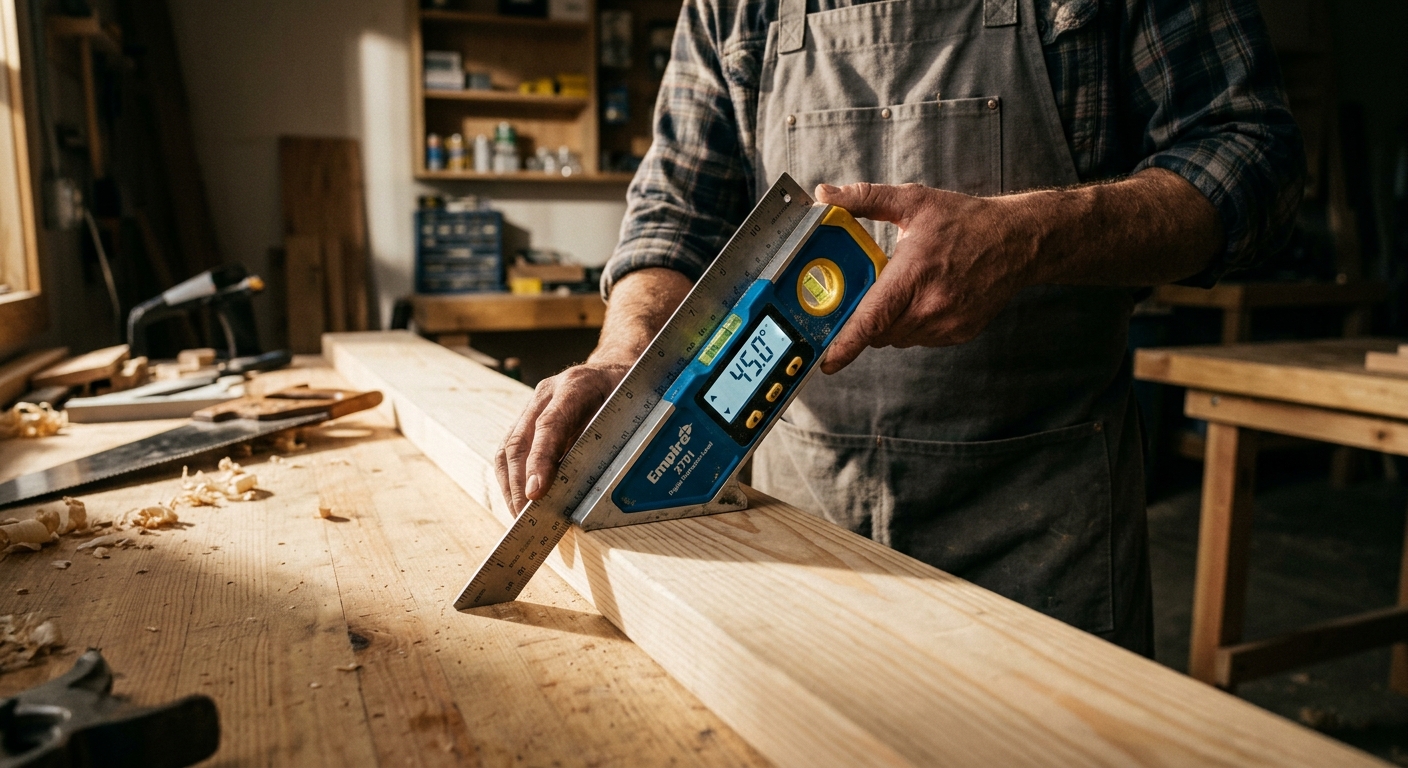
Empire’s digital protractor combines the speed square function with a digital angle display that reads to 0.1 degrees. You get the fast edge-registration of a speed square plus precise angle measurement for any cut between 0 and 90 degrees. The backlit display works in dark job sites, and the degree hold button locks the reading for transfer. For trim carpenters who cut angles at non-standard degrees frequently, this tool saves time and math.
- Pros: Digital angle display (0.1 degree), speed square function, backlit, hold button, versatile
- Cons’:’Battery required, digital display can malfunction in cold, more expensive than standard speed square
Johnson Level 750M Digital Pitch Gauge – Best Roof Pitch Gauge
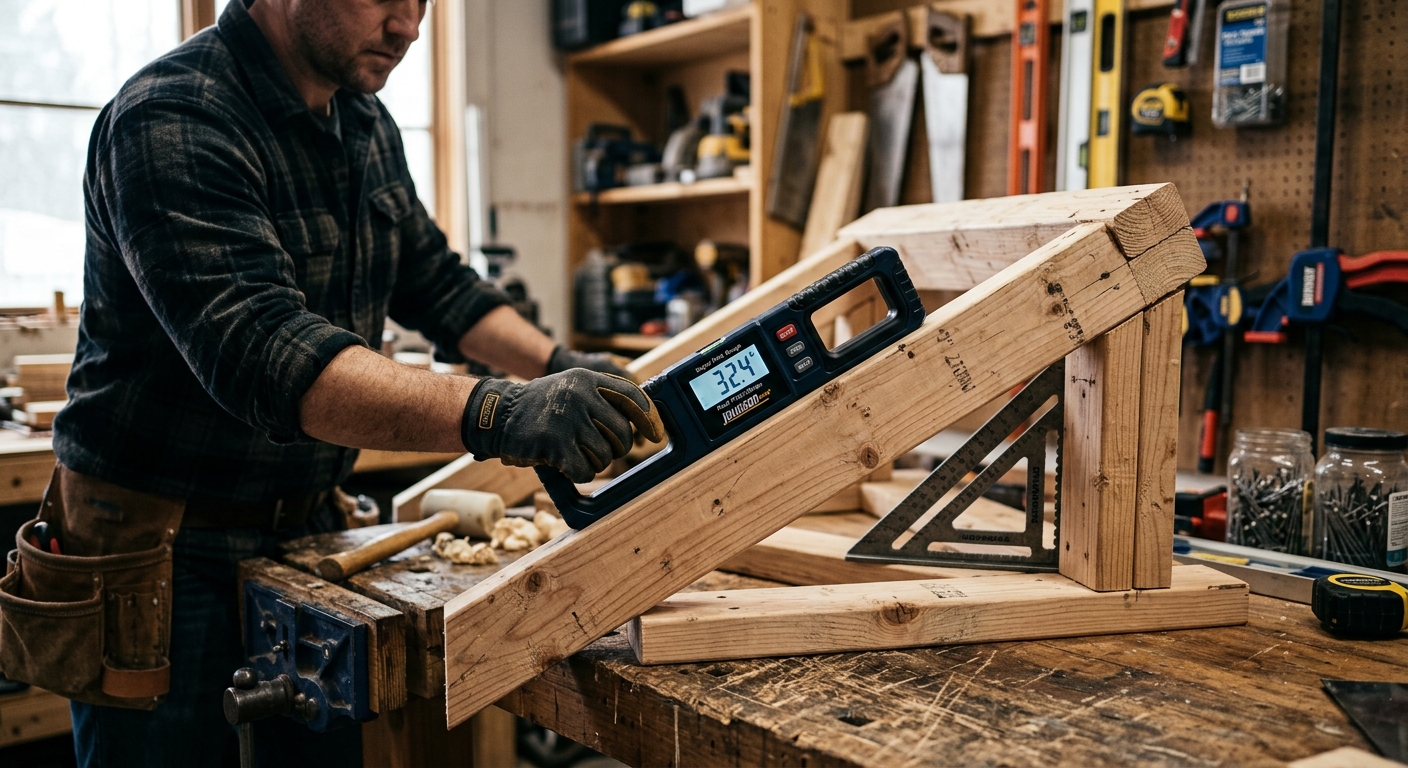
Johnson’s digital pitch gauge measures roof pitch, slope, and grade directly in the units you need: pitch (rise in 12), angle in degrees, or slope percentage. Place it on a rafter, truss, or roof surface, and the digital display shows the pitch reading immediately. Essential for cutting matching rafters, installing roof drainage systems, and calculating rafter lengths. Far faster than calculating pitch from a tape and calculator.
- Pros: Reads directly in pitch/12, degrees, and percent slope, magnetic base sticks to metal, fast and accurate
- Cons’:’Specialized use case, expensive for occasional use, battery dependent
Starrett 36-Inch Steel Rule – Best Long Layout Rule
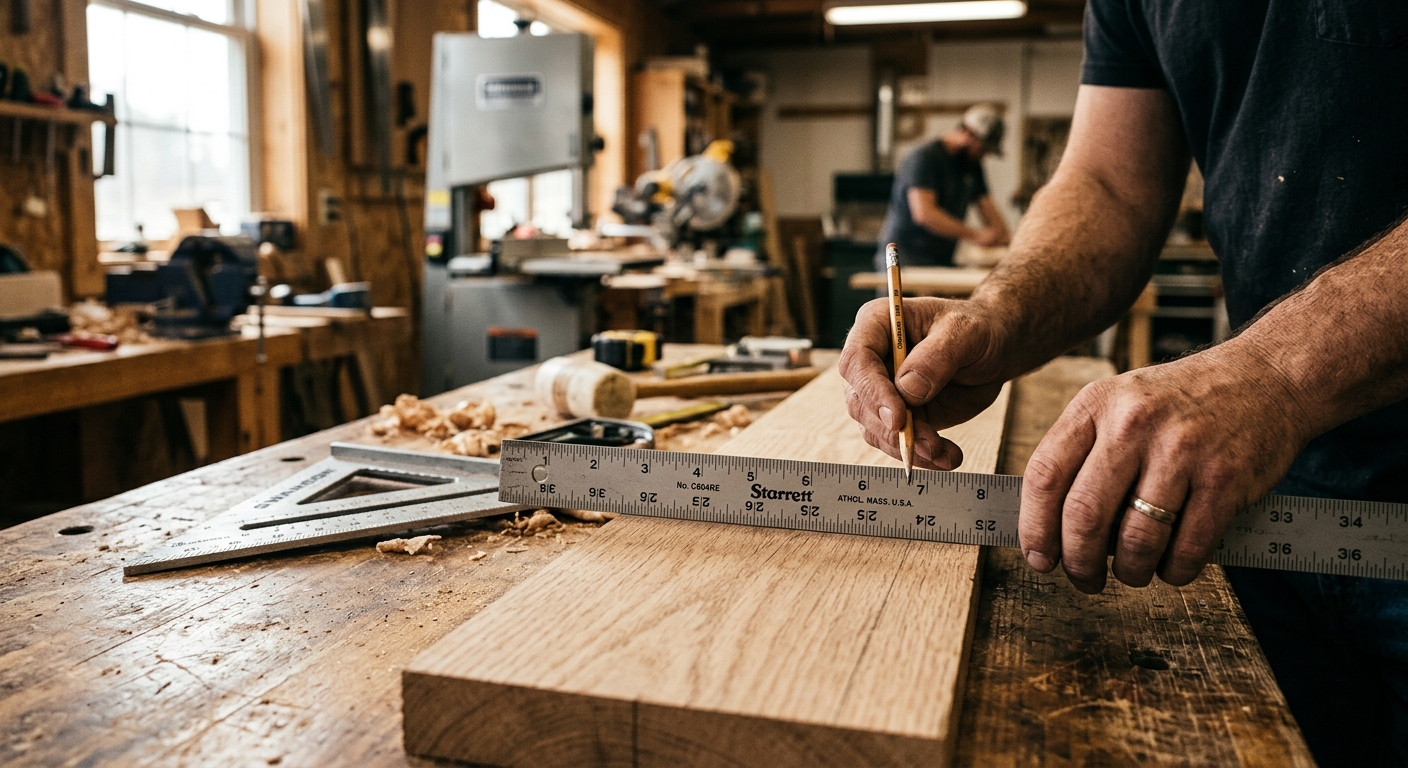
When you need a perfectly straight edge for layout that’s longer than a combination square blade but more precise than a tape measure, a Starrett steel rule is the answer. The 36-inch model provides a rigid, accurate straight edge for scribing long lines on wide stock, checking flatness of surfaces, and ruling lines in metalworking. Graduated in 64ths on one side and 32nds on the other, the rule is accurate to ±0.003 inch over 36 inches.
- Pros: Dead-straight over 36 inches, precise graduation, flexible enough to check surface flatness, durable hardened steel
- Cons’:’Specialized (not for rough layout), must be kept from rust, expensive for a ruler
Frequently Asked Questions
How do I read rafter pitch with a speed square? Hook the pivot point over the rafter edge and rotate the square until the rafter’s top surface aligns with the pivot’s rotation point. Read the degree scale at the edge – this converts directly to common rafter pitch tables printed on the square body.
Can I use a speed square as a protractor? The degree scale along the hypotenuse lets you mark any angle from 0 to 90 degrees. Pivot the square on a board edge, align to the desired degree mark, and scribe. Less convenient than a combination square for this purpose, but it works.
What’s the difference between roof pitch and roof angle? Roof pitch is expressed as rise per 12 inches of run (4/12, 6/12, etc.). Roof angle is the same measurement in degrees. A 6/12 pitch equals approximately 26.6 degrees. Most roofing materials specify pitch; most trigonometry uses degrees.
How accurate does a speed square need to be? For framing and rough carpentry, ±1/32 inch over 7 inches is more than adequate. For finish work and fine joinery, use a precision combination square or machinist’s square instead. Speed squares are fast-layout tools, not precision instruments.
Bottom Line
The Swanson S0101 earns Best Overall for its unmatched combination of simplicity, durability, and utility at a price that makes it a no-brainer for every tool kit. Every carpenter, framer, and DIYer needs a 7-inch speed square – it’s the single most used layout tool on the job site day after day. Supplement with the Johnson pitch gauge for roof work and the Empire digital model when precise angle marking matters.
Affiliate Disclosure: DIY Arsenal participates in the Amazon Associates Program and other affiliate programs. When you purchase through links on this site, we may earn a small commission at no additional cost to you. We only recommend products we have personally tested and genuinely believe in.