Best Pipe Insulation – Foam and Fiberglass for DIY
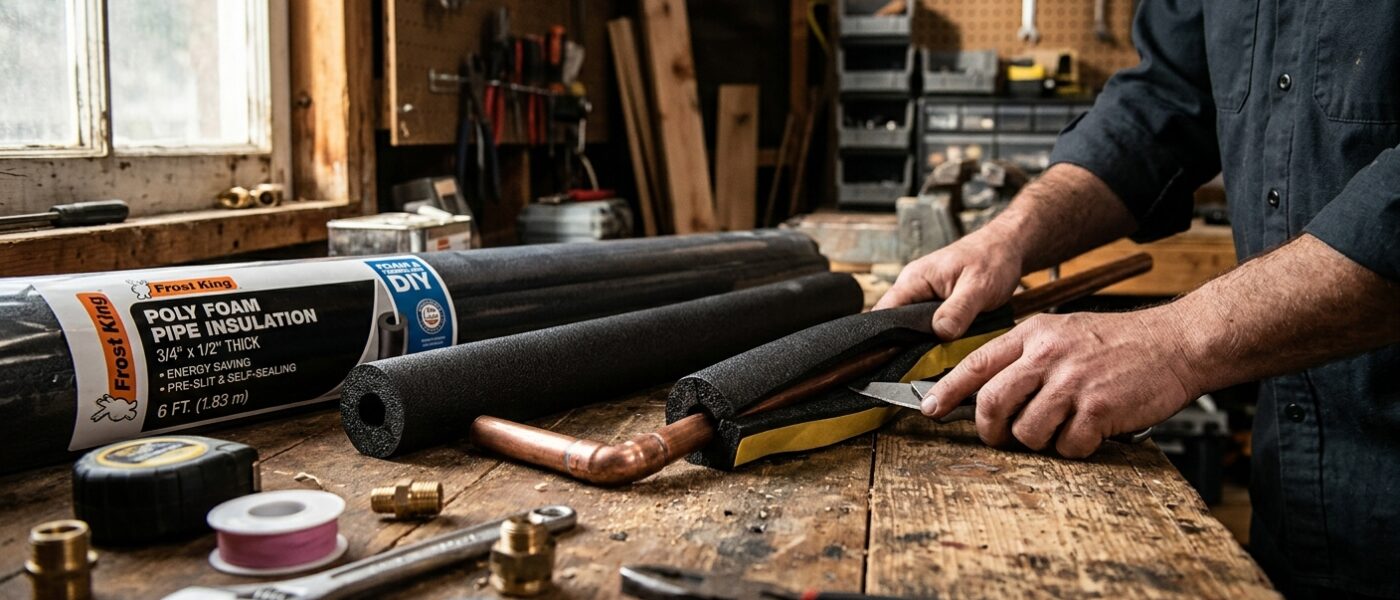
Match foam wall thickness to your expected low temperature and cover fittings with pipe wrap tape — the fittings are where DIY freeze-protection installations most often fail.
As an Amazon Associate, we earn from qualifying purchases.
Stop Freezing Pipes and Sweating Supply Lines
Pipe insulation serves two distinct purposes that homeowners often conflate: freeze protection for pipes in unheated spaces, and condensation prevention for cold water supply lines in humid environments. The right insulation material for each job differs – foam sleeve insulation handles most residential applications, but extreme cold or high-temperature pipes require fiberglass or rubber foam with better thermal resistance. Getting the wall thickness and material right is what separates effective insulation from a cosmetic fix that fails at -10 degrees F.
Key Features to Look For
- R-value and wall thickness: Foam sleeves come in 3/8″, 1/2″, and 3/4″ wall thicknesses. For freeze protection in spaces that drop below 20 degrees F, 3/4″ wall foam or a fiberglass wrap provides significantly better protection than thin sleeves. Match thickness to your actual expected low temperature.
- Self-sealing slit: Pre-slit foam tubes with self-sealing adhesive make installation without tools possible – open the slit, slip over the pipe, press closed. Non-adhesive slit tubes need tape to seal the seam, which adds labor and a potential gap in the insulation envelope.
- Material type: Polyethylene foam is the standard for cold water lines and freeze protection. NBR/PVC rubber foam (like Armaflex) handles temperatures from -40 to 220 degrees F and is the right choice for hot water, chilled water, and refrigerant lines. Fiberglass wraps handle very high temperatures (steam pipes) but require protective jacket tape.
- Pipe diameter accuracy: Foam insulation must match the nominal pipe size precisely – too loose and it won’t seal at fittings; too tight and it won’t slide into position. Measure actual pipe OD before purchasing.
- Length per package: Most residential foam comes in 6-foot sections. Full rolls (25-50 linear feet) are cost-effective for larger crawl space or attic insulation projects.
Top Picks
Frost King Foam Pipe Insulation
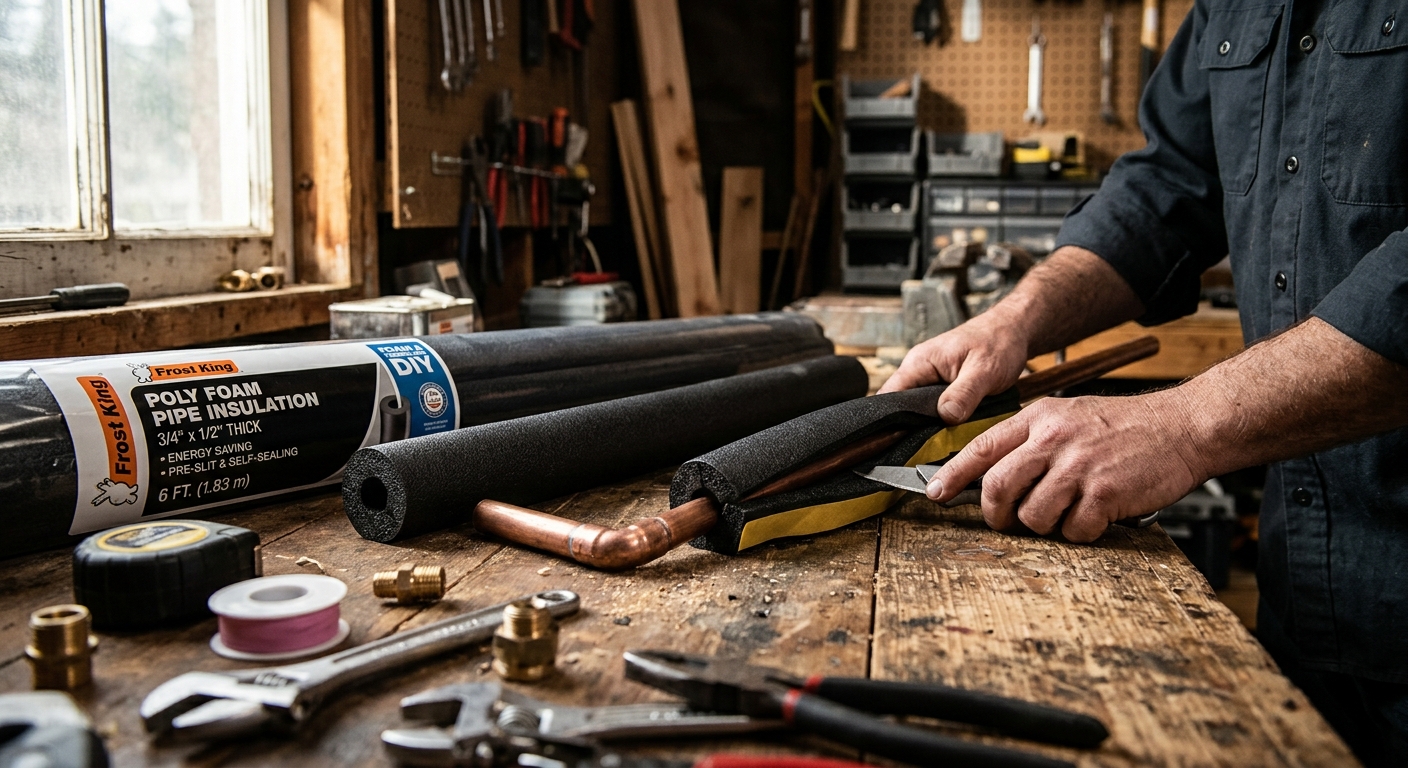
The most widely available residential pipe insulation, Frost King’s polyethylene foam sleeves cover 1/2″ through 1″ pipe in 3-foot and 6-foot sections. The self-sealing slit presses closed without tape in most applications. This is the right product for freeze protection on water supply pipes in garages, crawl spaces, and unconditioned attics. Available at every hardware and home center – easy to find for partial project purchases.
Armacell Armaflex AP Pipe Insulation
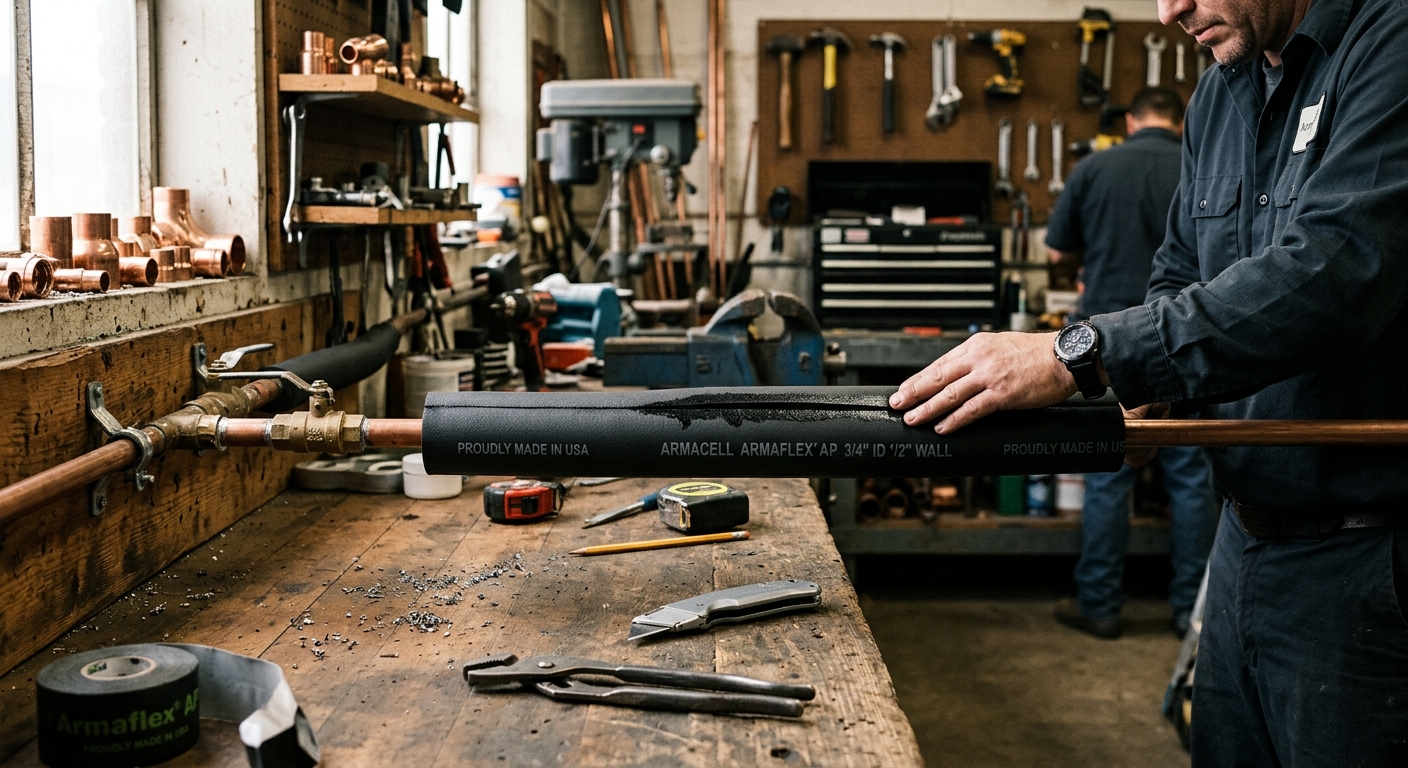
The professional standard for mechanical insulation, Armaflex’s closed-cell NBR/PVC foam handles temperature ranges that polyethylene foam can’t. The self-adhesive slit stays closed without additional tape and the material resists UV and moisture absorption better than polyethylene. More expensive than Frost King but the right choice for hot water recirculation lines, chilled water, and any application requiring long-term performance without degradation.
Thermwell Fiberglass Pipe Wrap
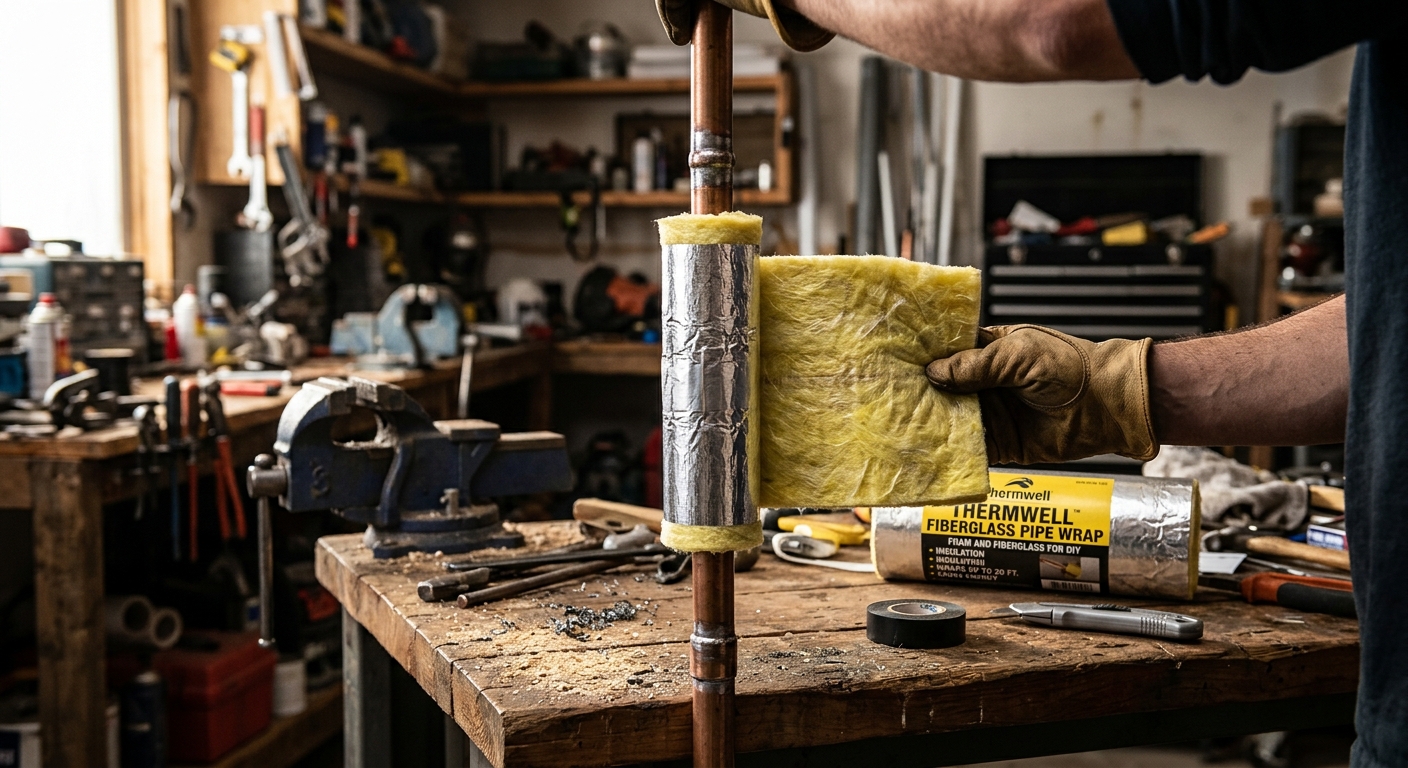
Fiberglass wrap with foil jacket tape for high-temperature applications – furnace flue connections, steam pipes, and hot water heater flue runs. The wrap is 1″ thick and covers approximately 2.5 square feet per linear foot of pipe. Requires gloves and respiratory protection during installation (glass fibers). Use this where foam would melt, nowhere else.
M-D Building Products Self-Sealing Pipe Wrap Tape
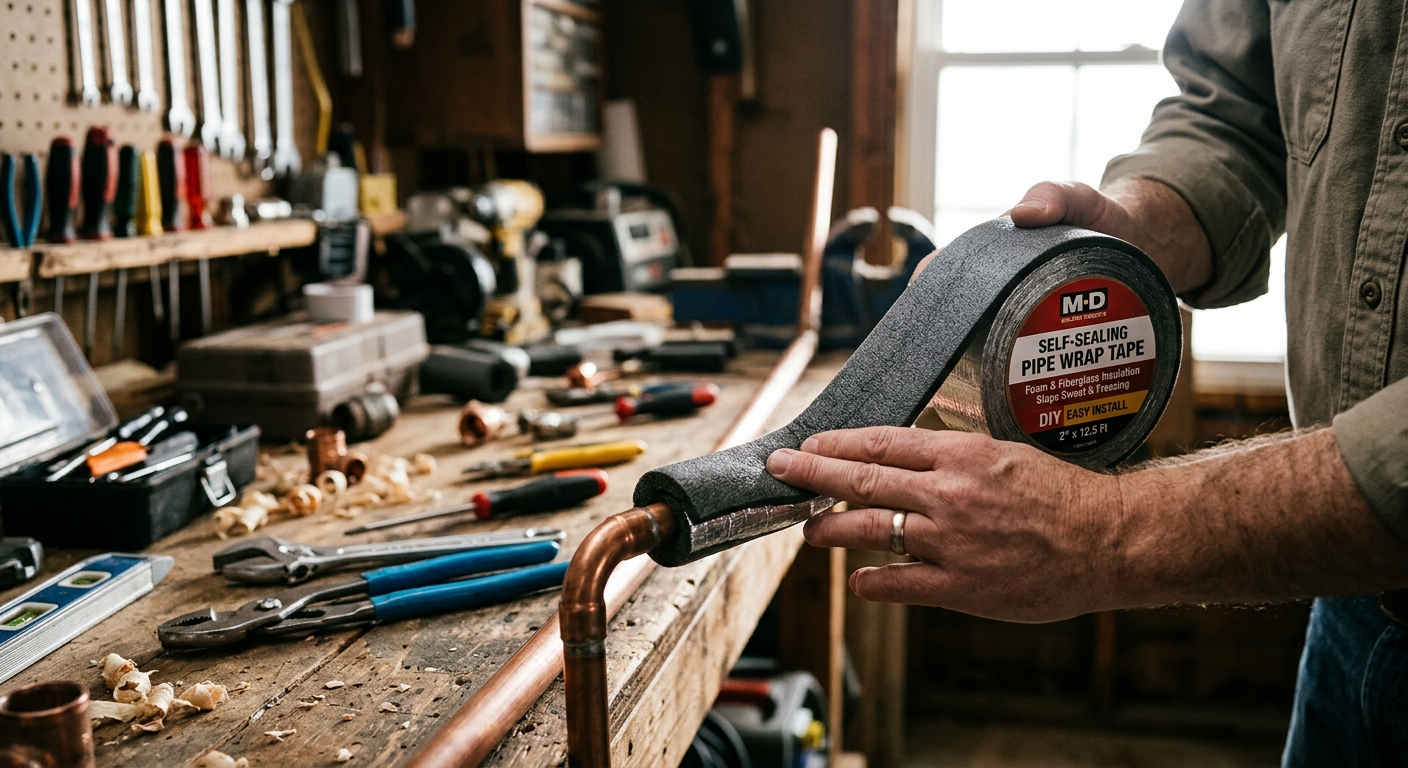
A foam-backed tape for insulating pipe bends, tees, and valve bodies where sleeve insulation won’t conform. Stretches to wrap irregular shapes and creates a continuous insulation envelope at the fittings that sleeve insulation leaves exposed. Use this in combination with sleeve insulation to cover all the spots where freeze protection matters most – uninsulated fittings are the weak points in most DIY installations.
Frequently Asked Questions
At what temperature do pipes freeze?
Water in pipes begins to freeze when the air temperature surrounding them drops to 20 degrees F or below for an extended period. Pipes in exterior walls without insulation, crawl spaces, and unheated garages are most vulnerable. The combination of pipe insulation plus maintaining at least 55 degrees F in unconditioned spaces provides adequate protection during typical cold snaps.
Should I insulate hot water pipes to save energy?
Yes – insulating hot water pipes from the water heater to the first few fixtures reduces standby heat loss and shortens wait time for hot water at faucets. The payback period on foam sleeve insulation is typically less than one heating season. This is one of the higher-ROI simple DIY energy projects available to homeowners.
How do I insulate pipes in finished walls?
Pipes inside finished walls are protected by the wall cavity’s air gap and any adjacent insulation, but they’re not easily accessed for additional insulation without opening walls. The better approach is ensuring exterior walls have adequate cavity insulation and that rim joists (where many pipes run) are sealed and insulated. Foam pipe wrap on accessible sections in mechanical spaces handles the high-risk areas without wall demolition.
Affiliate Disclosure: DIY Arsenal participates in the Amazon Associates Program and other affiliate programs. When you purchase through links on this site, we may earn a small commission at no additional cost to you. We only recommend products we have personally tested and genuinely believe in.