Best Pipe Cutters – Copper, PVC, and Steel
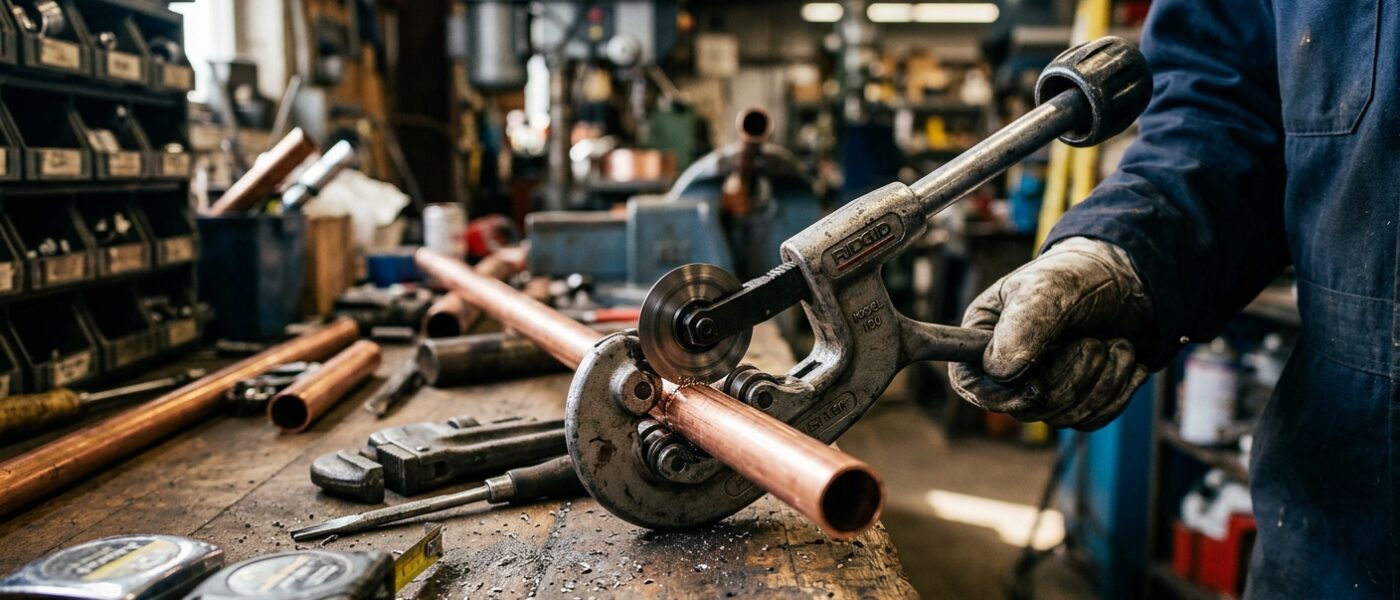
The Ridgid 32923 is the definitive copper pipe cutter for residential plumbing work; the Oetiker PEX cutter is essential for anyone working with modern PEX tubing systems.
As an Amazon Associate, we earn from qualifying purchases.
A pipe cutter produces a cleaner, squarer cut than a hacksaw in far less time, without the metal filings that a saw leaves inside the pipe. For copper, PVC, CPVC, and steel pipe, the right cutter for each material makes a visible difference in the quality of the joint – a square, clean cut is essential for solder joints, solvent welds, and compression fittings to seal correctly. This guide covers the cutters for each common pipe material and how to choose between them.
Types of Pipe Cutters
Rotary Pipe Cutters (Copper and Soft Metal)
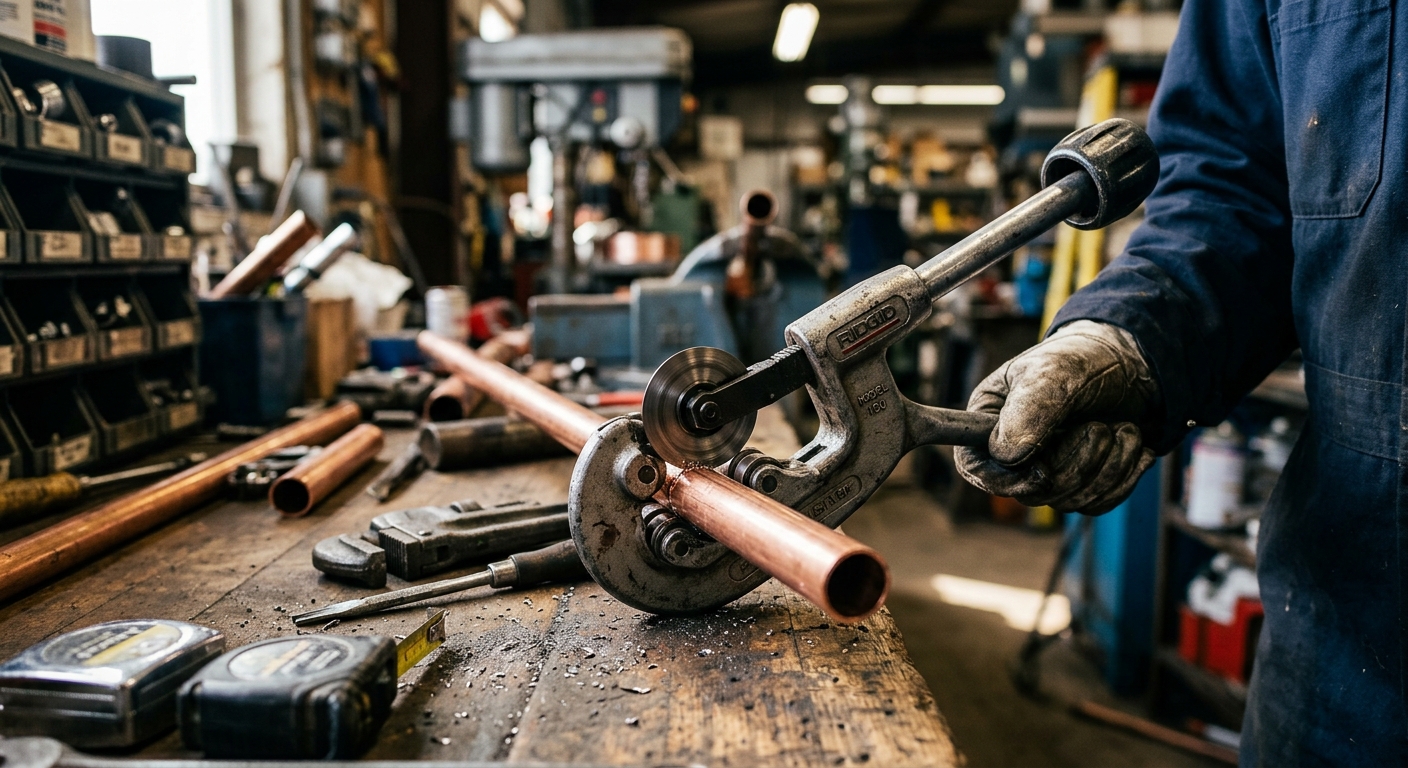
A hardened steel cutting wheel and adjustable rollers that clamp onto the pipe. You rotate the cutter around the pipe while tightening the feed screw with each revolution. The wheel scores deeper with each rotation until it cuts through. Produces a perfectly square, burr-edged cut. The burr must be reamed away before using the pipe in a soldered joint. Standard equipment for copper plumbing.
Plastic Pipe Cutters (PVC, CPVC, PEX)
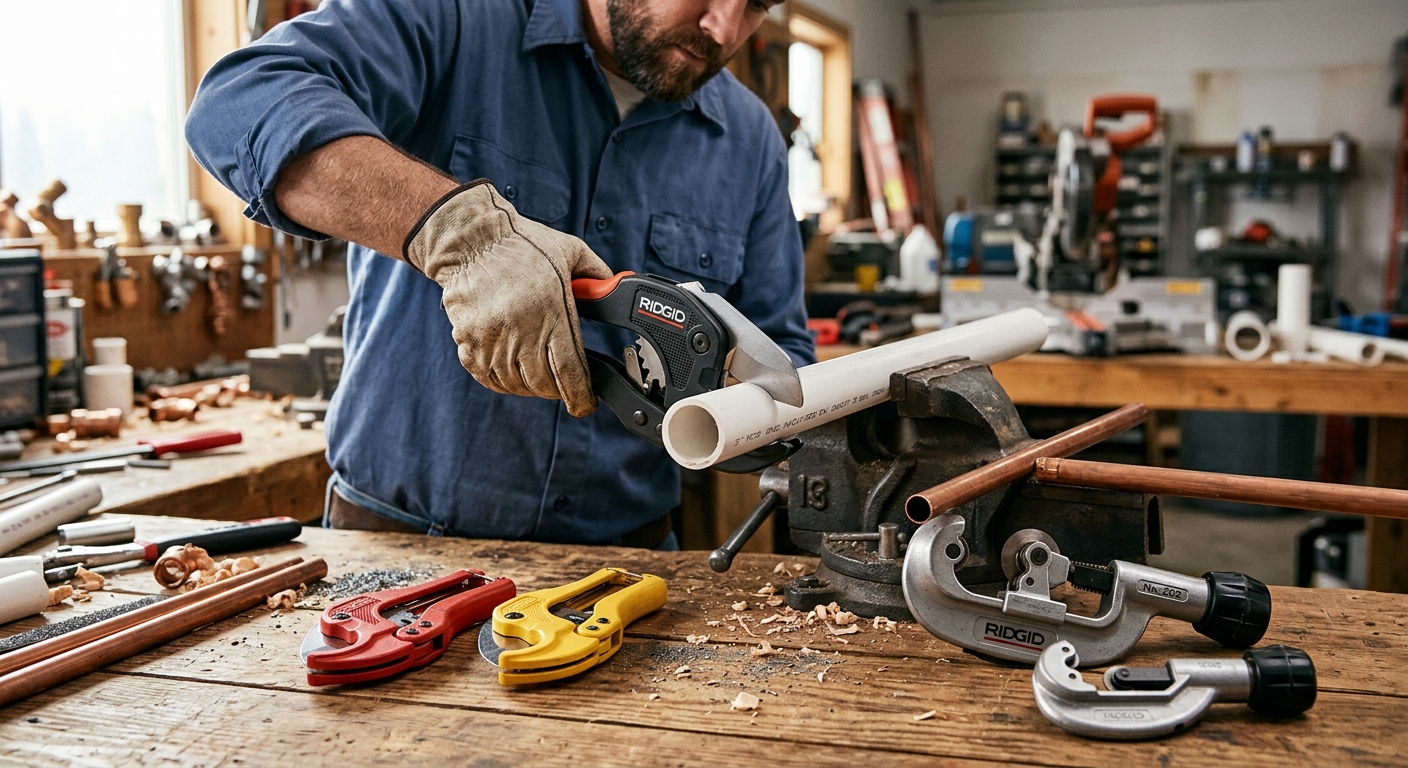
Ratchet-action cutting shears or scissors that cut through plastic pipe in a single squeeze (for small diameters) or with a ratchet action for larger diameters. The clean, square cut they produce is better than a saw for solvent-welded PVC fittings. Not appropriate for copper or steel – only plastic pipe materials.
Hacksaw with Tube Cutting Guide
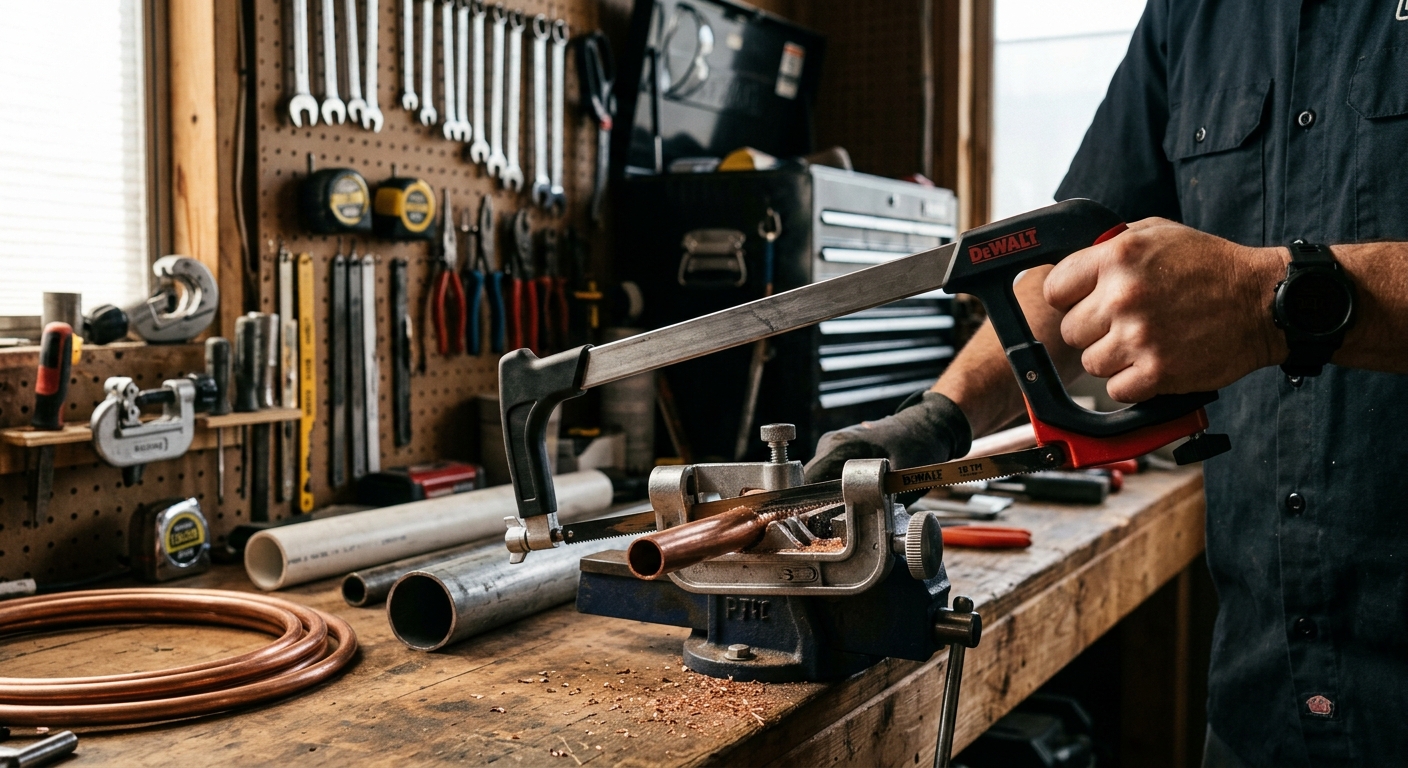
A mitering box or tube cutting guide used with a hacksaw to produce square cuts on any pipe material. Slower and less precise than a dedicated cutter but does not require a separate tool for each material. Good for occasional use and for pipe materials that do not have dedicated cutters readily available.
Reciprocating Saw (for Cast Iron)
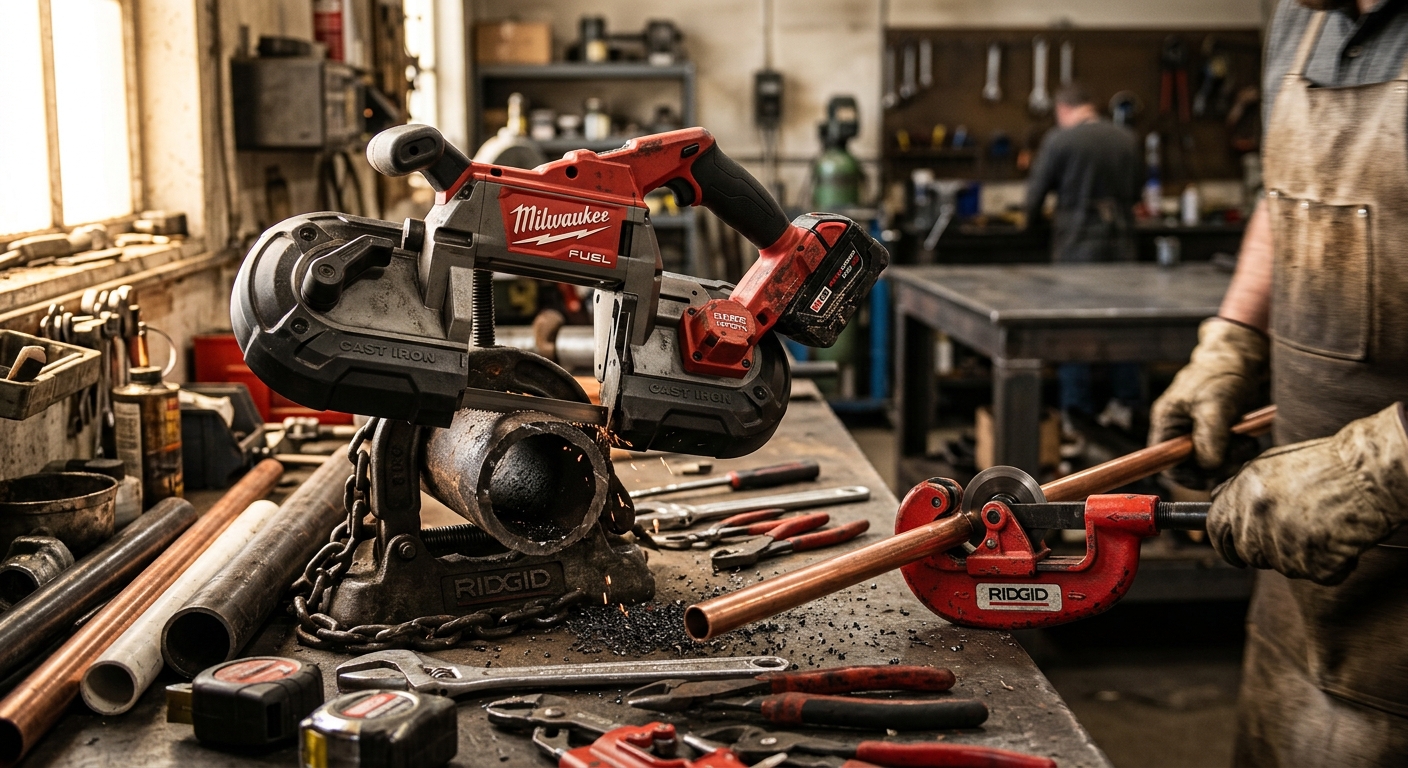
Cast iron drain pipe (found in older homes) requires a reciprocating saw with a metal-cutting blade or a snap cutter (rented from plumbing supply). Cannot be cut with standard pipe cutters.
Our Top Picks
1. Ridgid 32923 1/4-Inch to 1-1/8-Inch Copper Pipe Cutter
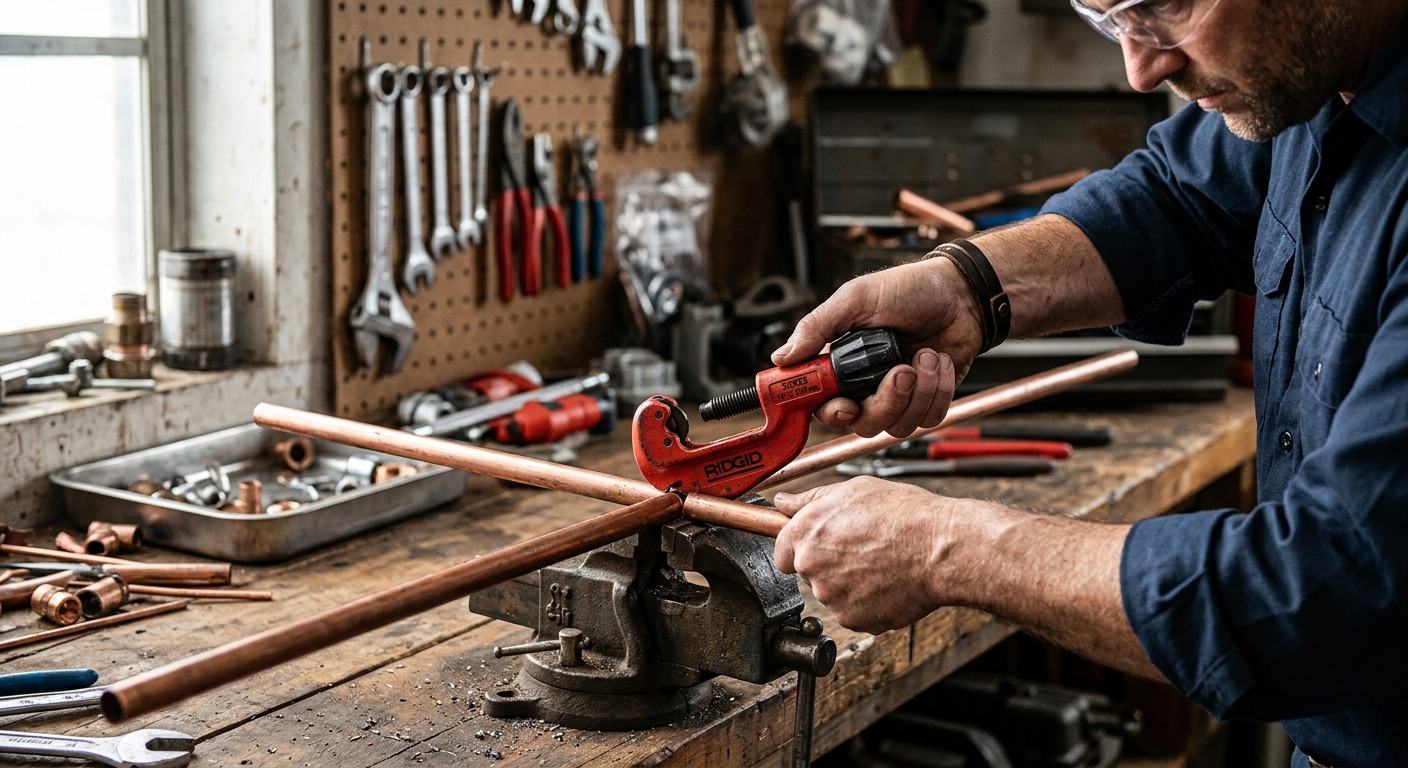
Ridgid makes the professional standard pipe cutter for copper tubing. The 32923 covers the full range of residential copper pipe (1/4-inch to 1-1/8-inch diameter) with a hardened cutting wheel and a built-in reamer for removing the inner burr after cutting. One of the most used tools in any plumber’s kit. The wheel is replaceable when it dulls.
2. Milwaukee 48-22-4252 Compact Copper Cutter
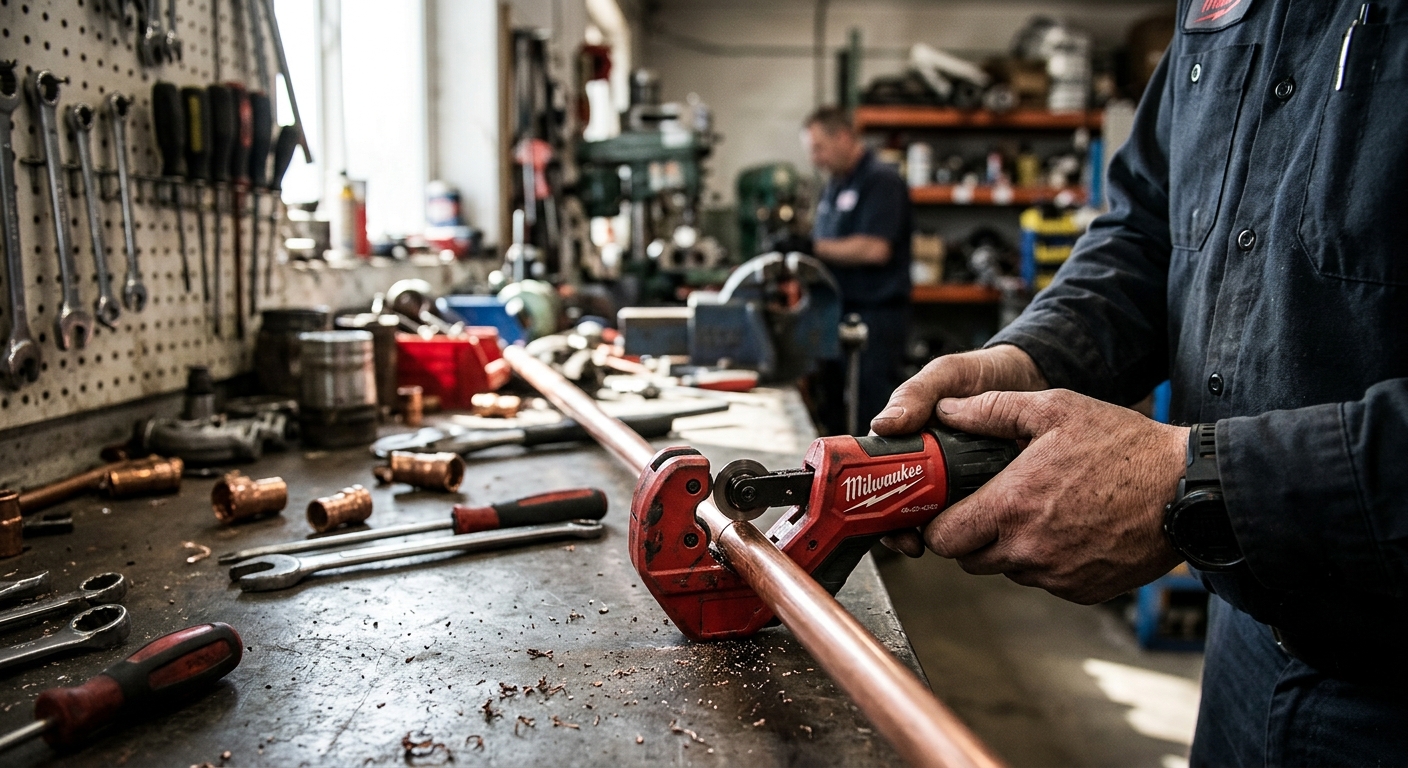
Milwaukee’s version of the compact rotary cutter is designed for working in tight spaces – the compact profile fits into areas where the Ridgid 32923 (which is larger) cannot swing a full rotation. The tradeoff is a smaller cutting wheel that requires more rotations per cut. An excellent complement to the Ridgid for tight under-sink and inside-wall work.
3. Oetiker HCRP-1 PEX Pipe Cutter
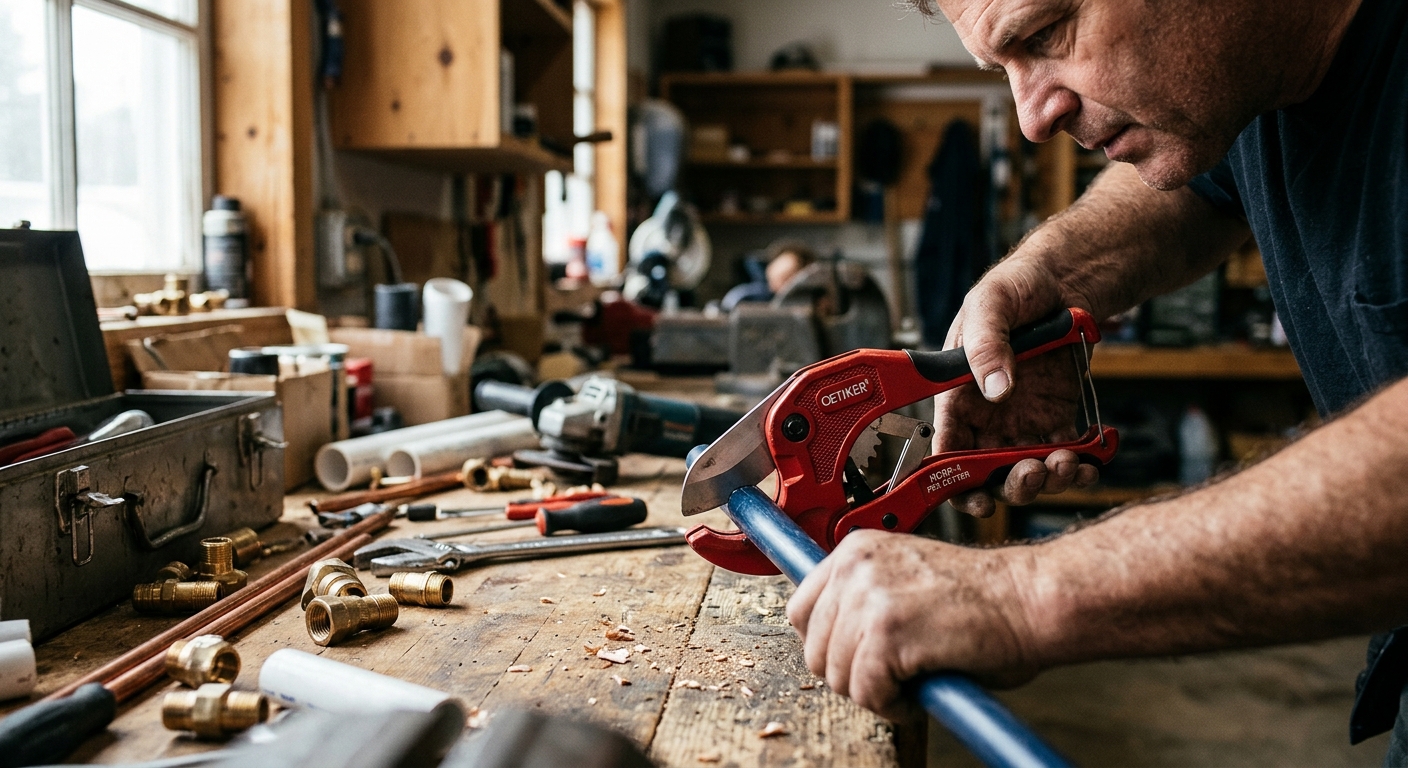
PEX (cross-linked polyethylene) tubing has become the dominant residential plumbing material for new construction and repairs. The Oetiker HCRP-1 makes the clean, square, ratchet-free cuts that PEX crimping and push-fit fittings require. Handles up to 1-inch PEX in a single smooth motion. An essential tool for any DIYer doing PEX plumbing work.
4. IRWIN Tools 2078900 PVC Pipe Cutter (1-5/8-Inch)
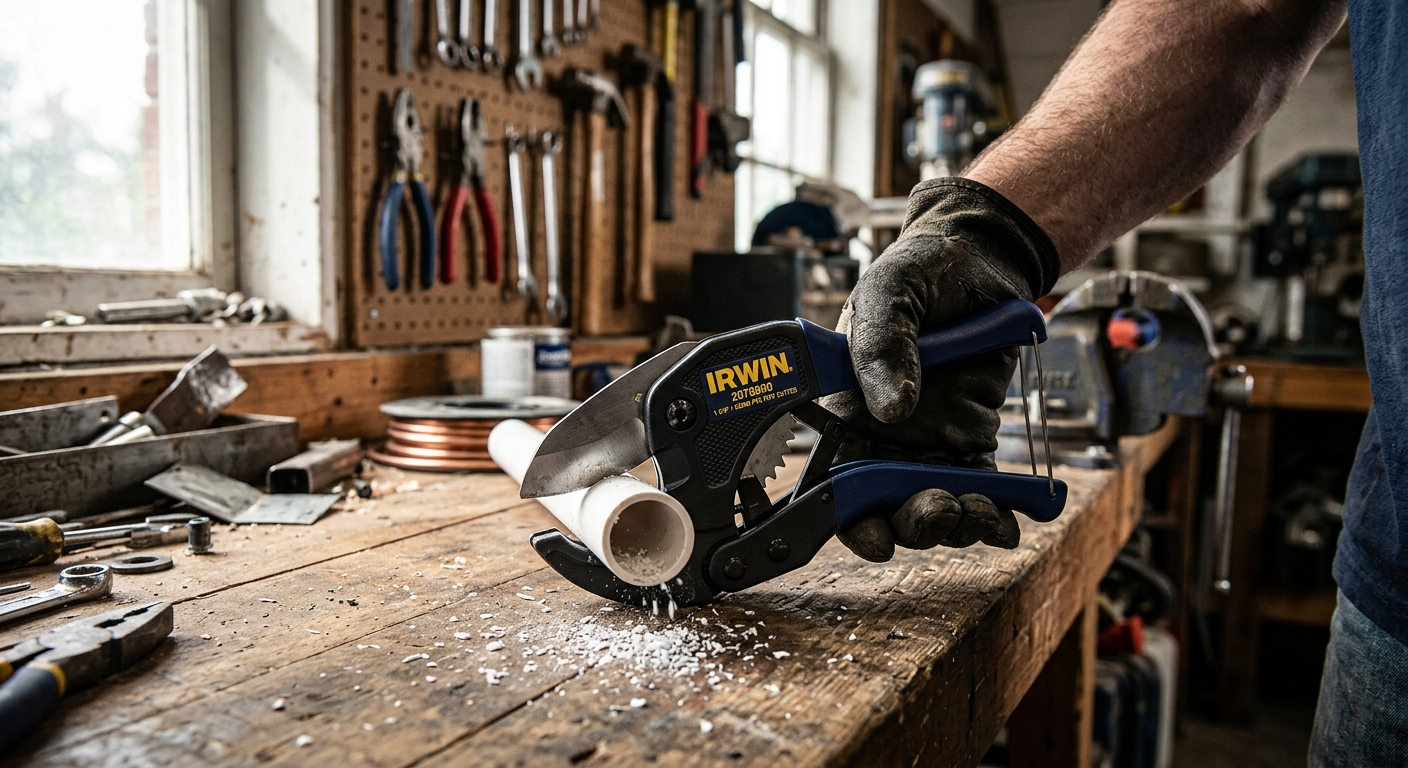
The leading PVC plastic pipe cutter for drain pipe work. Ratchet action handles schedule 40 PVC up to 1-5/8 inches in diameter with a clean, square cut. Far faster and cleaner than a hacksaw for PVC drain fitting connections. An essential tool for any bathroom or kitchen plumbing project.
5. Reed Manufacturing PC250 2-1/2-Inch Heavy Duty Cutter
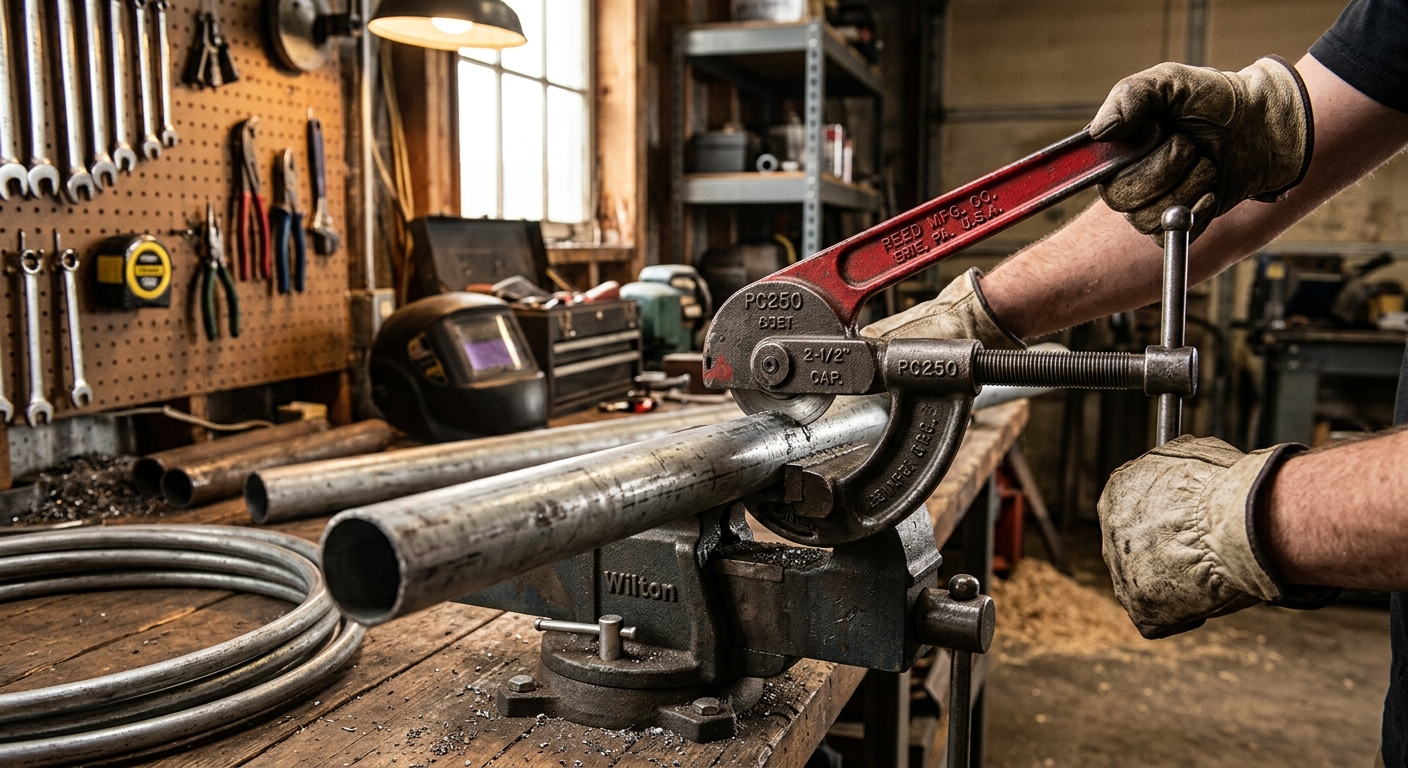
For larger diameter pipe (up to 2-1/2 inches) including galvanized, steel, and larger copper supply lines: the Reed PC250 is a commercial-grade rotary cutter that handles the larger pipe sizes beyond residential copper cutter range. A professional tool for those doing whole-house plumbing or commercial light work.
FAQ
Do I need to deburr copper pipe after cutting?
Yes, without exception. The rotary cutter wheel rolls a slight inner burr into the pipe end. This burr restricts flow in the finished joint and, if left in a solder joint, can trap flux and cause a weak or leaky joint. Use the built-in reamer on the pipe cutter or a deburring tool to remove it completely.
Can I use a PVC cutter on CPVC?
Yes. CPVC (used for hot water supply lines in some homes) cuts exactly like PVC with the same shear-action cutters. The same tool handles both. Use the size-appropriate cutter – CPVC comes in the same schedule 40 diameters as standard PVC.
What is the best way to cut cast iron drain pipe?
Rent or buy a snap cutter (soil pipe cutter) that chains around the pipe and scores and fractures the cast iron on a clean line. A reciprocating saw with a metal-cutting blade also works but is slower and produces more vibration in the pipe. A standard pipe cutter will not work on cast iron.
Affiliate Disclosure: DIY Arsenal participates in the Amazon Associates Program and other affiliate programs. When you purchase through links on this site, we may earn a small commission at no additional cost to you. We only recommend products we have personally tested and genuinely believe in.