Best Multimeters and Voltage Testers for DIY Electrical Work
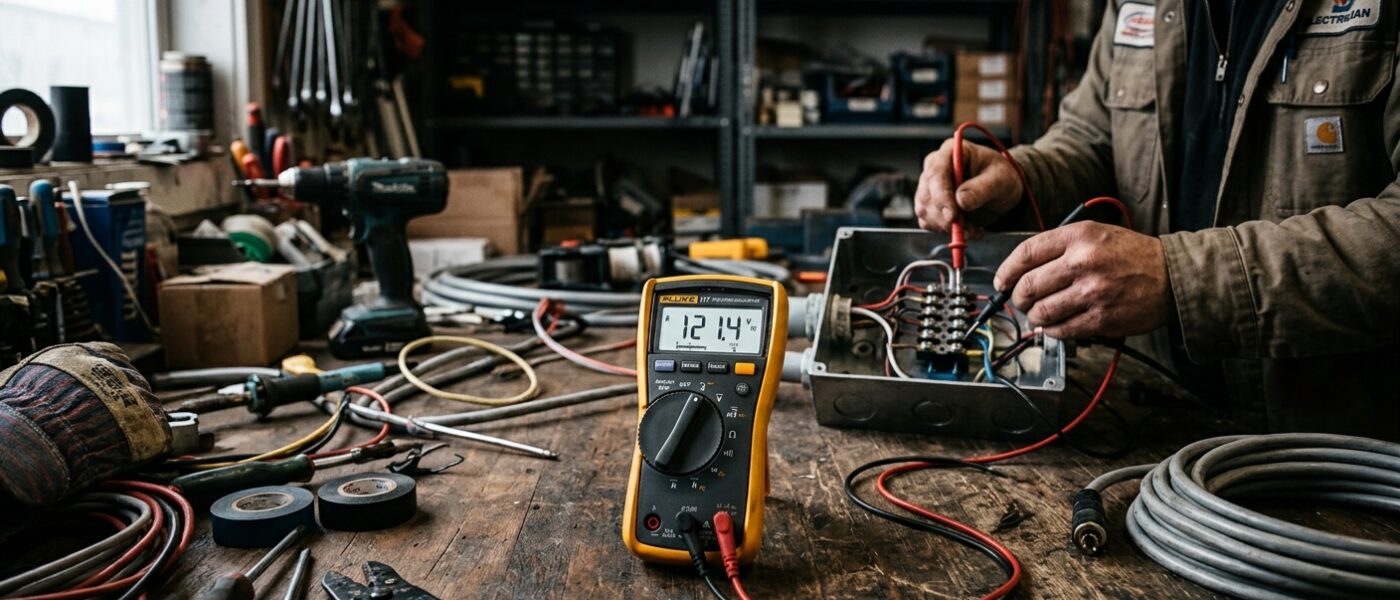
Fluke 117 is the completely reliable choice; Klein MM400 delivers 90% of the value at 30% of the cost
Multimeters and voltage testers are the diagnostic eyes of electrical work. Before touching any wiring, you need to verify whether it’s live. When troubleshooting a dead outlet, you need to measure voltage at the source. For DIYers doing basic electrical work – replacing outlets, installing light fixtures, troubleshooting circuits – the right meters make work safe and efficient. This guide covers the best options for home use through advanced DIY.
How We Evaluate Electrical Test Equipment
We tested meters for measurement accuracy (voltage, current, resistance, continuity), safety rating (CAT rating for the voltage environments they’re designed for), display readability, probe quality, input impedance, auto-ranging capability, and overall build quality. A poorly rated or inaccurately measuring multimeter creates both wrong diagnoses and genuine electrical safety hazards.
Top Picks
Fluke 117 – Best Overall Multimeter
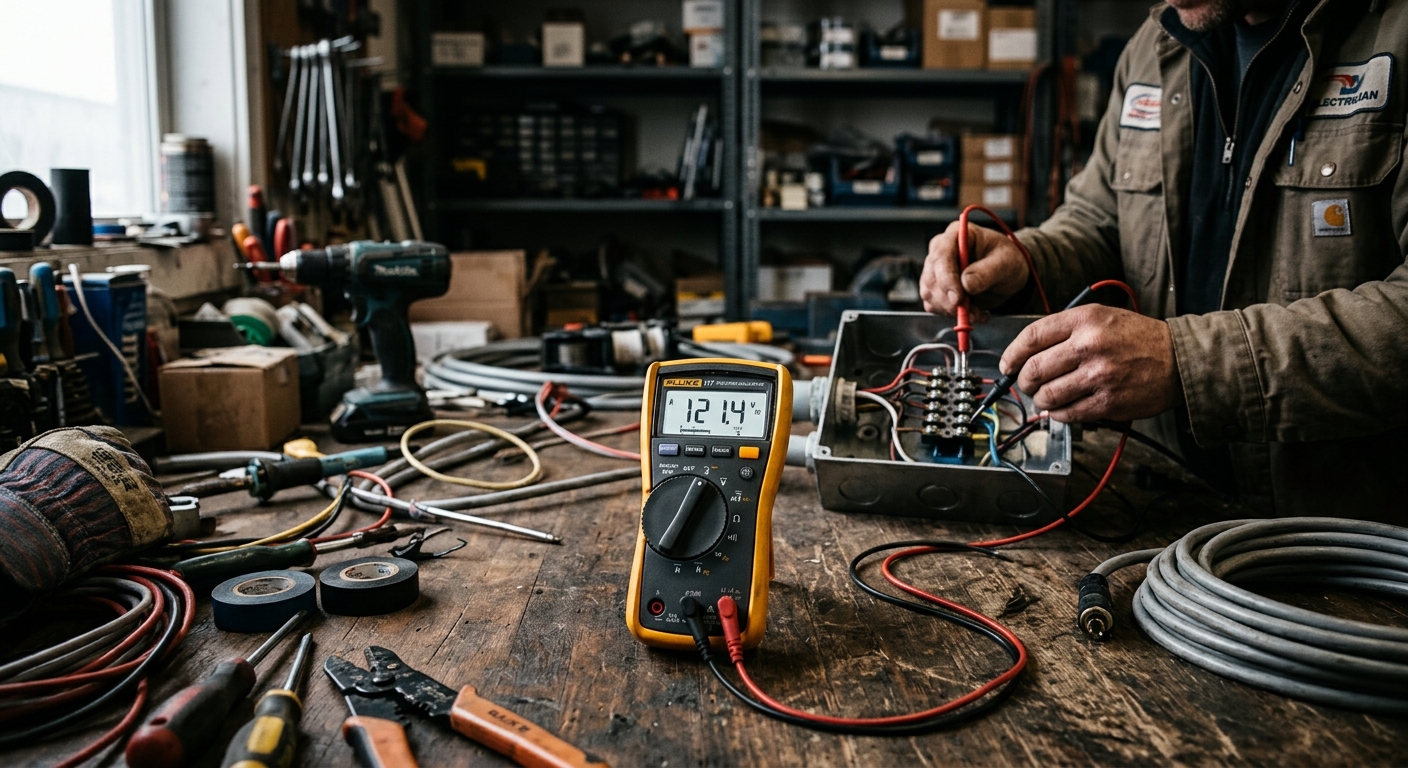
Fluke is the professional electrical test equipment benchmark, and the 117 is their mid-range model optimized for electricians. It’s a true-RMS auto-ranging multimeter with LoZ (low-impedance) mode that eliminates ghost voltage readings – false voltage readings that appear on de-energized circuits due to capacitive coupling with adjacent live wiring. The non-contact voltage detection beeps before probes touch anything. CAT III 600V / CAT IV 300V rated for panel work. A meter you can trust completely.
- Pros: True-RMS, LoZ mode eliminates ghost voltage, NCV detection, high CAT rating, Fluke reliability
- Cons: Expensive, more features than basic DIY requires
Klein Tools MM400 Auto-Ranging Multimeter – Best Value
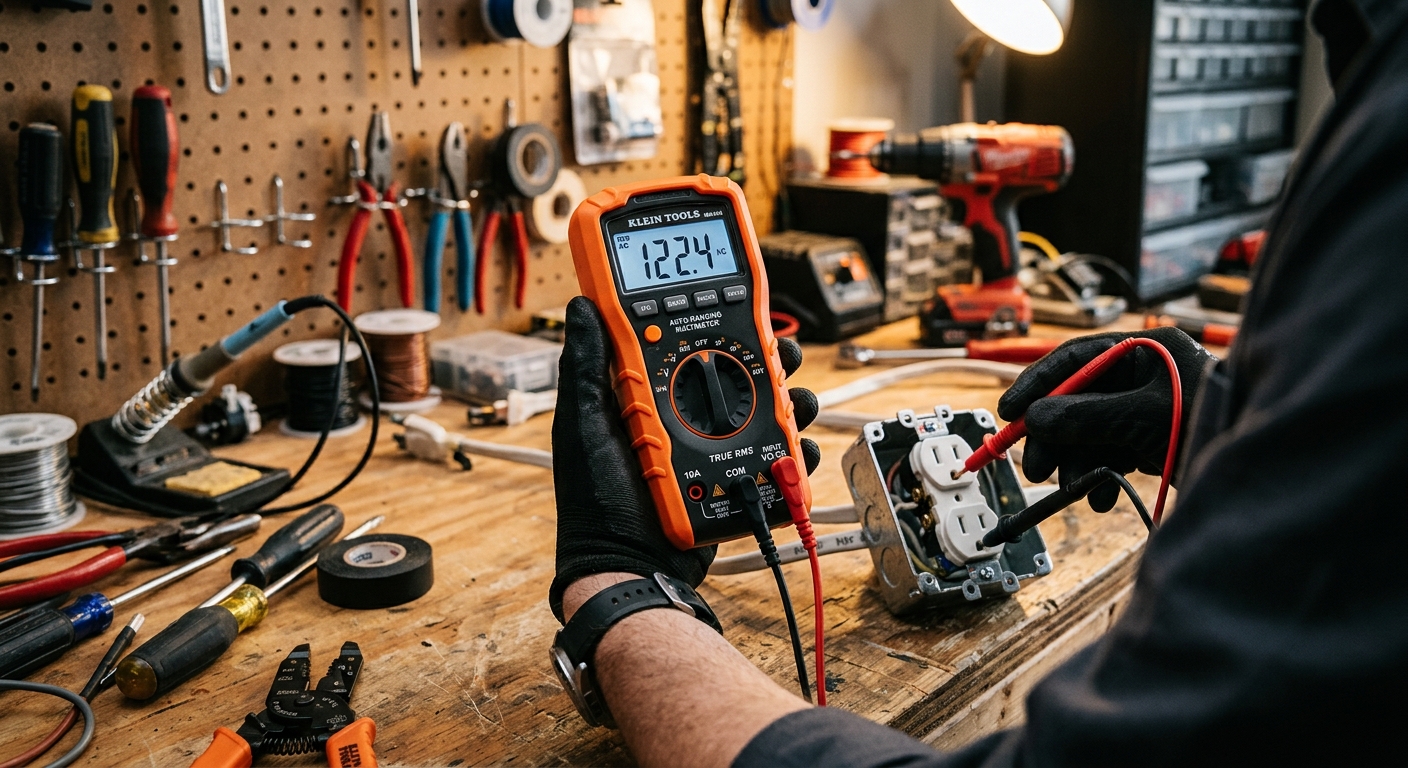
Klein’s MM400 is the best value auto-ranging multimeter for DIYers who do occasional electrical work. It measures AC/DC voltage, resistance, continuity (with beep), diode test, and capacitance. The auto-ranging selects the correct measurement scale automatically, the display is large and backlit, and the CAT III 600V rating covers household panel work safely. At under $50, it’s the smart recommendation for 90% of home electrical testing needs.
- Pros: Auto-ranging, CAT III 600V, continuity beeper, backlit display, capacitance mode, excellent value
- Cons’:’No true-RMS (reads AC RMS less accurately on modified sine wave power), no LoZ mode
Klein Tools NCVT-3P – Best Non-Contact Voltage Tester
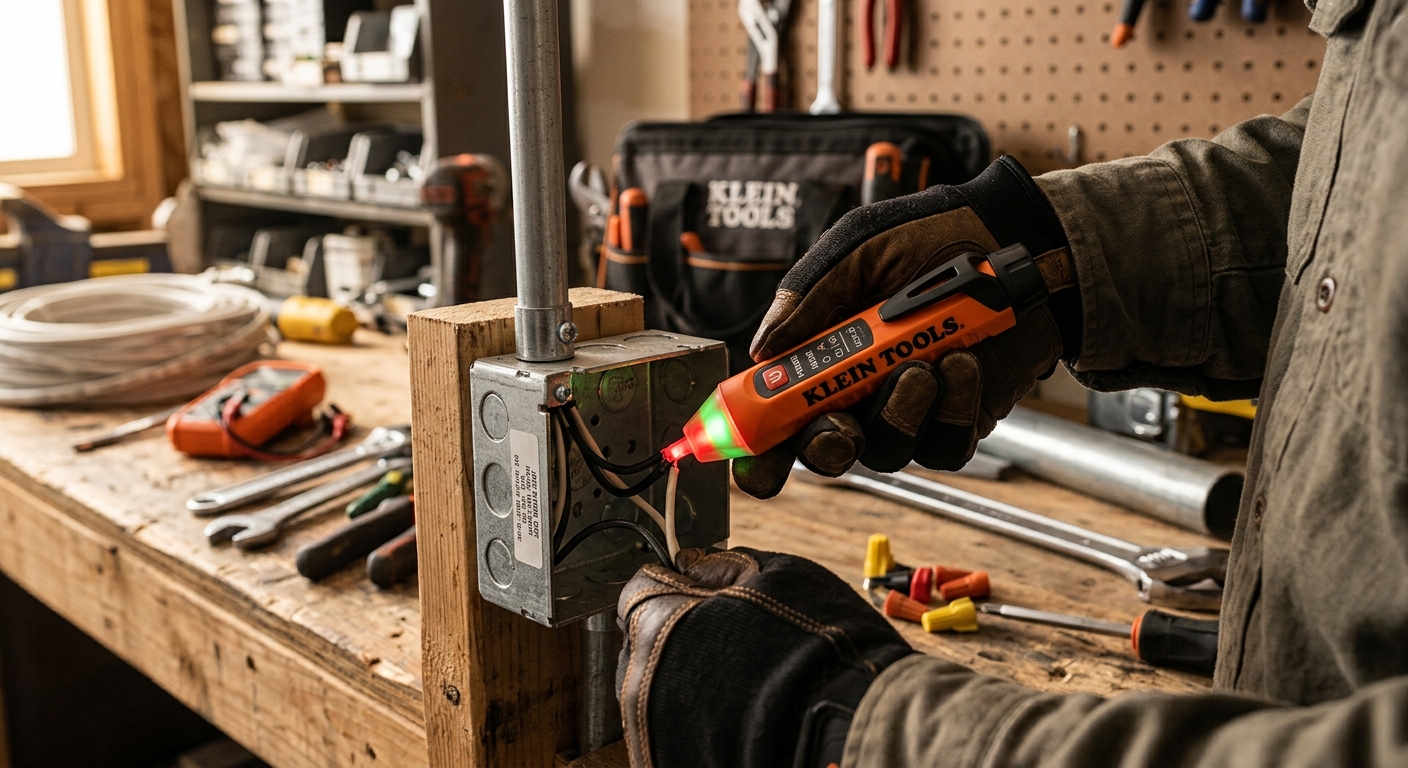
Non-contact voltage testers (NCV testers) detect AC voltage through wire insulation and outlet slots without direct contact – a critical first-check safety tool before touching any wiring. The Klein NCVT-3P adds a built-in flashlight for work in dark panels and boxes, shows dual sensitivity ranges (12V and 1000V detection), and has a loud audible alarm. Every homeowner and DIYer should own an NCV tester – they’re the fastest safety check available.
- Pros: Detects voltage without contact, dual sensitivity, built-in flashlight, loud alarm, extremely easy to use
- Cons’:’AC voltage only (not DC), doesn’t measure voltage magnitude, not a substitute for a full multimeter
Fluke 323 Clamp Meter – Best for High-Current Measurement
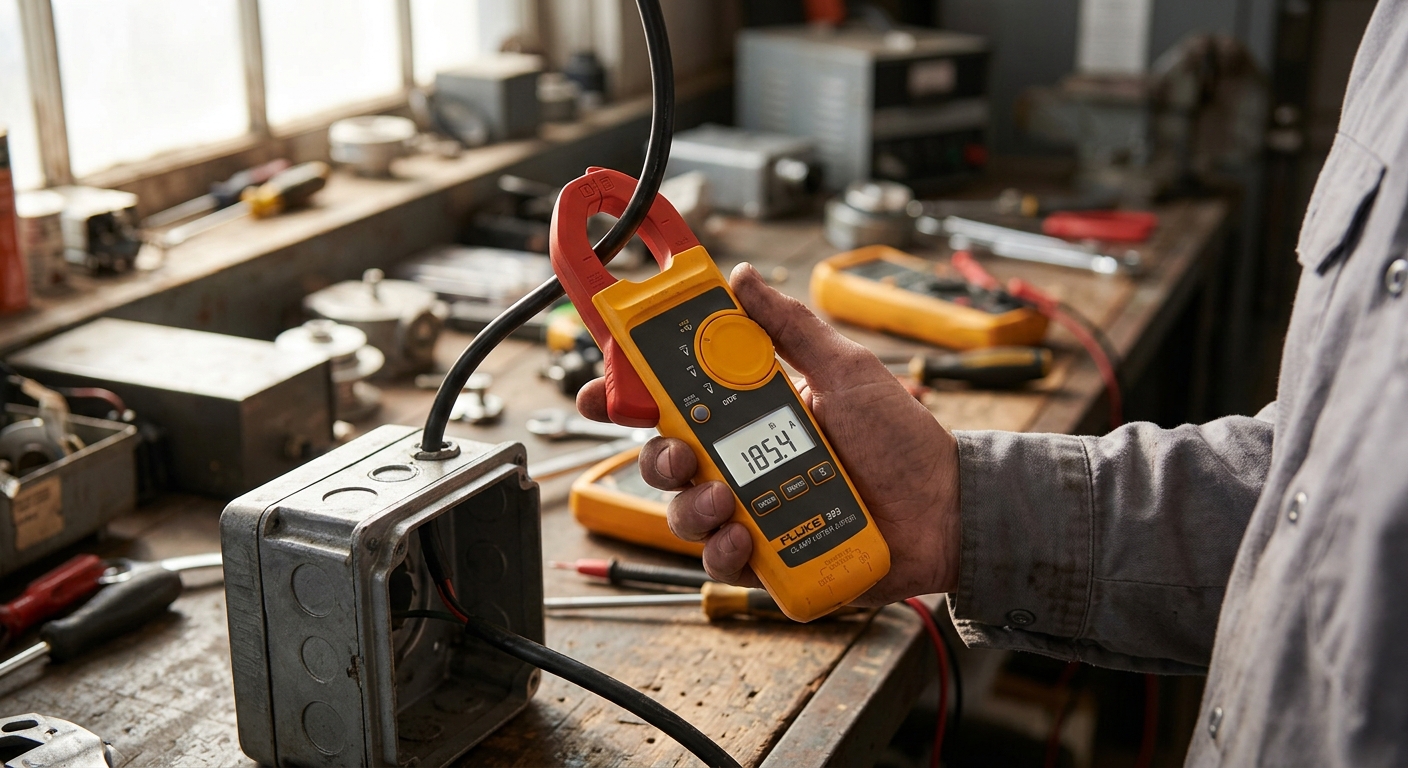
Clamp meters measure current by clamping around a conductor without breaking the circuit – essential for measuring amp draw of appliances, HVAC equipment, and circuits where you can’t interrupt the load. The Fluke 323 also measures AC/DC voltage and resistance, making it a combination clamp and multimeter. If you work on HVAC systems, motors, or large appliances, a clamp meter is the tool that makes current measurement safe and practical.
- Pros: Measures current without breaking circuit, combined clamp and multimeter functionality, Fluke accuracy
- Cons’:’Larger than a standard multimeter, current measurement only accurate when one conductor is inside the clamp
Southwire 3030 Receptacle Tester – Best for Outlet Testing
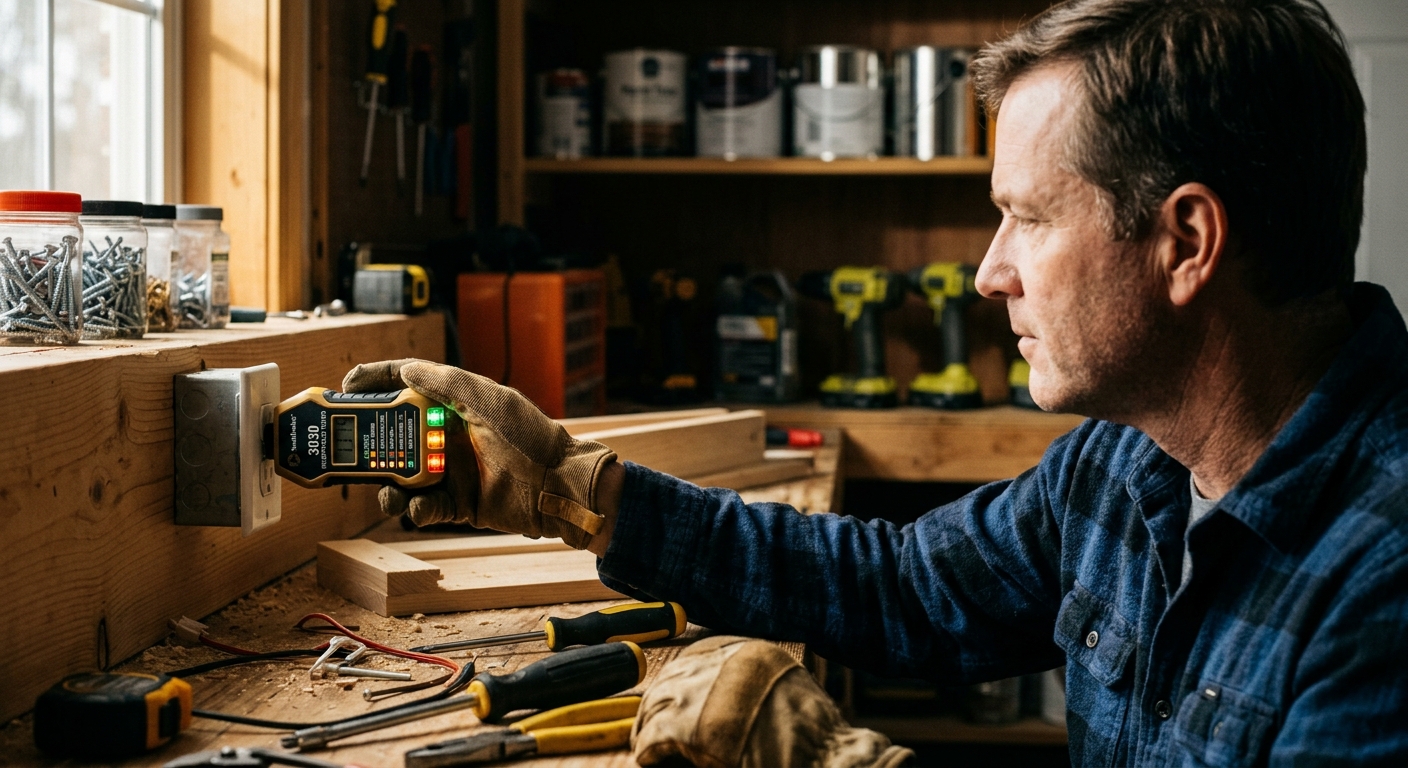
The Southwire outlet tester is the fastest tool for checking outlet wiring: plug it in and three LED indicators reveal wiring status immediately – correct, open ground, reversed polarity, open hot, open neutral. No probes, no settings, no displays to read. Every homeowner should own one; walk every outlet in a new home, rental, or post-renovation installation and verify correct wiring in seconds.
- Pros: Plug-in simplicity, reads 7 wiring conditions, instant LED result, no skill required, very affordable
- Cons’:’Doesn’t measure voltage magnitude, AC only, doesn’t detect all fault types (won’t find high resistance grounds)
Frequently Asked Questions
What CAT rating do I need? For household outlet testing: CAT II minimum. For work at the service panel: CAT III minimum. Never use a CAT I meter in any building electrical work – the safety margin against transient voltage spikes is inadequate.
What is true-RMS? True-RMS meters accurately measure non-sinusoidal AC waveforms – the distorted waveforms produced by variable speed drives, dimmer switches, and UPS systems. Averaging meters read these waveforms incorrectly. For home outlet testing, averaging meters are usually fine; for HVAC or motor diagnostics, true-RMS matters.
Do I need a clamp meter or a multimeter? If you only need voltage and continuity, a multimeter is sufficient. If you need to measure current draw (amperage), you need either a clamp meter or a multimeter with a current probe. For HVAC diagnosis, a clamp meter is nearly mandatory.
Is a non-contact tester sufficient for electrical work? As a first-check safety tool, yes – never touch wiring without confirming no voltage first. But NCV testers don’t replace multimeters; they can’t measure voltage magnitude, check polarity, or verify ground continuity. Own both.
Bottom Line
The Fluke 117 earns Best Overall for professionals and serious DIYers who need completely reliable measurements in real electrical environments. The Klein MM400 is the recommended value multimeter for most home electrical work. Own a Klein NCV tester for safety checks before any wiring task – it’s the most important electrical tool a homeowner can own. Add a Southwire outlet tester for quick whole-house wiring verification.
Affiliate Disclosure: DIY Arsenal participates in the Amazon Associates Program and other affiliate programs. When you purchase through links on this site, we may earn a small commission at no additional cost to you. We only recommend products we have personally tested and genuinely believe in.