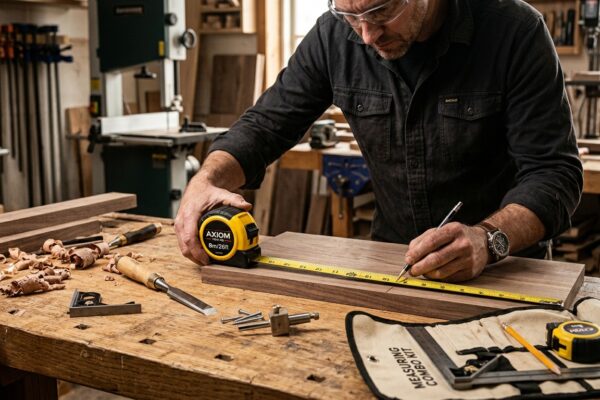
Best Moisture Meters for Wood, Flooring, and Building Inspection

Orion 950 pinless meter is the non-damaging accuracy standard for flooring professionals and serious woodworkers
Moisture meters are diagnostic tools that prevent some of the most expensive mistakes in woodworking, flooring, and building: installing hardwood floor over a damp subfloor, gluing up wood that hasn’t equalized to shop humidity, or applying drywall joint compound over wet framing. Knowing the moisture content of your materials before installation is the difference between a project that performs and one that fails. This guide covers the best moisture meters for DIYers.
How We Evaluate Moisture Meters
We tested moisture meters for accuracy against known-moisture-content samples, species correction capability, ease of calibration, response speed, build durability, and display readability. A moisture meter that reads 2% high or low isn’t useless, but it misleads you if you’re relying on it to judge whether wood is at the 6-8% moisture content appropriate for interior flooring installation.
Top Picks
Orion 950 Smart Pinless Moisture Meter – Best Overall
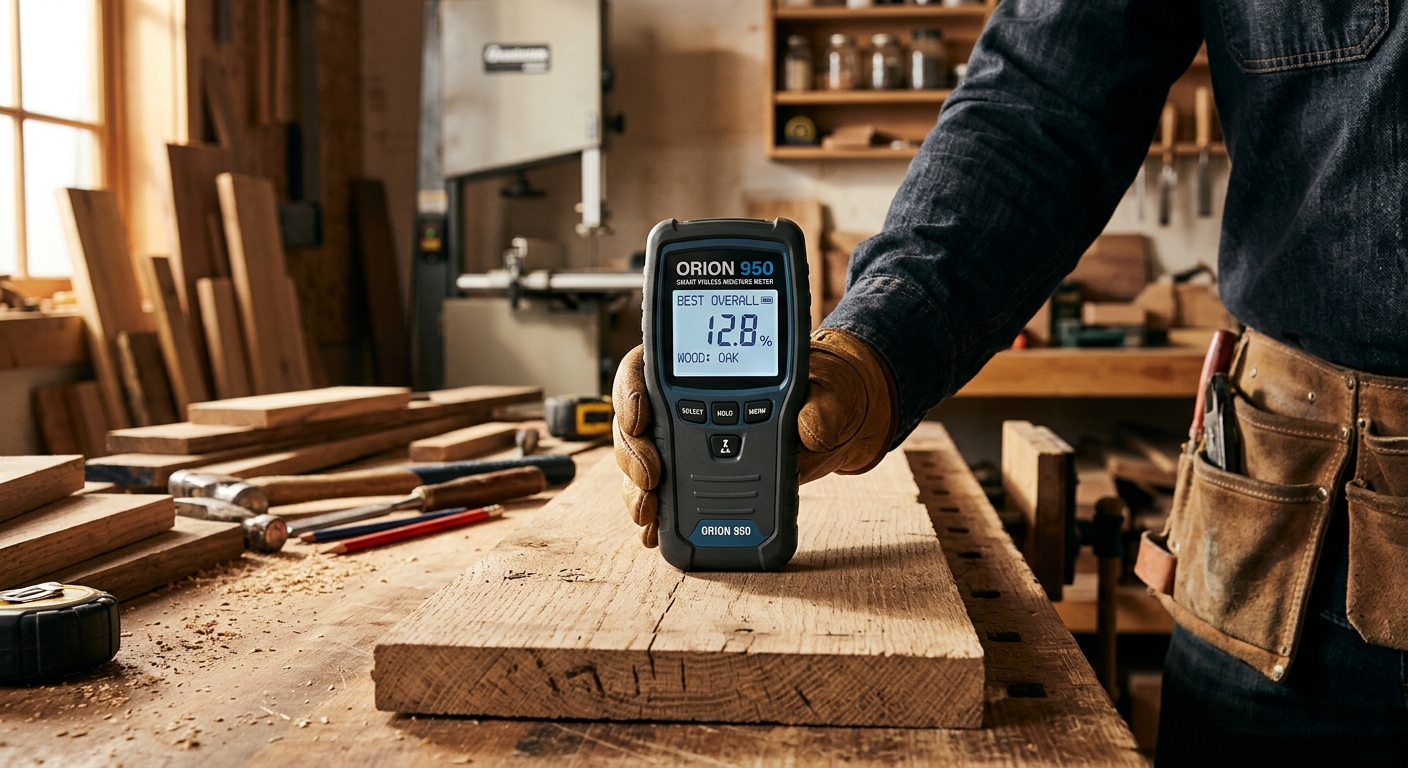
Wagner Meters’ Orion 950 is the benchmark pinless moisture meter for serious wood evaluation. Pinless meters read moisture content through the surface without penetrating it – no holes in your finished flooring, no split veneer on expensive lumber. The Orion 950 scans to 3/4-inch depth, covers 50+ wood species with specific correction values, and includes Bluetooth data logging for record-keeping during inspections. Accurate to ±1% in the 5-20% range. The choice for flooring inspectors and furniture makers.
- Pros: Pinless (non-damaging), 50+ species database, Bluetooth logging, accurate to ±1%, 3/4-inch scan depth
- Cons: Expensive, pinless readings are surface-average (not deep-sample), requires calibration check
General Tools MMD7NP – Best Value Pinless
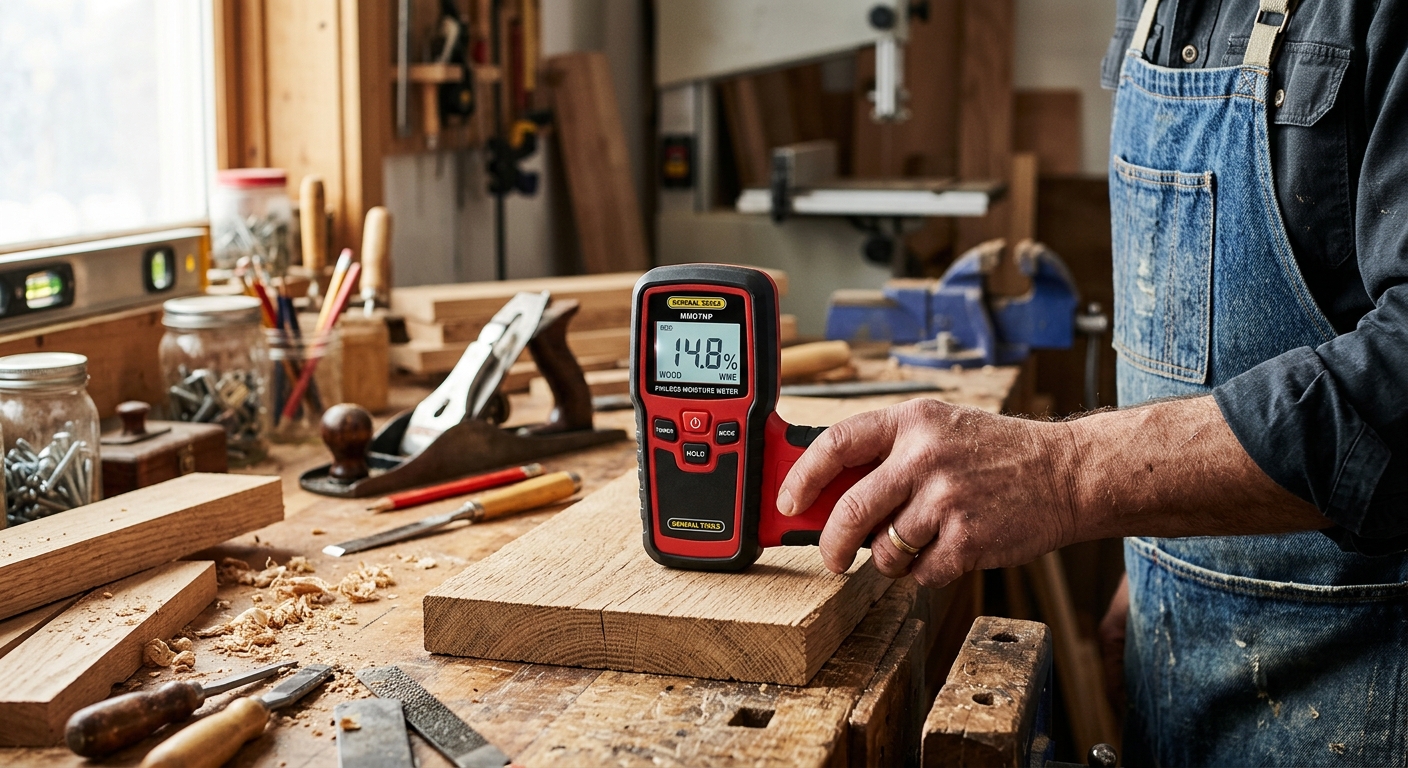
General Tools’ pinless moisture meter covers the bases for woodworking and flooring installation at a fraction of the Orion price. It reads through surfaces up to 3/4 inch deep, has a simple LED/LCD display, and covers the moisture ranges relevant to most wood installation work (5-50%). Accuracy is approximately ±2% – sufficient for go/no-go decisions on flooring installation without the Orion’s precision.
- Pros: Non-damaging pinless, affordable, simple display, adequate accuracy for most DIY decisions
- Cons’:’±2% accuracy vs ±1% for Orion, limited species compensation, no data logging
Delmhorst J-Lite – Best Pin Meter for Lumber
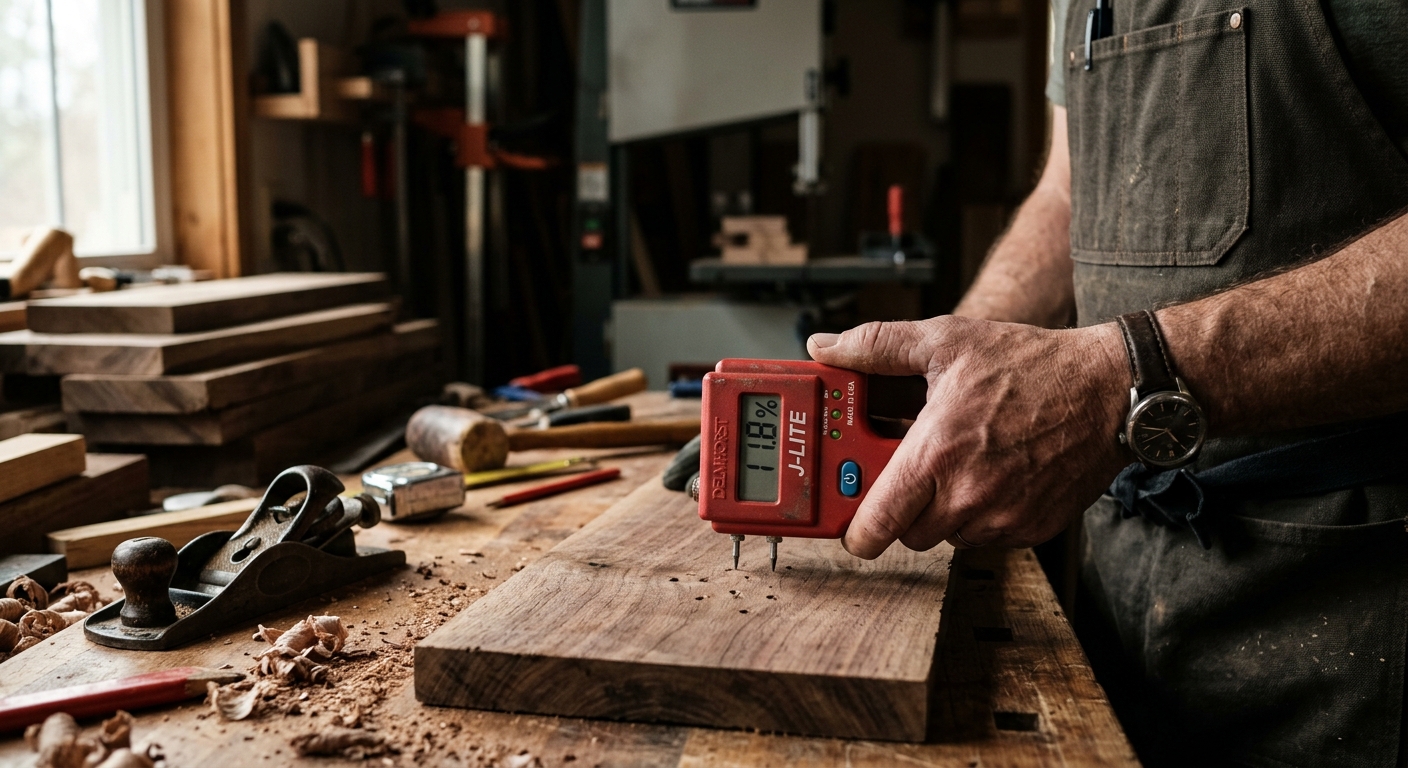
Pin-type moisture meters insert two pins into the wood and measure electrical resistance between them – a direct measure of moisture content at the pin depth. The Delmhorst J-Lite is the job-site standard for building inspectors, restoration contractors, and serious woodworkers who need accurate readings at specific depths. The pins can reach through surface layers to measure subsurface moisture that a pinless meter averages over. Accurate, durable, and essential for water damage assessment.
- Pros: Measures at specific depth, not affected by surface conditions, accurate for damage assessment, industry standard
- Cons’:’Leaves pin holes in finished surfaces, pins break if forced into very hard wood, slower than pinless for scanning
Tavool Wood Moisture Meter – Best Budget
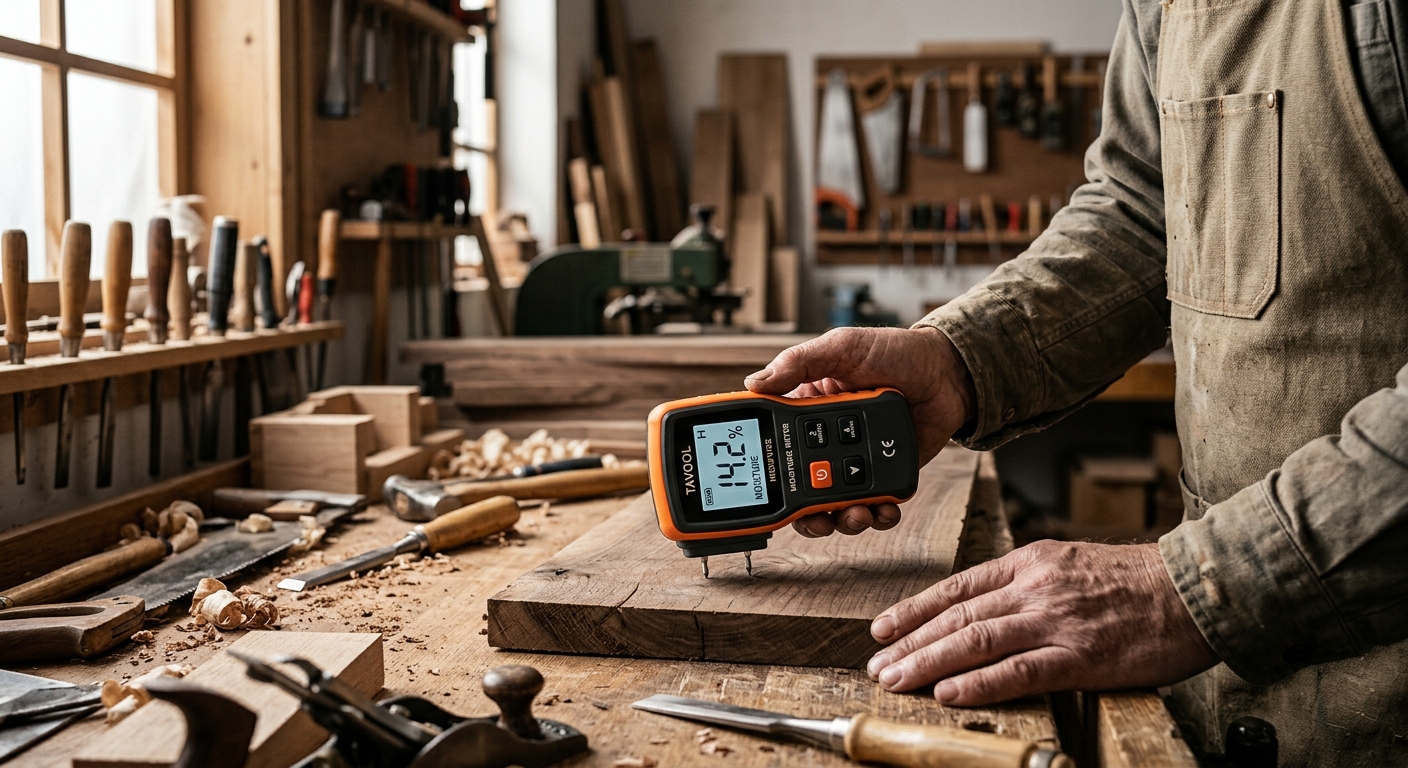
The Tavool digital pin meter is available for under $15 and reads wood moisture content accurately enough for basic woodworking decisions. It covers 4-80% moisture range with species-specific adjustments for 11 wood groups. For a beginner woodworker who wants to check whether lumber has dried sufficiently before gluing or milling, this meter provides useful information at minimal cost.
- Pros: Very affordable, digital display, 11 species groups, adequate for basic woodworking, widely available
- Cons’:’Less accurate than professional meters, pins less durable, no data logging, limited species correction
FLIR MR77 – Best for Building Inspection
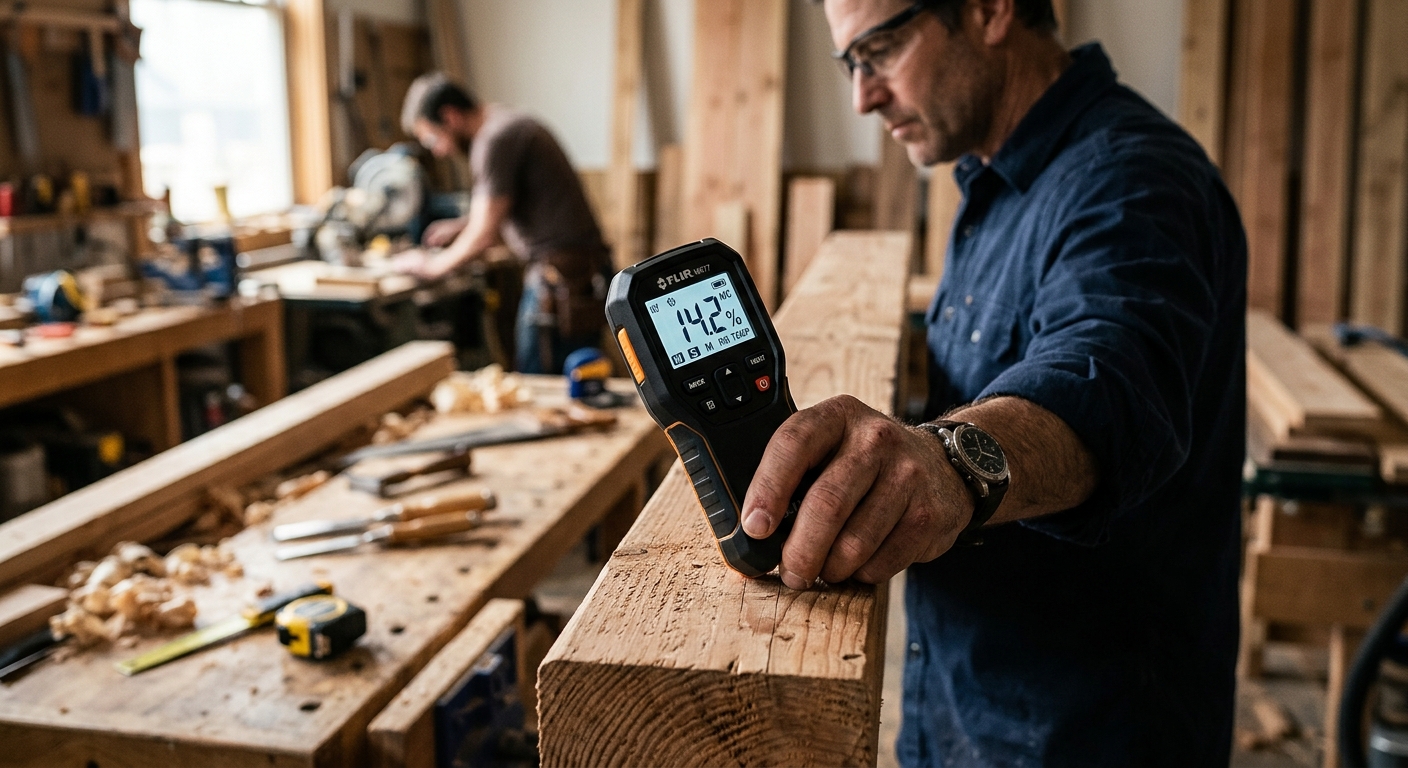
FLIR’s MR77 combines a pin moisture meter with an infrared thermal sensor in one tool. The thermal sensor shows relative moisture patterns on surfaces before you commit pins – a wet spot appears cooler than surrounding material under infrared. For water damage inspection, mold assessment, or post-flood restoration, knowing where moisture is before sampling saves time and pins. A professional-grade tool for serious building diagnostics.
- Pros: Pin meter plus thermal imaging, finds moisture patterns before pinning, excellent for damage assessment, one tool for two functions
- Cons’:’Very expensive, thermal sensor is not calibrated like a dedicated thermal camera, overkill for woodworking
Frequently Asked Questions
What moisture content should hardwood flooring have? Most interior hardwood flooring should be installed at 6-9% moisture content in a climate-controlled space. Check your flooring manufacturer’s specs – some engineered products allow wider ranges. The subfloor should be within 4% of the flooring material’s moisture content.
What’s the difference between pin and pinless meters? Pin meters measure resistance between two inserted pins – accurate at the pin depth, but leaves holes. Pinless meters scan through the surface without damage but average moisture across the scan depth. Both have legitimate uses.
Can I use a moisture meter on concrete? Some meters include concrete mode for measuring relative humidity in concrete slabs, important for adhesive flooring installation. Not all wood moisture meters measure concrete – check the specs before buying for this purpose.
How do I know when wood is dry enough to work? Air-dried lumber for interior furniture should reach 6-8% MC in typical indoor conditions. Wood that was recently purchased or stored outdoors may be 12-18% MC and needs weeks to months to dry before use in furniture. A moisture meter tells you where you are and when you’re ready.
Bottom Line
The Orion 950 earns Best Overall for flooring professionals and serious woodworkers who need reliable, non-damaging moisture assessment with species-specific accuracy. The General Tools MMD7NP delivers useful readings for most DIY decisions at an accessible price. For water damage assessment, the Delmhorst J-Lite pin meter or FLIR MR77 are the professional choices. Any moisture meter is better than no moisture meter – add one to your shop and protect your investments in wood and flooring materials.
Affiliate Disclosure: DIY Arsenal participates in the Amazon Associates Program and other affiliate programs. When you purchase through links on this site, we may earn a small commission at no additional cost to you. We only recommend products we have personally tested and genuinely believe in.