Best Hand Planes for Beginning Woodworkers

Veritas No. 4 delivers near-Lie-Nielsen quality for less; WoodRiver V3 is the best budget-to-quality option.
The hand plane is the woodworking tool that changes beginners into woodworkers. Before power jointers, planers, and sanders, hand planes were how every board surface was flattened, trued, and smoothed to a mirror finish. Today, hand planes remain essential for tasks that machines do less well: fitting a door to a binding frame, truing the face of a glue-up when it won’t fit through a thickness planer, shooting a perfect 90-degree edge on a board end, and achieving the glass-smooth surface that only a sharp iron dragging across wood grain can produce.
The challenge for beginners is the entry learning curve: hand planes are only as good as the sharpness of their irons. A poorly sharpened plane is nearly useless; a well-sharpened plane feels like magic. This guide covers the best planes for beginners, focusing on the first one or two planes that provide the most immediate utility while teaching the sharpening skills that make plane work rewarding.
Types of Hand Planes for Beginners
No. 4 Bench Plane (smoothing plane): The most versatile all-around bench plane. Approximately 9-10 inches long, 2-inch wide iron. Used for smoothing and flattening surfaces, fitting doors and drawers, and general surface preparation. The right first plane for most beginners. Available from Stanley/Bailey (budget to mid-range), Lie-Nielsen (premium), and Veritas (premium).
Block Plane: Small (6-7 inches), one-handed operation. Used for chamfering edges, smoothing end grain, and fitting small components. A perfect complement to the No. 4 for task coverage. Low-angle block planes work better on end grain than standard-angle models.
No. 5 Jack Plane: Longer than the No. 4 (14-15 inches), used for initial dimensioning and removing material faster. The workhorse plane for breaking down rough lumber before finishing with a No. 4. Often the second or third plane a woodworker buys.
Shoulder Plane: Specialized for trimming the shoulders and faces of tenons – the parts of a mortise-and-tenon joint where precise, square trimming matters. Not a first plane; an addition once joinery work begins.
How We Evaluate Planes
Sole flatness: The flat bottom of the plane must be truly flat to produce flat work. Quality new planes (Lie-Nielsen, Veritas) come flat from the factory. Budget planes (entry-level Stanley, Harbor Freight) often have soles that require lapping on a flat stone before they’ll work well. Always check or lap the sole before using a new plane.
Frog adjustment: The frog is the angled casting that holds the plane iron. Adjustable frogs (with blade advance screws) allow fine-tuning of chip clearance for different wood types. Better frogs fit tightly without lateral play – play in the frog causes chattering during planing.
Blade quality and steel type: A2 tool steel (used by Lie-Nielsen and Veritas) holds an edge 3-4x longer than O1 or W1 steel. The trade-off is that A2 is slightly harder to sharpen. For beginners who are learning sharpening, O1 steel (easier to sharpen, shorter edge retention) may be more educational. Upgrade to A2 blades once sharpening technique is established.
Lateral and depth adjustment quality: Quality adjustors move smoothly and hold their set position during planing. Cheap adjustors have slop and drift during use. The difference is immediately apparent in use.
Top Picks
1. Lie-Nielsen No. 4 Bench Plane – Best Premium First Plane
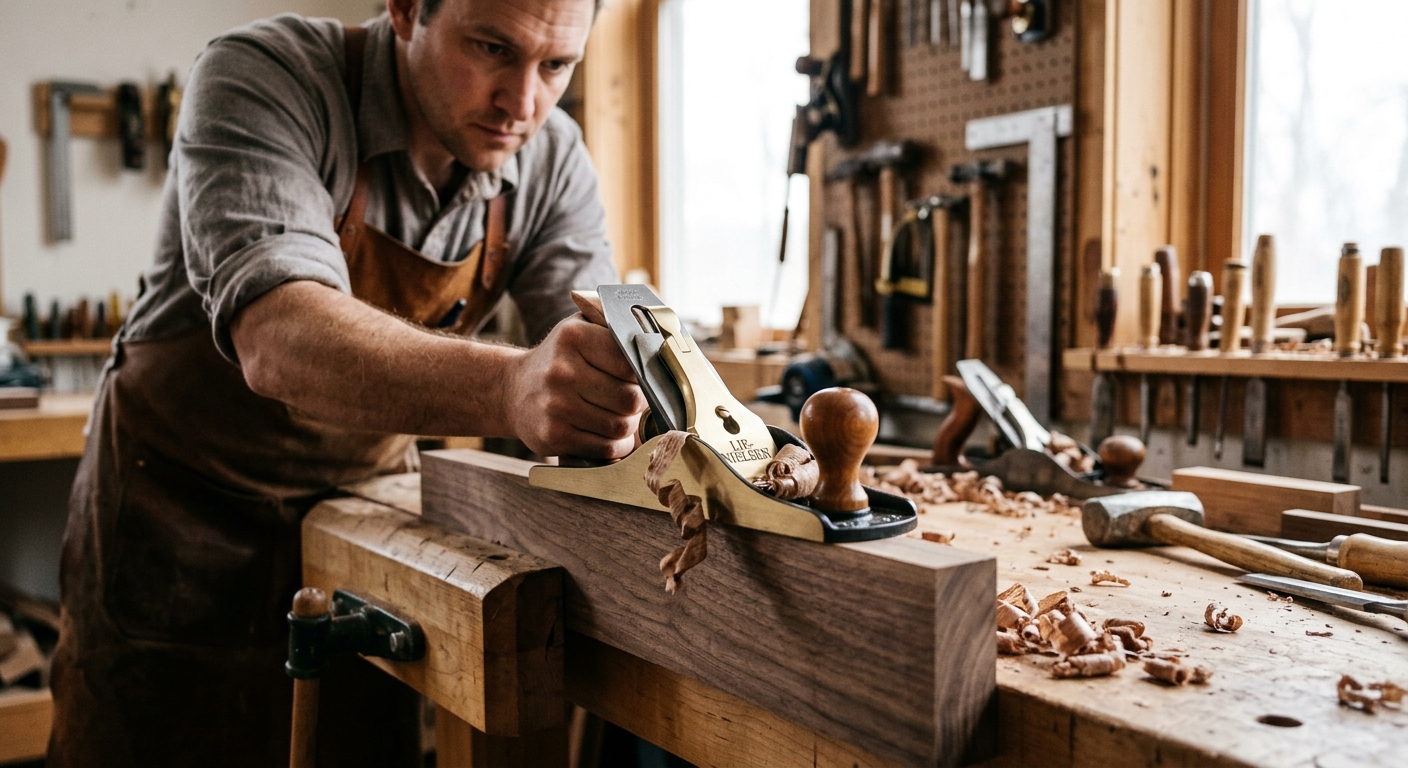
The Lie-Nielsen No. 4 at $375–$425 is the benchmark for premium hand planes. Its ductile iron body (more precisely cast than standard steel), A2 tool steel iron, and machined-flat sole produce a plane that works beautifully straight from the box with only minor initial setup. The adjustors are buttery smooth; the lateral adjustment holds under load. It’s a lifetime tool that will outlast its owner and cost less over a 40-year period than the multiple lower-quality planes it would replace.
- Pros: Flat sole from factory, A2 iron, smooth adjustors, lifetime quality, worth every dollar for a serious woodworker
- Cons’:’Very high price for a beginner’s first plane, may discourage commitment before the learning curve is understood
- Price range: $375–$425
2. Veritas Standard No. 4 – Best Premium Alternative
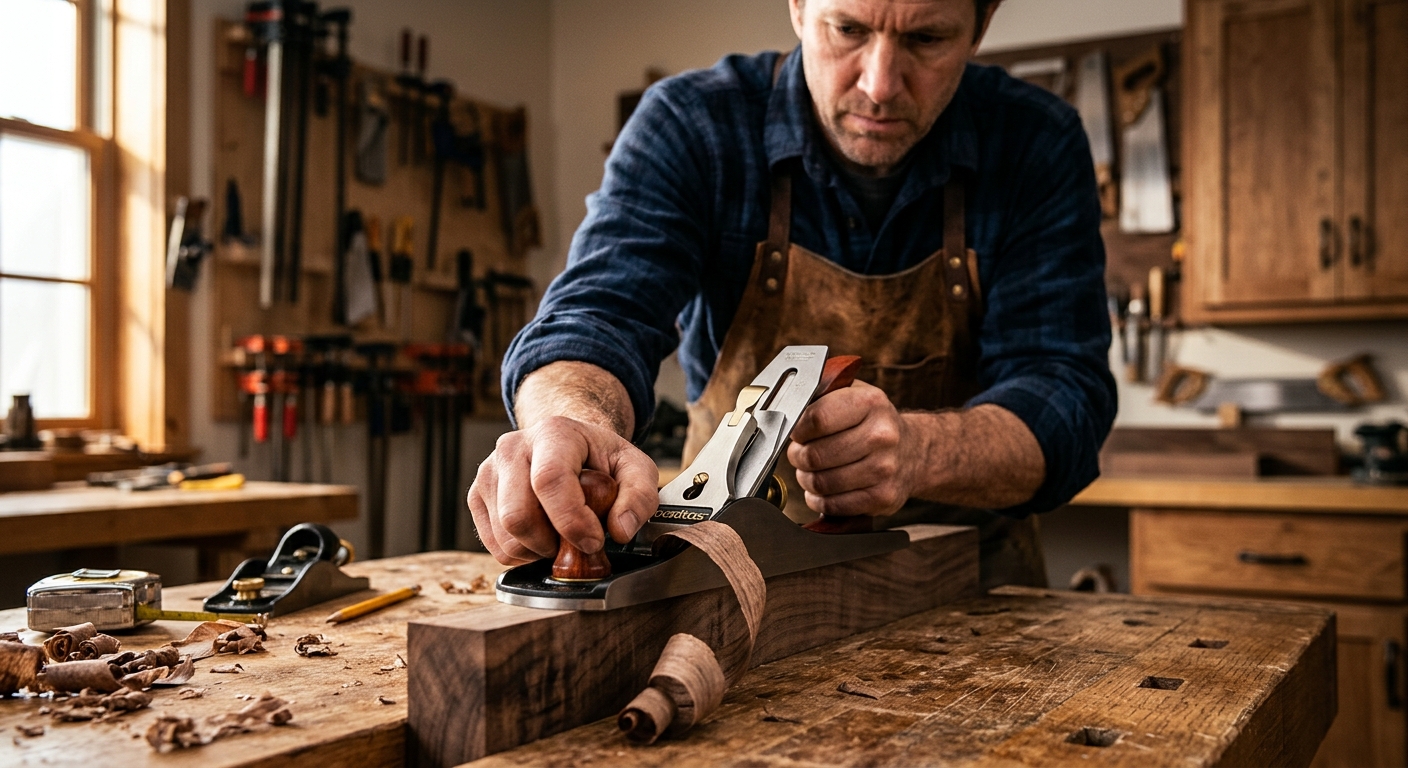
Veritas’s No. 4 at $259–$299 is the best alternative to Lie-Nielsen – Veritas planes are manufactured by Lee Valley in Canada to precision standards that rival Lie-Nielsen at a meaningfully lower price. The PM-V11 steel (their proprietary tool steel) holds an edge longer than A2 and sharpens nearly as easily. The innovative blade adjustment mechanism is different from traditional Bailey-style but equally functional once learned. For buyers who find the Lie-Nielsen price prohibitive, Veritas is an excellent alternative at only slightly lower quality.
- Pros: Near-Lie-Nielsen quality at lower price, PM-V11 steel, Canadian manufacturing, innovative adjustors
- Cons’:’Different adjustor style requires adjustment to traditional Bailey-style technique
- Price range: $259–$299
3. WoodRiver V3 No. 4 – Best Mid-Range Value
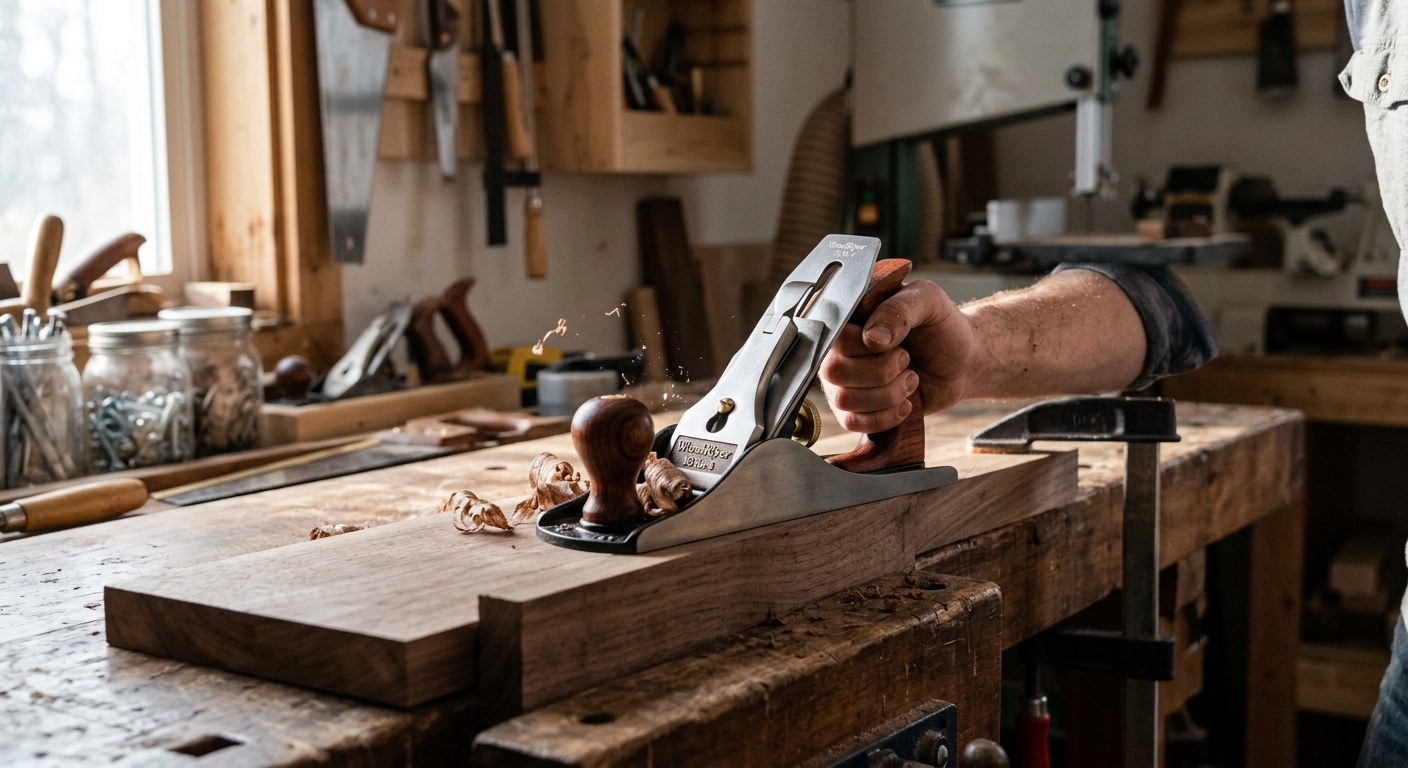
Woodcraft’s WoodRiver V3 No. 4 at $149–$179 is the best mid-range hand plane for beginners who want quality without premium prices. The V3 generation improved sole flatness and iron quality over earlier versions; most WoodRiver V3 planes can be used after minor tuning without extensive lapping. The O1 tool steel iron is adequate and easy to sharpen as a beginner develops technique. Recommended as a first plane for those who want to explore hand plane work before committing to Lie-Nielsen or Veritas prices.
- Pros: Best quality under $200, improved V3 sole flatness, adequate O1 iron, good for beginners
- Cons’:’May require some lapping and tuning before optimal performance, O1 steel needs more frequent sharpening
- Price range: $149–$179
4. Quangsheng No. 4 – Best Budget Premium
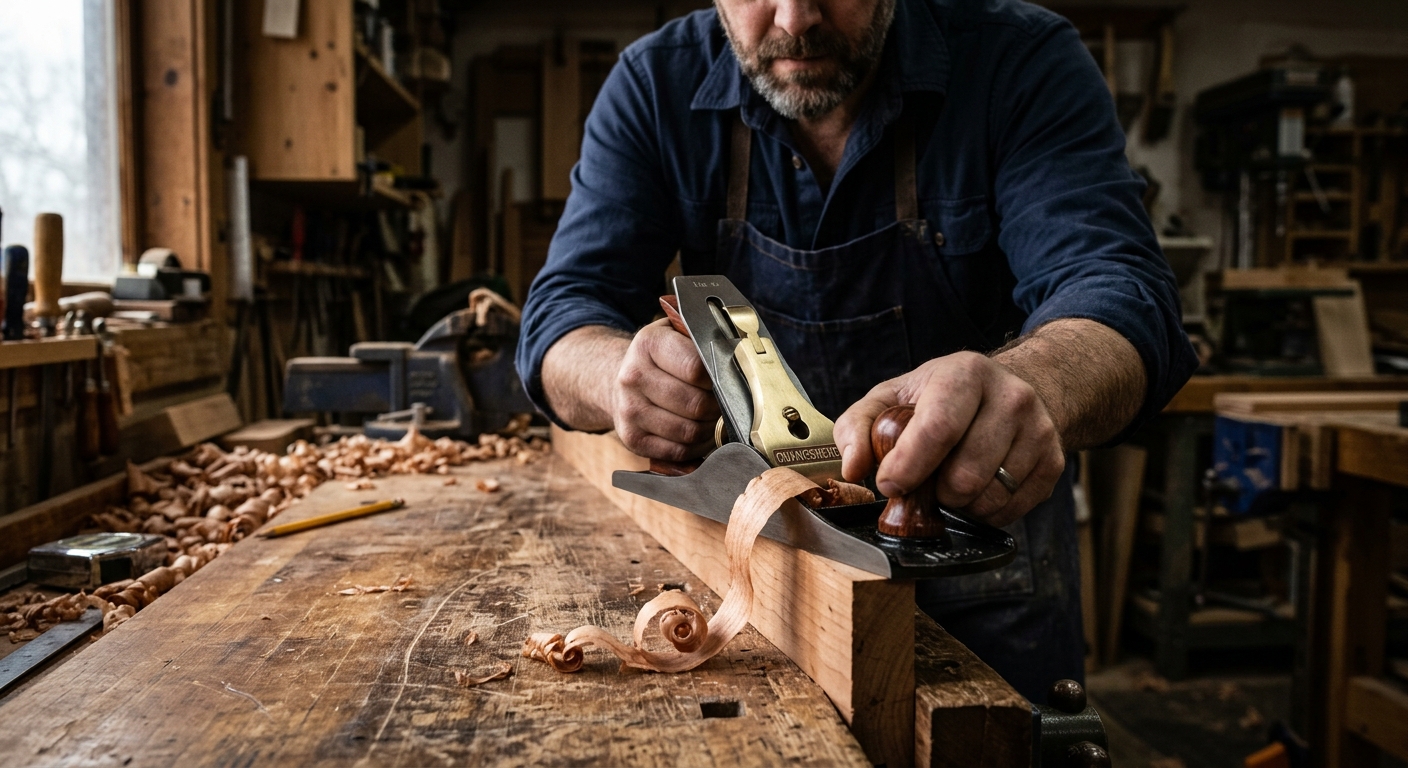
Chinese-made Quangsheng planes sold through Workshop Heaven (UK) and some US distributors at $99–$129 provide surprisingly good quality for their price. The casting is more precisely made than budget Stanley planes; the blades are reasonable-quality steel; the adjustment mechanisms function adequately. They require tuning (sole lapping, back-flattening the iron, mouth adjustment) before working well, but the result is a capable plane at a fraction of premium pricing. Recommended for buyers willing to do setup work to reduce upfront cost.
- Pros: Best quality at budget price after tuning, decent castings, functional adjustors
- Cons’:’Requires significant setup work before optimal use, inconsistent quality control batch-to-batch
- Price range: $99–$129
5. Stanley 12-220 Block Plane – Best First Block Plane

Stanley’s 12-220 low-angle block plane at $29–$39 is the best value block plane for beginners who want to add chamfering, end grain smoothing, and edge trimming to their hand tool capability. The low-angle bed (12 degrees) works well on end grain that tears out under standard-angle planes. Quality is adequate for learning; the iron sharpens easily. The upgrade path leads to Lie-Nielsen’s 60-1/2 or Veritas’s Low-Angle Block Plane when more precise work demands better tools.
- Pros: Low angle for end grain work, low price, adequate for learning, widely available
- Cons’:’Requires sole lapping and iron sharpening before working well, lateral adjustment less precise than premium models
- Price range: $29–$39
FAQ
Do I need to sharpen a brand-new plane?
Almost always. Even quality manufacturers ship planes with edges that are technically sharp but not refined enough for fine hand planing. Before using any new plane, flatten the back of the iron (the face without the bevel) on progressively finer stones, then sharpen the bevel to your preferred angle (25–35 degrees depending on wood type). Budget 30–60 minutes for initial sharpening. A properly sharpened plane requires almost no pressure to take wispy shavings from hardwood.
What wood type is hardest to plane?
Interlocked grain (wild grain that changes direction through the board) is the most challenging planing situation – planing in any direction tears fibers in some areas. Figured maple, quilted cherry, and birds-eye maple fall into this category. Reduce tear-out by: setting the finest possible cut (the iron should barely extend below the sole), using a toothed iron as a first pass, or planing at a high angle (45-60 degrees) to shear fibers instead of lifting them. End grain is hardest to get a smooth result from – it requires a very sharp, low-angle iron and light cuts.
How do I tune a Stanley or vintage Bailey plane?
Vintage Stanley planes (pre-1960) often have better castings than current production but need cleaning and sharpening. Steps: disassemble and clean all parts; lap the sole on a flat surface with 120-grit sandpaper until it’s flat (no daylight between sole and reference surface); flatten the iron back; sharpen the bevel; reassemble. Many woodworkers prefer restored vintage Stanleys over new budget planes after proper tuning. YouTube has excellent restoration tutorials from Paul Sellers and Rob Cosman.
Bottom Line
Beginners who can justify the investment should buy a Veritas No. 4 at $259–$299 – it arrives nearly ready to use and produces immediate results that make the learning curve encouraging rather than discouraging. Those who want to limit upfront cost should try the WoodRiver V3 at $149–$179 after budgeting for a sharpening system ($40–$80). Don’t buy cheap planes – a poorly performing plane that requires extensive tuning discourages beginners before the rewarding results of sharp hand plane work are experienced. The tool quality and the sharpening system together determine results; invest in both.
Affiliate Disclosure: DIY Arsenal participates in the Amazon Associates Program and other affiliate programs. When you purchase through links on this site, we may earn a small commission at no additional cost to you. We only recommend products we have personally tested and genuinely believe in.