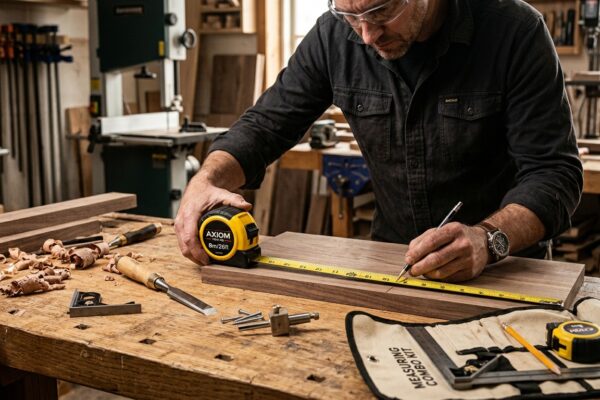
Best Framing Squares and Layout Tools for Framing and Woodworking
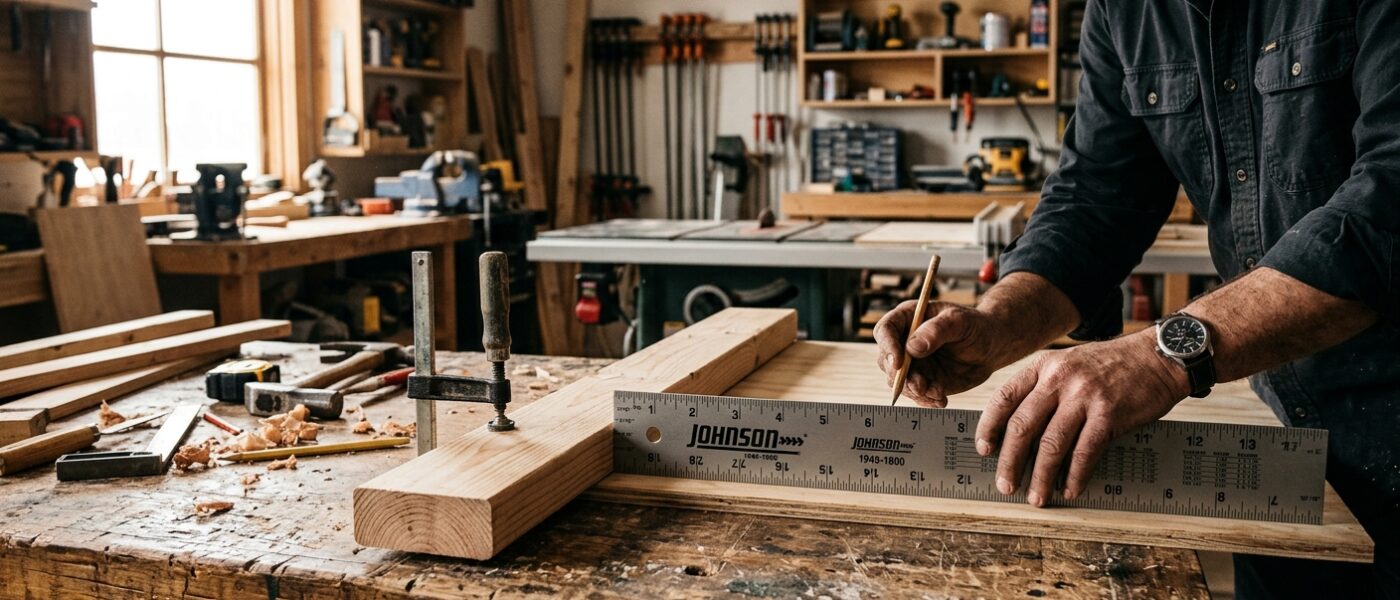
Johnson framing square is the fundamental large-scale layout reference no framer or woodworker can work without
Tape measures handle most measurements, but they fail when you need repeatable, consistent spacing – laying out deck joists every 16 inches, marking pilot holes for a row of hooks, or dividing a panel into equal sections. Layout tools like framing squares, trammel points, and layout sticks solve these problems efficiently. This guide covers the best specialty layout tools for DIYers who work on framing, cabinetry, and woodworking projects.
How We Evaluate Layout Tools
We tested tools for measurement accuracy, repeatability, ease of setup, durability, and versatility across layout tasks. A framing square that’s not truly square, or trammel points that shift during scribing, produce compounding errors throughout a project. Precision and repeatability are the primary evaluation criteria for all layout tools.
Top Picks
Johnson Level 1940-1800 Steel Framing Square – Best Overall
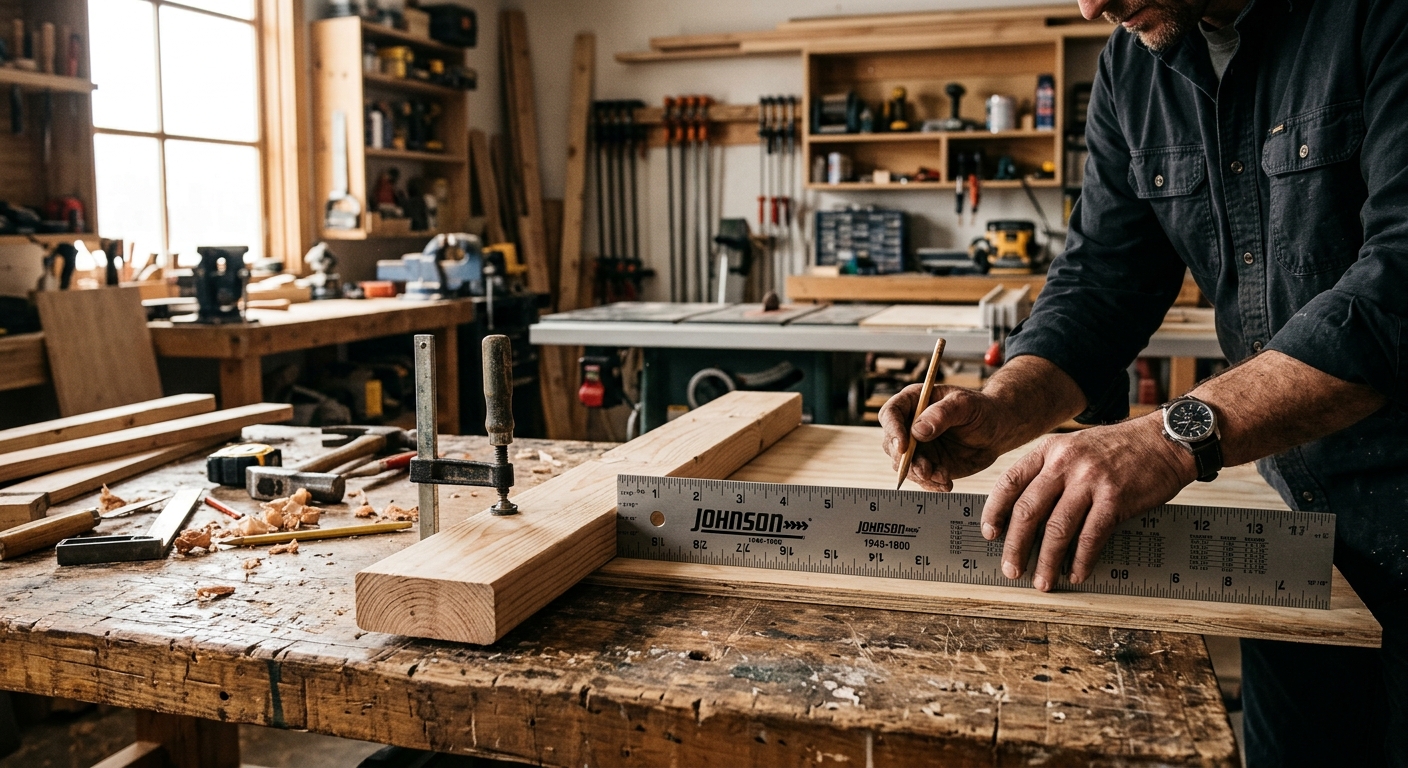
The framing square (also called a steel square or rafter square) is the fundamental tool for laying out rafters, framing walls, checking squareness of large assemblies, and establishing 90-degree references across wide stock. Johnson’s 18×24-inch framing square is made from hardened steel with clear, accurate graduations on all four edges. The body (long arm) and tongue (short arm) are truly perpendicular. Rafter tables are stamped on the body. Every framer needs one.
- Pros: Large 18×24-inch reference, rafter tables included, hardened steel, true 90 degrees, durable
- Cons: Bulky for storage and transport, requires care to keep perpendicularity accurate (don’t drop it)
Woodpecker Precision Marking System – Best for Woodworking Joinery
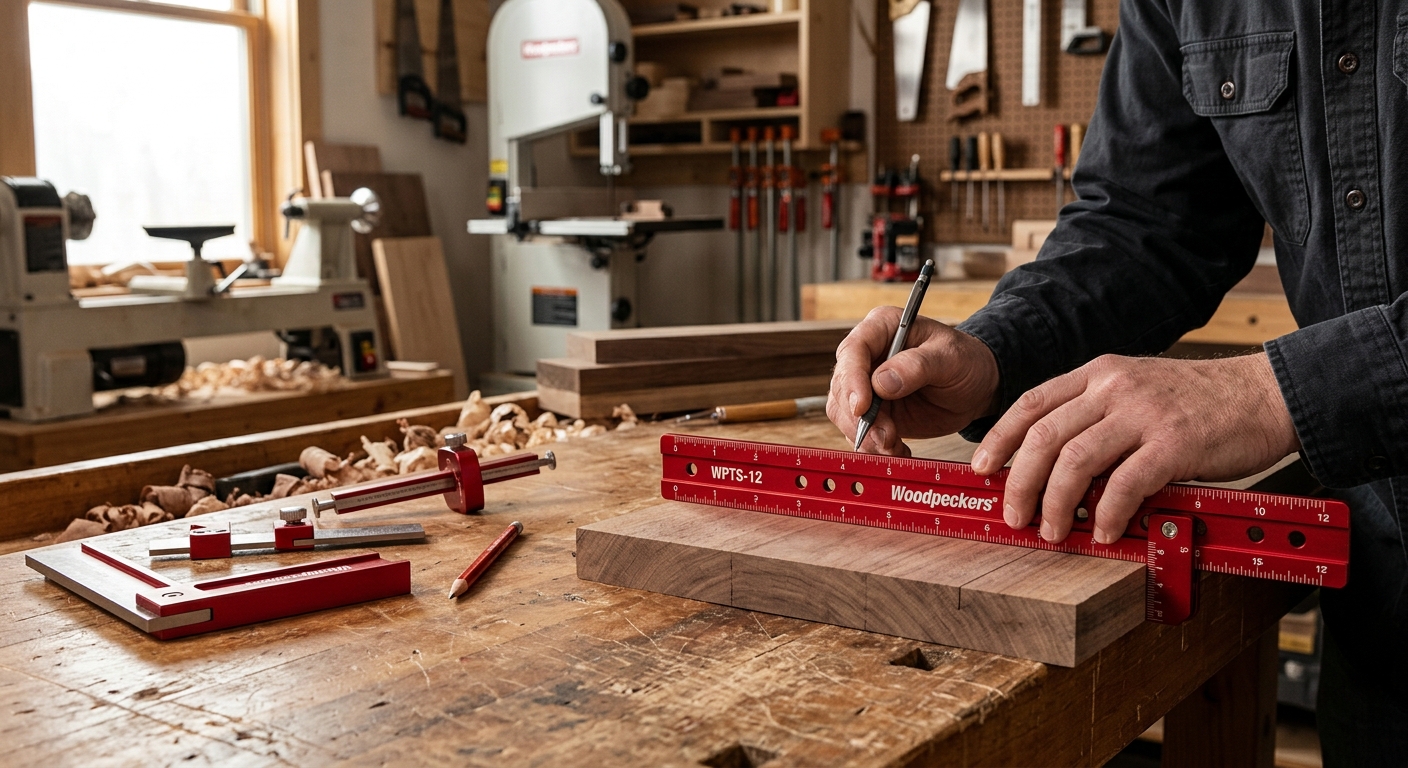
Woodpeckers’ precision aluminum layout tools are CNC-machined to tolerances tighter than most woodworkers ever need. The marking system includes a T-square for drawer slot layout, a story stick for repeatable spacing, and precision fence references. Every piece is accurate to 0.001 inch. Expensive but warranted for furniture makers, cabinetmakers, and woodworkers who want setup tools that never become the source of error.
- Pros: CNC precision, aluminum construction, repeatable setup for production work, versatile system
- Cons’:’Very expensive, specialized for dedicated woodworking (not general construction), limited availability
Empire E2994 36-Inch Drywall T-Square – Best for Drywall and Sheet Goods
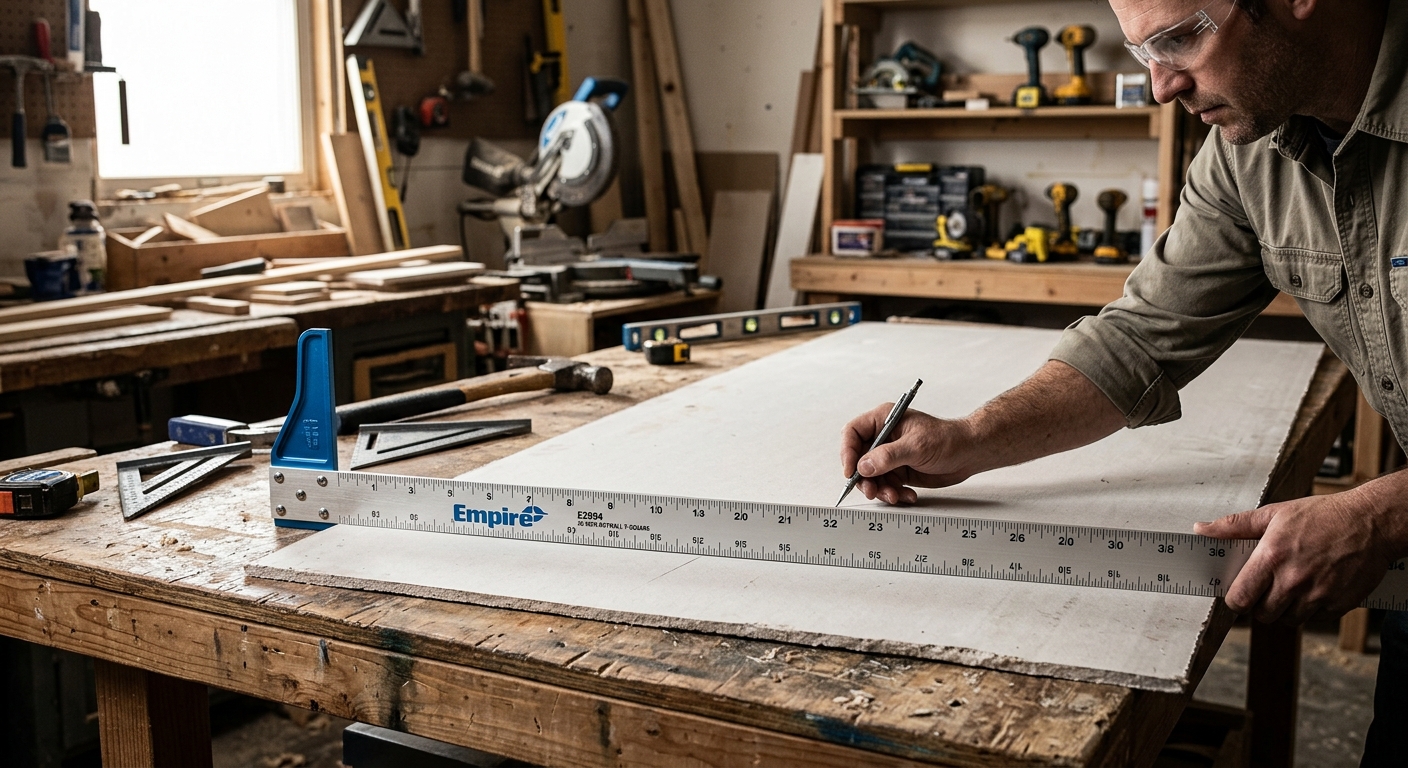
The drywall T-square is the tool for scoring drywall sheets accurately. The horizontal cross-arm hooks over the drywall top edge, the vertical blade gives you a 48-inch straight reference to score along, and the built-in level confirms the panel is plumb. Marking and scoring a full drywall sheet takes seconds with the T-square; trying to do it with a tape measure and a chalk line takes minutes and produces less accurate results.
- Pros: Hooks over drywall edge, provides full 48-inch reference, level built in, speeds drywall cutting dramatically
- Cons: Specialized for drywall and sheet goods, not general purpose, bulky to transport
Calculated Industries 6135 Pocket Reference Calculator – Best Layout Calculator
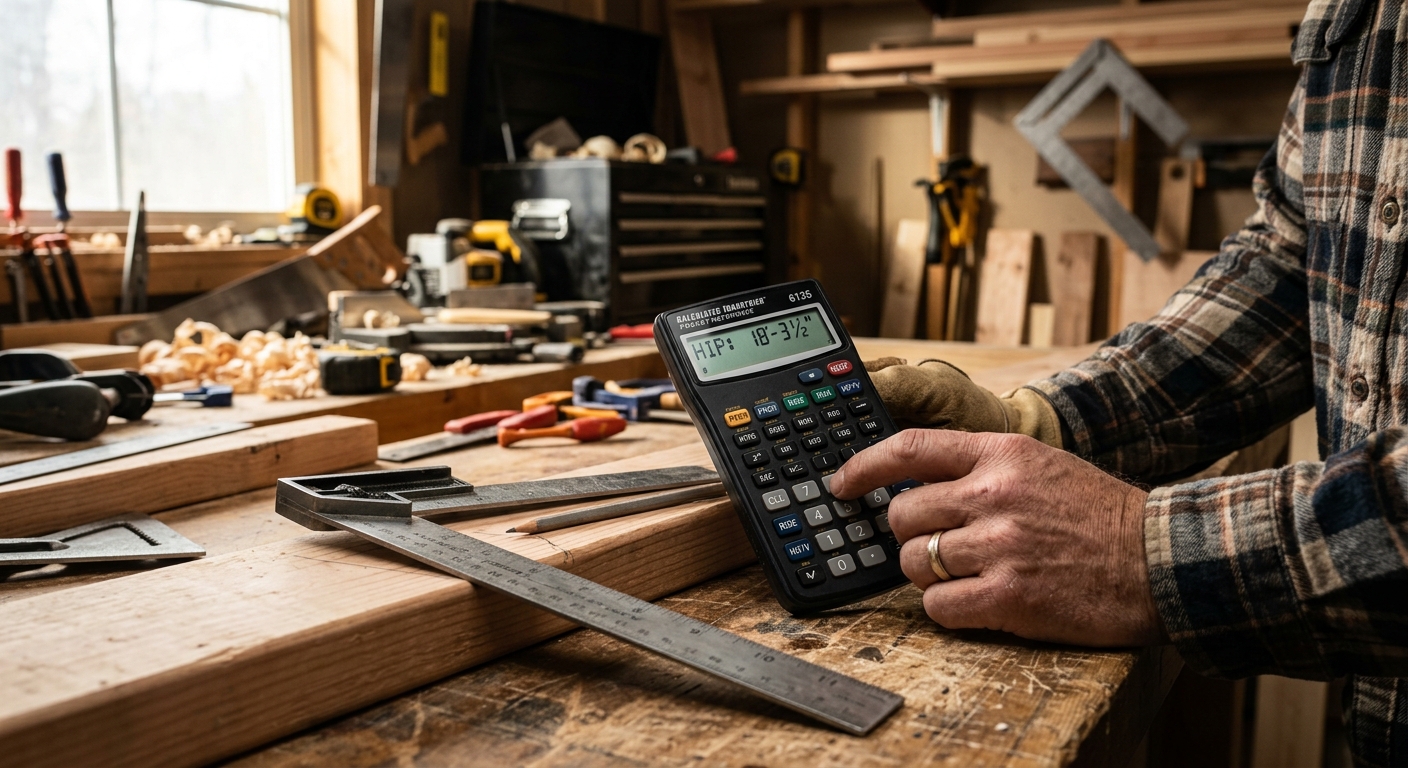
The Construction Master Pro calculator handles all the math of building layout: converting between fractions and decimals, calculating board feet, computing stair rise/run, solving rafter problems, calculating concrete volume, and performing trigonometry. It eliminates calculation errors and saves the mental overhead of converting 3/4 inch to decimals for every computation. Tradespeople who own one wonder how they worked without it.
- Pros: Eliminates math errors, handles all construction calculations, feet/inches/fractions input, compact
- Cons’:’Learning curve for all functions, specialized (not a general calculator), smartphone apps cover most functions
Woodpecker Story Stick – Best for Repeatable Spacing
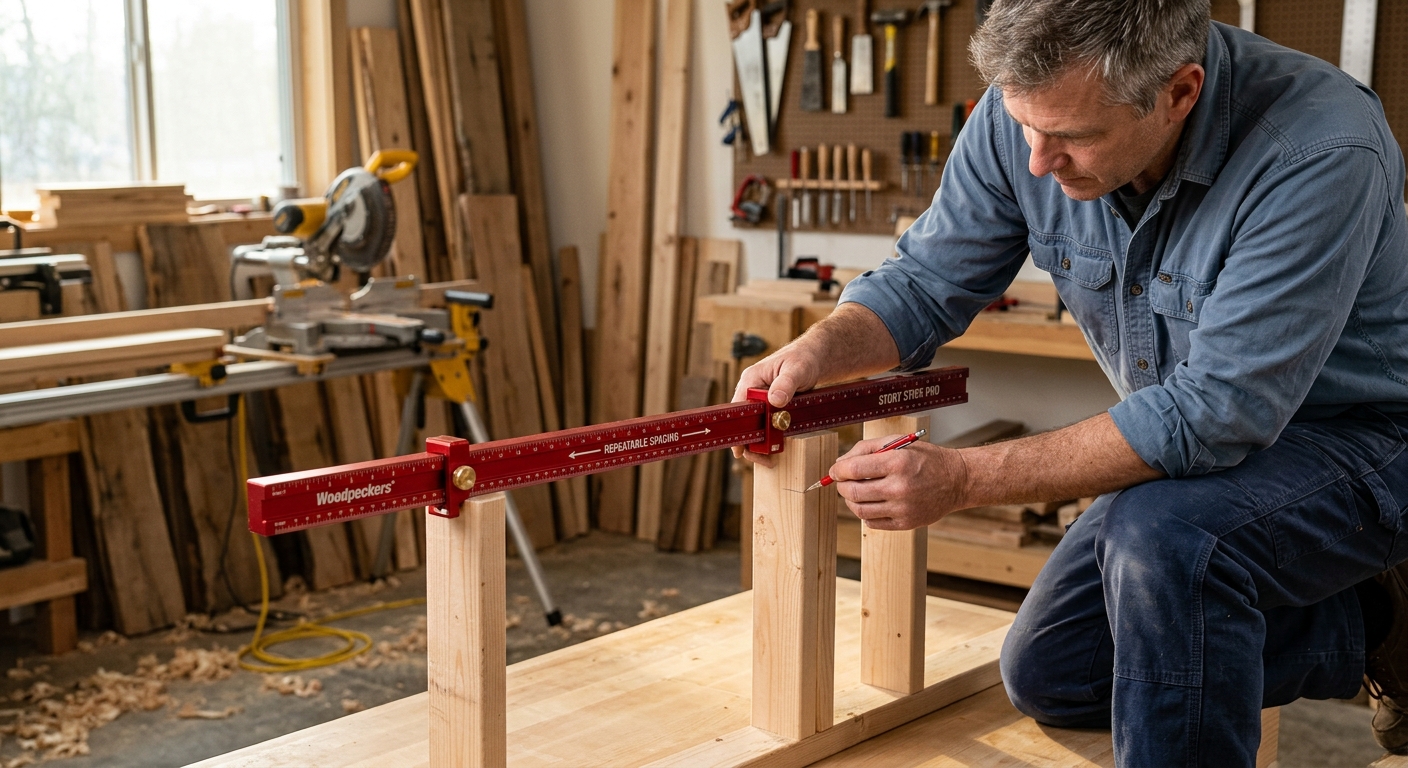
A story stick (also called a story pole) is a length of material (wood or metal) marked with the exact positions of repeating elements – shelf locations, drawer positions, tile spacings, window locations. Instead of measuring each location individually from a tape measure, you transfer each position from the story stick simultaneously. Woodpecker’s aluminum story sticks are precision-drilled for consistency; you can also make your own from a straight piece of scrap.
- Pros: Transfers multiple positions simultaneously, eliminates cumulative measurement error, reusable for matching components
- Cons’:’Requires setup time for one-off jobs, store-bought story sticks are expensive vs making your own
Frequently Asked Questions
How do I use a framing square to lay out rafters? Use the rafter tables stamped on the square body. Find the total rise per foot of run in your column, step the square along the rafter top edge the number of times equal to total run in feet, and mark at each step. The square gives you ridge plumb cut, tail plumb cut, and bird’s mouth automatically.
What is the 3-4-5 method? A technique for establishing a 90-degree corner: measure 3 units along one leg, 4 units along the other, and adjust until the diagonal measures exactly 5 units. The corner is then perfectly square. Works at any scale – 3 inches, 3 feet, 3 meters.
How do I divide a board into equal parts without math? Place a ruler diagonally across the board so the total number of desired divisions aligns with the edges at easy numbers, then mark at each division point. For example, to divide an 11-inch board into 5 equal parts, tilt the ruler so it spans 0 to 15 inches corner to corner, and mark at 3, 6, 9, and 12 inches.
Do I need a specialized layout tool or can I use a tape measure? Tape measures work for one-time measurements. Specialized tools – framing squares, story sticks, drywall T-squares – save time when you’re repeating the same measurement or need a longer straight reference than a tape provides.
Bottom Line
The Johnson 18×24-inch framing square earns Best Overall for its fundamental utility in framing, rafter layout, and squareness checking that no other tool replicates. The Empire drywall T-square is essential for any drywall project. A Construction Master Pro calculator pays for itself on the first stair or rafter calculation it prevents you from getting wrong. Together, these layout tools make large-scale projects faster, more accurate, and less stressful.
Affiliate Disclosure: DIY Arsenal participates in the Amazon Associates Program and other affiliate programs. When you purchase through links on this site, we may earn a small commission at no additional cost to you. We only recommend products we have personally tested and genuinely believe in.