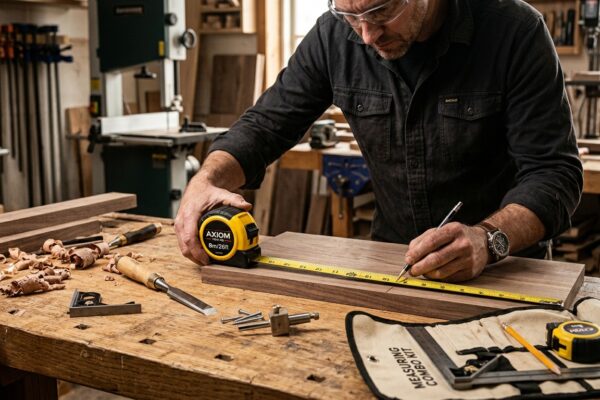
Best Specialty Measuring Tools – Angle Gauges, Thread Gauges, and Shop Scales
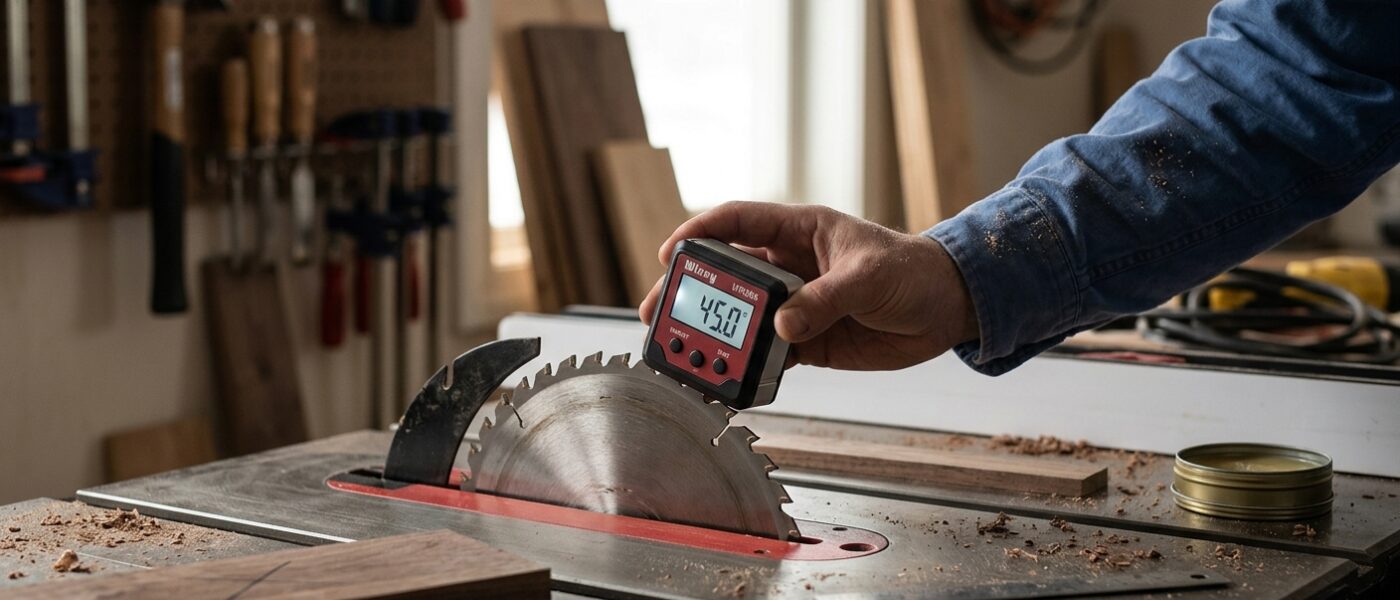
Wixey digital angle gauge transforms saw setup accuracy with 0.1-degree precision in 30 seconds
Shop scales, angle gauges, and specialty measuring tools fill the gaps in every measuring toolkit. When you need to weigh hardware for shipping, set a blade angle to 0.1 degrees, or measure the diameter of an inside bore, general measuring tools don’t quite fit. This guide covers the specialty measuring tools that show up on every advanced DIYer’s wish list: precision angle gauges, inside/outside calipers, thread pitch gauges, and shop scales.
How We Evaluate Specialty Measuring Tools
We evaluated specialty tools for accuracy, ease of use, build quality, and how well they solve specific measurement problems that general tools can’t address. In this category, the value proposition matters most – a specialty tool that saves significant time or enables work that’s otherwise impossible is worth far more than its price suggests.
Top Picks
Wixey WR365 Digital Angle Gauge – Best Blade Angle Gauge
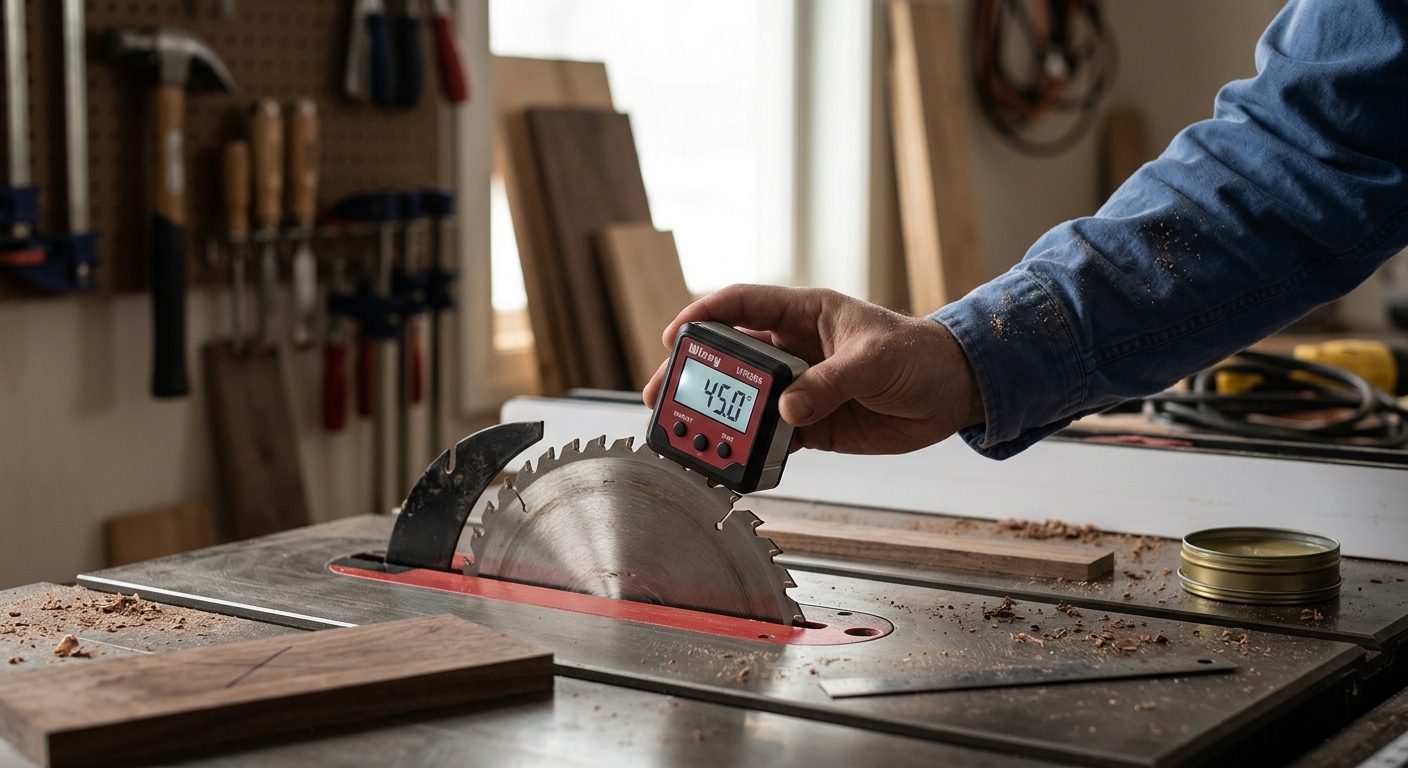
The Wixey WR365 is the original magnetic digital angle gauge for table saws, miter saws, and router tables. Place it on the blade (with the saw off), set to zero on a flat reference, and transfer to any blade tilt setting with 0.1-degree accuracy. The built-in hold function freezes the reading, and the large display reads from across the saw. An essential upgrade for any woodworker who wants consistent, accurate bevel cuts without relying on the saw’s unreliable built-in scale.
- Pros: 0.1-degree accuracy, magnetic base, large display, fast zero calibration, transforms saw setup accuracy
- Cons’:’Battery required, magnetic base can shift if bumped during setup, only useful where magnetic surfaces exist
General Tools 820 Thread Pitch Gauge – Best Thread Gauge

A thread pitch gauge identifies the thread count per inch (UNC/UNF) or pitch in mm (metric) of any bolt, nut, or threaded hole. The 820 includes 28 leaf gauges covering the most common inch and metric thread standards. Identifying thread pitch before trying to source replacement hardware or cut threads saves enormous frustration. A tiny tool that every mechanic and machinist keeps nearby permanently.
- Pros: Identifies thread pitch quickly, 28 blades cover common standards, durable metal case, small and portable
- Cons’:’Requires practice to read correctly, doesn’t cover unusual or specialty thread standards
American Weigh Scales SC-2KG – Best Shop Scale
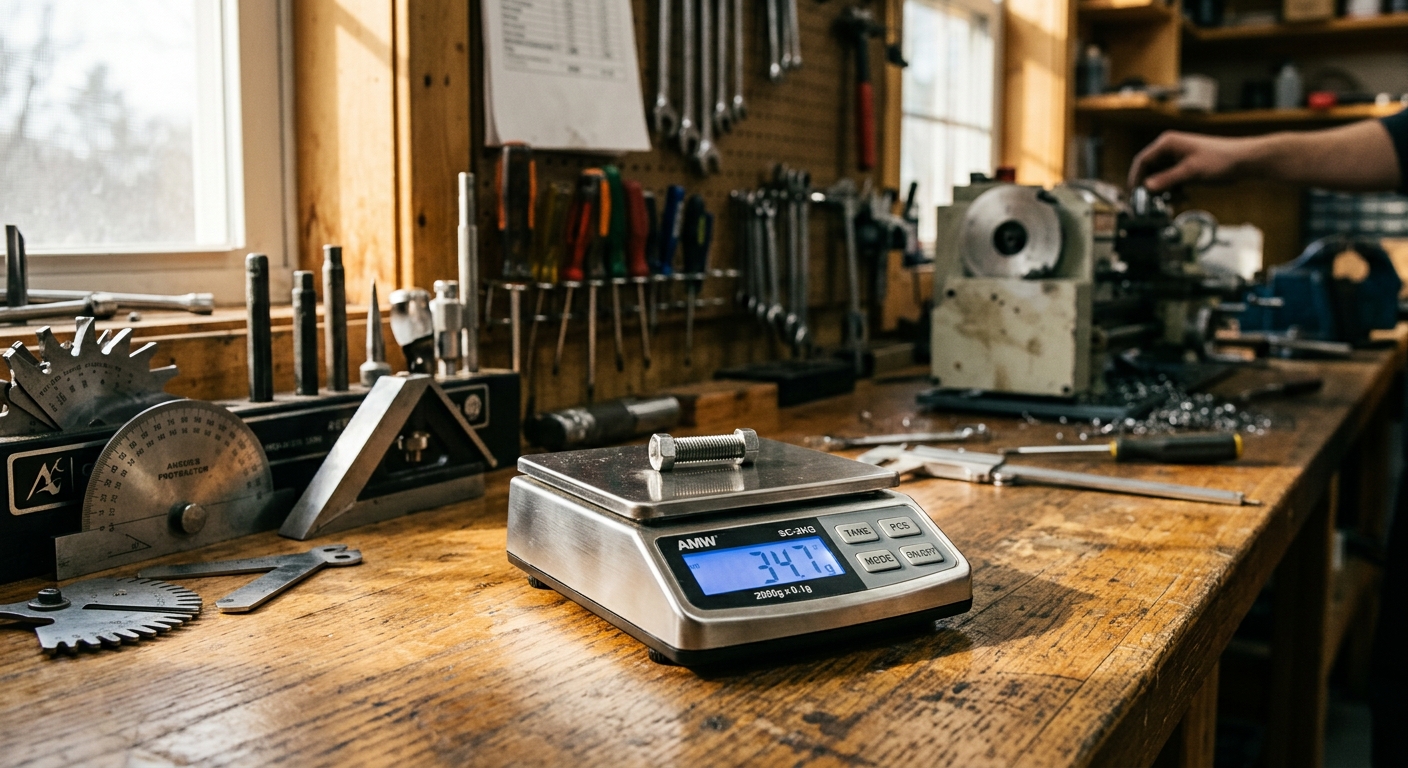
A shop scale handles tasks from weighing packages for shipping to measuring resin and epoxy components for exact ratio mixing. The SC-2KG handles up to 2 kilograms in 0.1-gram increments, the stainless platform is easy to clean, and the tare function subtracts container weight instantly. For woodworkers finishing with epoxy resin, jewelers, or anyone shipping handmade items, a precise shop scale is a genuinely useful tool.
- Pros: 0.1-gram precision, 2kg capacity, tare function, stainless platform, compact, affordable
- Cons’:’Limited to 2kg (purchase 5kg or 10kg model for heavier work), battery required
Mitutoyo 526-911 Radius Gauge Set – Best for Radius Measurement
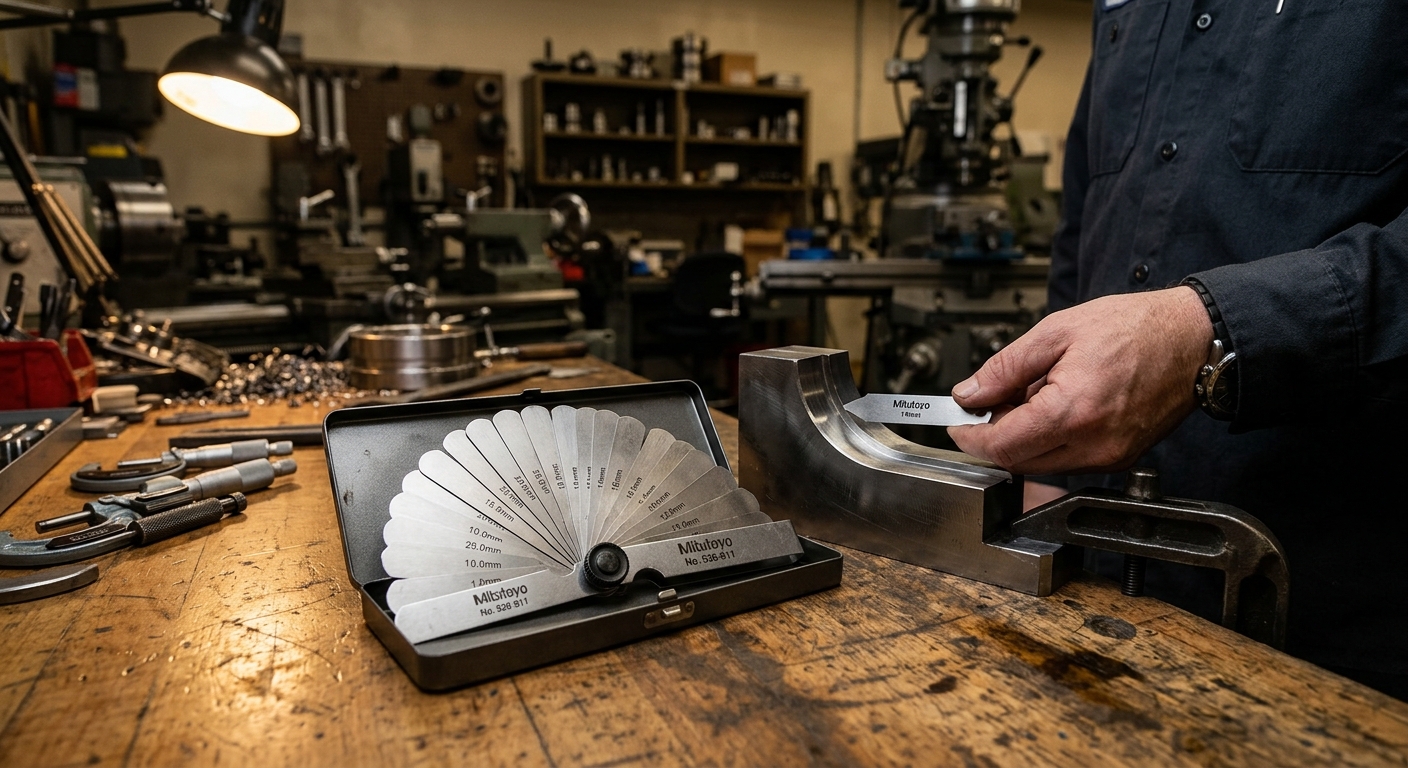
Radius gauges measure the inside or outside curve radius of a machined or woodworked part. The Mitutoyo set covers common radii from 1/32 to 1/2 inch (both concave and convex) with leaf gauges that you hold against the curve. When matching a router profile, fitting a curved joint, or verifying a machined radius, no other tool gives you the direct answer as quickly. A specialized tool that pays dividends in production shops.
- Pros: Direct radius measurement, both concave and convex ranges, durable, precise Mitutoyo quality
- Cons’:’Very specialized, expensive for occasional use, limited to the included radius range
Calculated Industries 4020 Construction Master – Best for Advanced Calculations
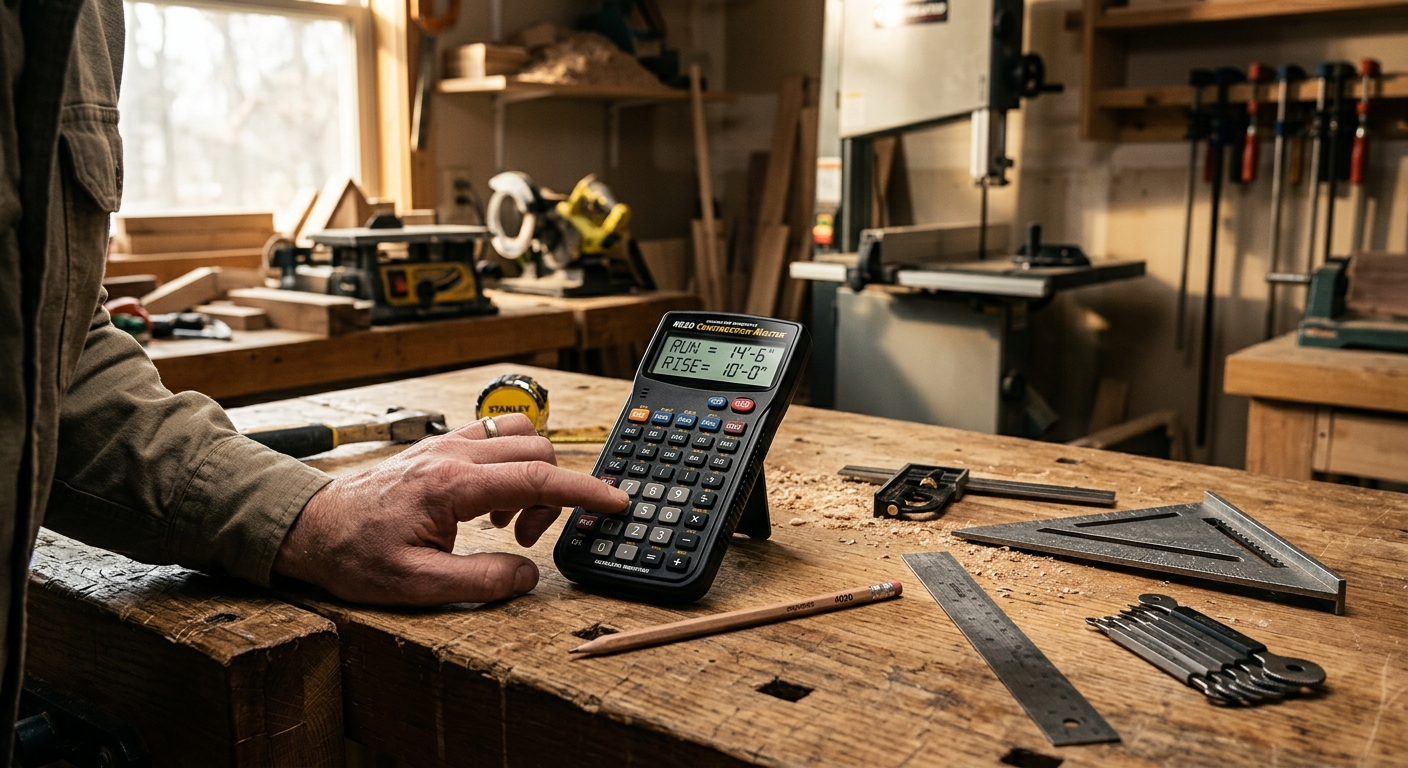
The Construction Master Pro is the trade calculator that professional contractors carry to every job. It handles feet-inches-fraction input directly (no decimal conversion), calculates rake walls, hip-valley rafters, stairs, concrete volume, board feet, and every other construction math problem. The difference between a correct and incorrect stair layout or rafter length calculation can mean expensive do-overs – this calculator eliminates the math errors that cause them.
- Pros: Native feet/inches input, all construction math functions, eliminates calculation errors, compact, long battery life
- Cons’:’Learning curve for all features, smartphone calculator apps cover many functions for free
Frequently Asked Questions
Do I need a digital blade angle gauge if my saw has a bevel scale? Yes, if accuracy matters. Built-in saw scales are often off by 0.5-2 degrees due to manufacturing tolerances and wear. A digital gauge takes 30 seconds and gives you actual blade angle. For bevel cuts in furniture and finish carpentry, the difference between 44.5 and 45 degrees is visible.
How do I identify a thread pitch without a gauge? Count the threads over 1 inch of bolt shaft – this gives threads per inch (TPI). For metric, count threads over 10mm and divide to get pitch in mm per thread. Tedious but possible without a gauge. With the gauge, it takes 5 seconds.
What capacity shop scale do I need? For epoxy and resin mixing: 500g-2kg at 0.1g resolution. For shipping packages: 5-50kg at 2g resolution. Buy the capacity for your primary use case; a scale that’s too small for a task is useless at that task.
Can I use a digital angle gauge on a miter saw? Yes – place it on the flat surface of the blade and zero it. The reading gives the exact miter angle. This is particularly useful when the miter detent doesn’t land exactly on the angle you need. Tilt the saw slightly, place the gauge, and adjust until you read exactly your target.
Bottom Line
The Wixey WR365 digital angle gauge earns Best Overall for the specialty category – it transforms the accuracy of every bevel cut you make and pays for itself the first time it prevents a miscut angle on expensive material. Add a thread pitch gauge for mechanical work, a Construction Master calculator for complex builds, and a shop scale if you work with resins or ship products. These specialty tools solve problems that general tools can’t address efficiently.
Affiliate Disclosure: DIY Arsenal participates in the Amazon Associates Program and other affiliate programs. When you purchase through links on this site, we may earn a small commission at no additional cost to you. We only recommend products we have personally tested and genuinely believe in.