Best Thermal Cameras and Infrared Thermometers for Home Inspection and DIY
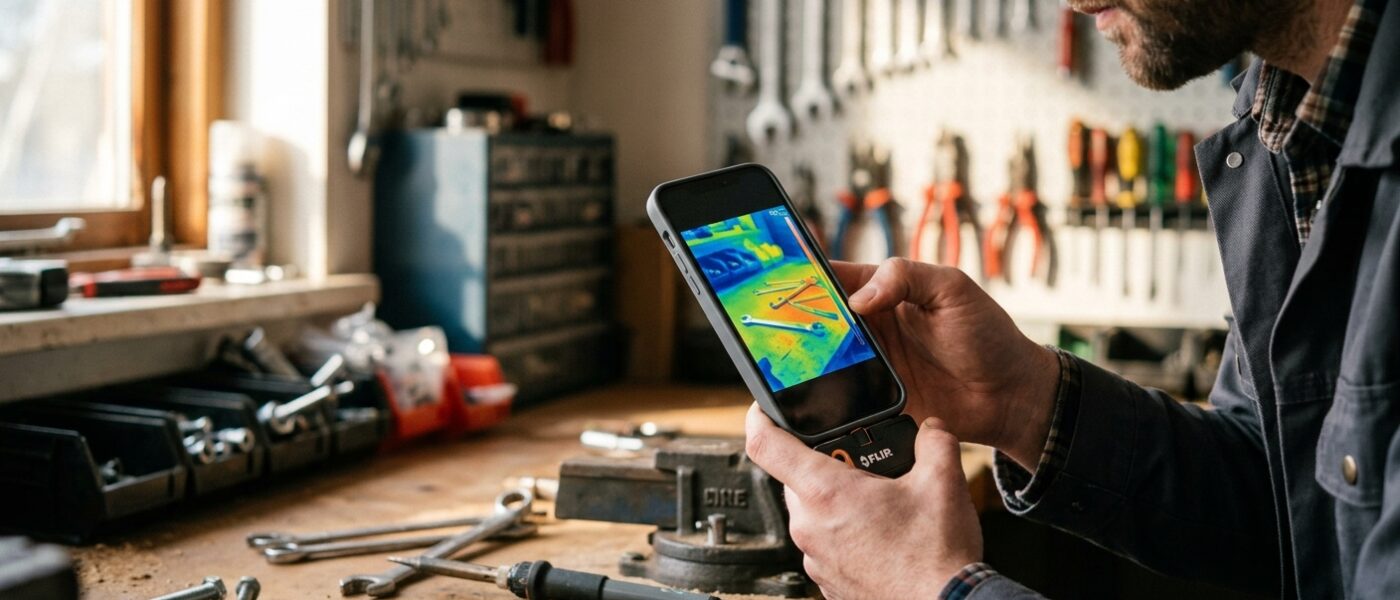
FLIR ONE Pro MSX overlay makes thermal images far more useful than competing cameras at similar prices
Thermal cameras and infrared thermometers reveal invisible problems in homes and buildings: insulation gaps, moisture intrusion, electrical hot spots, HVAC duct leaks, and radiant heating failures. A few hundred dollars spent on thermal imaging before a renovation can save thousands in unexpected repairs. This guide covers the best thermal imagers and infrared tools for DIYers and home inspectors.
How We Evaluate Thermal Imaging Tools
We tested thermal cameras for thermal sensitivity (NETD – how small a temperature difference can they detect?), image resolution (how many pixels in the thermal image?), ease of use and display quality, accuracy of temperature measurement, connectivity (Wi-Fi, Bluetooth, phone attachment), and overall value. A thermal camera with poor sensitivity misses the subtle temperature differences that reveal real problems.
Top Picks
FLIR ONE Pro – Best Overall Smartphone Thermal Camera
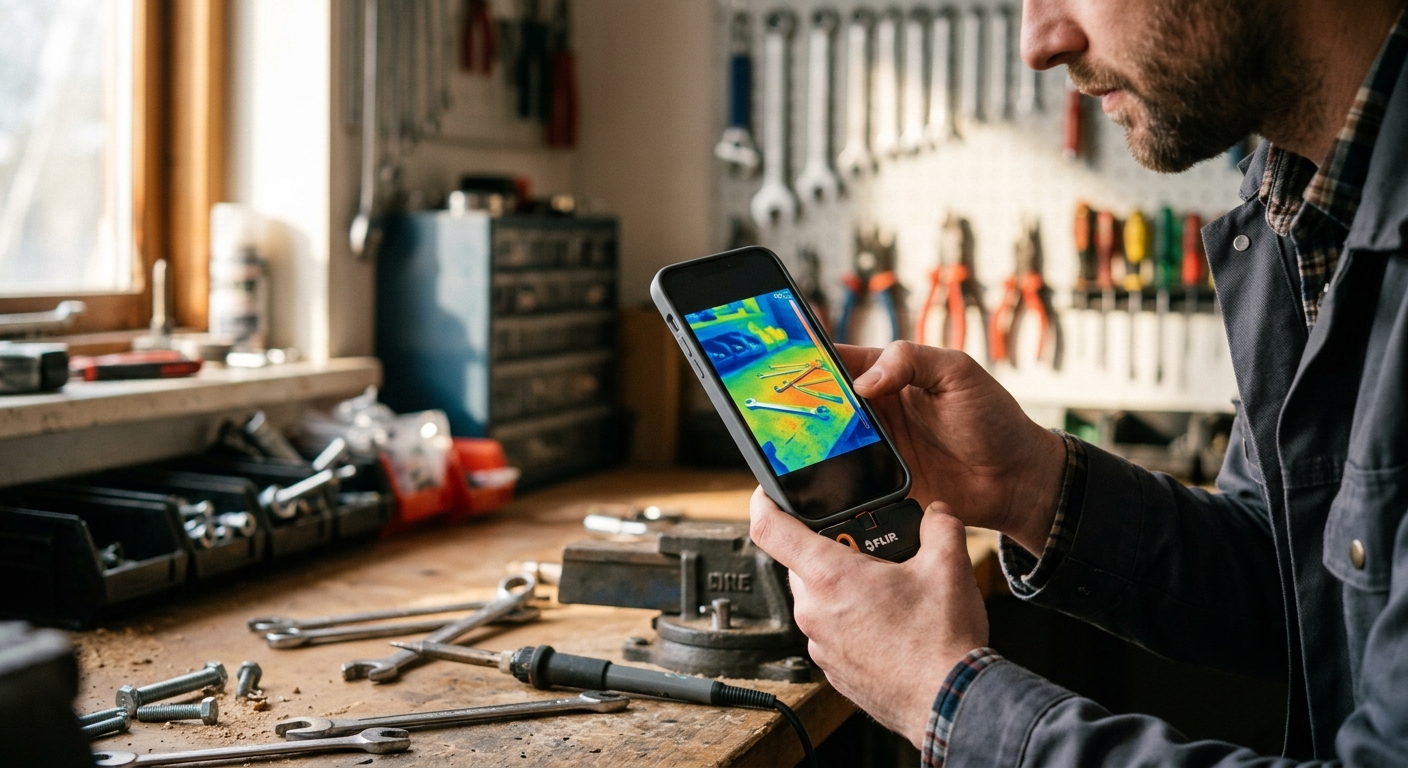
The FLIR ONE Pro attaches to a smartphone (Lightning or USB-C) and uses FLIR’s MSX technology to overlay thermal data onto visible-light images. The result is a sharp, readable thermal image that shows temperature patterns clearly. The 160×120 thermal resolution combined with MSX produces images that look like 4K compared to raw thermal-only cameras at similar price points. At -20 to 400°C range and 0.1°C thermal sensitivity, it detects all practically meaningful temperature differences in buildings.
- Pros: MSX image enhancement, phone-based display, 160×120 resolution, 0.1°C sensitivity, wide temperature range
- Cons: Requires compatible phone, battery drains phone, must hold phone to use
FLIR C5 – Best Standalone Thermal Camera
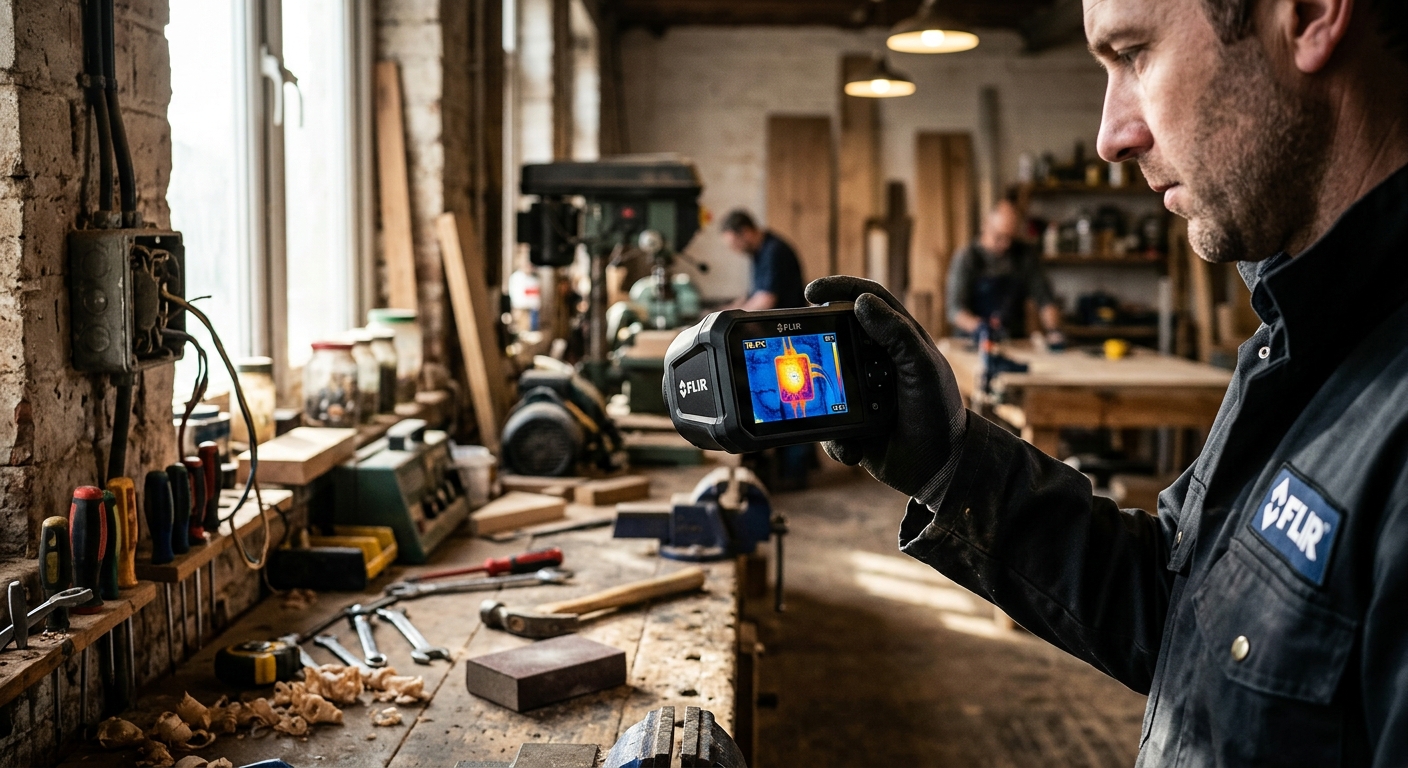
The FLIR C5 is a pocket thermal camera with a built-in 5-inch touchscreen – no phone required. The 160×120 resolution with MSX overlay produces excellent images, Wi-Fi connectivity lets you share images instantly, and the cloud storage integration builds an inspection record automatically. For home inspectors and contractors who use thermal imaging professionally, the standalone design is faster and more reliable than a phone-attached camera.
- Pros: Standalone design (no phone needed), touchscreen display, Wi-Fi sharing, cloud storage, MSX overlay
- Cons’:’Expensive, 160×120 resolution is limited for high-detail work, specialized tool
Seek Thermal Compact – Best Value Smartphone Thermal
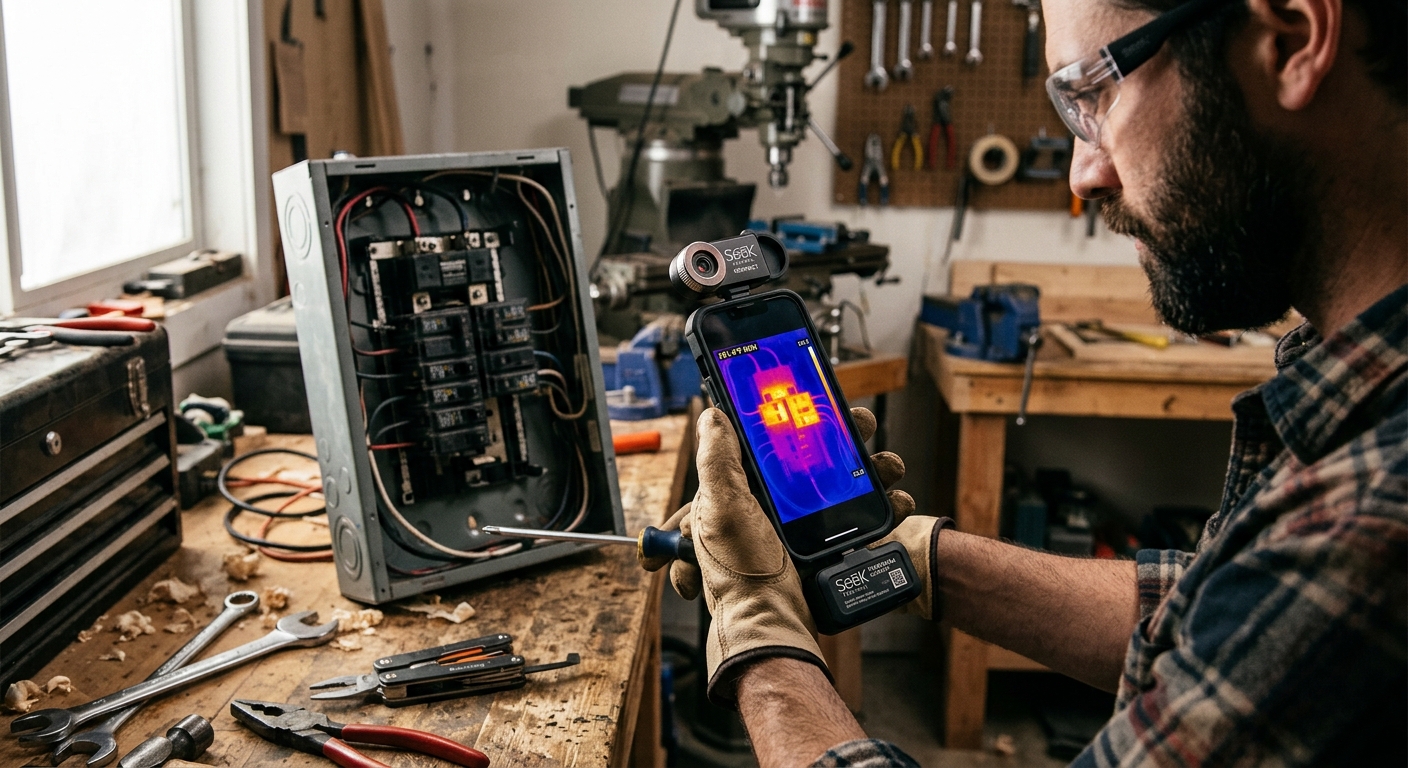
The Seek Thermal Compact offers 206×156 resolution (higher than FLIR ONE) at roughly half the FLIR price. The temperature range covers -40°F to 626°F, and the 36-degree field of view is appropriate for building work. Without MSX image enhancement, images are harder to interpret than FLIR’s but the raw temperature sensitivity is excellent. A cost-effective choice for occasional thermal inspection work where budget matters more than image clarity.
- Pros: Higher pixel count than FLIR ONE at similar price, wide temperature range, compact, no batteries needed (draws from phone)
- Cons’:’No MSX enhancement (images harder to interpret), limited image detail without overlay, requires compatible phone
Fluke 62 MAX+ Infrared Thermometer – Best IR Thermometer
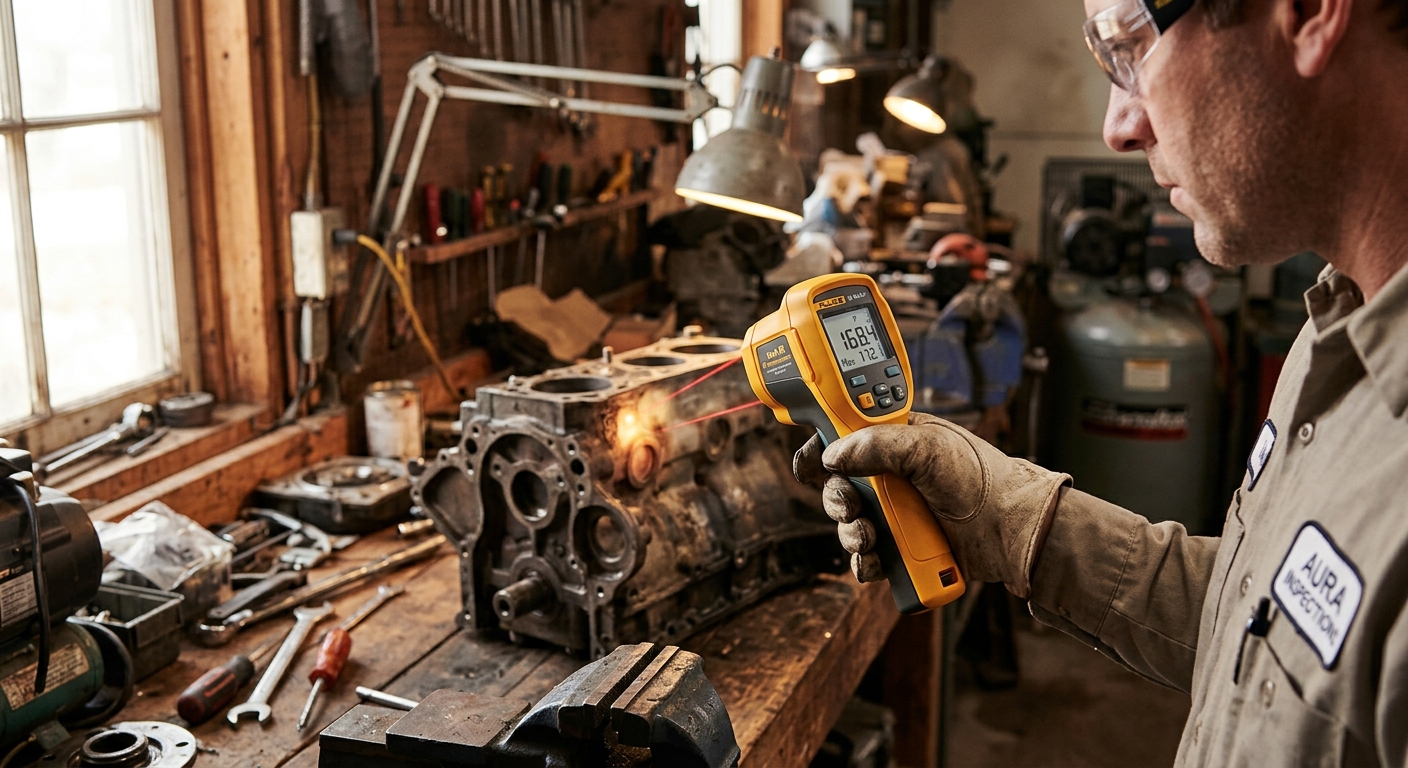
For non-contact temperature measurement without thermal imaging – checking HVAC supply/return temperatures, verifying circuit breaker temperatures, checking motor heat, or monitoring grill temperatures – the Fluke 62 MAX+ is the professional standard. The dual laser pointer frames the measurement spot accurately at distance, the IP54 rating handles shop environments, and accuracy is ±1.5°C over a -30 to 650°C range. The 12:1 distance-to-spot ratio tells you exactly what area you’re measuring.
- Pros: Dual laser framing, IP54 rated, wide range, ±1.5°C accuracy, fast response, durable
- Cons’:’Single-point temperature (not thermal image), can be fooled by reflective surfaces
Klein Tools TI250 – Best Budget Thermal Camera
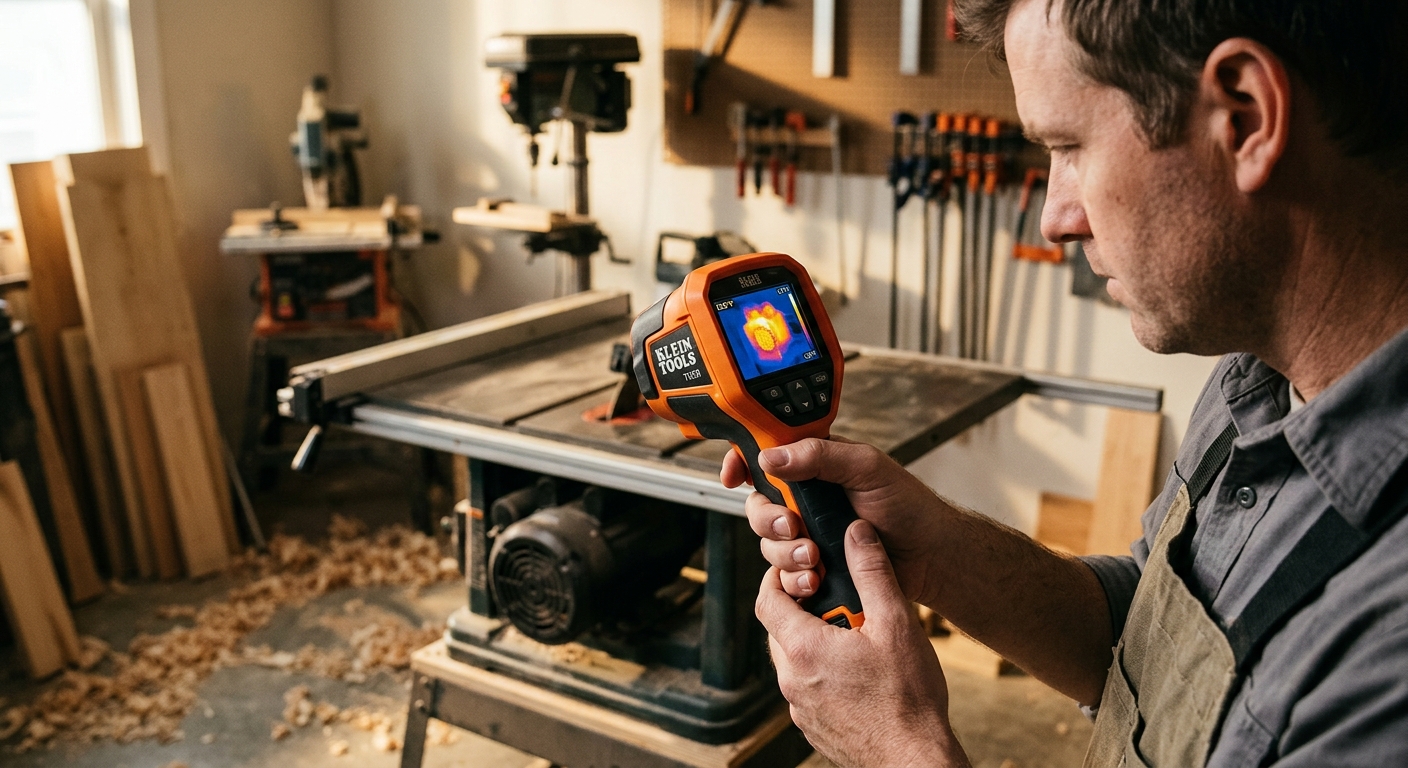
Klein’s TI250 is a standalone thermal camera at roughly half the FLIR C5 price. The 160×120 resolution and 0.15°C sensitivity are adequate for identifying insulation gaps, moisture patterns, and hot electrical connections. The 3.5-inch screen is readable in most conditions, and the battery life reaches 4 hours. Not as refined as FLIR but genuinely capable for building diagnostics at a more accessible price point.
- Pros: Standalone (no phone), 160×120 resolution, 0.15°C sensitivity, 4-hour battery, affordable vs FLIR
- Cons’:’Less refined than FLIR, no MSX overlay, smaller screen than FLIR C5
Frequently Asked Questions
What can thermal cameras detect in a home? Air leaks at windows, doors, and penetrations; insulation gaps in walls and ceilings; moisture intrusion and hidden water damage; hot electrical connections and overloaded breakers; HVAC duct leaks; and radiant heating system failures.
How accurate are consumer thermal cameras? Most consumer cameras are accurate to ±2-3°C. Professional cameras (Fluke, Flir industrial) achieve ±1°C or better. For home diagnostics, ±2-3°C is more than sufficient – you’re looking for patterns, not absolute temperatures.
When is the best time to do a thermal scan of a house? During heating season with a temperature differential of at least 10°F between inside and outside. Thermal differences drive energy flows that show up clearly in thermal images. Summer thermal imaging works for cooling diagnostics but requires different interpretation.
Can I see electrical problems with a thermal camera? Yes – overloaded or failing connections run hotter than properly loaded connections. A breaker running significantly hotter than adjacent breakers is a warning sign. Electrical thermal surveys require removing panel covers, which must be done safely.
Bottom Line
The FLIR ONE Pro earns Best Overall for its MSX image enhancement that produces the most useful and interpretable thermal images in its price class. For a standalone camera, the FLIR C5 is the professional choice. The Fluke 62 MAX+ IR thermometer handles the majority of temperature measurement tasks without the complexity or cost of a full thermal camera. Thermal tools pay for themselves the first time they reveal an insulation gap or failing electrical connection.
Affiliate Disclosure: DIY Arsenal participates in the Amazon Associates Program and other affiliate programs. When you purchase through links on this site, we may earn a small commission at no additional cost to you. We only recommend products we have personally tested and genuinely believe in.