Best Utility Knives – Fixed, Folding, and Auto-Retract
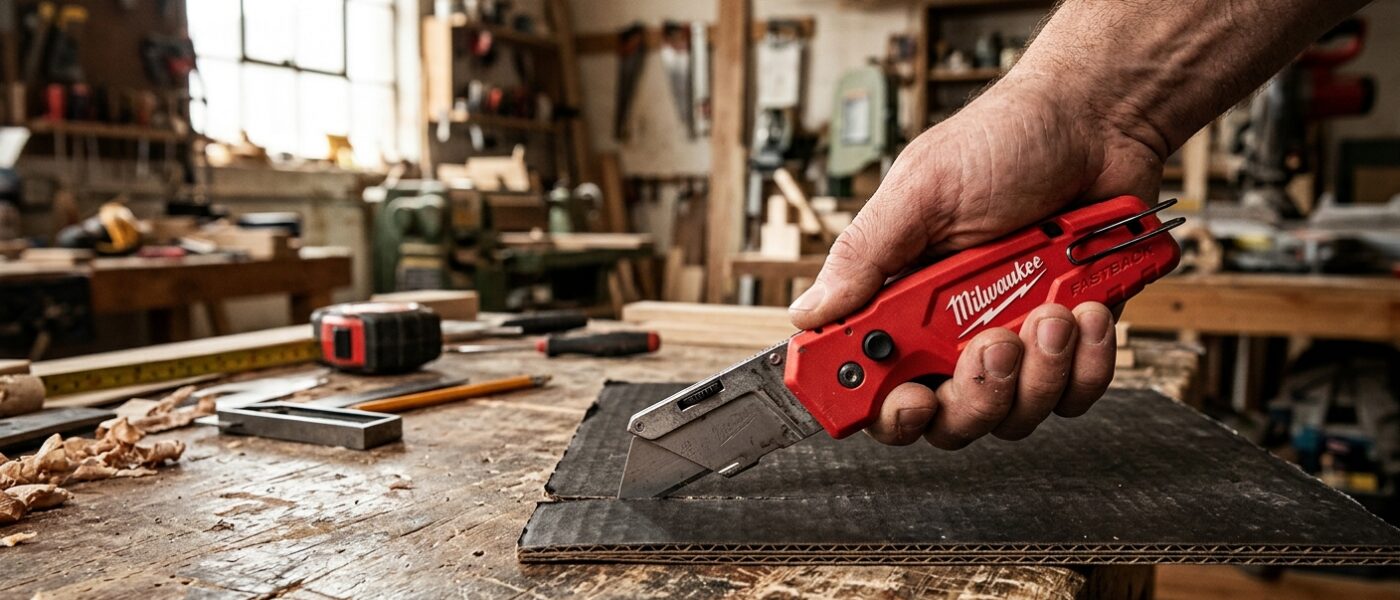
Milwaukee Fastback leads for speed and convenience; Irwin ProTouch is the safety pick for home use.
Utility knives are among the most frequently used tools in any workplace – for cutting drywall, slicing packaging, scoring laminate, opening sheathing on wiring, trimming insulation, and dozens of other tasks that come up constantly in renovation and construction work. Despite their ubiquity, most people own mediocre ones and don’t realize it until they try a quality knife and notice the difference in blade retention, safety, and usability that comes from thoughtful design.
The market divides into three main categories: fixed-blade knives (maximum rigidity and strength), folding knives (compactness and pocket carry), and auto-retract knives (safety-first design for environments where blades left extended cause injuries). Understanding which type fits your work style is the foundation for a good knife purchase.
How We Evaluate Utility Knives
Blade type and compatibility: Standard utility knives use trapezoidal blades (also called hook-and-notch or trapezoid blades). These are universally available and interchangeable between brands. Specialty snap-off blades (used in smaller Japanese-style cutters) are finer and preferred for scoring. Confirm which blade type a knife uses before buying – specialty formats limit your blade sourcing options.
Blade change mechanism: Slow, tool-requiring blade changes are a real productivity obstacle. Quick-change mechanisms (push-button, slider, or twist release) allow one-handed blade changes in seconds. Test this mechanism in person if possible – it’s used dozens of times in a heavy-use day.
Auto-retract safety: Auto-retracting knives retract the blade automatically when pressure is released from the handle. This eliminates open-blade injuries from setting down knives, forgetting to close them, or accidental contact. Required in many workplaces for insurance reasons; strongly recommended for home use around children.
Handle ergonomics and grip: Utility knives are used repeatedly across long shifts. Rubber grip inserts prevent slipping during pull cuts; ergonomic handle shapes reduce wrist fatigue. Test grip comfort in both a power grip (full-hand cut) and precision grip (pen-style trim cut) before buying.
Blade storage: On-board blade storage (typically in the handle) allows quick blade access without searching through toolboxes. Most quality utility knives store 2–5 spare blades internally.
Top Picks
1. Milwaukee 48-22-1901 Fastback – Best Overall Fixed Utility Knife
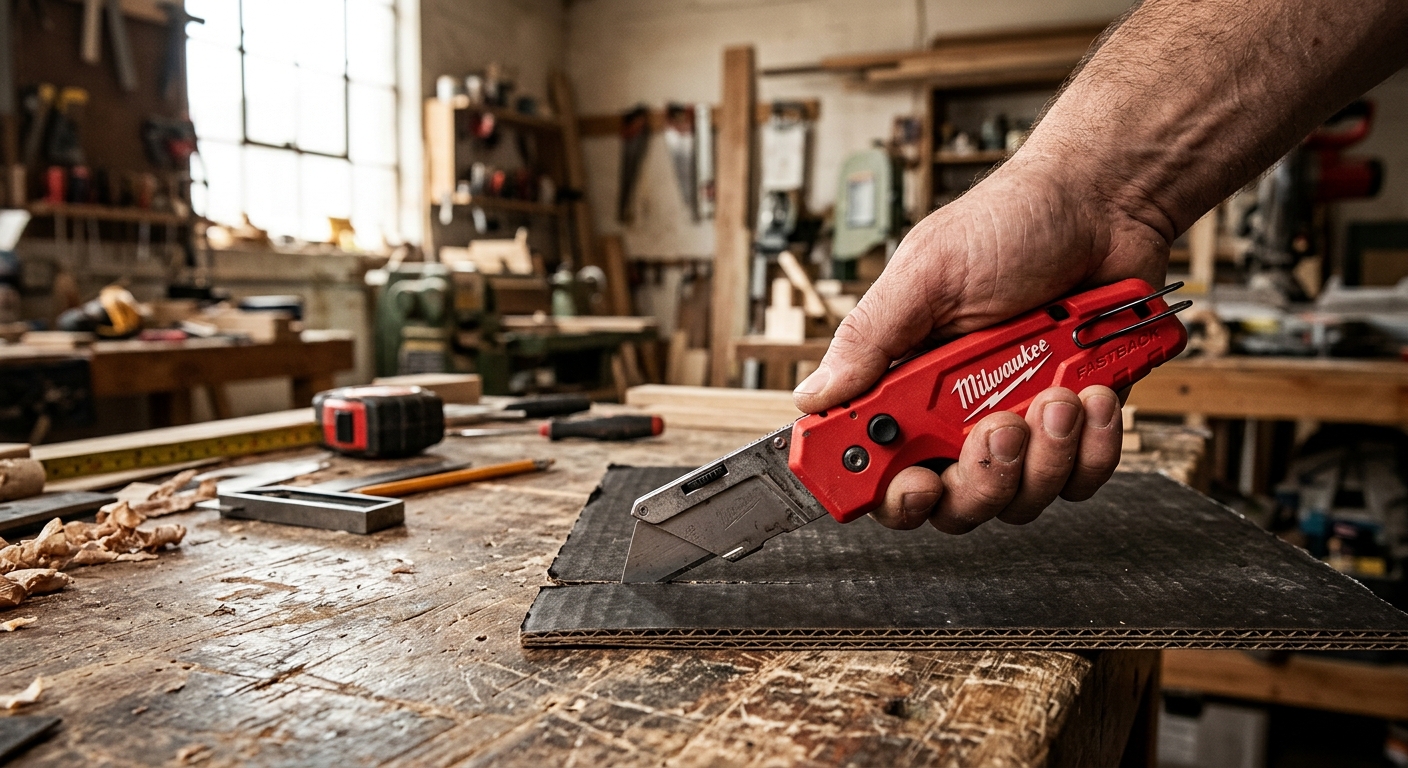
Milwaukee’s Fastback utility knife at $19–$29 is the most refined all-purpose utility knife available. Its one-handed blade deployment flips the blade out like a switchblade – faster than any slide-out mechanism. Five on-board spare blades store in the handle. The blade change requires a tool (screwdriver), which is the only limitation. Heavy rubberized overmold grip provides excellent control in both wet and dry conditions. Available in fixed-blade and folding versions at similar prices.
- Pros: One-handed flipout deployment, five on-board spare blades, excellent grip, durable construction, fast opening
- Cons: Blade change requires screwdriver (slow), not auto-retracting (safety consideration)
- Price range: $19–$29
2. DeWalt DWHT10295 – Best Quick-Change Utility Knife
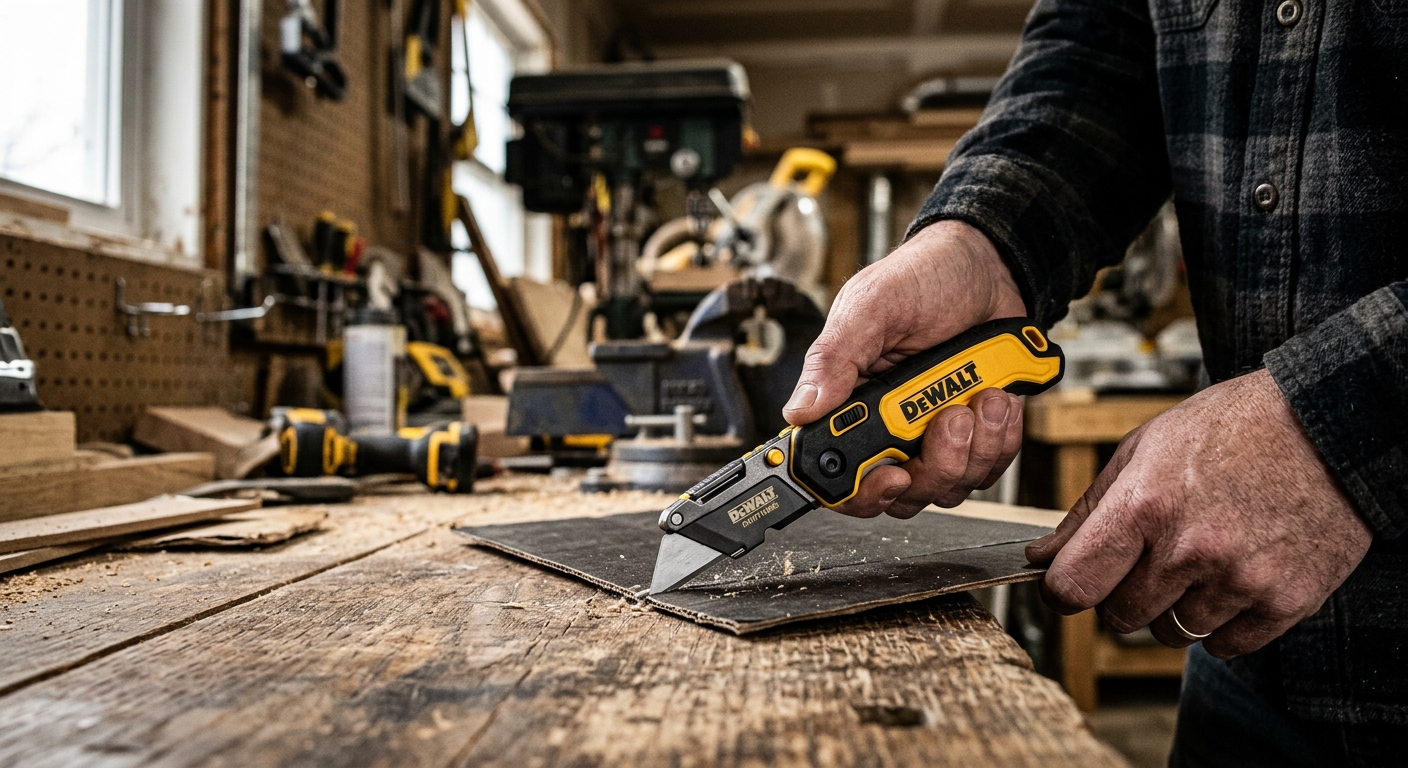
DeWalt’s quick-change utility knife at $14–$19 enables one-tool-free blade changes via a thumb slide mechanism. The blade magazine stores additional blades in the handle; the rubberized grip is comfortable for extended cutting sessions. At this price, it’s the best combination of quick-change mechanism and grip quality in the budget range. A solid everyday carry for tradespeople who need frequent blade changes.
- Pros: Quick tool-free blade change, on-board blade storage, good grip, DeWalt build quality
- Cons: Not auto-retract, standard blade deployment (not Fastback-style flipout)
- Price range: $14–$19
3. Olfa 18mm L-1 – Best Snap-Off Knife
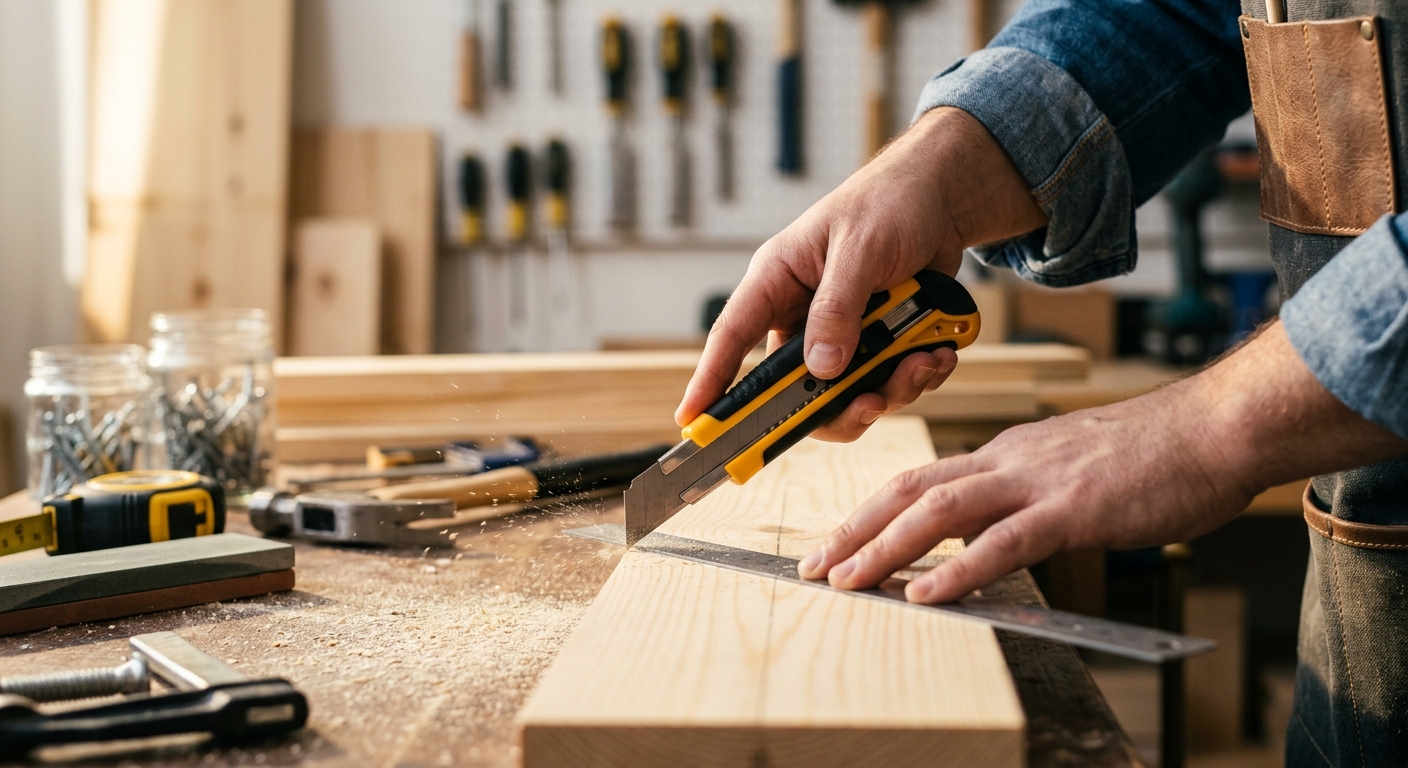
Snap-off utility knives use a long blade that snaps at pre-scored segments to always present a fresh cutting edge – no blade changes, just a snap. Olfa invented this format, and their 18mm L-1 at $9–$15 remains the standard. The wide 18mm blade is stiffer than standard snap-off knives and handles scoring laminate, flooring, and insulation with excellent precision. When the front segment dulls, snap it off and the next fresh edge is ready. Perfect for scoring applications and light cutting work.
- Pros: Always fresh cutting edge, excellent for scoring, wide blade reduces flex, economical long-term
- Cons: Less suitable for heavy pull cuts (blade more fragile than trapezoidal), snap-off segments are a hazard if not contained
- Price range: $9–$15
4. Irwin ProTouch Auto-Retract – Best Auto-Retract Knife
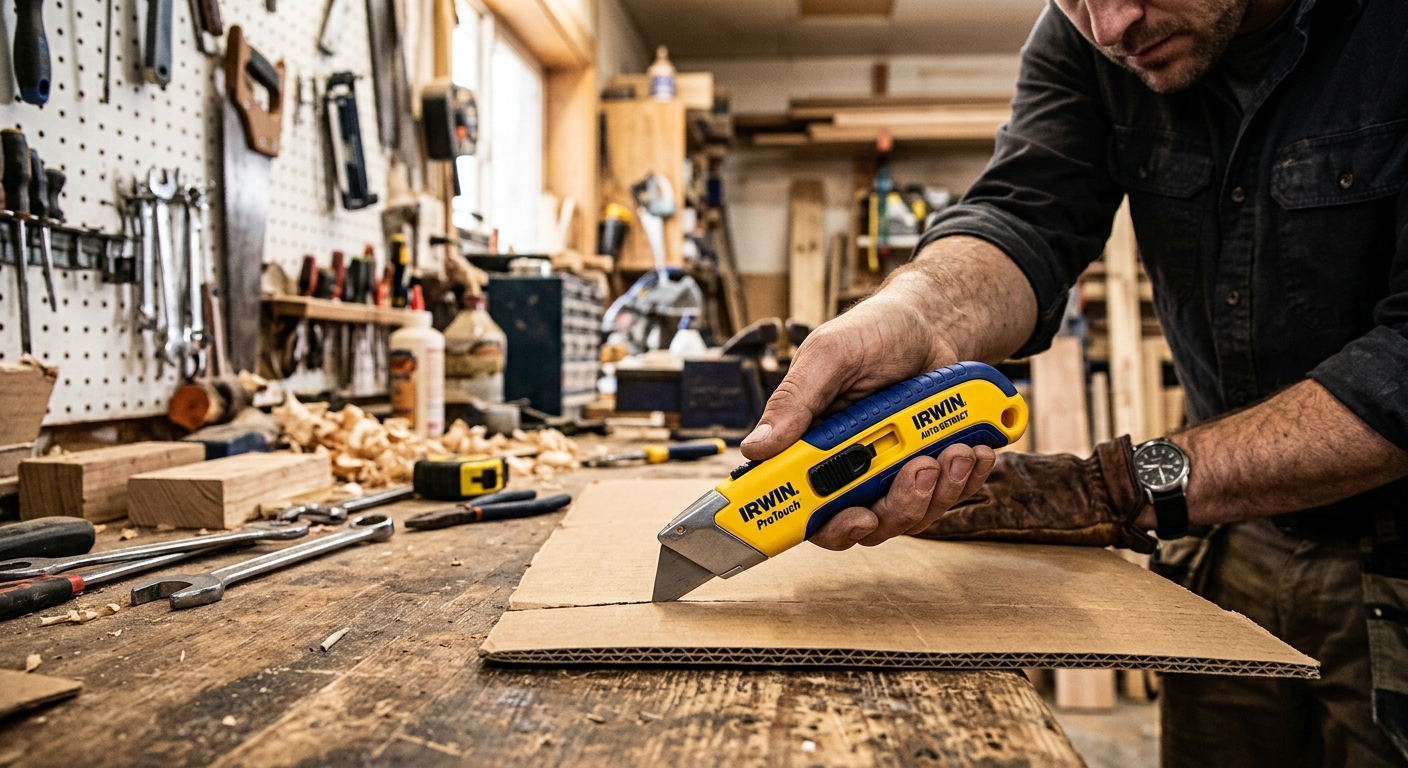
Irwin’s ProTouch auto-retract utility knife at $14–$19 automatically retracts the blade when hand pressure releases. This design essentially eliminates open-blade injuries – the knife is only open while actively cutting. The best auto-retract mechanism doesn’t interfere with the cutting experience; Irwin’s ProTouch deploys with trigger pressure and retracts smoothly. Highly recommended for environments with multiple users and as an everyday carry where blade discipline isn’t always maintained.
- Pros: Auto-retract for maximum safety, good grip, blade deploys with trigger pressure, standard trapezoidal blades
- Cons: Auto-retract mechanism adds mechanical complexity (more parts that can fail)
- Price range: $14–$19
5. Stanley 10-099 – Best Budget Utility Knife
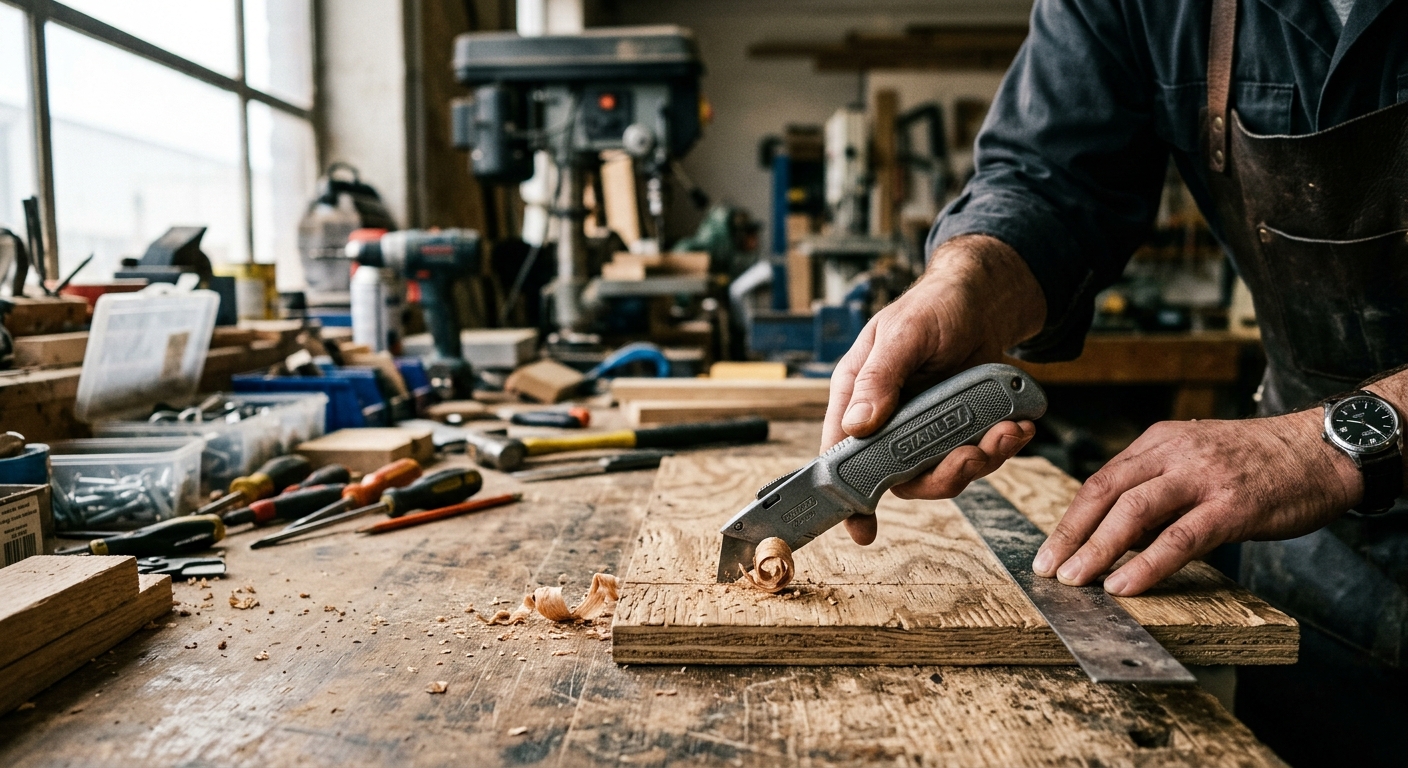
Stanley’s classic retractable utility knife at $5–$9 is what the category looks like at its most stripped-down. No quick-change mechanism, no fancy grip, no on-board blade storage – just a reliable, adjustable-depth blade holder that has been working on job sites for 60 years. For occasional use and as a backup knife, the Stanley 10-099 is entirely functional at a price that makes buying two for $10 the smart move.
- Pros: Lowest price, reliable, adjustable depth, widely available
- Cons: Screw-and-slider blade change is slow, no quick deployment, plastic body marks easily
- Price range: $5–$9
FAQ
How often should I change utility knife blades?
More often than you think. Most people change blades when they’re visibly dull; they should change blades when the blade feels like it’s dragging rather than slicing. A dull utility knife requires excessive force – which is when slips and injuries occur. In professional use, change blades every 1–2 hours of active cutting. For DIY use, change blades when you feel any increased resistance. Replacement blade packs of 50 cost under $5 – there’s no economy in keeping a dull blade.
What’s the safest utility knife for general home use?
Any auto-retracting knife eliminates the most common utility knife injury source: an open blade left on a surface or set down carelessly. The Irwin ProTouch or any quality auto-retract model is the recommendation for home environments, especially with children present. If blade discipline is excellent, any quality retracting knife (not fixed) is safe with proper habits.
Can utility knives cut roofing shingles?
Yes – utility knives are the standard tool for cutting asphalt shingles. Use a hook blade (a specially-shaped trapezoidal blade with a hook at the tip) rather than a standard straight blade. The hook engages the granule surface and pulls through the asphalt layer with significantly less effort than a straight blade. Hook blades are sold in all hardware stores alongside standard trapezoidal blades.
Bottom Line
The Milwaukee Fastback is the best everyday utility knife for tradespeople and regular DIY users – its one-handed deployment is genuinely faster and more useful than any push-and-slide mechanism. The Irwin ProTouch is the best choice for home use where safety is the priority, and for any shared-tool environment. Budget-conscious buyers who need a utility knife for occasional use can start with the Stanley 10-099 without concern. Whatever knife you choose, replace blades often – a fresh utility knife blade is one of the cheapest productivity improvements available.
Affiliate Disclosure: DIY Arsenal participates in the Amazon Associates Program and other affiliate programs. When you purchase through links on this site, we may earn a small commission at no additional cost to you. We only recommend products we have personally tested and genuinely believe in.