Best Japanese Pull Saws – Why Woodworkers Swear by Them
Suizan Ryoba is the best value entry; Gyokucho 270 is the upgrade for committed woodworkers.
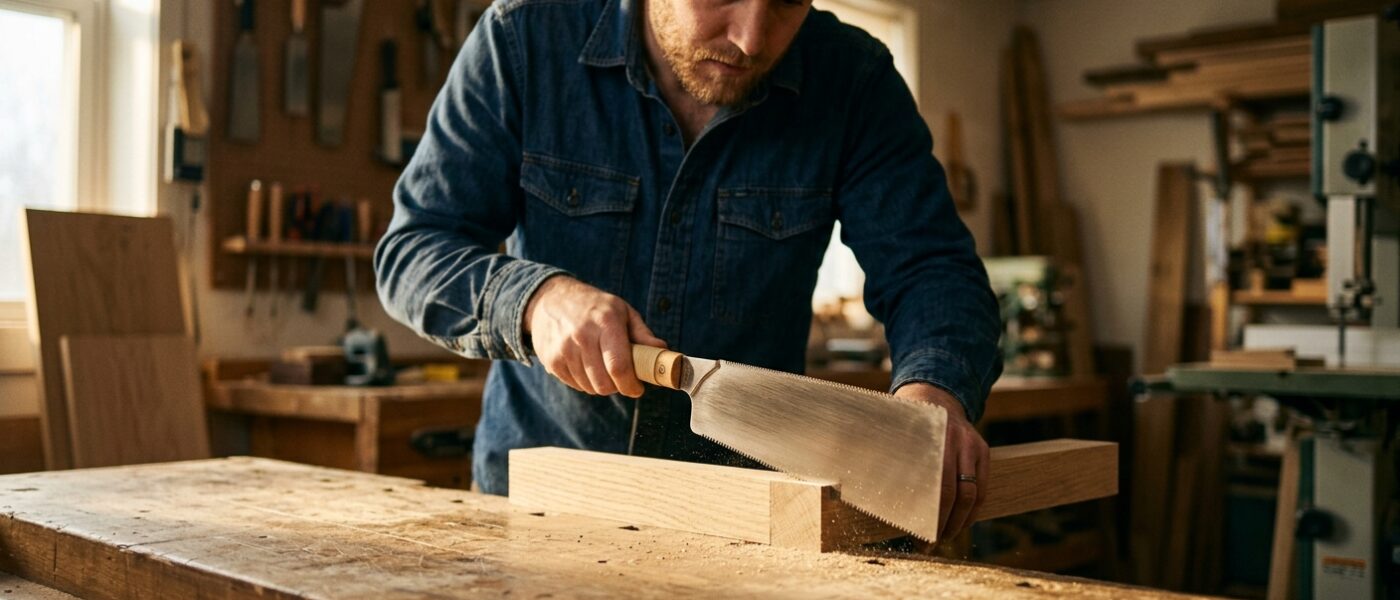
Japanese pull saws occupy a category of tool fanaticism that seems disproportionate to how a blade cuts through wood – until you actually use one. Woodworkers who work with both Western push saws and Japanese pull saws overwhelmingly report that the pull-stroke Japanese saw is faster, requires less physical effort, and produces a finer, more controlled kerf than their Western equivalents. The physics supports the experience: a blade in tension during the cutting stroke can be far thinner than one that must resist buckling, which means less material removed, less effort, and finer cuts.
This guide explains what makes Japanese pull saws distinctive, covers the main types (Ryoba, Dozuki, Kataba), and recommends the best options at each price point for woodworkers exploring Japanese hand tool techniques.
Understanding Japanese Pull Saw Types
Ryoba: A double-edged saw with rip teeth on one edge and crosscut teeth on the other. The most versatile Japanese saw – two tools in one. The dual-edge design limits its use to cuts where both edges have clearance; it can’t reach into corners or cut close to a surface on one side. The starting point for most woodworkers new to Japanese saws.
Dozuki: A single-edge saw with a brass or steel back for rigidity – the Japanese equivalent of a Western dovetail saw. The back stiffens the blade for precise, controlled cuts; dozuki saws typically have 17–21 TPI for very fine crosscut work. Used for dovetails, tenon shoulders, and any precise joinery where a saw mark visible on the finished surface is unacceptable.
Kataba: A single-edge saw without a back, allowing it to cut deeper than the blade width. Available in both rip and crosscut configurations. More flexible than a dozuki but less rigid; preferred for breaking down larger pieces and thicker material where the back saw’s depth limitation is a constraint.
How We Evaluate Japanese Saws
Blade quality and hardness: Japanese saw teeth are impulse-hardened to achieve 58–65 HRC – harder than most Western saw steel. This allows thinner, sharper teeth that hold their edge longer. The trade-off is that hardened teeth can’t be filed to resharpen – replacement blades are the maintenance approach.
Tooth geometry (TPI and crosscut/rip): Crosscut Japanese teeth have tiny hooks on alternating sides – they slice across fibers like razor blades. Rip teeth are vertical-faced, scraping along the grain. Japanese saw TPI (counting both sides for double-edged saws) typically runs 7–9 TPI for rip cuts, 16–22 TPI for fine crosscut work.
Blade replacement: Most Japanese saws use replaceable blades. A quality Japanese saw body will last decades; the blade is replaced when dull ($10–$30 for replacement blades). Always confirm replacement blade availability before buying a Japanese saw brand – some lesser-known brands have poor parts availability.
Handle design: Traditional bamboo-wrapped handles are beautiful but can crack if the saw is stored improperly. Modern Japanese saw handles use injected plastic or compressed wood – more durable for regular workshop use. The handle-to-blade connection angle affects comfort for different saw types.
Top Picks
1. Suizan Double Edge Ryoba Saw – Best Entry Japanese Saw
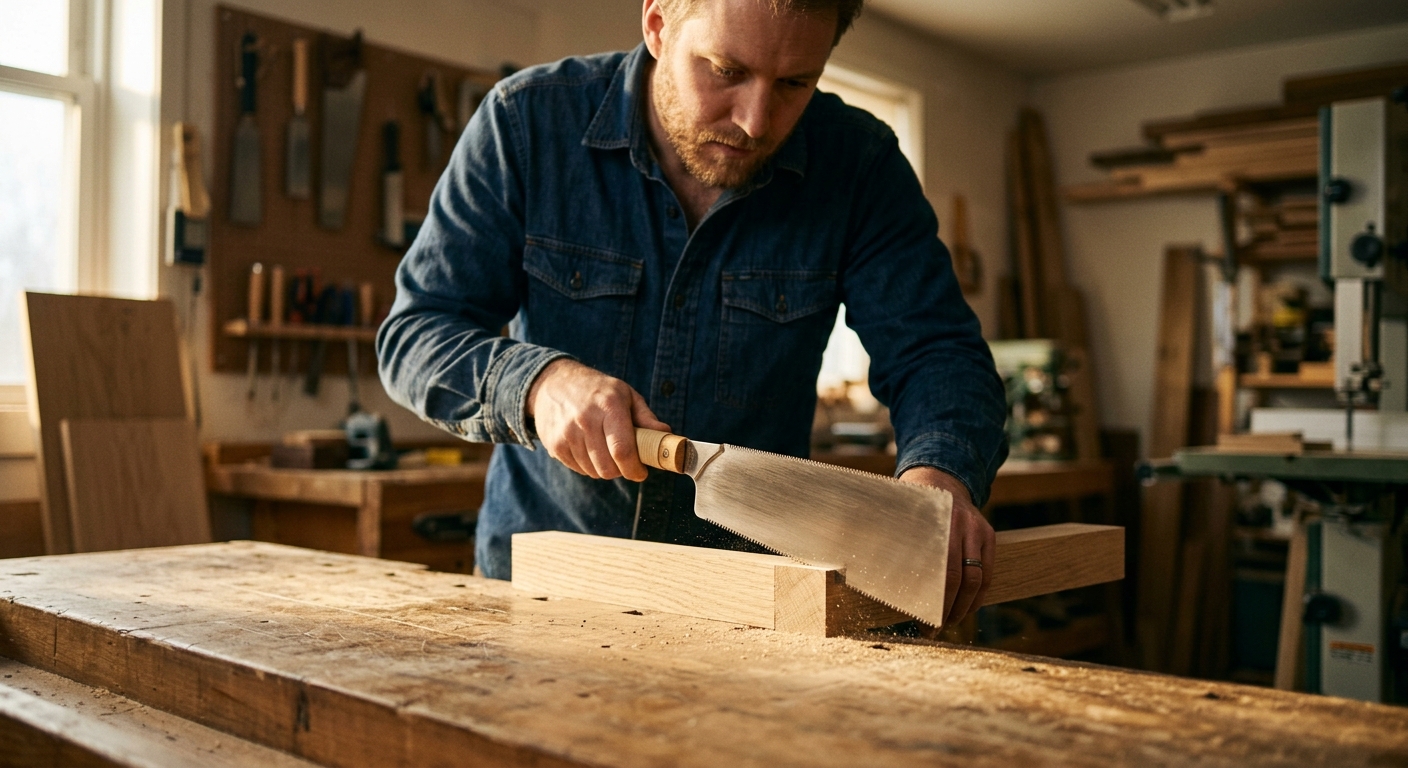
Suizan’s 9.5-inch Ryoba at $29–$39 is the best starting Japanese pull saw for woodworkers making their first investment in Japanese hand tools. The 9.5-inch blade handles furniture-scale work, the replacement blades are readily available on Amazon for $12–$15, and the cut quality – both rip and crosscut edges – is excellent for the price. The handle is comfortable for Western-trained hands. An excellent tool that converts most users to pull-saw methodology permanently.
- Pros: Best value entry point, rip and crosscut in one tool, replacement blades easily available, excellent cut quality for price
- Cons: Can’t reach into corners with both edges present, light handle may feel insubstantial to some users
- Price range: $29–$39
2. Gyokucho Ryoba 270 – Best Upgrade Ryoba
Gyokucho is one of Japan’s finest saw manufacturers, and the 270mm Ryoba at $49–$65 is a meaningful step up from entry-level Japanese saws. The tooth quality and hardness are noticeably better – the blade stays sharp longer and cuts with a silkier feel. At 270mm (10.6 inches), it handles larger work than the Suizan. Replacement blades are available directly from Gyokucho and through specialty suppliers. The standard recommendation for woodworkers who’ve decided Japanese saws are a permanent part of their toolkit.
- Pros: Premium tooth quality, longer blade for larger work, excellent replacement blade availability, Japanese manufacturing standard
- Cons: Slightly more expensive than Suizan, replacement blades harder to find locally
- Price range: $49–$65
3. Suizan Dozuki – Best Joinery Saw
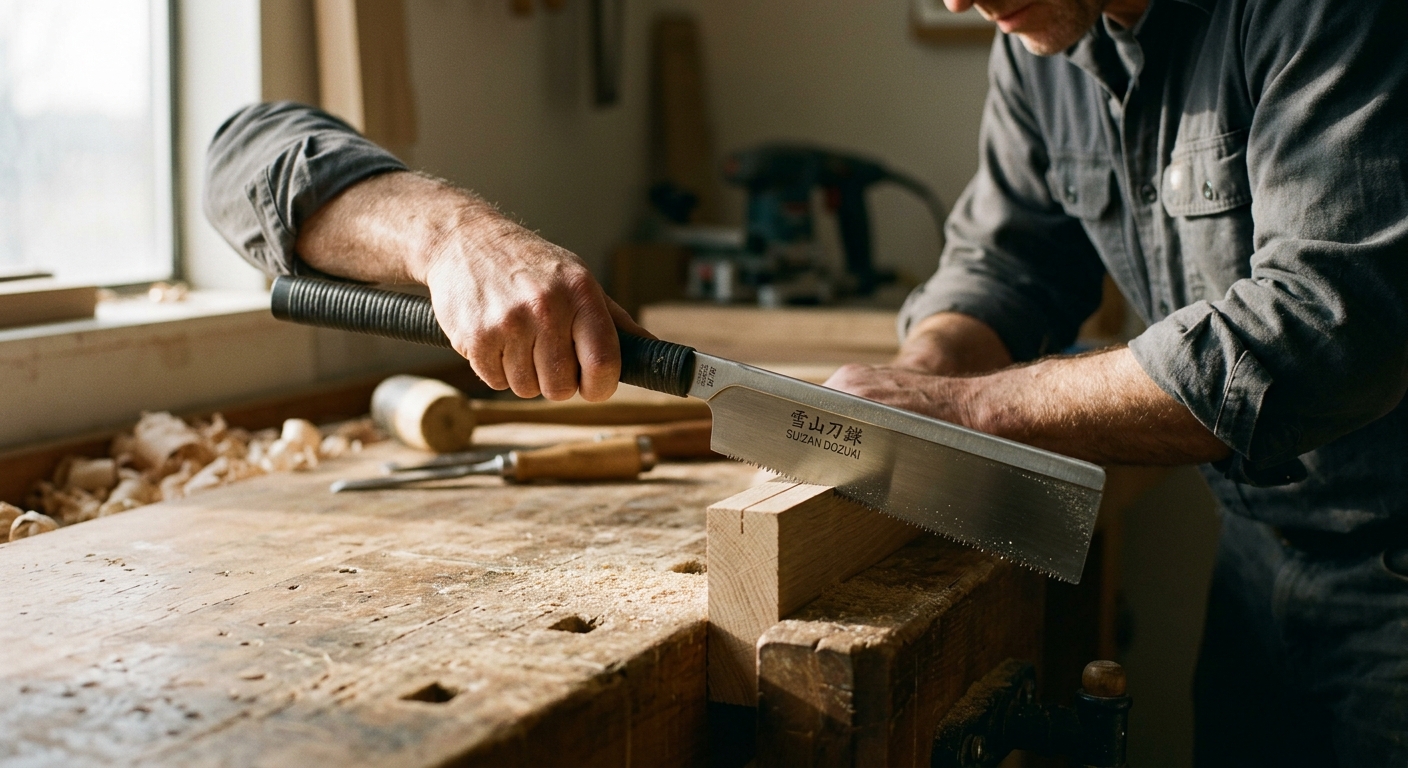
For dovetail cutting, tenon shoulders, and precision joinery, the Suizan Dozuki at $29–$39 is the gateway to Japanese back saw technique. Its 9.5-inch blade with 22 TPI produces an exceptionally fine, narrow kerf – visible on finished wood as a hairline rather than a saw mark. The brass back keeps the blade perfectly rigid during the pull stroke, which produces the precise shoulder cuts that tight-fitting dovetails require. This is what convinced many hand-tool woodworkers that hand-cut dovetails are faster and more satisfying than they expected.
- Pros: Fine 22 TPI for precision cuts, back prevents blade deflection, excellent dovetail and tenon work
- Cons’:’Can only cut to the depth of the back height, requires two-handed control technique initially
- Price range: $29–$39
4. Z-Saw H-250 – Best Compact General Use
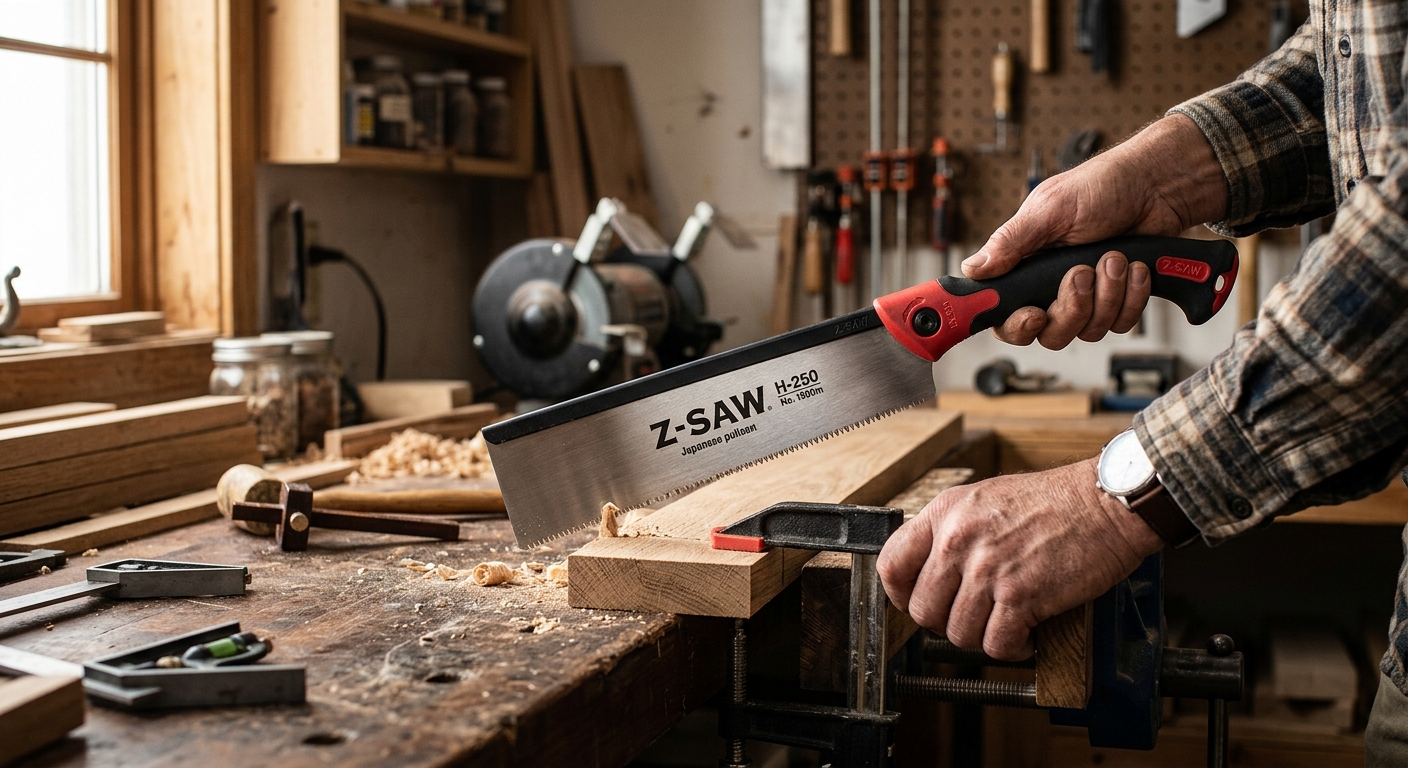
The Z-Saw H-250 at $19–$25 is a high-value compact Japanese crosscut saw – 10 inches, 10 TPI, lightweight and extremely easy to use for quick crosscuts in dimensional lumber, flooring, and trim work. Its compact size fits in a tool bag; it’s light enough to carry on renovation jobs for quick trim cuts without powering up a miter saw. Ideal as a general-use Japanese saw for non-woodworking applications.
- Pros: Best price, compact and light, excellent for trim and flooring cuts, easy pull-saw technique entry
- Cons: Single-edge crosscut only, not for furniture joinery, thicker kerf than premium Dozuki
- Price range: $19–$25
5. Lie-Nielsen Japanese Pull Saw – Best Premium Option
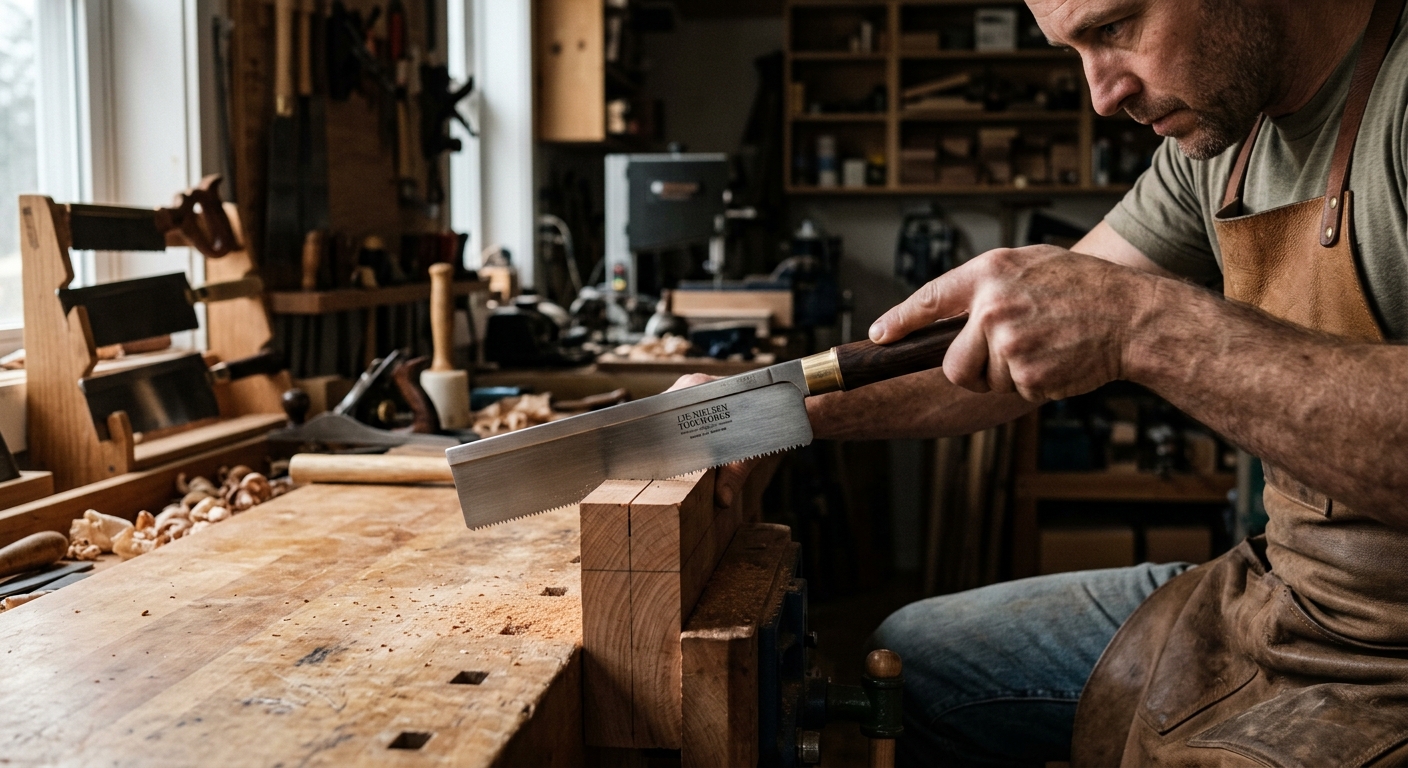
For woodworkers who want the finest Japanese pull saw available from a Western manufacturer with North American customer support, Lie-Nielsen’s crosscut and rip saws at $79–$99 each combine Japanese blade technology with Lie-Nielsen’s quality standards and service. Premium choice for those who want a tool that matches the quality of their plane irons and chisels.
- Pros: Premium quality, North American support, Lie-Nielsen reliability, exceptional cut quality
- Cons: High price for a saw with replaceable blades, premium may not be visible in cut quality for most users
- Price range: $79–$99
FAQ
How do I start a cut with a Japanese pull saw?
Unlike push saws that can be started with a forward stroke against a guide, start a Japanese pull saw with light back strokes to establish the kerf. Hold the saw at a low angle (30 degrees) initially to create a groove, then raise to full cutting angle (45 degrees) for the main cut. Use your thumb as a guide against the cut line for the first few strokes. The thin kerf means there’s almost no room for error once the groove is established – start carefully.
Are replacement blades expensive?
No – replacement blades for most Japanese saws run $10–$25. Since the blades are harder than Western saw steel, they stay sharp through hundreds of cuts before dulling. A replacement blade every 2–3 years is typical for regular workshop use. Always buy at least one spare blade when you buy the saw, so you have it when the original dulls.
Can I use a Japanese saw for cutting green (fresh) wood?
Yes, with some caution. Japanese saw teeth are harder and more brittle than Western saw teeth. Grit, embedded stones, and very resinous green wood can chip the micro-teeth if pressure is excessive. Use light pressure and let the blade do the work. For sustained cutting of green wood or very resinous materials, a hardened Western handsaw may be more durable (though less refined).
Bottom Line
The Suizan Ryoba at $29–$39 is the best starting point for any woodworker who wants to experience Japanese pull saw technique without significant investment. Once converted – and most users are, within the first session – the Gyokucho Ryoba 270 is the upgrade for regular shop use. Add a Dozuki (also Suizan at $29–$39) for joinery work – the two together cover everything a hand-tool woodworker needs in Japanese saw capability for under $80 total investment.
Affiliate Disclosure: DIY Arsenal participates in the Amazon Associates Program and other affiliate programs. When you purchase through links on this site, we may earn a small commission at no additional cost to you. We only recommend products we have personally tested and genuinely believe in.