Best Hand Saws for DIY – Cross-Cut, Rip, and Japanese
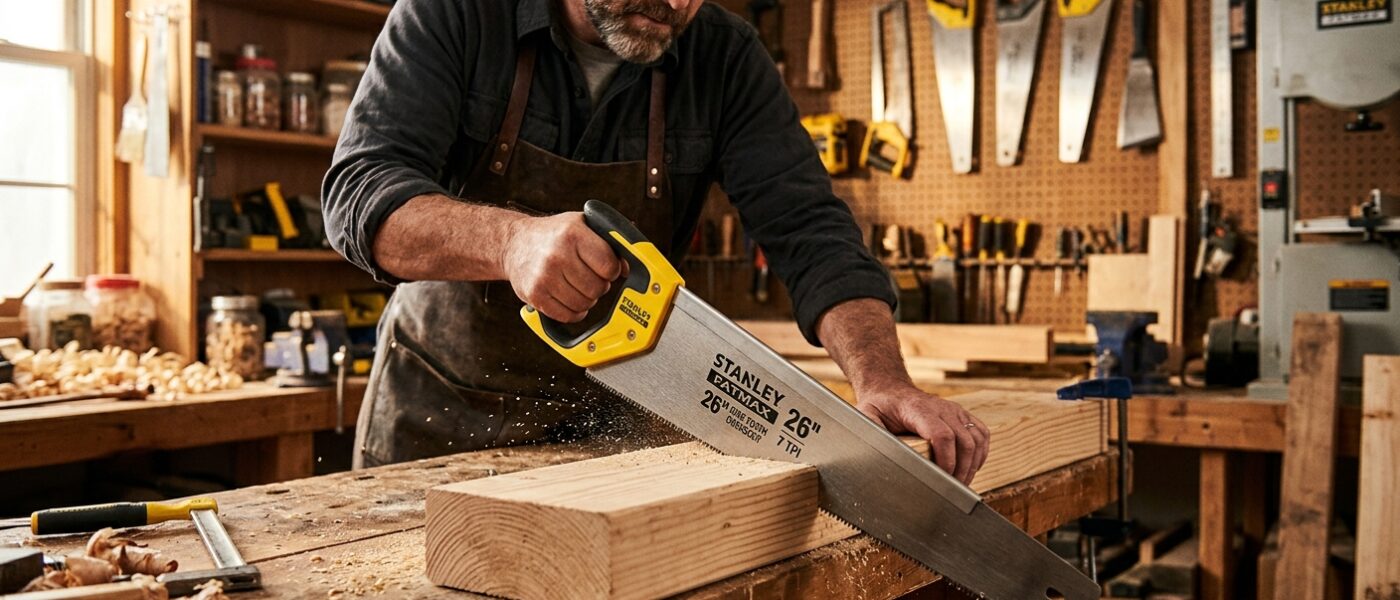
Stanley FatMax for general crosscut; Gyokucho Ryoba adds Japanese precision for furniture work.
The hand saw has been supplemented – though not replaced – by power tools in most workshops. But there are many situations where a hand saw is the right tool: cutting in tight spaces, making trim cuts without powering up a saw, cutting green wood that would bind a circular saw, camping and outdoor use, and making precision cuts in joinery where the control of a slow hand stroke is preferable to the speed of a power tool. Knowing which type of hand saw does what is the foundation for buying wisely.
This guide covers three main categories – crosscut saws, rip saws, and Japanese pull saws – with recommendations for each and clear guidance on when each type is most useful.
How We Evaluate Hand Saws
TPI (teeth per inch): The key variable in hand saw selection. Low TPI (4–8) cuts aggressively and fast, removes material quickly, but leaves a rough edge – right for rough lumber and framing. High TPI (10–14 for Western; 17–21 for Japanese) cuts slowly but leaves a fine, smooth kerf – right for finish work and joinery. Mid-range (9–11 TPI) is the general-purpose compromise for mixed use.
Tooth geometry – rip vs crosscut: Crosscut teeth are beveled to slice across wood fibers like a knife. Rip teeth are flat-faced to scrape wood fibers along the grain like chisels. A crosscut saw cuts across the grain (shortening boards); a rip saw cuts along the grain (narrowing boards). Most hand saws sold today are crosscut or combination; dedicated rip saws are specialty tools used in joinery work.
Pull vs push: Western saws cut on the push stroke – the saw blade is in tension during cutting and must be stiff enough to resist buckling. Japanese saws cut on the pull stroke – the blade is in tension, which allows much thinner blades with finer teeth, producing narrower kerfs and finer cuts with less effort.
Handle comfort: A hand saw can produce significant wrist fatigue over long sessions. Closed handles (pistol grip) provide better power transmission; open handles allow more wrist flexibility. Try the handle in person if possible – it’s a significant factor for extended use.
Top Picks
1. Stanley FatMax 26-Inch – Best General Crosscut Saw
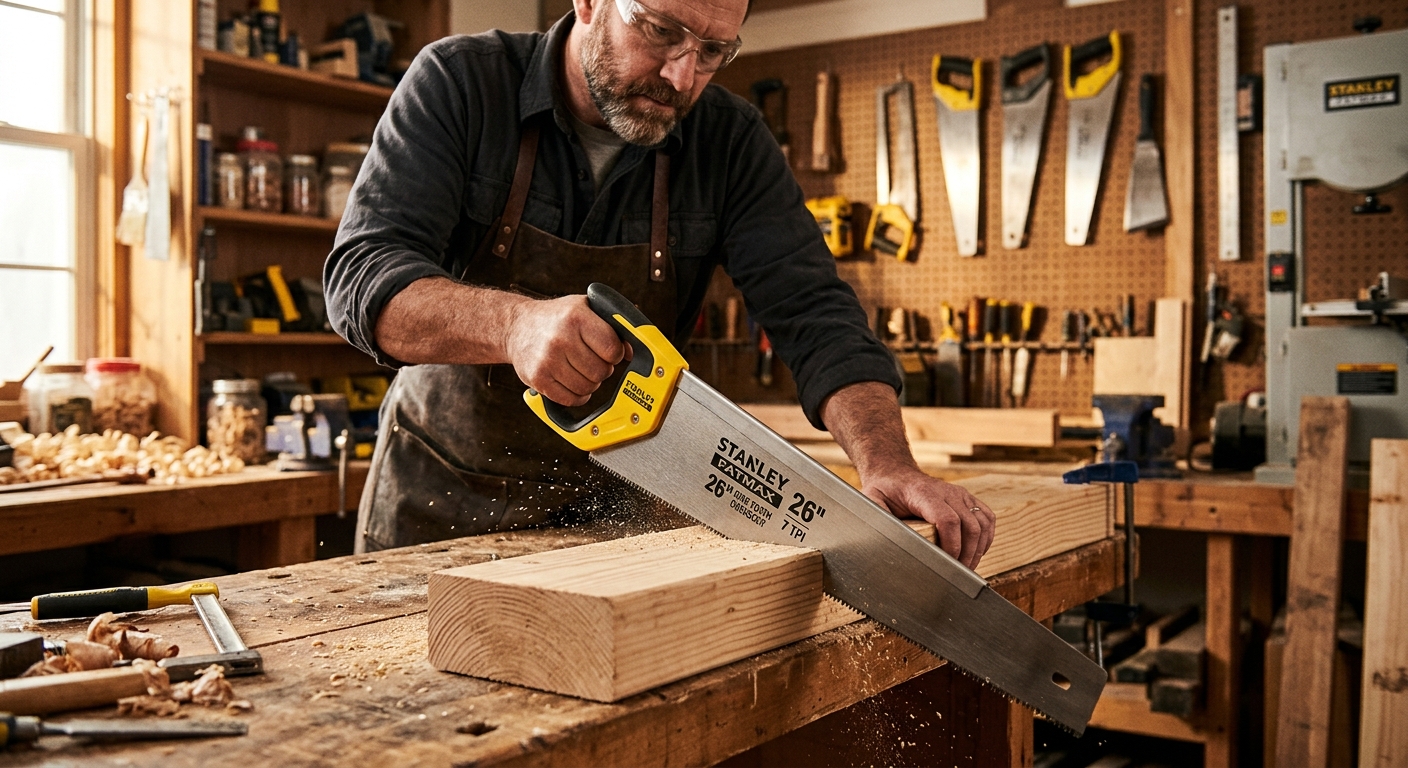
Stanley’s FatMax 20-540 at $19–$29 is the most popular hand saw in North America for good reason. Its 8 TPI tooth count and triple-ground teeth handle a wide range of wood with acceptable speed and decent edge quality. The 26-inch blade provides efficient stroke length for common lumber sizes. Not the finest saw in any specific dimension – not as fast as low-TPI aggressive saws, not as refined as Japanese pull saws – but the right all-purpose tool for the occasional hand saw user who needs one saw for mixed tasks.
- Pros: Excellent price, widely available, triple-ground teeth for versatile cutting, 26-inch blade length
- Cons: Replaceable blade is non-standard (not all replacement blades available everywhere), mediocre at both extremes (very aggressive cuts and very fine cuts)
- Price range: $19–$29
2. Irwin Tools Universal Hand Saw – Best Budget Option
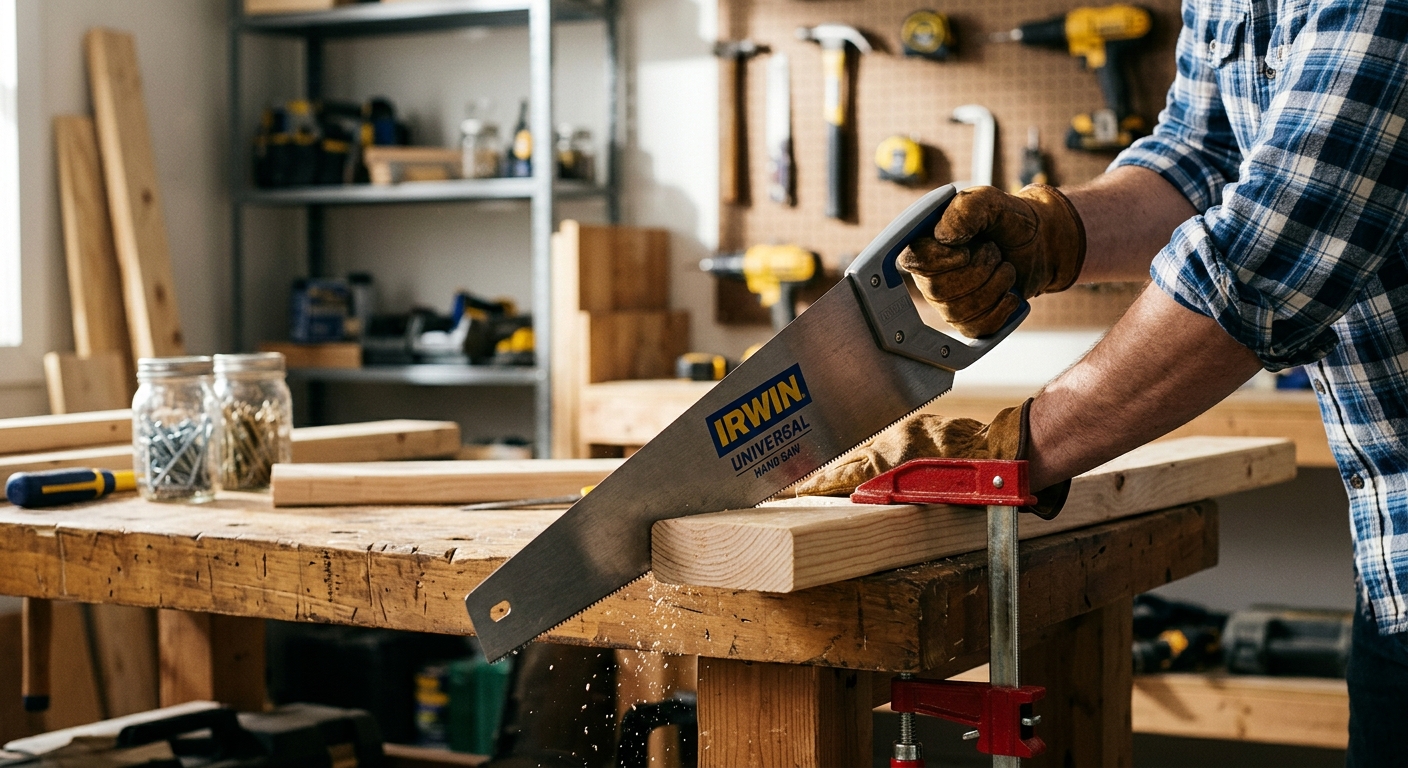
Irwin’s 15-inch universal hand saw at $12–$18 is the budget choice for simple cuts and emergency situations. The 10 TPI count handles standard dimensional lumber and plywood reasonably. At 15 inches it’s less efficient for long cuts in wide boards but manageable in tight spaces. A perfectly functional saw for homeowners who need occasional cuts and want a hand tool backup for their power tools.
- Pros: Lowest price, adequate performance for light use, compact 15-inch size fits in tool bag
- Cons: Short length reduces efficiency, harder to control for accurate square cuts
- Price range: $12–$18
3. Gyokucho Ryoba 210 – Best Japanese Pull Saw
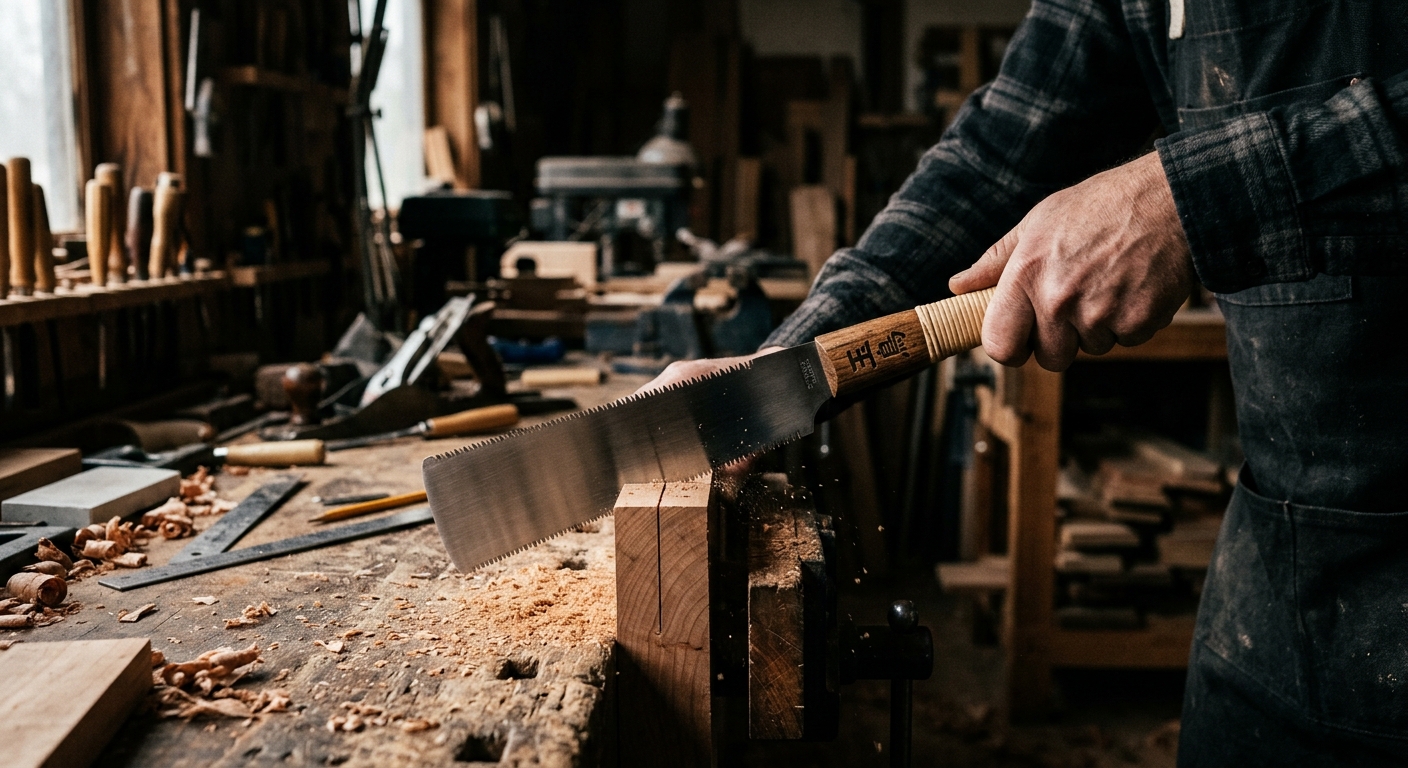
The Gyokucho Ryoba at $29–$39 is the best entry into Japanese pull saw use. Its double-edged blade provides rip teeth on one edge (for cuts along the grain) and crosscut teeth on the other – two tools in one blade. The 210mm blade (8.25 inch) handles furniture-scale work with the precision Japanese tooth geometry is known for. Pull stroke cutting requires much less force than push-stroke Western saws, making Japanese saws faster and less fatiguing for many users once the technique is comfortable.
- Pros: Double-edged (rip and crosscut), precision cuts, pull stroke is efficient, excellent value
- Cons: Replaceable blade (standard for Japanese saws) adds ongoing cost, technique adjustment required from push saws
- Price range: $29–$39
4. Lie-Nielsen Carcass Saw – Best Fine Joinery Saw
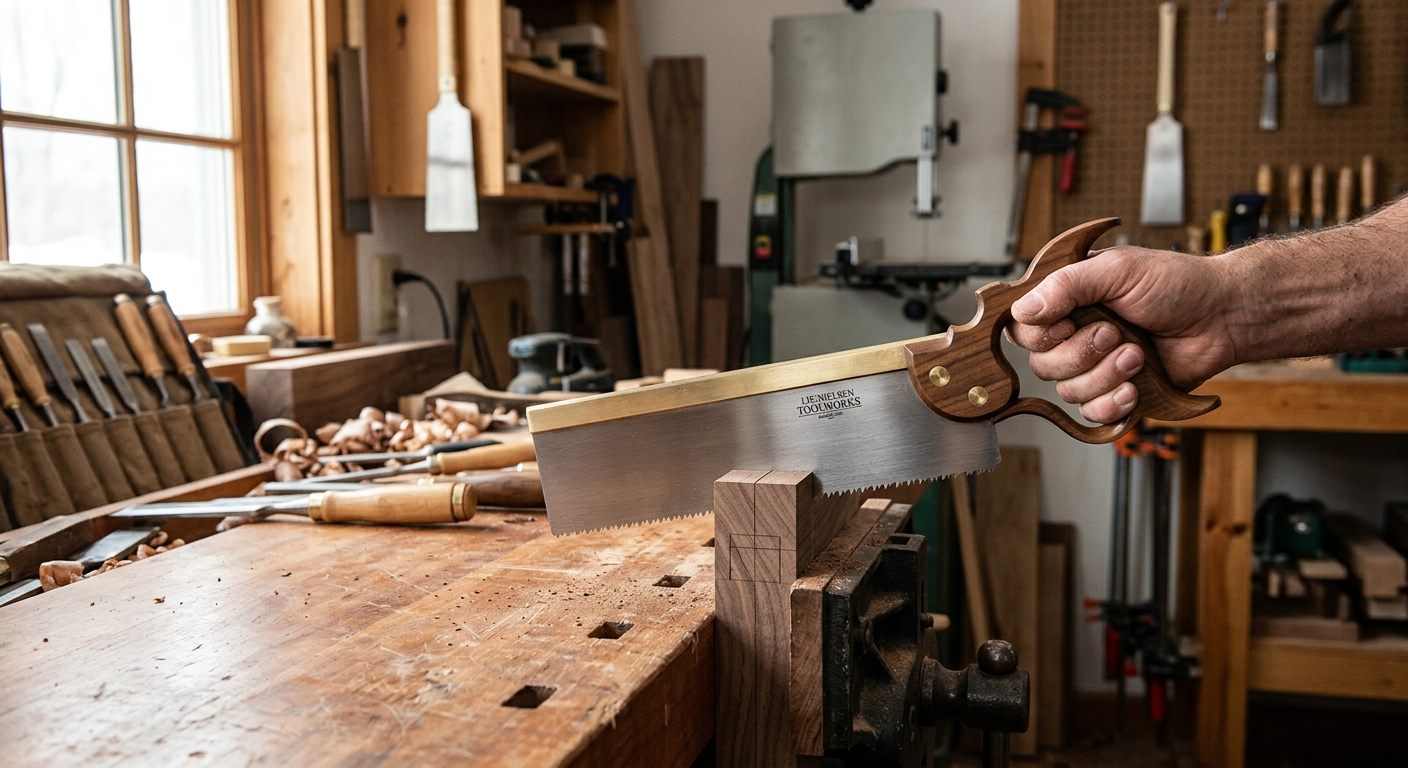
For woodworkers who cut dovetails, tenon shoulders, and precision joinery by hand, the Lie-Nielsen Carcass Saw at $149–$179 is the benchmark Western back saw. Its brass back stiffens the 14-inch plate, and 15 TPI crosscut teeth produce an exceptionally clean, narrow kerf. The polished plate sides reduce friction in the cut. This is a tool for serious hand-tool woodworkers – overkill for occasional trimming, essential for furniture joinery.
- Pros: Finest edge quality in class, brass-backed rigidity, 15 TPI precision, lifetime Lie-Nielsen quality
- Cons’:’Very high price, narrow application (joinery and fine cuts only), overkill for general carpentry
- Price range: $149–$179
5. Great Neck N2610 – Best Rip Saw
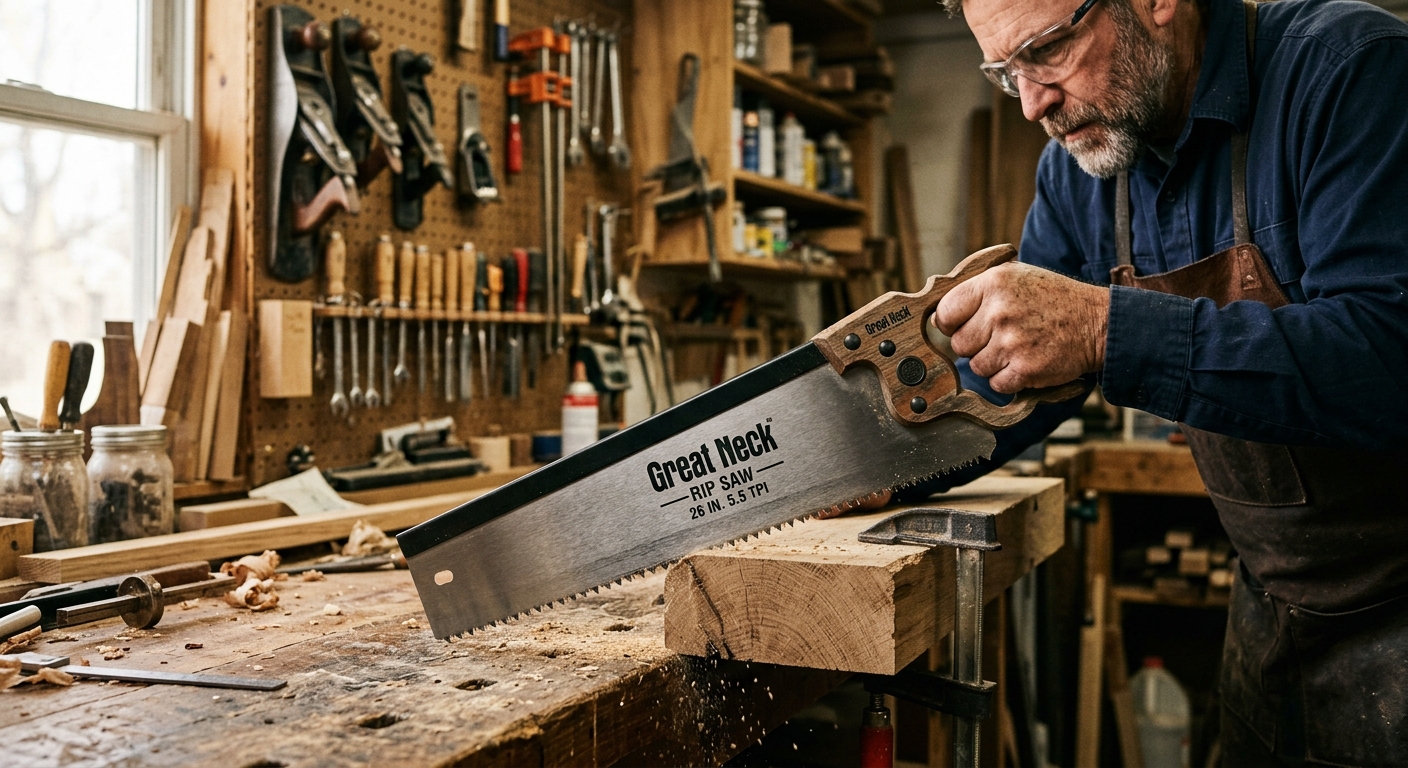
For hand-ripping lumber along the grain – breaking down wide boards, cutting tenon cheeks – a dedicated rip saw’s flat-faced teeth are dramatically faster than a crosscut saw. Great Neck’s 5 TPI rip saw at $19–$29 handles this task effectively. Few DIYers need a dedicated rip saw (most ripping is done with table saws and circular saws), but for hand-tool oriented woodworkers who want to process timber from rough boards, this completes a hand tool set.
- Pros: Correct tooth geometry for ripping, 5 TPI for fast material removal, inexpensive
- Cons: Specialty use only – not for crosscuts or finish work, most DIYers don’t need it
- Price range: $19–$29
FAQ
How do I make a square crosscut with a hand saw?
Use a combination square or speed square as a guide. Score the cut line across the face with a marking knife (not pencil). Grip the saw near the handle with a relaxed wrist. Start the cut with light back strokes to establish the kerf, then advance with full-length strokes. Let the saw’s weight do the work – pressing down creates binding. Practice on scrap until the kerf is consistently within 1/16″ of plumb.
When should I use a Japanese saw instead of a Western saw?
Japanese pull saws are superior for: fine joinery (dovetails, through-tenons, precision shoulder cuts), cutting in cramped spaces where a push stroke is awkward, cutting thin material that deflects under push-stroke pressure, and cutting flush with a surface (flush-cut Japanese saws are uniquely useful for trimming dowels and through-tenons). Western saws remain better for: fast rough cuts in thick material, cutting green wood, and tasks where the push-stroke habit is deeply ingrained.
How do I sharpen a hand saw?
Western saws can be sharpened with a triangular needle file – a 3-sided file sized to match the gullet depth. This is a learnable skill but takes practice. Alternatively, most modern hand saws use hardened (induction-hardened) teeth that can’t be resharpened – when dull, the blade is replaced. Japanese saw blades are almost universally replaceable rather than sharpenable. For the occasional user, replacing rather than sharpening is the practical approach.
Bottom Line
The Stanley FatMax 26-inch hand saw at $19–$29 is the right all-purpose crosscut saw for most homeowners. Add a Gyokucho Ryoba Japanese pull saw ($29–$39) if you do any furniture or cabinet work – the pull-stroke precision and double-edged design add significant capability for minimal investment. Serious hand-tool woodworkers doing furniture joinery should evaluate the Lie-Nielsen Carcass Saw as a long-term investment. Most DIYers can accomplish everything they need with a quality general crosscut saw and decent Japanese pull saw combination.
Affiliate Disclosure: DIY Arsenal participates in the Amazon Associates Program and other affiliate programs. When you purchase through links on this site, we may earn a small commission at no additional cost to you. We only recommend products we have personally tested and genuinely believe in.