Best Wood Chisels for Beginner Woodworkers
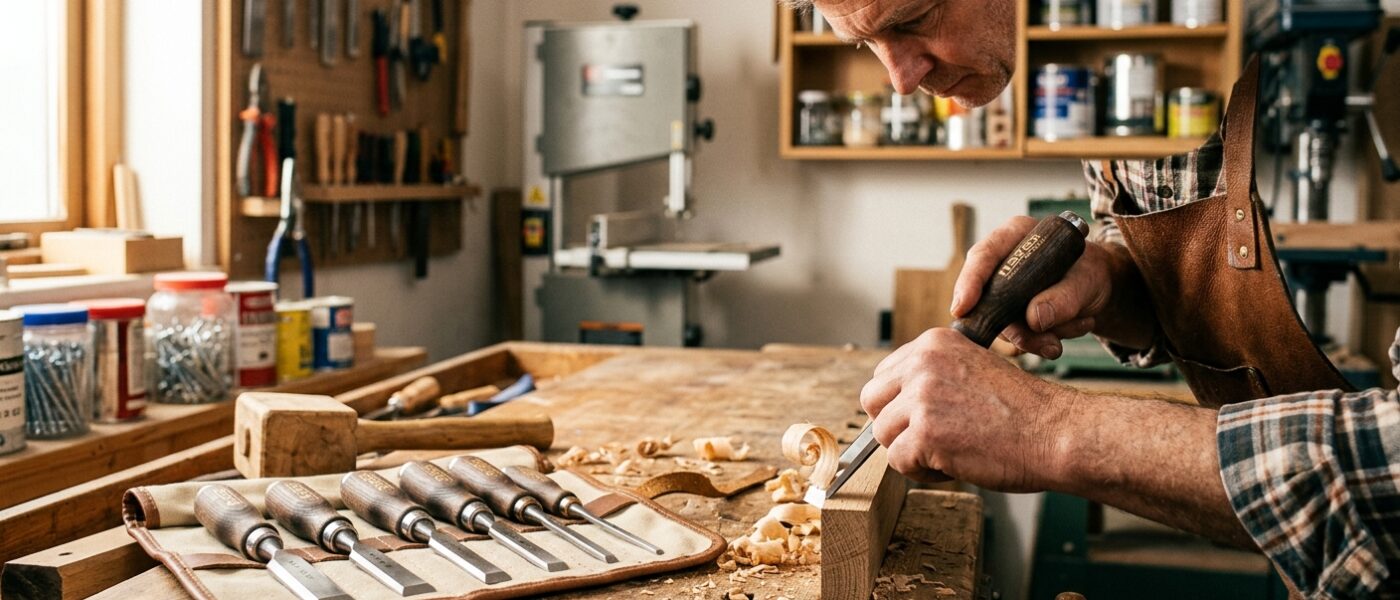
Narex 4-piece set is the best value for beginners; Lie-Nielsen is the premium investment for serious woodworkers.
Wood chisels are one of the oldest woodworking tools, and for good reason – no other tool cleans out a mortise corner, trims a hinge gain, or pares a dovetail tail as precisely as a sharp chisel in skilled hands. For beginning woodworkers, chisels represent an essential investment: a set that covers the common sizes, holds an edge well, and is comfortable to use transforms hand-tool work from frustrating to genuinely enjoyable. The challenge is separating quality chisels from the many cheap lookalikes that look similar but feel dramatically worse in use.
This guide focuses on what beginning woodworkers need: quality chisels at prices that don’t discourage experimentation, with honest guidance on what makes a chisel good, and what to look for as skills develop.
How We Evaluate Wood Chisels
Steel quality and hardness: Chisels need to hold a sharp edge through extended paring and chopping. Hardness (measured on the Rockwell C scale) should be 58–62 HRC for most woodworking chisels. Too soft (under 56 HRC) and the edge dulls immediately; too hard (over 64 HRC) and it’s brittle – chipping at the edge under mallet blows in hardwood. Japanese chisels typically use harder steel (61–64 HRC); Western chisels use 58–62 HRC.
Back flatness: The back of the blade must be flat to produce flat, accurate paring cuts. A curved or hollow back requires extensive lapping on a sharpening stone before the chisel is usable. Quality manufacturers flatten backs before sale; cheap chisels often ship with curved or scratched backs that require significant prep work.
Handle quality and material: Handles need to withstand mallet strikes (if striking chisels) and provide a comfortable grip for extended paring work. Hornbeam, boxwood, ash, and beech are traditional materials; modern chisels increasingly use hornbeam, walnut, or plastic. Plastic handles are perfectly functional and don’t crack from mallet impact. Brass ferrules or hoops at the top of the handle prevent splitting under heavy mallet use.
Bevel angle: Standard Western chisels ship at 25–30 degrees primary bevel. Sharpening typically adds a 30–35 degree secondary bevel. Japanese chisels use different geometry with hooped handles designed for mallet work. You can sharpen any chisel to your preferred bevel angle – the factory angle is a starting point.
Size set for beginners: A beginner’s first chisel set should cover 1/4″, 1/2″, 3/4″, and 1″ widths – the four sizes that handle 90% of mortising, hinge gains, and joinery work. Larger sets (up to 1-1/2″ and 2″) can be added as projects demand them.
Top Picks
1. Narex 8112 Set – Best Value Beginner Chisel Set

Czech-made Narex chisels at $49–$79 for a 4-piece set (1/4″, 1/2″, 3/4″, 1″) are the best value entry point in quality chisels. Their chrome manganese steel holds a reasonable edge and sharpens easily on oilstones and waterstones. Backs are reasonably flat out of the box – minimal lapping required before use. Hornbeam handles are comfortable and survive mallet strikes well. These are the chisels that countless woodworking schools use as starter tools – because they perform well enough to learn on and don’t require expensive upgrades to work properly.
- Pros: Excellent value, adequate steel quality for beginners, good back flatness, hornbeam handles
- Cons: Not the finest steel available – experienced woodworkers will eventually upgrade
- Price range: $49–$79 (4-piece set)
2. Two Cherries 1511-012 – Best Mid-Range Set

German-made Two Cherries chisels at $99–$149 for a 4-piece set represent the next quality tier. Their chromium-vanadium steel takes a sharper edge and holds it longer than the Narex steel. Handles are high-quality hornbeam. Backs require minimal lapping. These are working-woodworker chisels – good enough to use professionally for years without feeling limited by the tool rather than the skill. An appropriate upgrade after 6–12 months of chisel use.
- Pros: Better steel quality than Narex, longer edge retention, excellent handle quality, German manufacturing
- Cons: More expensive than Narex; beginner may not notice the difference immediately
- Price range: $99–$149 (4-piece set)
3. Lie-Nielsen Bench Chisels – Best Premium Western Chisel

Lie-Nielsen’s A2 tool steel bench chisels at $42–$55 per chisel ($170–$220 for a 4-piece set) are the American standard for premium hand chisels. The A2 steel is exceptionally tough and holds an edge significantly longer than O1 steel competitors. Handles are solid cherry – beautiful and durable. Backs come flat from the factory. These are heirloom tools that will outlast their owners – appropriate for woodworkers who’ve identified hand chisels as a central part of their practice.
- Pros: Best A2 steel available, flat backs from factory, excellent handles, lifetime quality
- Cons’>’:Premium price difficult to justify for beginners who may not maintain sharpness properly
- Price range: $42–$55 per chisel
4. Stanley 750 – Best Budget Starting Chisel
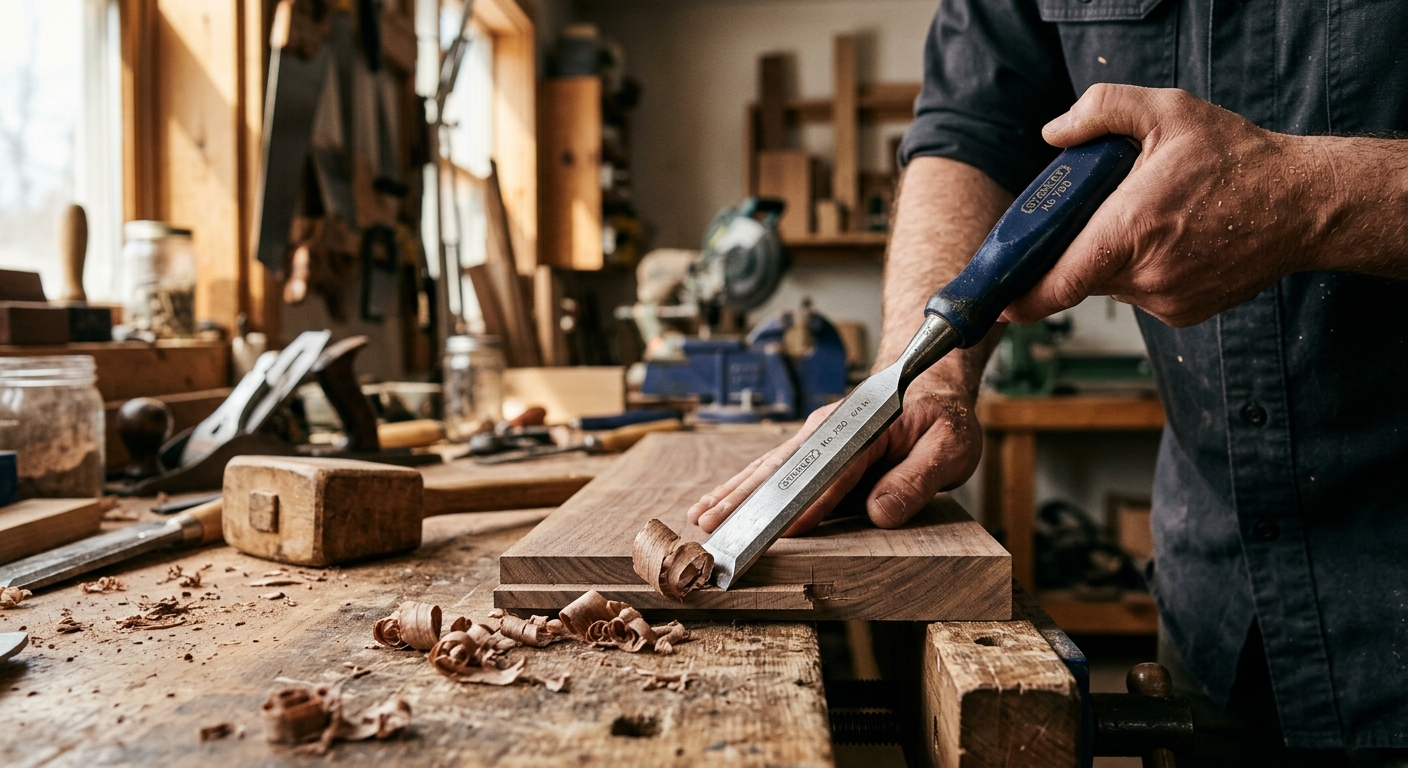
The vintage Stanley 750 (found used for $5–$15 per chisel) is what woodworking schools used for decades – and what many serious woodworkers still reach for after restoration. New current-production Stanley chisels are not the same tool; buy used. For beginners who want to test chisel work before investing, a $10 flea-market Stanley 750 after a quick sharpening is a completely functional learning tool.
- Pros: Excellent value used, good steel for price, teaches sharpening and care basics
- Cons: Must be bought used, requires restoration work, current production Stanley chisels are inferior
- Price range: $5–$15 per chisel (used)
5. Woodcraft Dovetail Chisel Set – Best Specialty Beginner Set
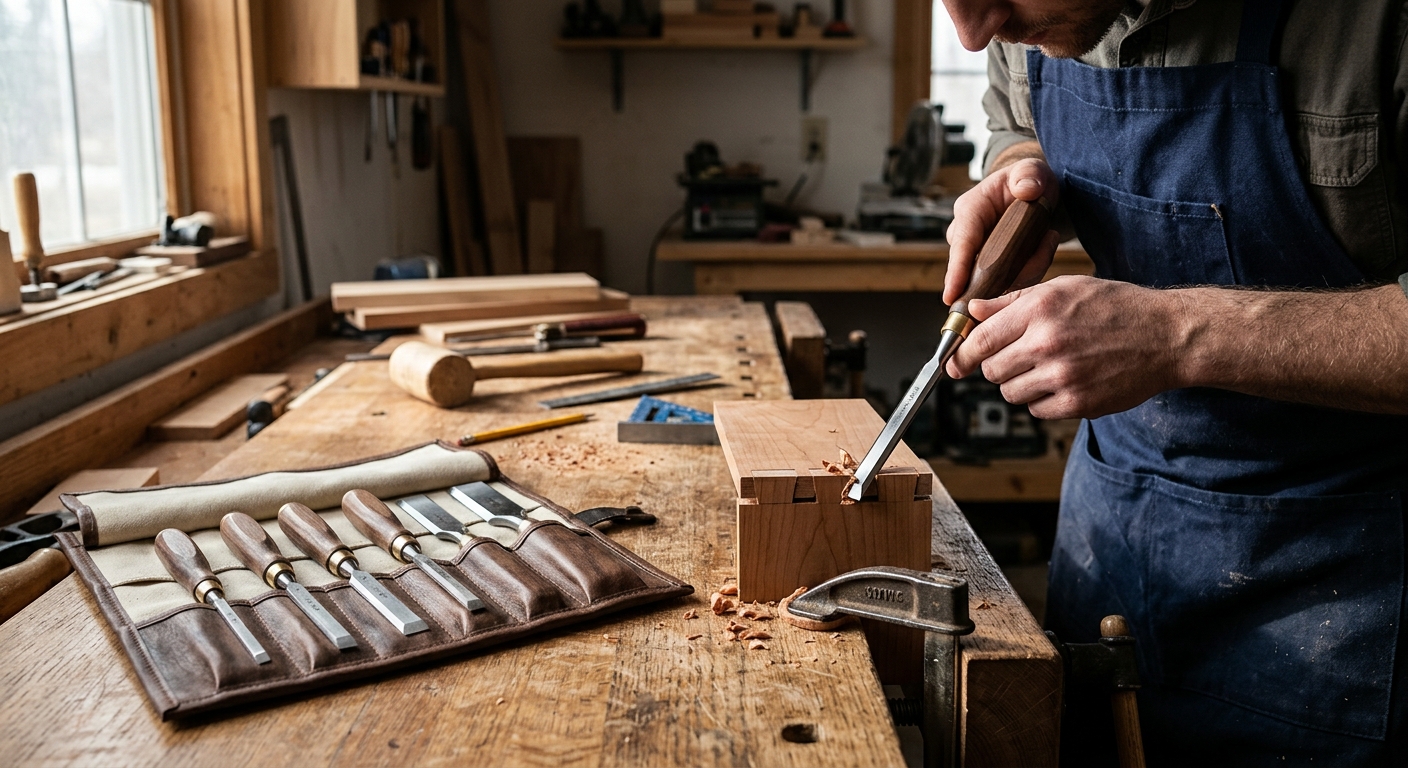
For beginners specifically interested in hand-cut dovetails, Woodcraft’s long paring chisels set at $79–$99 provides the narrow, long blades ideal for cleaning joint corners and paring to a line. These are not general chisels – they’re complementary tools that work alongside a standard bench chisel set for precision joinery applications.
- Pros: Long blades ideal for dovetail paring, good steel for price, comfortable handles
- Cons: Not a complete chisel set – complement to, not replacement for, bench chisels
- Price range: $79–$99
FAQ
Do chisels need to be sharpened before first use?
Almost always. Factory edges from most manufacturers, including good ones, are adequate for rough work but not for fine paring. Before first use, flatten the back on a medium sharpening stone (1000 grit), then sharpen the bevel to your desired angle (30–35 degrees for general woodworking). This process takes 15–30 minutes per chisel on a new set and establishes the foundation for all future sharpening. Sharp chisels work with the grain; dull chisels fight it.
What sharpening system is best for beginners?
A basic two-stone setup: a 1000-grit waterstone for sharpening, an 8000-grit waterstone for finishing the edge. Add a leather strop with green compound for the final polish. Total cost: $40–$80 for quality stones. Oil stones and diamond stones are alternatives; each has adherents. Whatever system you use, maintain it consistently – a mediocre stone used regularly beats an excellent stone used never.
When should a chisel be struck with a mallet vs used by hand?
Use a mallet for: chopping mortises, severing fibers across the grain, removing waste in heavy cuts. Use hand pressure alone for: paring to a line, cleaning corners, fitting joinery where control matters more than force. A sharp chisel used by hand requires surprisingly little force – the blade does the work. If you’re pushing hard on a chisel, it needs sharpening.
Bottom Line
Narex chisels at $49–$79 for a 4-piece set are the best starting point for beginning woodworkers – good enough to learn on, affordable enough that beginner mistakes don’t hurt, and legitimate tools that will last for years. The upgrade path leads to Two Cherries (mid-range) and Lie-Nielsen (premium) as skills and appreciation develop. Whatever set you choose, invest equally in a sharpening system – even the finest chisel is a poor tool without a sharp edge.
Affiliate Disclosure: DIY Arsenal participates in the Amazon Associates Program and other affiliate programs. When you purchase through links on this site, we may earn a small commission at no additional cost to you. We only recommend products we have personally tested and genuinely believe in.