Best Hammers for Every DIY Task – Claw, Rip, and Framing
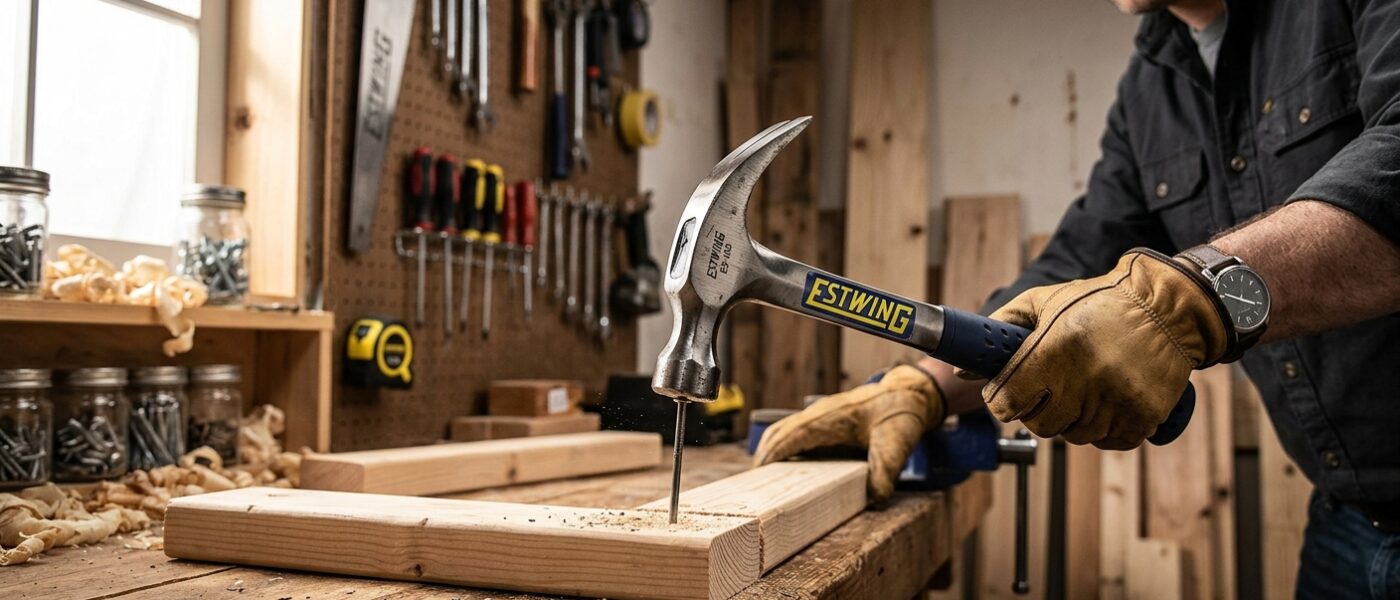
Estwing E3-16S is the best all-purpose hammer; titanium upgrades are worth it for regular framers.
A hammer is the tool humans have used to strike things for roughly three million years, and despite that history, buying a poor one remains a common mistake. The weight, handle material, head shape, and face profile all affect how much work you can do before your arm wears out – and how accurately you can drive nails into precise locations. For a tool you’ll use in nearly every project, investing in a quality hammer pays dividends every single time you pick it up.
The hand tool category offers three main types: claw hammers for general carpentry and finish work, rip hammers for framing, and specialty hammers (ball peen, mallets, dead blows) for metalwork and woodworking. This guide covers all three, with honest assessments of what each type does best.
How We Evaluate Hammers
Head weight: The classic DIY all-purpose hammer is 16 oz. Lighter (12–14 oz) for trim work and finish carpentry; heavier (20–28 oz) for framing. Framing hammers need the extra mass to drive 16d sinkers in two swings. Using a framing hammer for trim work is exhausting; using a finish hammer for framing is inefficient. Match weight to the work.
Handle material: Wood handles (hickory or ash) absorb vibration well, are easy to replace, and feel natural. Fiberglass handles are nearly indestructible and absorb vibration adequately. Steel handles (with rubber grip) are the most durable for heavy framing work but transmit the most vibration – not recommended for extended finish work. Titanium handles (Ti framing hammers) are extremely lightweight with excellent vibration absorption – premium cost, premium feel.
Face type: Smooth face – standard for finish work and general use, won’t mark wood surfaces. Milled face (waffle pattern) – grips nail heads for framing, prevents glancing blows, will mark wood surfaces if it contacts them. Finish work always requires smooth face; framing can use either.
Claw type: Curved claw – best for pulling nails, acts as a pry lever for general use. Straight (rip) claw – better for prying boards apart, splitting wood, and demolition work. Both pull nails adequately; the rip claw wins for demo applications.
Balance and swing feel: The best hammer for you is the one that feels balanced in your hand at the point where your swing is most powerful. Head-heavy hammers drive nails efficiently but fatigue the wrist; balanced hammers require more effort per swing but reduce fatigue over a full day. Try hammers in person before buying when possible.
Top Picks
1. Estwing E3-16S – Best All-Around Hammer
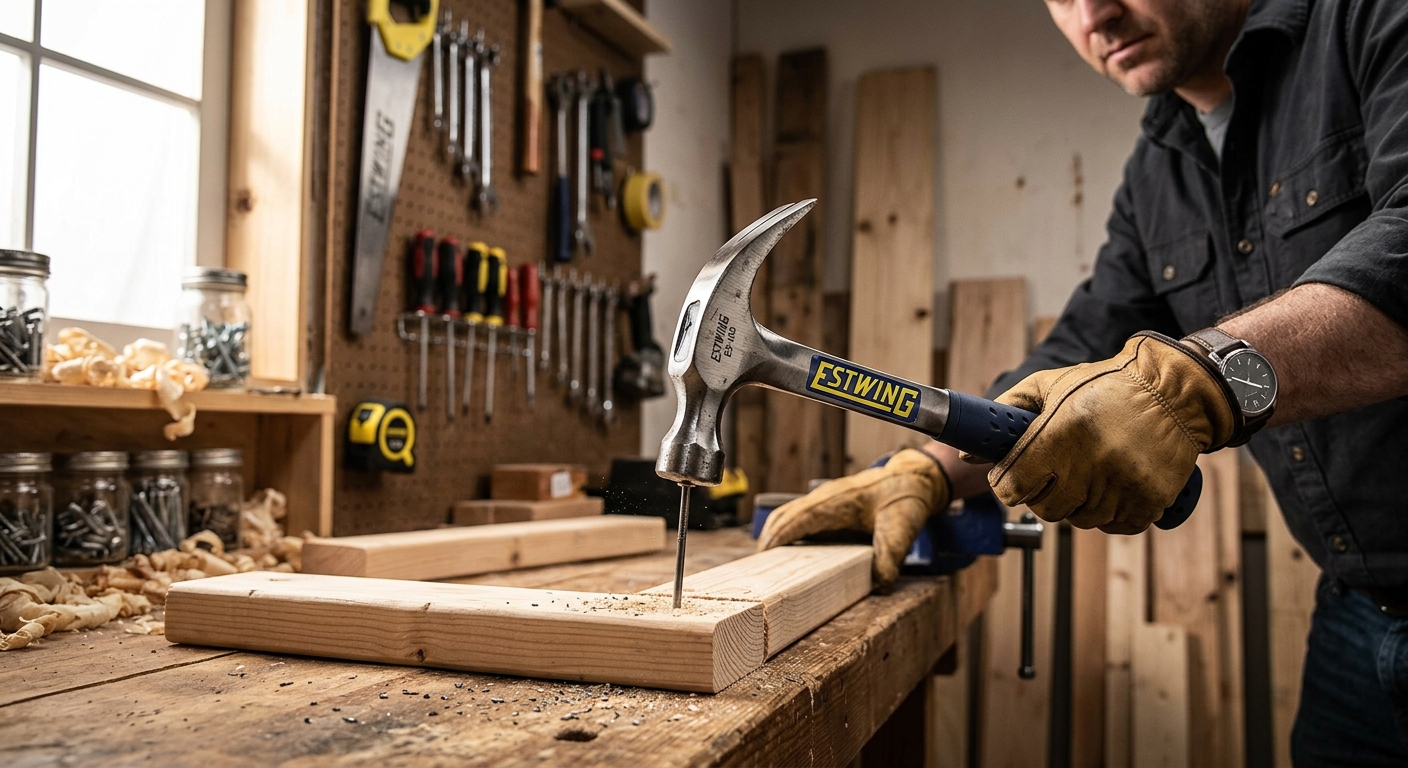
Estwing has been making one-piece forged steel hammers in Rockford, Illinois since 1923, and the E3-16S remains arguably the best all-purpose hammer available. Its 16 oz smooth-face head, forged steel handle, and leather grip wrap deliver excellent balance and the distinctive Estwing “ring” on nail strike that experienced carpenters recognize immediately. The one-piece forged construction eliminates the head-to-handle failure point that eventually affects every wood and fiberglass handle hammer.
At $29–$39, it’s the best value in quality hammers. It’s not the lightest option, and the steel handle transmits more vibration than fiberglass or wood – buy the leather grip version (not vinyl) to mitigate this. For a first quality hammer and an all-purpose tool, this is the default recommendation.
- Pros: One-piece forged steel, excellent balance, lifetime warranty, American-made, 16 oz all-purpose weight
- Cons: Steel handle transmits more vibration than wood or fiberglass, heavier than some alternatives
- Price range: $29–$39
2. Vaughan 20 oz Rip Hammer – Best Framing Hammer
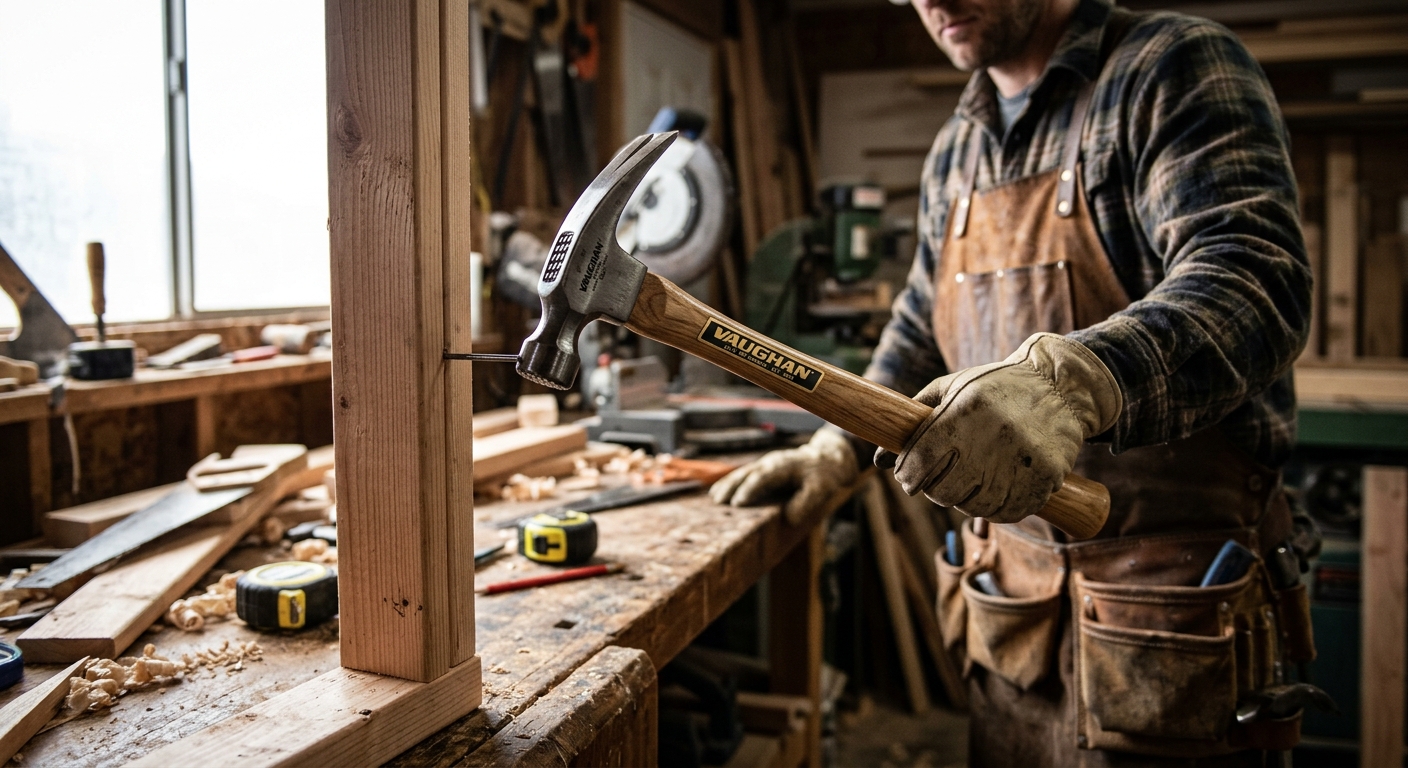
For framing walls, decks, and structural work where driving 16d and 20d sinkers rapidly is the task, a 20 oz framing hammer dramatically reduces the number of swings per nail. Vaughan’s 20 oz steel framing hammer with milled face at $29–$45 is the workhorse choice – heavy enough to drive framing nails efficiently, reasonably priced, and available with both wood and steel handles. The rip claw handles board separation during layout changes.
- Pros: 20 oz weight drives framing nails efficiently, milled face grips nail heads, rip claw for demo
- Cons: Too heavy for finish work, milled face marks soft wood surfaces
- Price range: $29–$45
3. Martinez M1FS – Best Titanium Framing Hammer
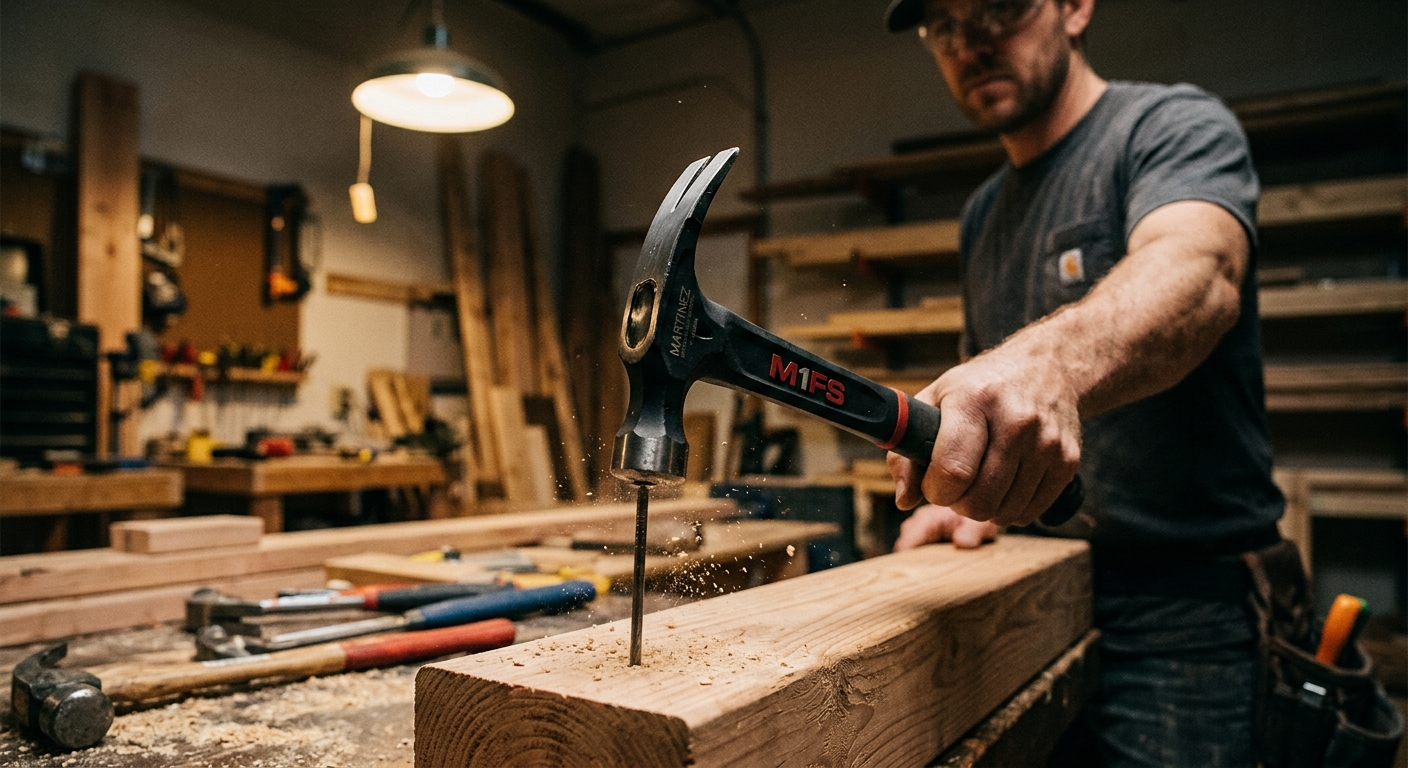
Titanium handles at $179–$219 are a serious investment for serious framers. The Martinez M1FS weighs 15 oz but hits like a 22 oz steel hammer due to titanium’s transfer efficiency – less energy lost to handle flex means more energy into the nail. The vibration absorption is the best available; experienced framers who switch to titanium often report dramatic reductions in wrist and elbow fatigue over a full work day. Not a DIY necessity; a professional investment for those who frame daily.
- Pros: Dramatic vibration reduction, titanium efficiency means lighter hammer hits as hard, excellent for repetitive framing
- Cons’>’:Very high price, overkill for occasional DIY framing projects
- Price range: $179–$219
4. Stanley 51-162 – Best Budget Hammer
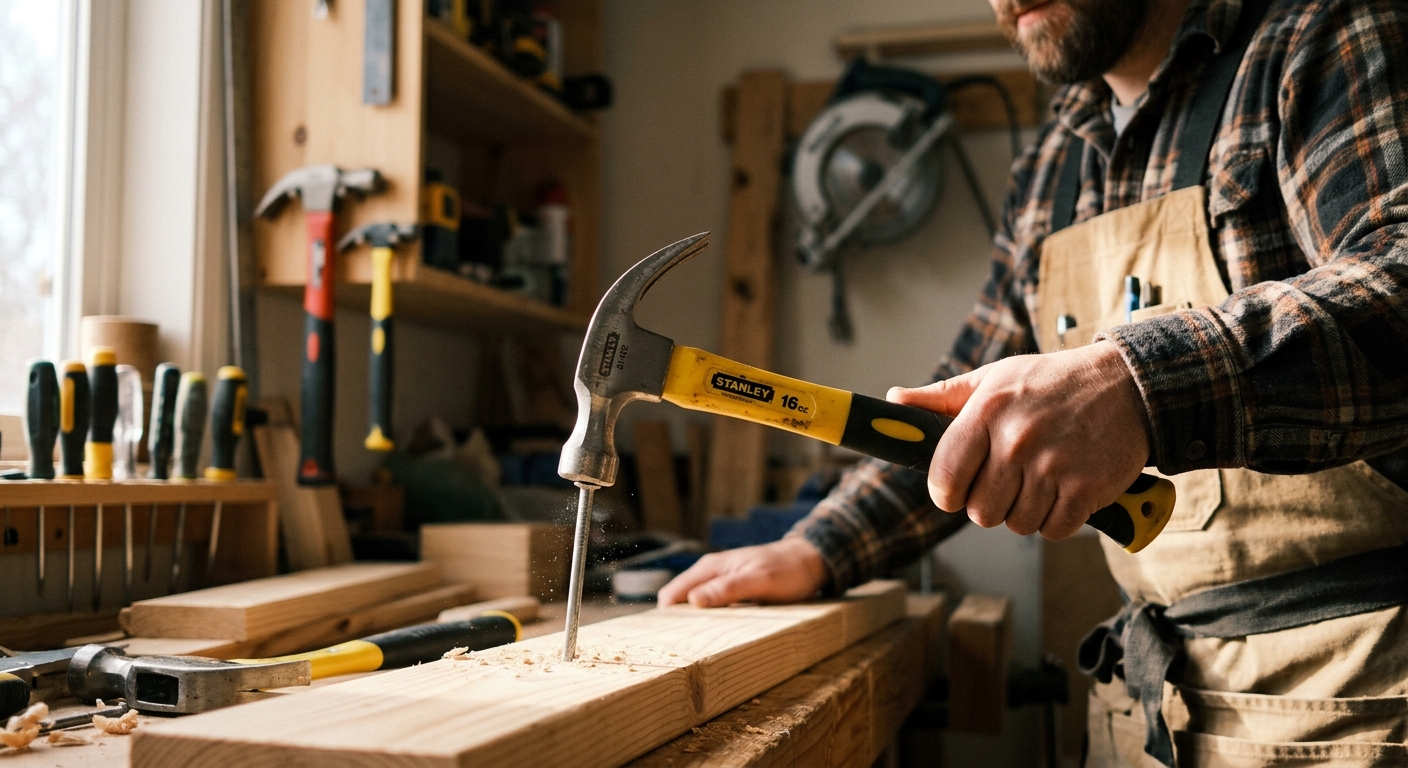
Stanley’s 16 oz curved claw hammer with fiberglass handle at $15–$22 is the recommended budget option. The fiberglass handle absorbs vibration better than steel, the 16 oz weight is appropriate for general DIY, and Stanley’s quality control is consistent at this price point. Not as refined as the Estwing, but entirely functional for occasional home projects. Available everywhere.
- Pros: Budget price, fiberglass handle reduces vibration, widely available, adequate for occasional use
- Cons: Head-to-handle joint can loosen over time, balance less refined than Estwing
- Price range: $15–$22
5. Stiletto TI14SC – Best Mid-Size Titanium
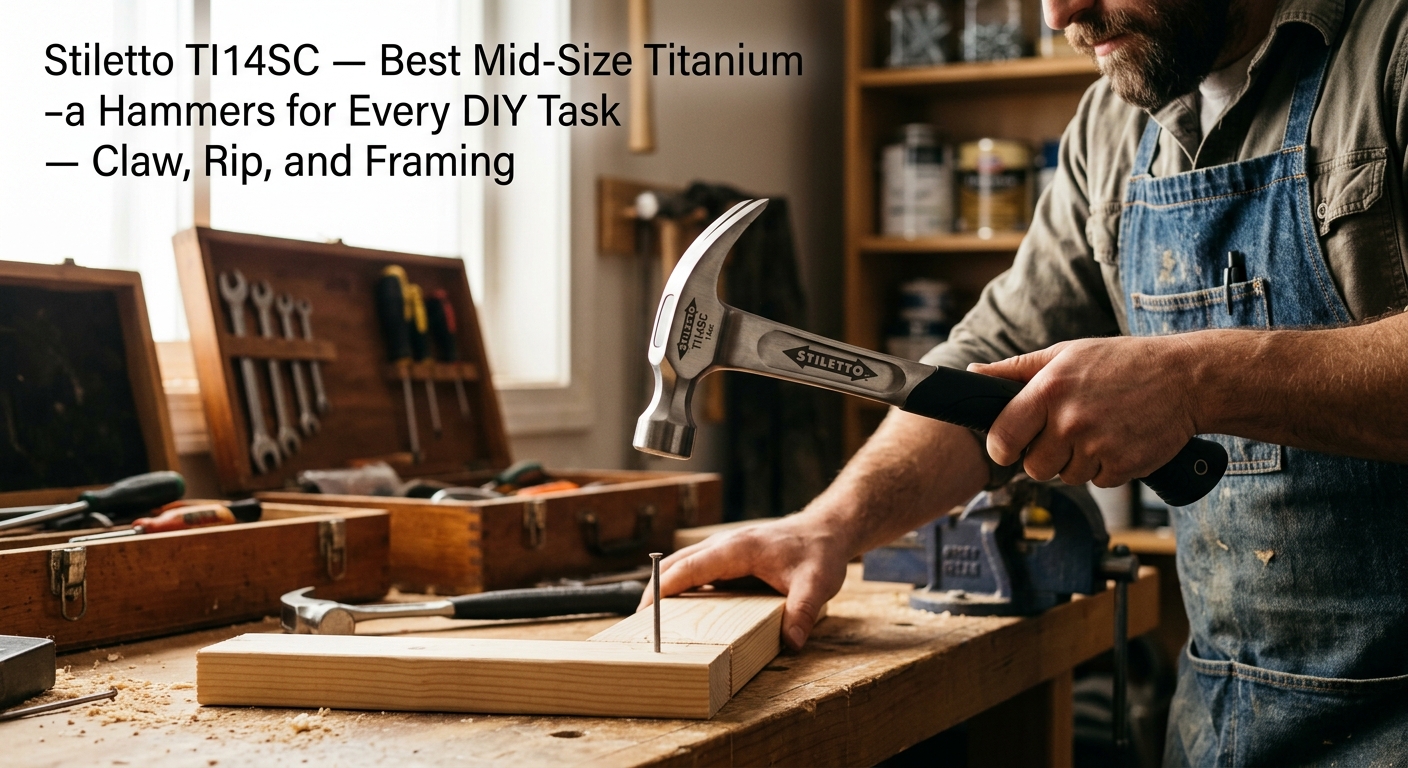
For DIYers who want a titanium option without paying the full Martinez premium, Stiletto’s 14 oz titanium milled-face hammer at $89–$119 hits the sweet spot. At 14 oz with titanium’s efficiency, it drives finish nails and light framing nails with less fatigue than heavier steel alternatives. The milled face handles framing; a smooth-face model is available for finish work. Popular among trim carpenters and lighter-duty framers.
- Pros: Titanium efficiency at lower price than Martinez, lighter than steel framers, good vibration reduction
- Cons: Still expensive vs steel alternatives, 14 oz limits use for heavy framing nails
- Price range: $89–$119
FAQ
What causes “tennis elbow” from hammering, and how do I prevent it?
Lateral epicondylitis (tennis elbow) from hammering results from repeated impact vibration transmitted through the handle to the tendons at the elbow. Prevention: use a handle that absorbs vibration (fiberglass, wood, or titanium over steel), grip the handle near the end for maximum mechanical advantage (which reduces force required per swing), take breaks during long nailing sessions, and use a pneumatic nailer for high-volume work rather than swinging a hammer hundreds of times.
Should I buy a 16 oz or 20 oz hammer?
If you do any framing work, own both – a 20 oz for structural nailing and a 16 oz for everything else. If you only do finish work and assembly, a 16 oz or 14 oz is the right choice. A 20 oz hammer is exhausting for trim nailing and risks marking surfaces with glancing blows. Match the tool weight to the task.
How do I know when to replace a hammer handle?
Replace a wooden handle when: cracks appear along the grain near the eye (where handle meets head), the fit between handle and head becomes loose enough that the head moves during swings (extremely dangerous), or the handle is significantly nicked, splintered, or weakened by chemical damage. Fiberglass and steel handles should be replaced (whole tool) if the head becomes loose; these aren’t practical to re-handle.
Bottom Line
The Estwing E3-16S is the best all-purpose hammer for most DIYers – a lifetime tool at an accessible price that delivers professional quality every time. Framers who drive a lot of nails should use a 20 oz head and strongly consider titanium once their use justifies the investment. Budget buyers can rely on the Stanley 51-162 for occasional work without sacrificing quality entirely. Whatever you choose, buy the best hammer you can afford for your primary use – it’s a tool you’ll pick up thousands of times over your life as a homeowner.
Affiliate Disclosure: DIY Arsenal participates in the Amazon Associates Program and other affiliate programs. When you purchase through links on this site, we may earn a small commission at no additional cost to you. We only recommend products we have personally tested and genuinely believe in.