Best Pipe and Tube Benders
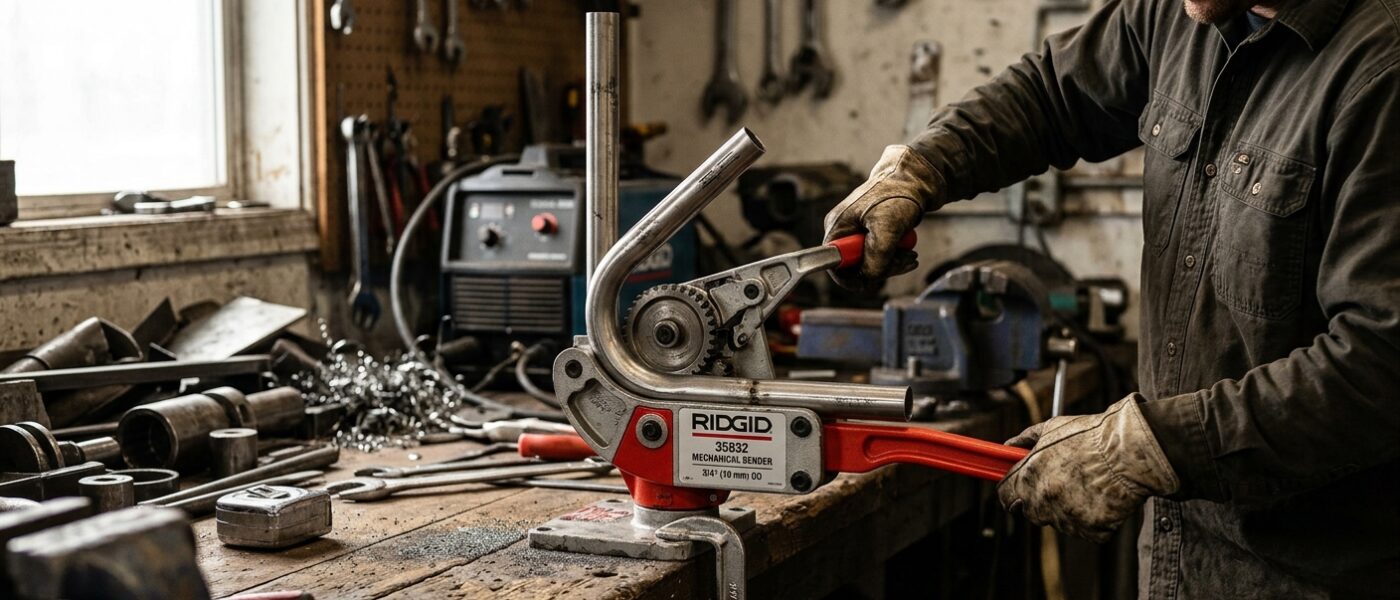
Match the bender to the material: Ridgid lever bender for hard copper and soft copper, Klein hand bender for 1/2" EMT. Never use a conduit bender on copper tube or vice versa.
As an Amazon Associate, we earn from qualifying purchases.
Bend It Right, Run It Clean
A clean pipe bend is both stronger and neater than an equivalent elbow fitting – no joints to leak, no flow turbulence from a fitting’s internal radius, and a more professional appearance in exposed installations. Bending copper for water lines, conduit for electrical, and soft copper for refrigeration lines all require different tools and techniques. The right bender for the material and radius produces a smooth, kink-free bend. The wrong approach produces flattened, kinked pipe that leaks under pressure or restricts flow.
Key Features to Look For
- Material compatibility: Conduit benders (EMT and rigid) are not the same as copper tube benders. Refrigeration benders are designed for soft copper. Using the wrong tool deforms the pipe wall or collapses the tube. Match tool type to material explicitly.
- Bend radius: Standard benders produce a specific centerline radius – typically 5-8 times the tube OD. A tighter radius kinks; a larger radius requires more space. Know your available space before committing to a bend plan.
- Tube size coverage: Spring-type benders (the simple coil springs) cover one diameter each. Lever-type benders handle one or several sizes depending on the model. Ratchet benders with multiple shoes cover a range in one tool. Budget for the sizes you’ll actually use.
- Degree markings: Conduit bending requires precise angle calculation (offsets, saddle bends) – degree markings on the bender and foot pedal are essential for accurate work. Plumbing tube benders need less precision but marked 90° and 45° stops are still useful.
- Spring benders vs. lever benders: Spring benders slip over (or inside) soft copper tube and prevent kinking while you bend by hand. Lever benders use mechanical advantage to form harder materials (EMT, copper water tube) with controlled radius. Springs are adequate for soft copper refrigeration work; lever benders are required for anything harder.
Top Picks
Ridgid 35832 Mechanical Tube Bender
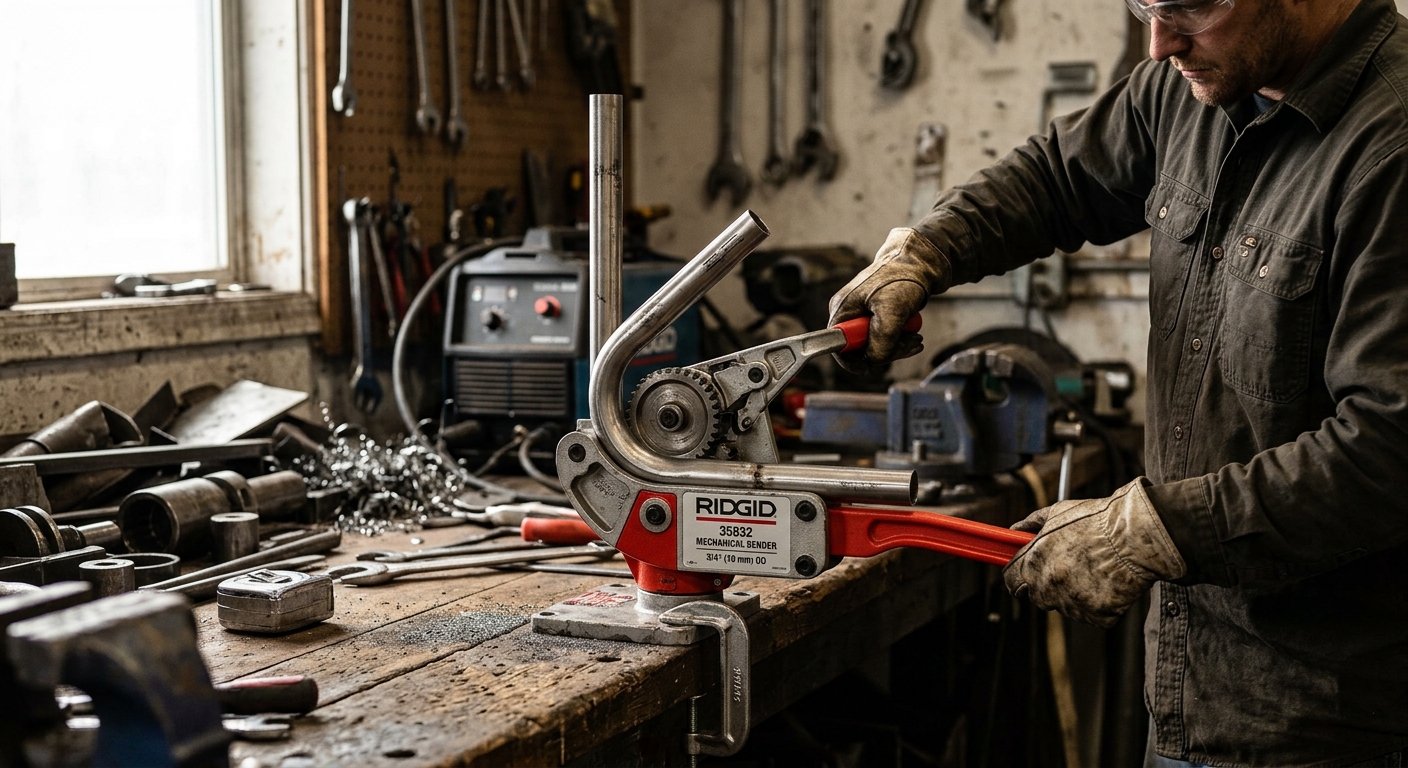
Ridgid’s lever-type tube bender handles 1/4″ through 7/8″ OD tubing with interchangeable shoes. The mechanical advantage lets you bend hard copper water tube (Type L and M) and aluminum tube cleanly without kinking. The degree markings are accurate and the forming shoe radius matches standard plumbing bend practice. A quality tool that handles the full range of residential copper bending in one unit. The multi-size shoe system means you’re not buying separate benders for each tube size.
Imperial Tool 364FH Flare and Swage Tool with Spring Benders
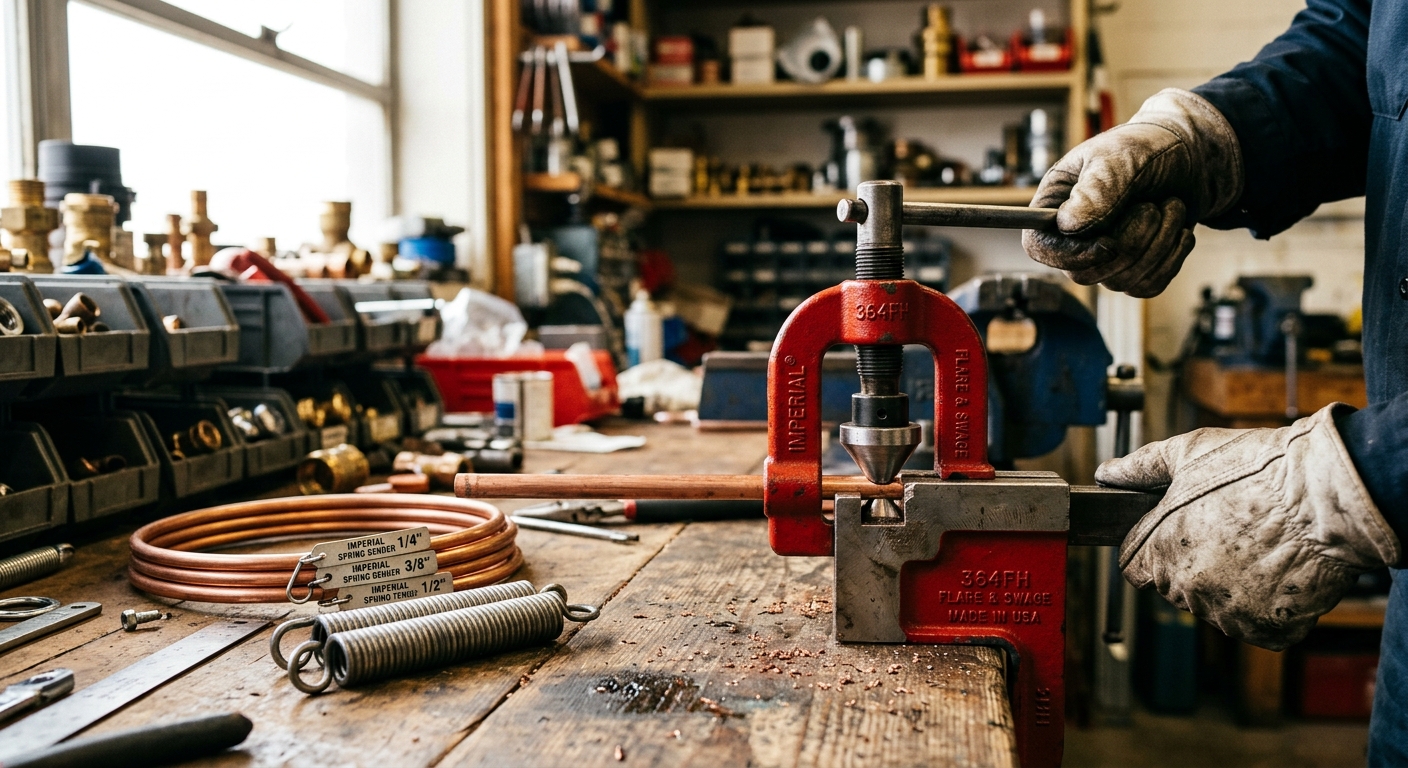
A combination tool kit for refrigeration and HVAC work – includes spring benders for 1/4″ through 5/8″ soft copper tube in addition to a flaring and swaging set. Spring benders are the right approach for soft copper: they’re compact, lightweight, and produce kink-free bends when used correctly. The full kit covers the bending, flaring, and connection tools needed for residential HVAC copper work in one case.
Klein Tools 56206 Aluminum Conduit Bender
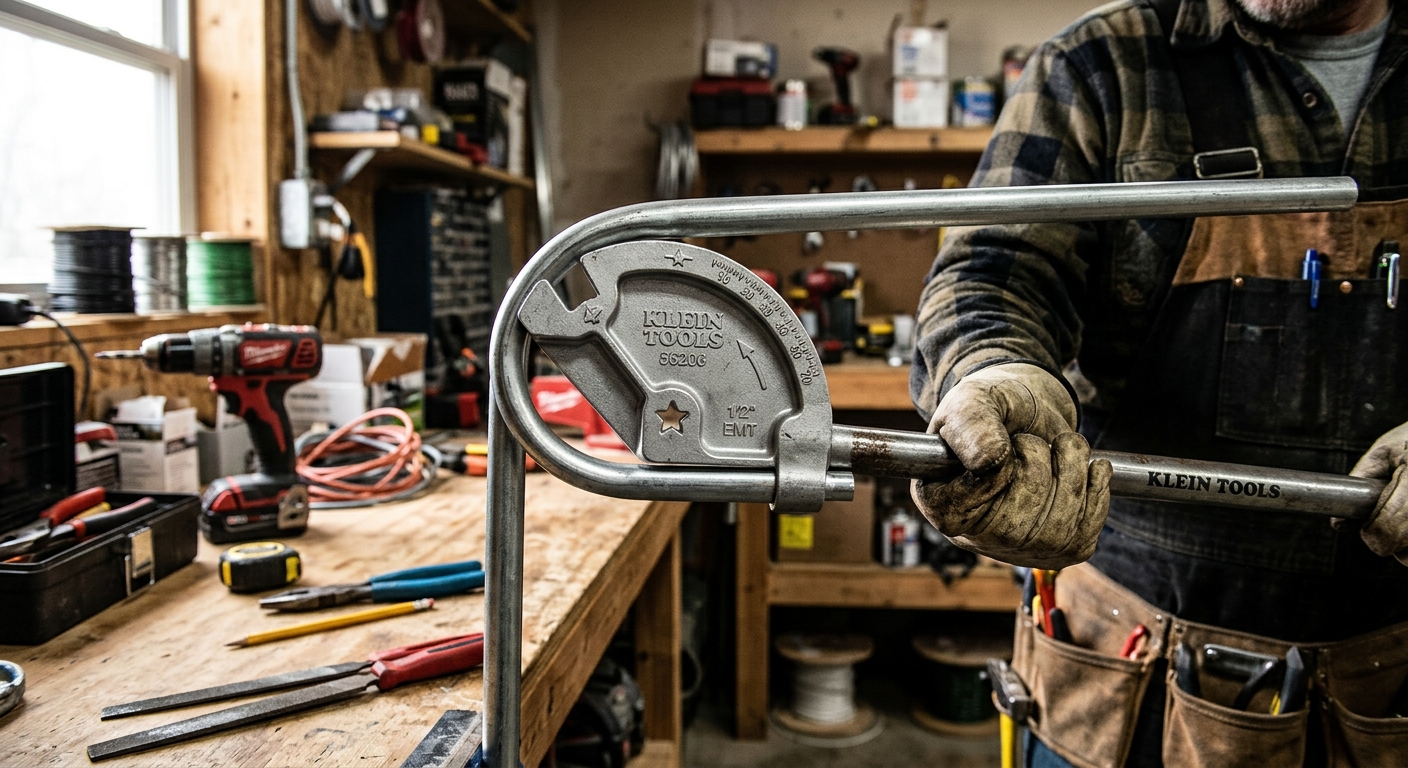
A 1/2″ EMT conduit bender with accurate degree markings, a comfortable foot pedal, and the take-up, offset, and saddle bend references stamped on the handle. Klein conduit benders are the professional standard – the geometry is designed to produce clean bends in EMT conduit without flattening. For electrical work involving 1/2″ EMT conduit runs (the most common size for residential work), this is the bender to own.
Greenlee 555 Electric Conduit Bender
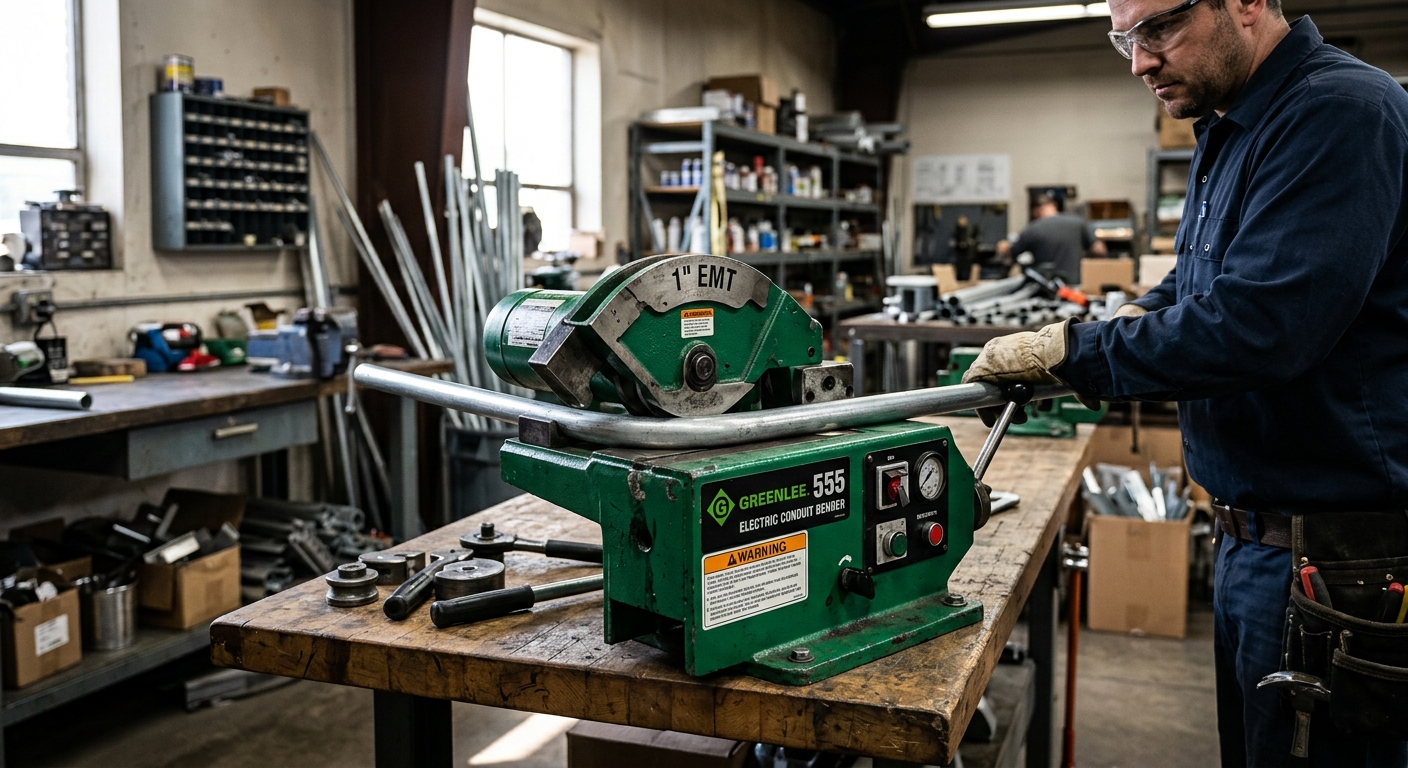
The step-up power bender for anyone doing significant conduit work – handles 1/2″ through 2″ EMT and rigid conduit with electric motor assist. The hydraulic ram creates consistent bend radius and the degree stop eliminates guesswork. This is a shop tool for serious DIYers or small contractors, not an occasional-use purchase. But for anyone bending large-diameter rigid conduit, the Greenlee 555 makes that job practical without a second person to help manage the conduit weight.
Frequently Asked Questions
How do I prevent copper tube from kinking when bending?
Use the correct bender for the tube type and size – a spring bender that fits snugly over soft copper or a lever bender with the proper radius shoe for hard copper. Bend slowly with even pressure; quick jerks kink soft materials even with the correct tool. For tight radius work on soft copper, filling the tube with sand before bending prevents wall collapse, then empty after bending.
What is a reverse offset in conduit bending?
A standard offset has both bends angling in the same direction – the conduit goes up, over an obstacle, then back down. A reverse offset places the second bend in the opposite direction. Both require careful measurement and accurate degree setting. Conduit benders with complete angle references handle both patterns. Klein’s handle markings include offset multiplier tables to calculate the required spacing between bends based on the obstacle height.
Can I rent a conduit bender instead of buying one?
Hand benders for 1/2″ and 3/4″ EMT are inexpensive enough that buying makes more sense than renting for any job longer than a single run. Power benders and large-diameter hydraulic benders are excellent rental choices – the Greenlee 555 and similar tools are available at tool rental shops and justify rental cost for a one-time large conduit installation rather than a purchase at their price point.
Affiliate Disclosure: DIY Arsenal participates in the Amazon Associates Program and other affiliate programs. When you purchase through links on this site, we may earn a small commission at no additional cost to you. We only recommend products we have personally tested and genuinely believe in.