Best Basin Wrenches for Tight Under-Sink Work
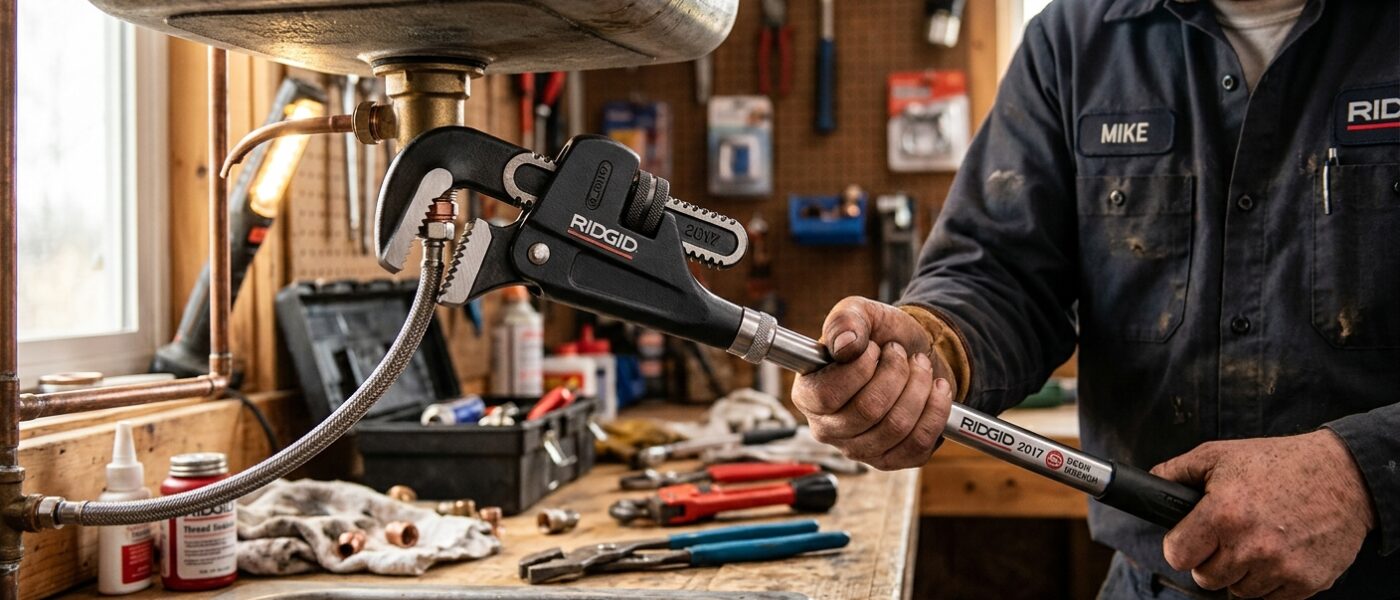
The Ridgid 2017 is the basin wrench that belongs in every homeowner's toolkit. Buy the right length for your sink depth — it transforms faucet replacement from a miserable job into a manageable one.
As an Amazon Associate, we earn from qualifying purchases.
The Tool That Reaches Where No Other Wrench Can
Basin wrenches exist for one job: tightening and loosening the mounting nuts that hold faucets to sink decks. These nuts sit in an almost inaccessible position – directly above the sink basin, inside a cabinet, behind the drain, with supply hoses in the way. No standard wrench geometry reaches them. A basin wrench’s long shaft and pivoting jaw reach up from below and turn nuts that would otherwise require disassembling the entire under-sink space. Anyone who has ever replaced a kitchen faucet without one understands exactly why this tool exists.
Key Features to Look For
- Jaw pivot range: The jaw at the top of a basin wrench pivots to grab nuts in either tightening or loosening direction. Quality wrenches pivot cleanly without slipping – a jaw that doesn’t fully engage the nut rounds corners and creates the worst kind of stuck fastener.
- Shaft length and extension: A standard 16-18″ shaft handles most faucet mounting nuts. Deep farmhouse sinks or oversized undermount sinks may require 24″ extension shafts. Check the distance from the bottom of your cabinet to the faucet nuts before assuming a standard length works.
- Jaw size range: Most basin wrenches cover 1/2″ to 1-1/4″ nuts – the range that covers standard faucet locknut sizes. If you’re working on large commercial-style faucets with oversized locknuts, verify jaw capacity.
- T-handle comfort: You’ll be applying significant torque in an awkward position – often lying under the sink on your back with limited visibility. A T-handle that’s comfortable to grip and gives good rotation control reduces fatigue and improves feel on nut engagement.
- Spring-loaded jaw: Spring-loaded jaws automatically return to the engagement position after each rotation – useful in the tight space where repositioning the jaw manually after each partial turn is difficult. A significant convenience upgrade over non-spring versions.
Top Picks
Ridgid 2017 Basin Wrench
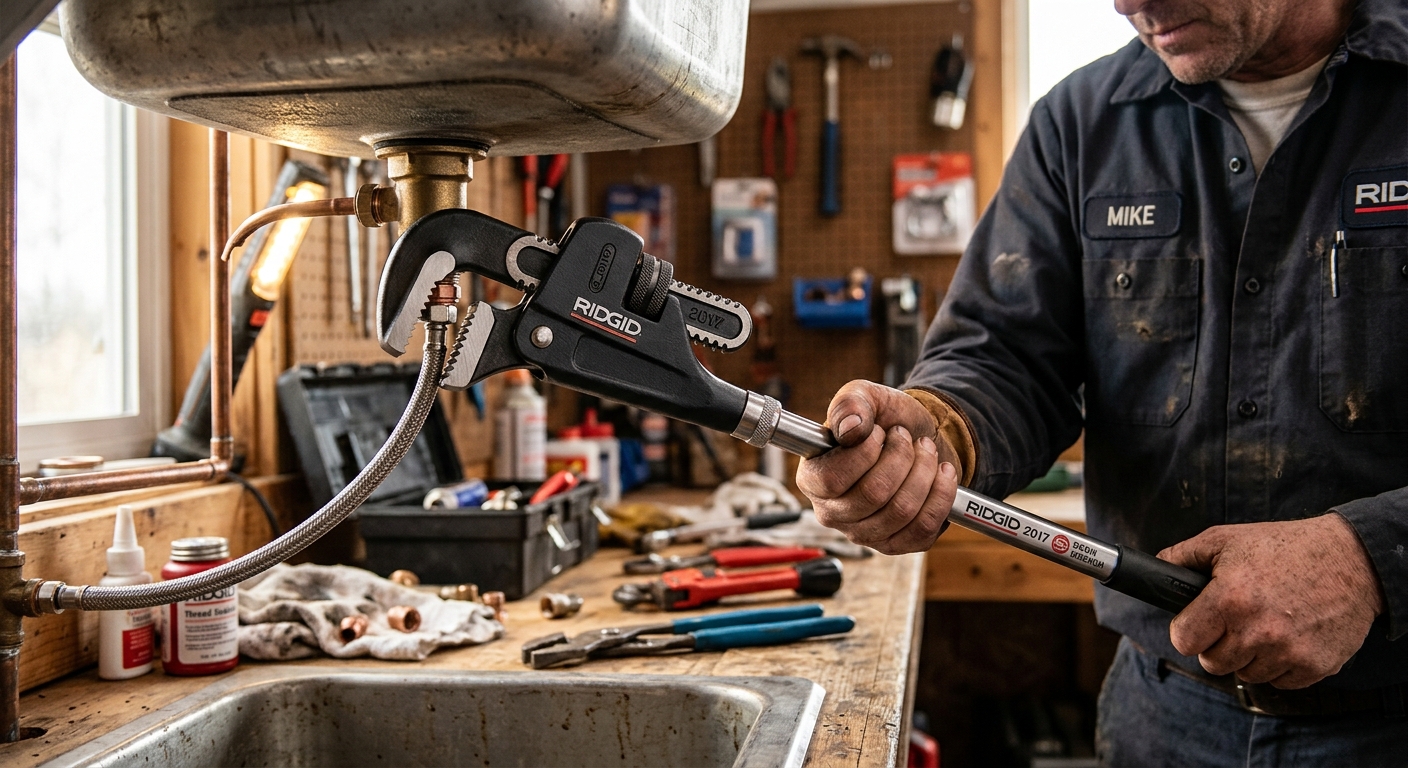
The professional standard for basin wrenches. The spring-loaded jaw grips 3/8″ to 1-1/4″ nuts, the 16″ shaft handles standard depth sinks, and the quality of the pivot and jaw mechanism is noticeably better than budget alternatives. Ridgid tools are built to handle the torque that stuck, corroded faucet locknuts require – plastic-handled budget wrenches twist and slip under the same force. This is the tool plumbers reach for; it’s worth the price over cheaper alternatives.
Eastman 45276 Basin Wrench with Extension Shaft
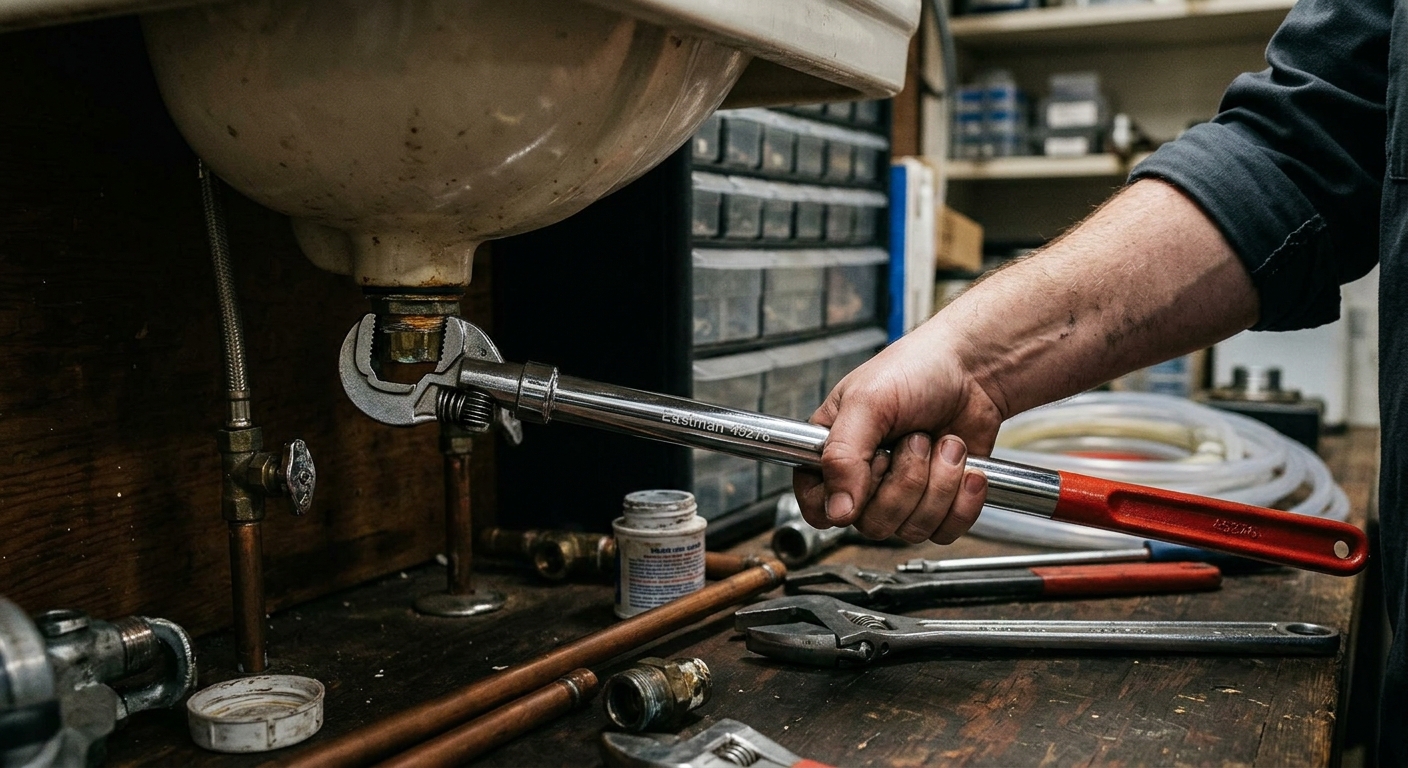
Eastman’s version includes an extension section that brings total reach to 24″ – covering deep apron-front and farmhouse-style sinks where the standard 16″ shaft doesn’t reach. The jaw pivot is reliable and the included T-handle gives good control. If you have a standard-depth sink, the Ridgid is the better tool; if you have a deep sink, the Eastman’s extension capability solves a problem the Ridgid doesn’t address.
Husky Telescoping Basin Wrench
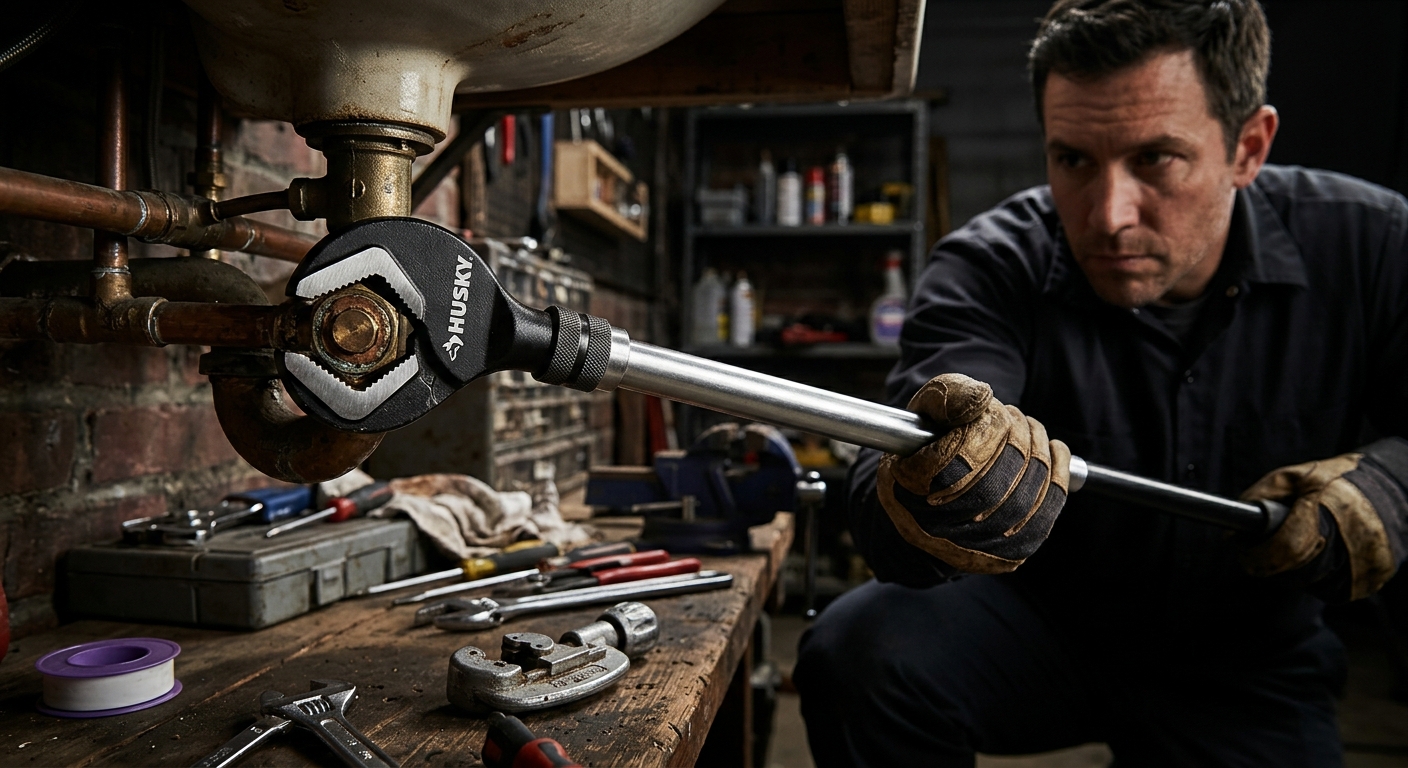
Husky’s telescoping model adjusts between 11″ and 20″ – covering a range of sink depths without a separate extension. The mechanism is straightforward and the jaw quality is adequate for standard homeowner use. Not quite the durability of the Ridgid for repeated professional use, but appropriate for the homeowner who replaces a faucet once every decade and doesn’t want to pay professional-grade prices.
OTC 4510A Basin Wrench with Swivel Head
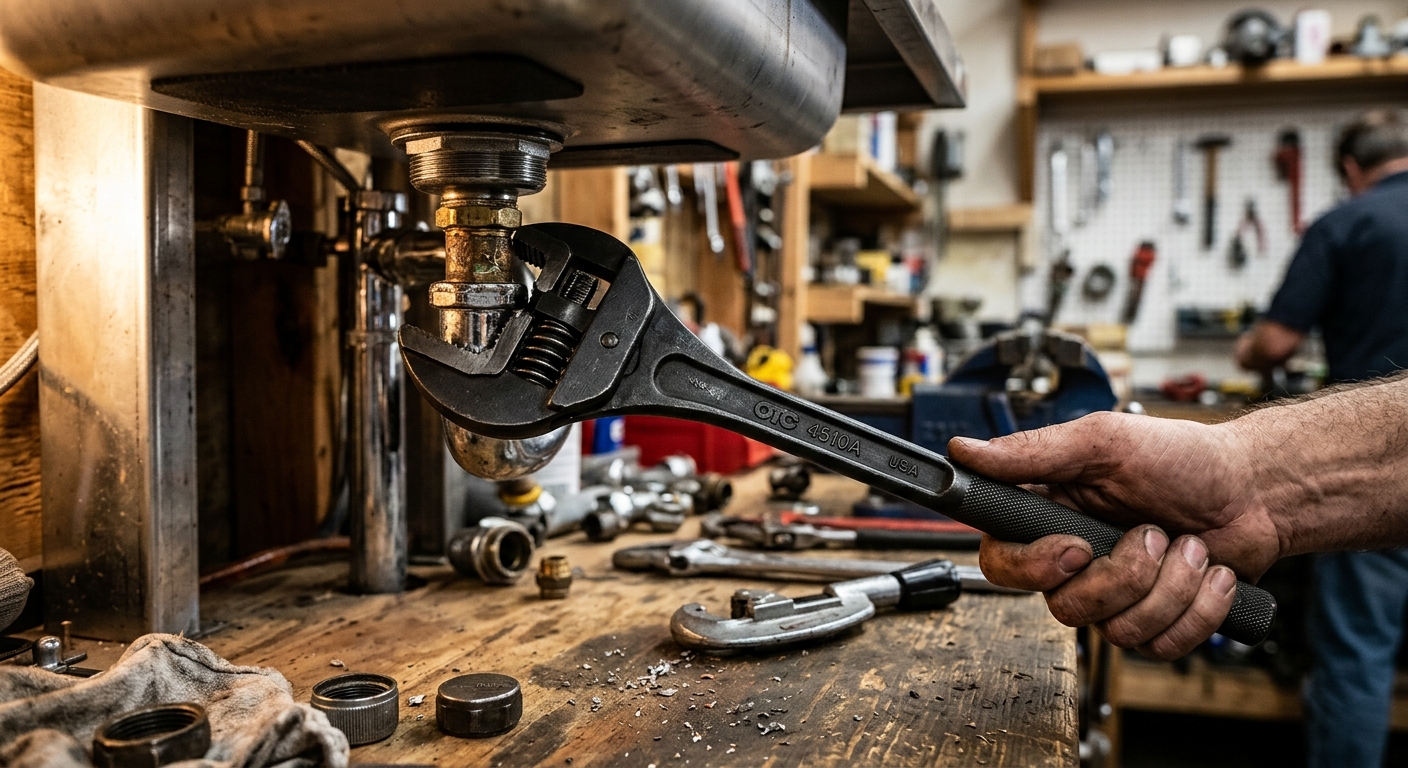
A heavy-duty option with a swivel head that adds angular reach beyond what a fixed-shaft wrench provides. When the faucet mounting nuts are in an offset or angled position (common in vessel sink and bar sink applications), the swivel head reaches angles that straight basin wrenches can’t. Niche, but genuinely useful for unusual sink configurations where standard wrenches fail.
Frequently Asked Questions
Can I replace a kitchen faucet without a basin wrench?
Technically sometimes, but it’s genuinely difficult. On shallow sinks with plenty of cabinet clearance, a stubby combination wrench or adjustable wrench can sometimes reach the locknuts. In any realistic under-sink space with supply hoses, drain assemblies, and the sink deck in the way, a basin wrench is effectively required. Attempting it without usually results in stripped nuts, hours of frustrated effort, and a phone call to buy the tool anyway.
How do I avoid rounding off a corroded faucet locknut?
Apply penetrating oil (PB Blaster or similar) and allow it to soak for 15-30 minutes before attempting removal. Ensure the jaw is fully seated before applying force – partial engagement is what rounds corners. Apply firm, steady force rather than a sudden jerk. If the nut won’t budge after penetrant treatment, a basin wrench with better leverage (longer handle) or a strap wrench can add force without rounding.
My faucet locknut is plastic – does a basin wrench still work?
Yes, but apply less force. Plastic locknuts (common on Delta and some Moen faucets) strip easily if overtightened or if the jaw slips under force. Hand-tight plus a quarter-turn with the basin wrench is typically sufficient for plastic nuts. For loosening stuck plastic nuts, a basin wrench with a grip jaw (rubber-lined) reduces the risk of cracking.
Affiliate Disclosure: DIY Arsenal participates in the Amazon Associates Program and other affiliate programs. When you purchase through links on this site, we may earn a small commission at no additional cost to you. We only recommend products we have personally tested and genuinely believe in.