Best Plunger Sets – Full Bathroom and Kitchen Kit
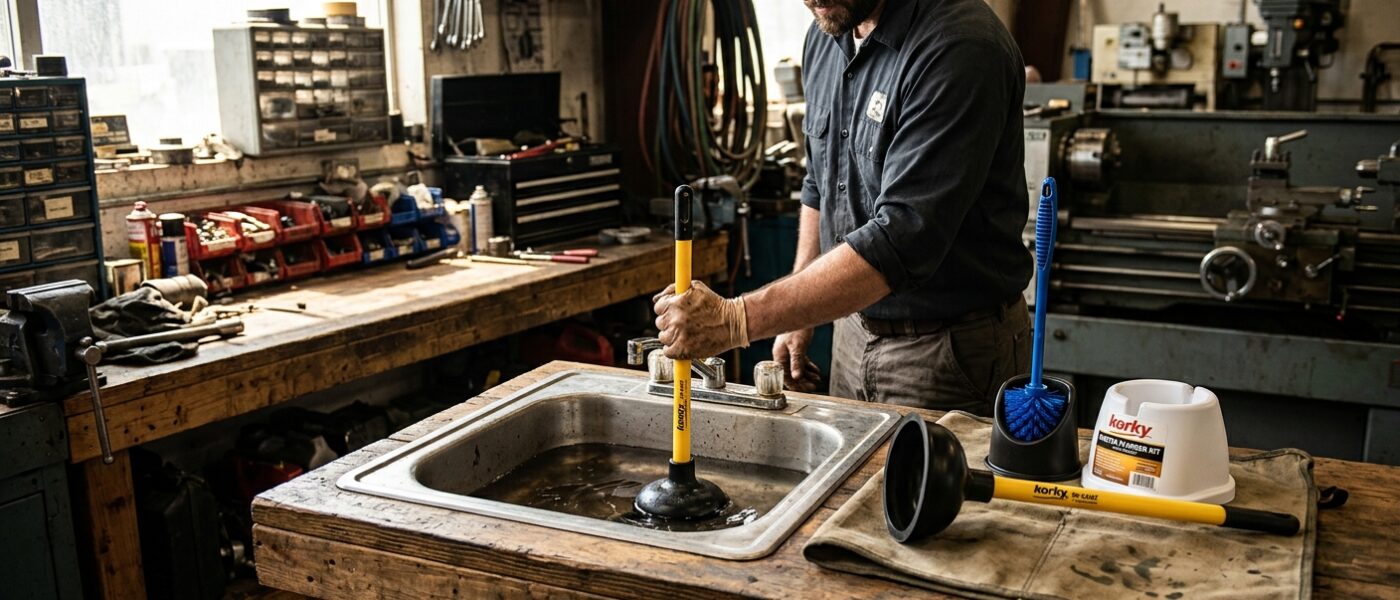
The Korky three-piece kit is the smart one-purchase solution for whole-house drain clearing. Never use a cup plunger on a toilet — the flange design makes all the difference.
As an Amazon Associate, we earn from qualifying purchases.
The Right Plunger for the Right Drain
Most homeowners own one plunger and use it for everything – and wonder why it doesn’t always work. There are three functionally different plunger types: the cup plunger for flat-surface drains (sinks, tubs, shower floors), the flange plunger for toilets, and the accordion plunger for maximum toilet force. Using a cup plunger on a toilet – the most common mistake – creates a poor seal on the curved bowl and delivers a fraction of the clearing force you’d get from the right tool. A three-piece plunger set covers every drain situation in the home properly.
Key Features to Look For
- Toilet flange design: The flange plunger has a soft rubber extension (the flange) that folds into the toilet drain opening and creates a complete seal before you pump. Without this seal, plunging is largely ineffective. The flange should be soft enough to conform to the drain shape, not rigid.
- Cup plunger flat bottom: For sink and tub applications, a flat cup creates the seal against a flat drain surround. The cup diameter should be close to the drain size – a cup much larger than the drain creates an awkward seal that breaks with each stroke.
- Handle quality: Wood handles feel more solid than hollow plastic and don’t flex on hard thrusts. Longer handles (18-24″) provide more leverage and keep hands away from the drain. T-grip handles give better control than straight sticks.
- Rubber durometer: Soft rubber creates better seals against irregular surfaces. Hard rubber loses sealing ability over time as it dries and cracks. Quality plungers maintain flexibility through years of use.
- Storage and hygiene: Sets that include a drip tray, caddy, or wall bracket are far more practical than loose plungers that end up lying on the floor. Enclosed storage prevents transfer of drain bacteria to adjacent surfaces.
Top Picks
Korky 99-4AMZ Master Plunger Kit
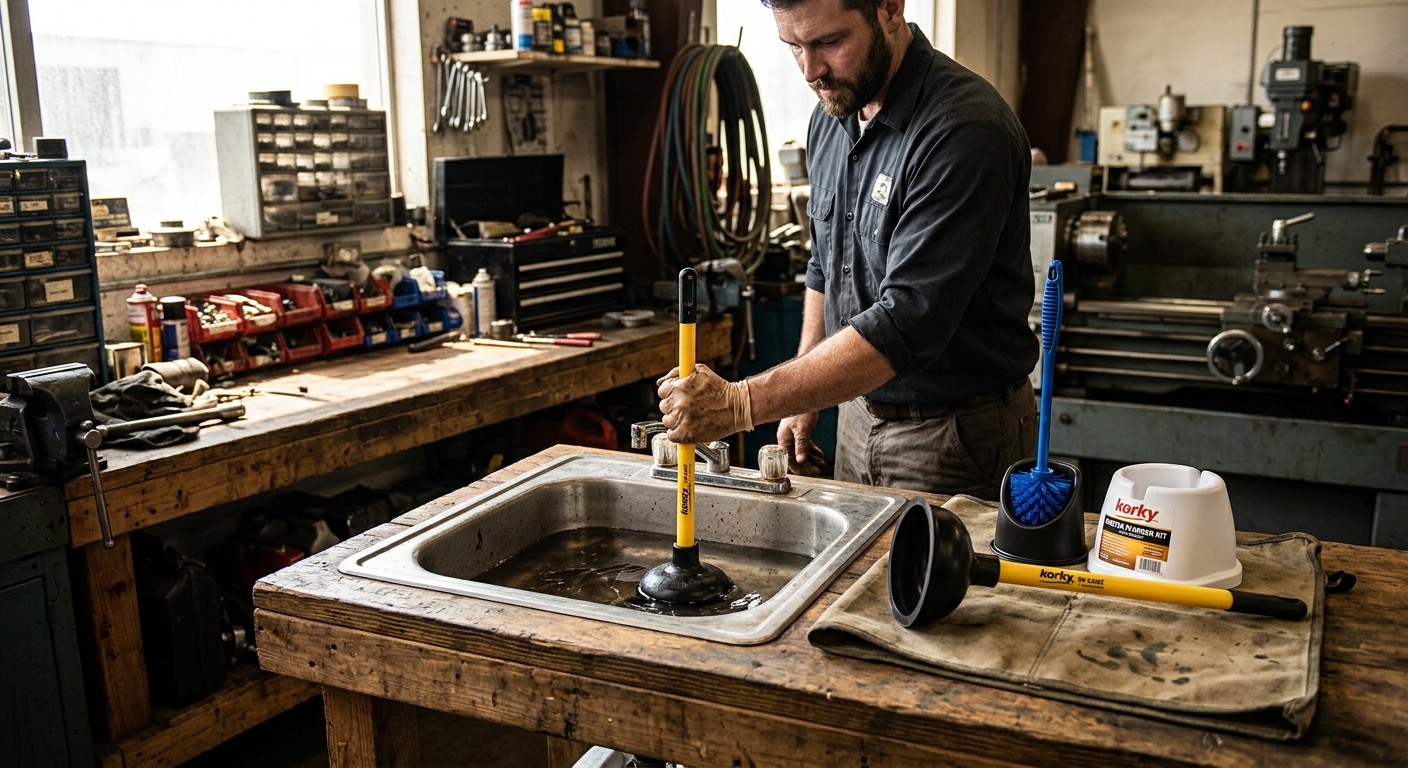
Korky’s three-piece kit includes a toilet plunger with integrated flange, a sink/tub cup plunger, and a rubber-tipped shower plunger – covering all common residential drain configurations. The T-bar handles are comfortable and the rubber is high quality. The included drip caddy stores the set hygienically without dedicated wall space. This is the set to buy if you want to cover the whole house in one purchase.
JS Jackson Supplies Professional Toilet Plunger
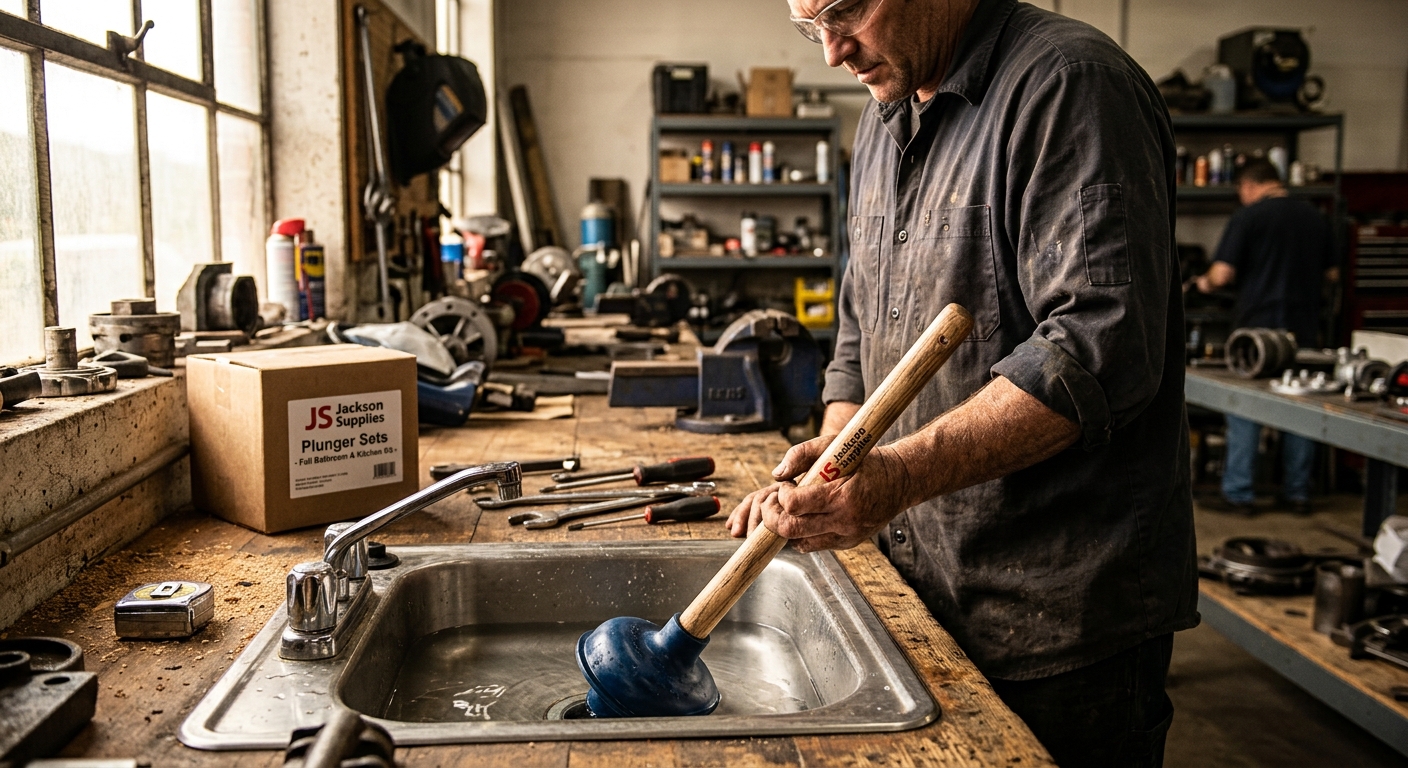
If you only upgrade one plunger, make it the toilet plunger. JS Jackson’s heavy-duty flange model with T-grip handle delivers serious force with a reliable flange seal. The soft rubber maintains compliance after extended storage. The attached drip tray makes bathroom storage clean. This is the go-to when the Korky kit isn’t overkill and you just want a better toilet plunger.
Simplehuman Toilet Plunger with Caddy
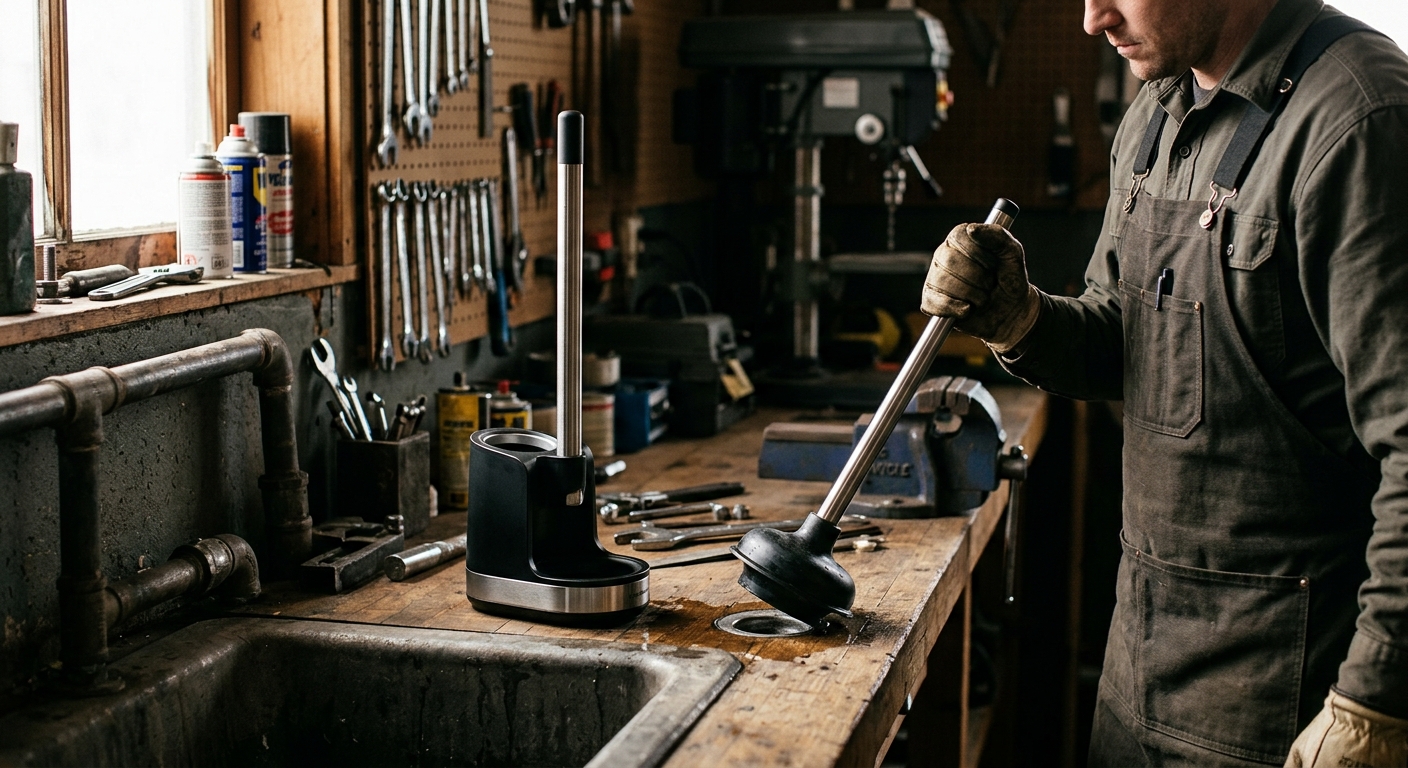
The aesthetics pick – a flange plunger with a magnetic-closing drip caddy that stores the plunger hygienically out of sight. The rubber quality is excellent and the dome shape creates strong seal force. More expensive than utility-grade plungers but appropriate for primary bathrooms where visual presentation matters. The caddy alone is better than any afterthought storage solution you’d improvise.
Ridgid 59787 Toilet Auger (for cases where a plunger isn’t enough)
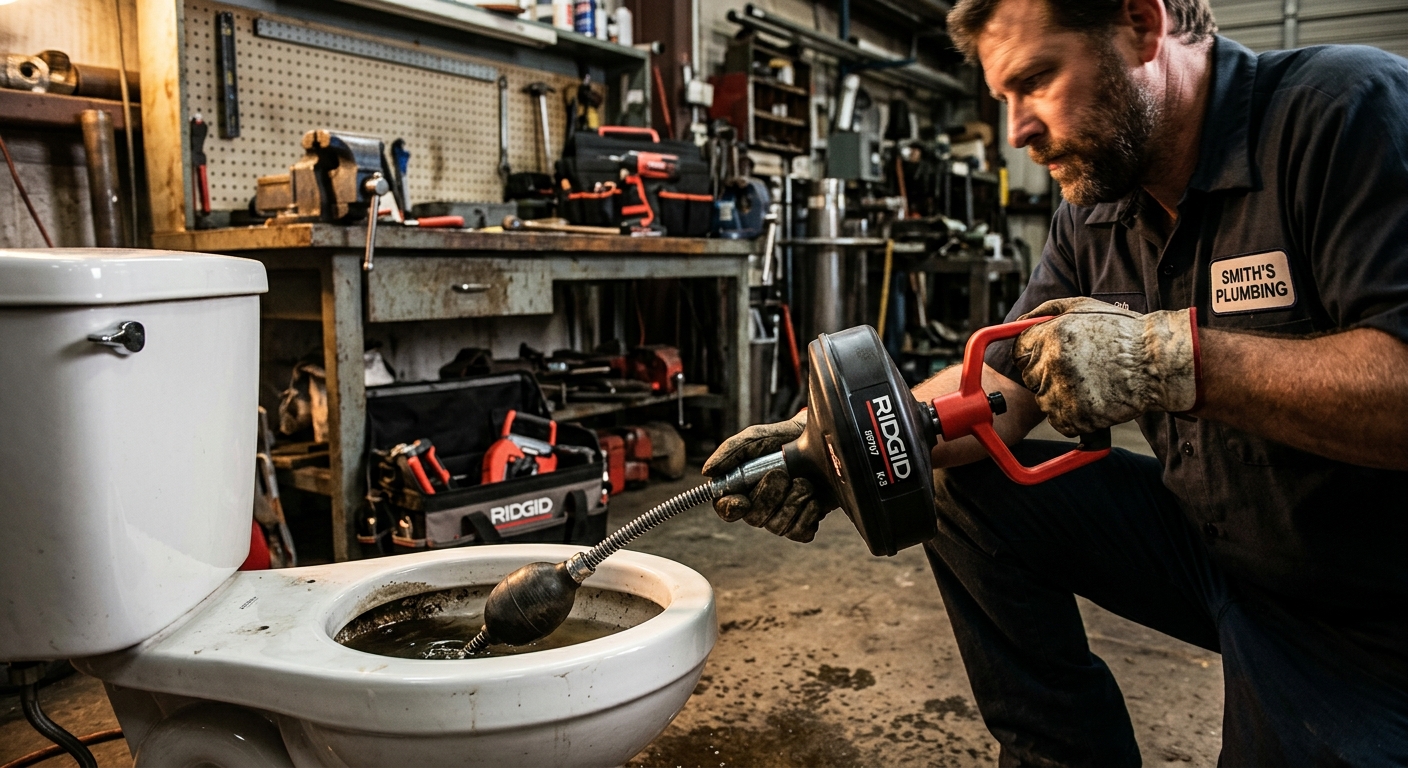
When a plunger fails on a persistent toilet clog, a closet auger is the next step before a plumber. The 3-foot cable reaches past the trap and the plastic sleeve protects the porcelain from the metal cable. Understanding when to escalate from plunger to auger to professional service saves multiple failed plunging attempts and unnecessary chemical treatments that may not help.
Frequently Asked Questions
Why isn’t my plunger clearing a toilet clog?
The most common reasons: wrong plunger type (cup vs. flange), poor flange seal (try warming the rubber under hot water to soften it for better conformity), insufficient water in the bowl (the plunger needs to be submerged to create hydraulic force – not air pressure), or a clog that’s too far down the drain for plunger reach. If 10-15 strokes with a proper flange plunger don’t clear it, escalate to an auger.
Can I use the same plunger on the toilet and on sink drains?
You can, but it’s strongly inadvisable from a hygiene perspective. Toilet plungers transfer fecal bacteria to sink surfaces – a real contamination risk on kitchen sinks. Keep dedicated plungers for toilet use and separate flat cup plungers for sinks and tubs. Color-code if needed (red for toilet, gray for sinks) to prevent mix-up.
How do I unclog a double kitchen sink where the plunger pressure just pushes water to the other side?
Cover the second drain opening with a wet rag or stopper while plunging the clogged side – this blocks the air bypass and forces hydraulic pressure into the clog rather than the path of least resistance. For kitchen sink clogs that don’t respond to plunging, the clog is usually in the P-trap or just past it and manual removal (bucket under the trap, unscrew, clear) is faster and more reliable than continued plunging.
Affiliate Disclosure: DIY Arsenal participates in the Amazon Associates Program and other affiliate programs. When you purchase through links on this site, we may earn a small commission at no additional cost to you. We only recommend products we have personally tested and genuinely believe in.