Best Water Shut-Off Valve Wrenches and Keys

Know which curb key socket size your municipality uses, keep a multi-socket key accessible, and exercise all shutoff valves annually so they work when a real emergency hits.
As an Amazon Associate, we earn from qualifying purchases.
Turn Off the Water Fast When It Matters
Water emergencies don’t wait for you to find the right tool. A burst pipe, failed washing machine hose, or overflowing toilet needs to be shut off in seconds – and if your main shutoff valve is buried in a meter pit, stuck from years of non-use, or requires a specific tool to operate, that’s seconds you don’t have. The right combination of curb key, meter key, and stop-and-waste valve tool ensures you can shut off water at any point in the system when an emergency demands it.
Key Features to Look For
- Curb key (T-bar with socket): Most residential water mains shut off at the curb box with a pentagon or square socket key. The socket size varies by municipality – 5/8″ and 3/4″ are most common, but verify with your water utility. A quality curb key is 36-48 inches long with a telescoping extension for variable depth pits.
- Meter box lid tools: Locking meter pit covers require a special hook or pentagon wrench to open. Homeowners who have access to their own meter shutoff need this tool – it’s different from the curb key socket.
- House shutoff wrench: Gate valves (the old multi-turn type) sometimes seize from long non-use. A pipe wrench or adjustable wrench handles gate valves; ball valves (quarter-turn) need only hand force normally. If your gate valve won’t budge, PB Blaster penetrant and patience are required before force.
- Socket variety: Multi-purpose utility keys covering pentagon, square, and hex sockets handle most municipal valves without carrying a full set of keys.
- Overall length for depth: Curb boxes are typically 18-36 inches deep. A fixed-length key that doesn’t reach the valve stem is useless. Telescoping models or keys with pipe extensions cover variable depths.
Top Picks
Everflow 3/4-Inch Pentagon Curb Key
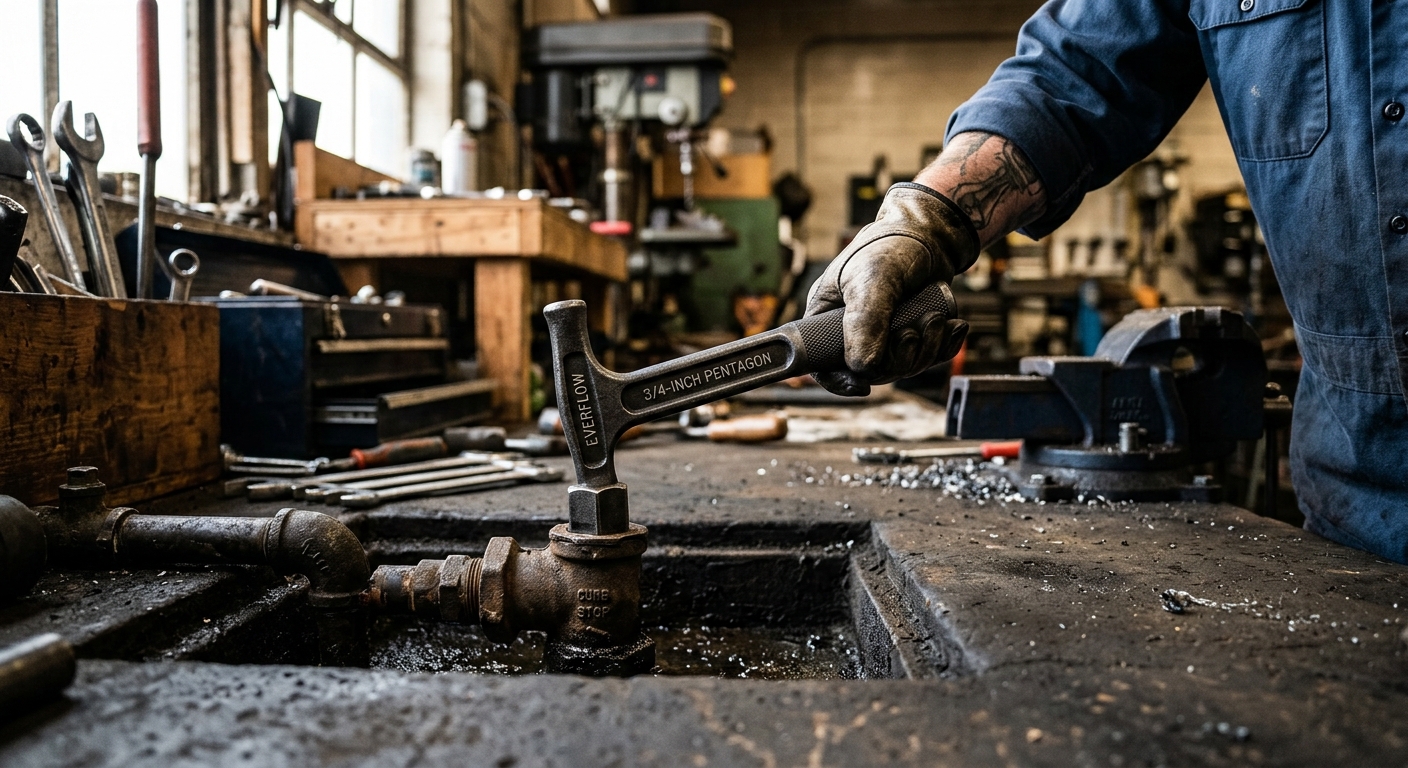
A straightforward 36-inch T-bar curb key with a 3/4″ pentagon socket – the most common residential curb valve socket size in North America. The steel construction handles the torque required to move valves that haven’t been operated in years. Confirm your curb valve socket size matches before ordering; some municipalities use 5/8″ or 1″ sizes. An essential emergency tool to keep accessible in your garage.
GN Diamond Utility Valve Key 4-in-1
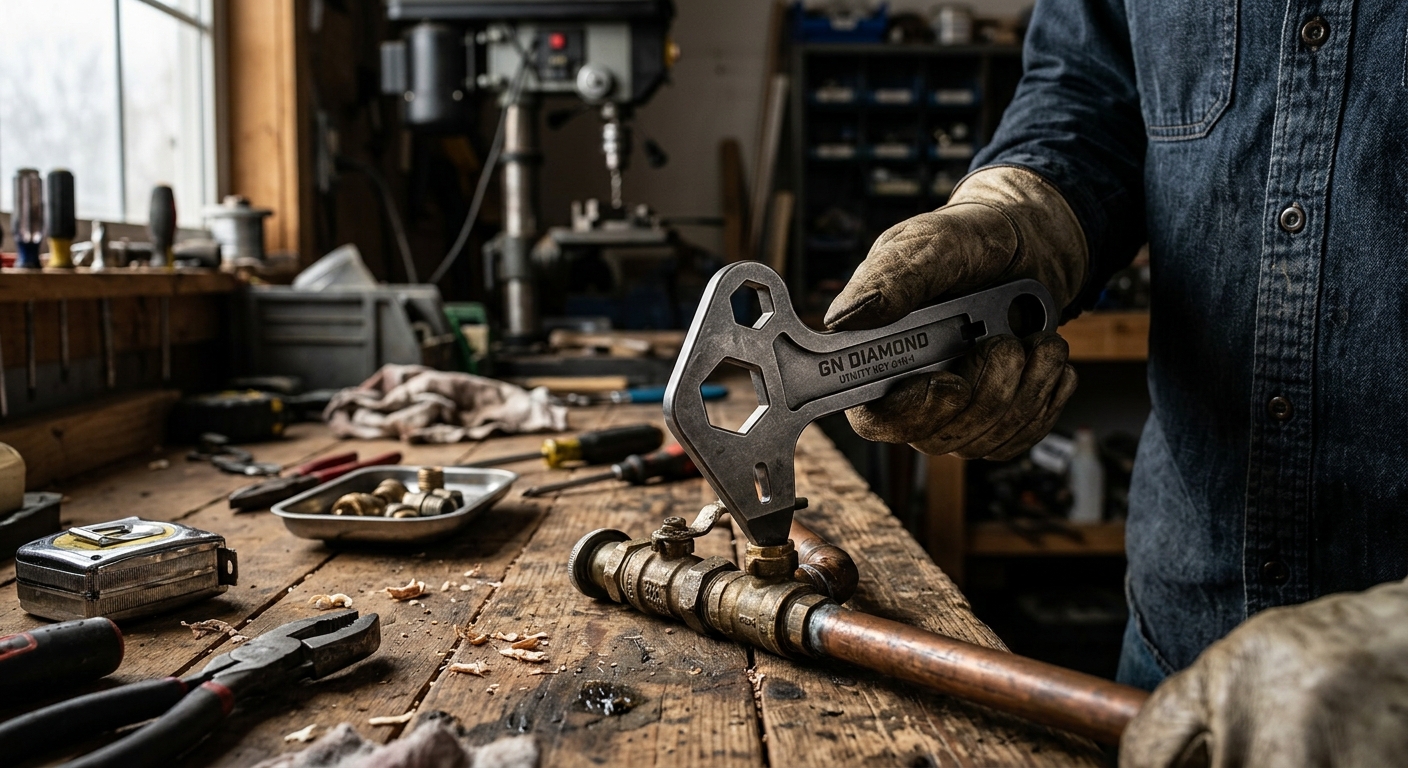
A multi-socket key covering pentagon (5/8″ and 3/4″), square, and offset configurations. If you’re not certain which socket your municipal valve uses, this four-in-one eliminates the guesswork. The 36-inch handle reaches standard depth boxes and the ball-end T-bar gives torque leverage even at angle. Worth owning for anyone with a meter pit that hasn’t been accessed recently.
Channellock 86 Water Pump Pliers

Not a dedicated shutoff key, but pump pliers are essential for the interior shutoffs homeowners actually use most – stuck supply valve under a toilet, corroded saddle valve on a refrigerator line, or a gate valve that needs muscle to turn. The 10″ jaw opening covers most residential valve handles. Keep these in your plumbing kit alongside dedicated curb keys for the full range of shutoff situations.
BrassCraft 1/4-Turn Ball Valve Replacement

The best tool for a stuck or failed shutoff valve is often replacement – not a wrench. BrassCraft’s quarter-turn ball valves (1/2″ and 3/4″ available) go on with SharkBite connections or compression fittings and provide a reliable, low-maintenance shutoff for the next 20 years. If your under-sink or in-line shutoff valves are old gate valves that don’t fully close, replacing them during a non-emergency repair is the smart preventive move.
Frequently Asked Questions
What do I do if my main shutoff won’t close fully?
Old gate valves may not fully seat after years of non-use even after turning. If you have a water meter with a meter shutoff on the supply side, close that – it’s typically a ball valve that operates reliably. For gate valves that won’t seat, a plumber can replace the valve while the water utility shuts the curb supply. Do not continue using a main valve that won’t fully close – replace it at the next opportunity.
Can I shut off my own water at the curb?
In most municipalities, homeowners are permitted to operate their own curb shutoff for emergency purposes. Operating the main meter shutoff (the utility’s valve) usually requires utility authorization. Know which box is which before an emergency – the curb box is typically a small access point near the sidewalk, while the meter box is slightly larger and contains the meter itself.
How often should I exercise my shutoff valves?
Turn shutoff valves fully open and fully closed once per year. Gate valves that go a decade without operation frequently seize or fail to fully seat when you actually need them. Ball valves are more reliable under long non-use but still benefit from annual exercise. Five minutes of annual maintenance prevents emergency failures.
Affiliate Disclosure: DIY Arsenal participates in the Amazon Associates Program and other affiliate programs. When you purchase through links on this site, we may earn a small commission at no additional cost to you. We only recommend products we have personally tested and genuinely believe in.