Best Plumber’s Putty and Silicone Sealants
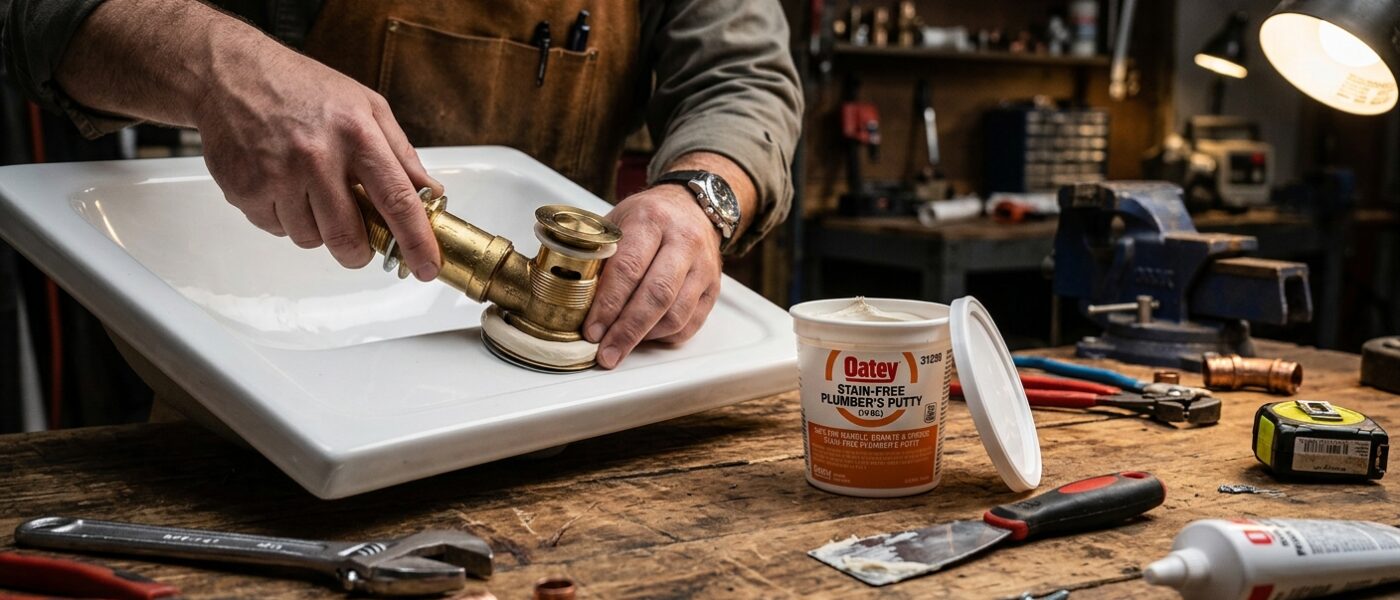
Use stain-free putty for drain flanges and 100% silicone for wet-area sealing. The right product for the right job prevents callbacks and staining headaches.
As an Amazon Associate, we earn from qualifying purchases.
Sealing Plumbing Fixtures the Right Way
Plumber’s putty and silicone sealant are not interchangeable. Using the wrong one in the wrong place leads to staining, cracked fixtures, failed seals, and water damage. Plumber’s putty stays pliable and is ideal for sink drain flanges and basket strainers. Silicone cures to a flexible waterproof seal and is required around tub surrounds, shower bases, and anywhere you need a permanent watertight bond. Knowing which to reach for – and which product formulation – determines whether your installation lasts five years or twenty.
Key Features to Look For
- Stain resistance: Standard plumber’s putty contains oils that stain porous materials like natural stone, marble, and cultured marble. Stain-free formulations eliminate this risk – if your sink or countertop isn’t standard porcelain, always use stain-free putty.
- Silicone mold resistance: Kitchen and bathroom silicone should be labeled mold and mildew resistant. Cheap silicone without this additive develops black mold colonies within months in wet environments.
- Cure time: Neutral-cure silicone (doesn’t smell of vinegar) cures in 24 hours and is safe for metals. Acetic-cure silicone (vinegar odor) can corrode metal flanges over time – avoid it where the sealant contacts metal hardware.
- Color matching: Silicone comes in white, almond, clear, and gray. Clear is the most versatile for mixed installations; brand-match for factory-colored tub and shower surrounds.
- Squeeze and application: A smooth-flowing formula that doesn’t slump or sag is essential for overhead and vertical bead work. Test new tubes on a piece of tape before committing to the fixture.
Top Picks
Oatey 31230 Stain-Free Plumber’s Putty
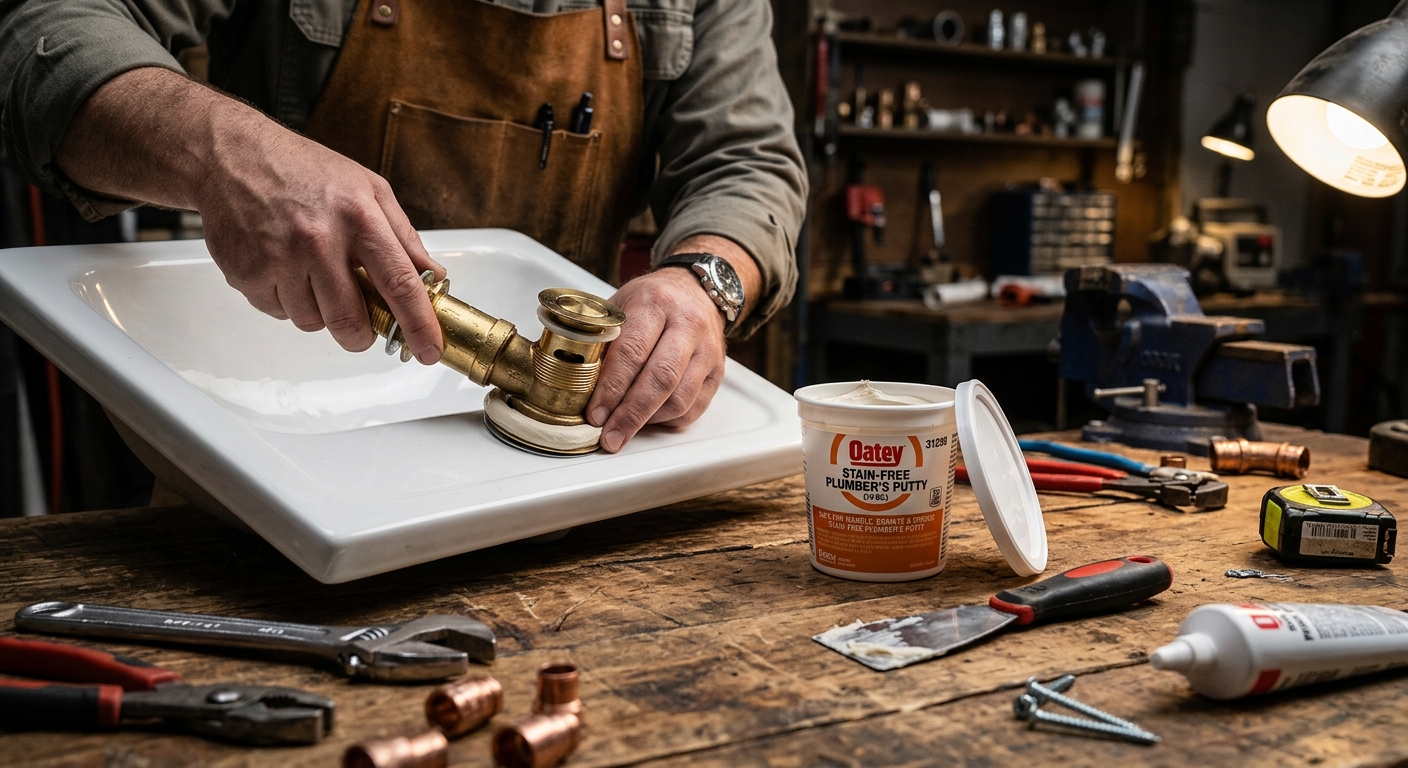
Oatey’s stain-free formula is the smart default for any putty application – it works on stone, composite, and porcelain without the staining risk of standard putty. The consistency is easy to roll into a rope and press into place, and it remains workable long enough for proper positioning. This is the right everyday choice over standard putty, even if you think your fixture is stain-resistant.
GE Sealants Advanced Silicone 2 Kitchen and Bath

GE’s Advanced Silicone 2 line has earned a strong reputation in the DIY community for durability and clean toolability. The formula is 100% silicone (not a blended latex-silicone), mold resistant, and rated for 40 years. It applies smoothly, tools to a clean bead with a wet finger, and doesn’t shrink significantly during cure. Available in white, clear, and almond.
DAP 18152 Kwik Seal Plus Kitchen and Bath Adhesive Caulk
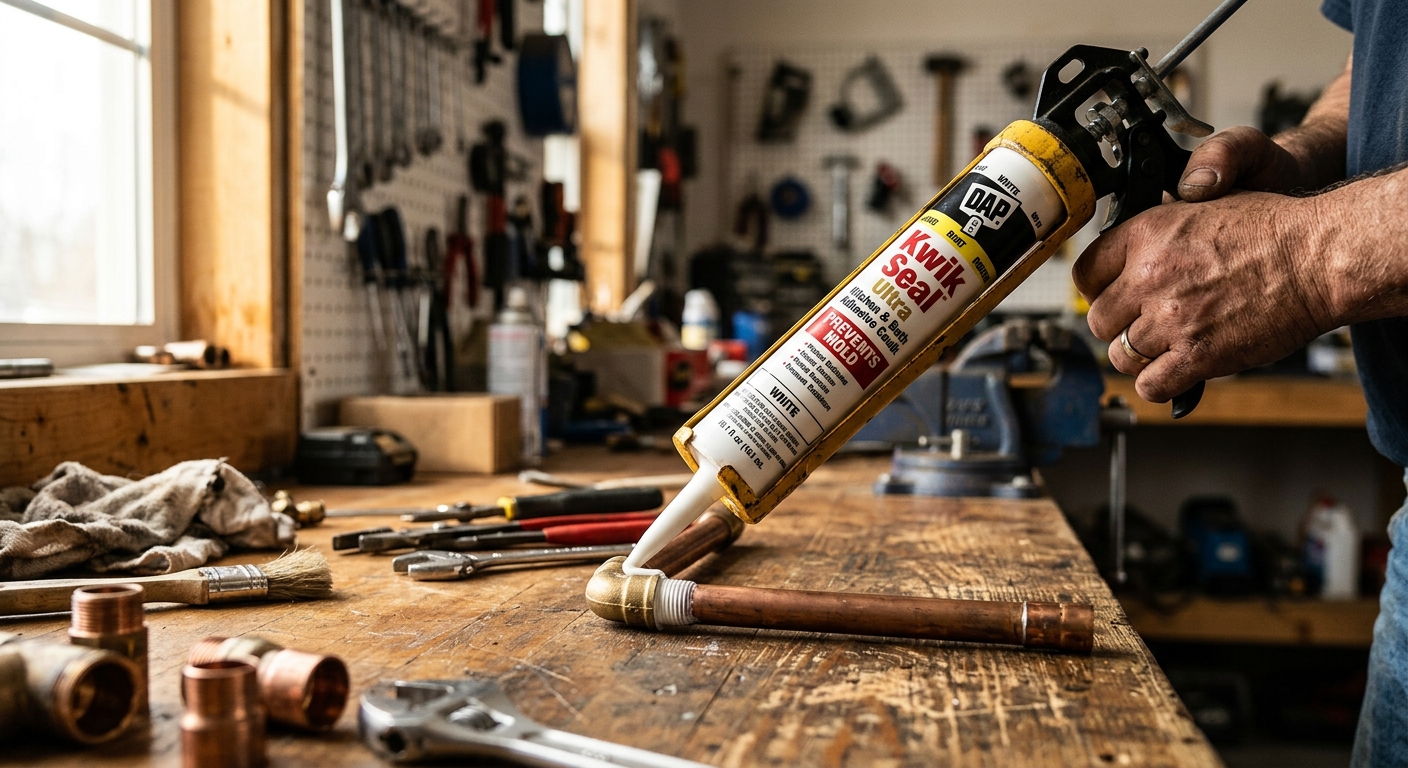
A latex-silicone blend rather than pure silicone – slightly easier to apply and clean up with water. The trade-off is slightly reduced flexibility and longevity compared to 100% silicone. DAP’s Kwik Seal Plus includes a built-in mold inhibitor and is a good choice for light-duty applications like around a toilet base or pedestal sink where the seal doesn’t see continuous water exposure.
Loctite Clear Silicone Waterproof Sealant

A neutral-cure, clear silicone that’s safe for use on acrylic and fiberglass surrounds where acetic-cure products can cause crazing. The clear formulation works on any surface color and the 5.4-oz squeeze tube format is easier to control than standard caulk gun cartridges for small bead applications. Good choice for faucet installation detail work and backsplash edge sealing.
Frequently Asked Questions
Can I use silicone over old silicone?
Not reliably. New silicone won’t bond well to cured silicone – adhesion fails within months. Scrape all old sealant out completely using a utility knife and silicone remover solvent, clean the surface with isopropyl alcohol, and let it dry completely before applying new material. The prep work is what separates a five-year seal from a five-month one.
Should I use putty or silicone on a kitchen sink drain?
Plumber’s putty is the traditional choice for sink drain flanges on porcelain and stainless sinks – it creates a watertight seal without bonding permanently, making future removal easier. Silicone is preferred for undermount sink clips and anywhere the seal needs to hold against water pressure from above. On granite or stone sinks, always use stain-free putty or silicone rather than standard putty.
How long does plumber’s putty last?
Properly applied putty typically lasts 10-15 years before drying out and becoming brittle. Signs of failure include discoloration around the drain flange, water seeping under the sink rim, and putty that crumbles when you press on it. Replacement is straightforward – remove the drain basket, clean off old putty, and reinstall fresh material.
Affiliate Disclosure: DIY Arsenal participates in the Amazon Associates Program and other affiliate programs. When you purchase through links on this site, we may earn a small commission at no additional cost to you. We only recommend products we have personally tested and genuinely believe in.