Best Faucet Supply Lines and Shut-Off Valves
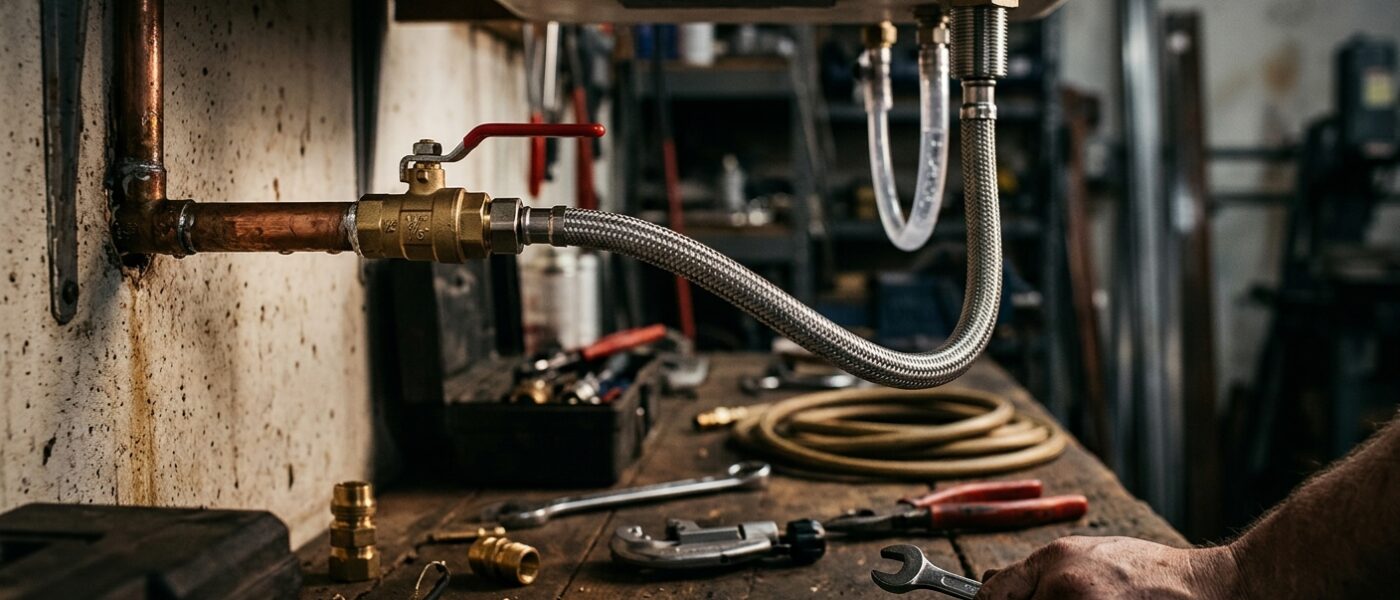
Replace rubber supply hoses with braided stainless steel hoses whenever doing any under-sink plumbing work — the upgrade costs $10 per hose and eliminates the most common cause of under-sink water damage.
As an Amazon Associate, we earn from qualifying purchases.
Faucet supply lines and shut-off valves are the small but critical components that connect your plumbing fixtures to the supply system. Old rubber supply hoses crack and fail without warning. Corroded or seized shut-off valves fail to close when you need them most – during a leak or fixture replacement. Replacing these components during any plumbing service is cheap insurance against future failures.
Supply Line Types
Braided Stainless Steel Supply Lines
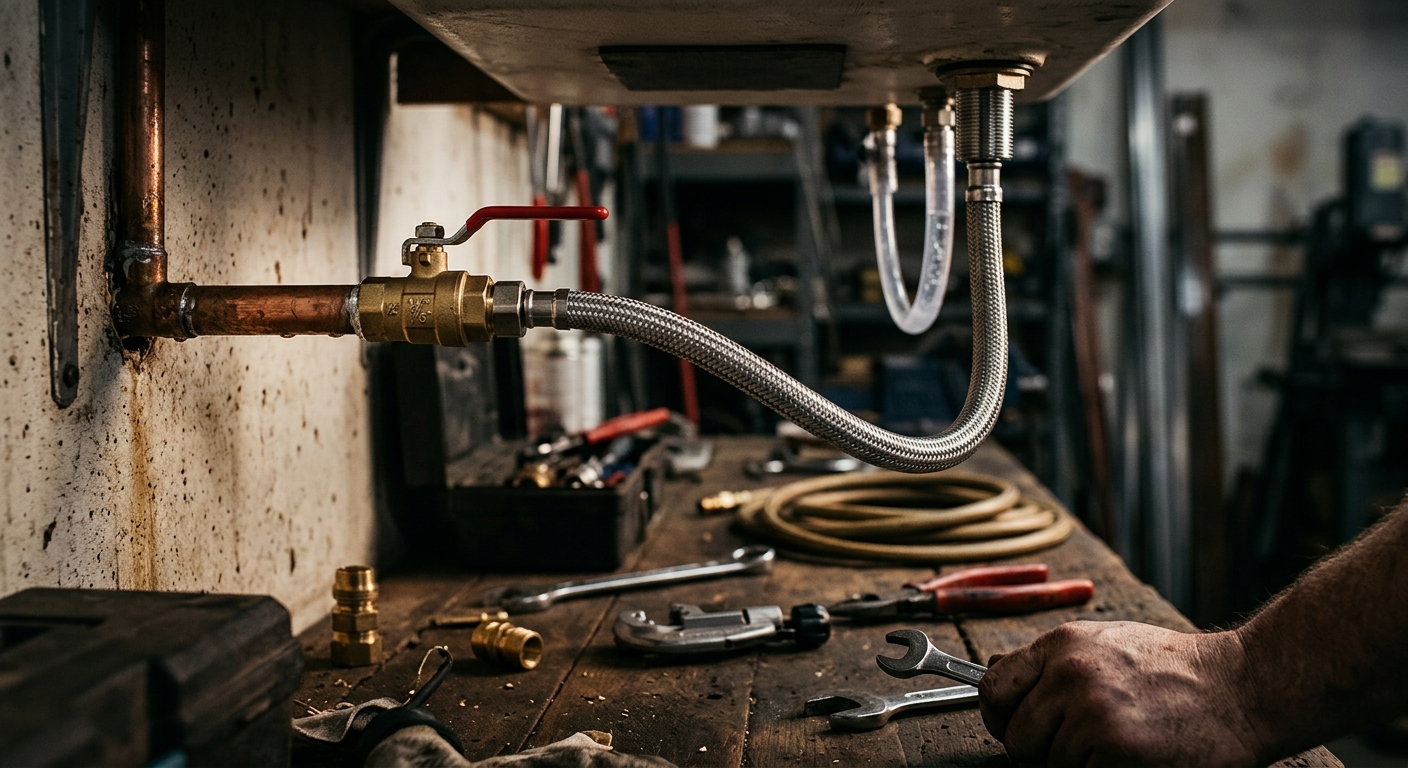
The professional standard for supply line replacement. Stainless steel braid over a polymer core provides both flexibility and resistance to cracking, kinking, and corrosion. Available in standard lengths (12, 16, 20 inches) and in 1/2-inch and 3/8-inch connection sizes. Replaces old rubber hoses in any under-sink, toilet, or appliance supply application. The upgrade from rubber hoses costs $10-15 per hose and dramatically reduces the risk of supply line failure.
Rubber Supply Lines
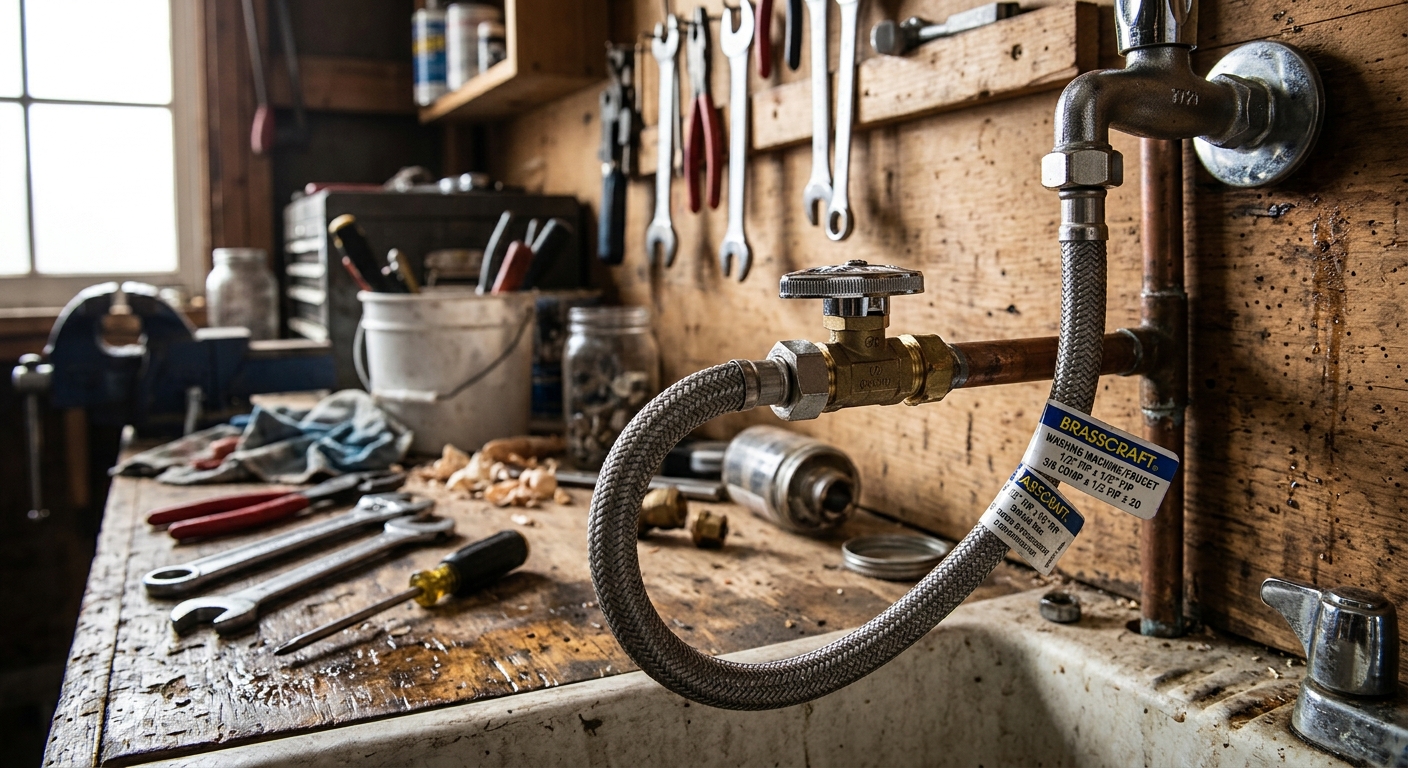
The original residential supply line material. Still adequate when new but prone to hardening, cracking, and failure after 5-10 years in service. Replace rubber supply hoses with braided stainless steel at the first opportunity – when installing a new faucet, replacing a toilet, or any time you are working under the sink.
PEX Supply Lines
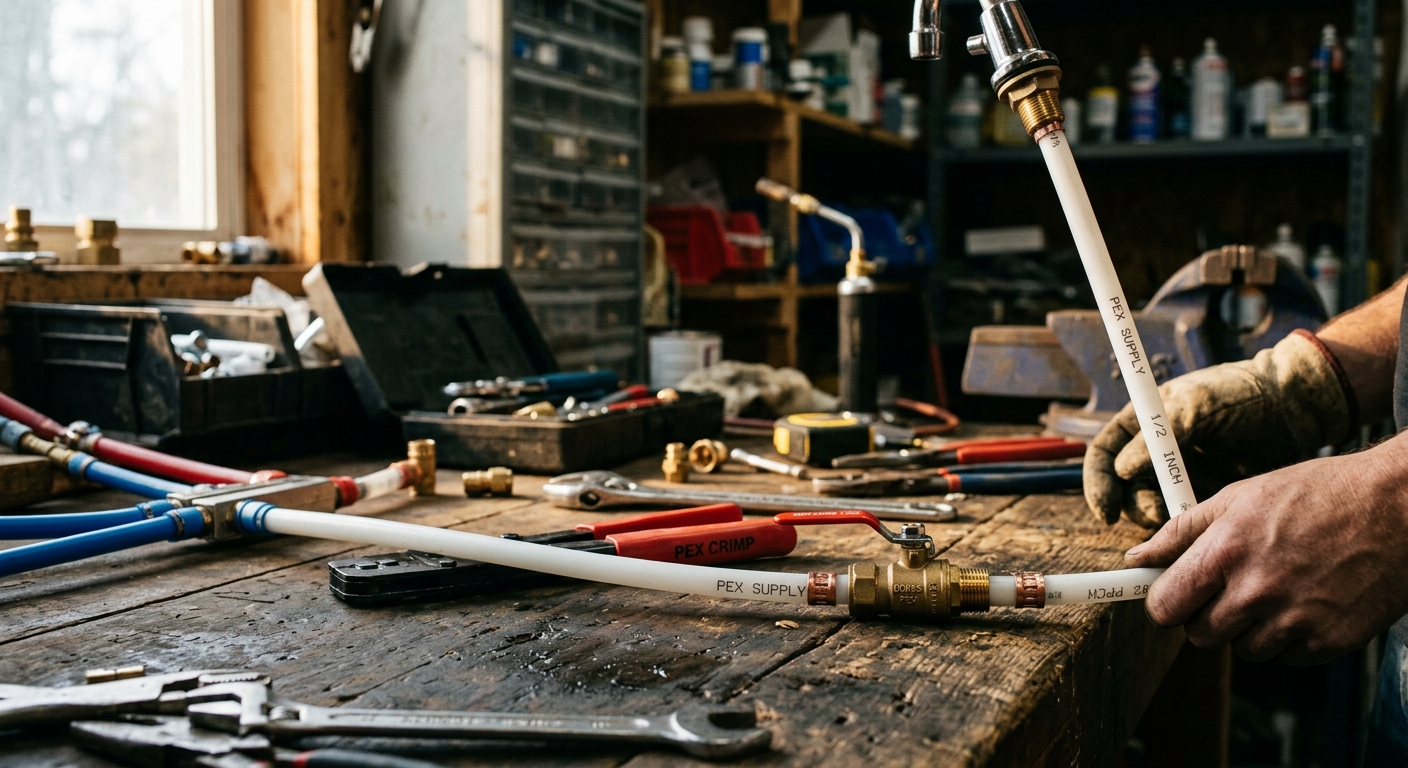
Flexible PEX tubing used as supply lines in new construction. More durable than rubber, less expensive than braided stainless. Common in new construction for washing machine connections and appliance hookups.
Shut-Off Valve Types
Angle Stop Valves
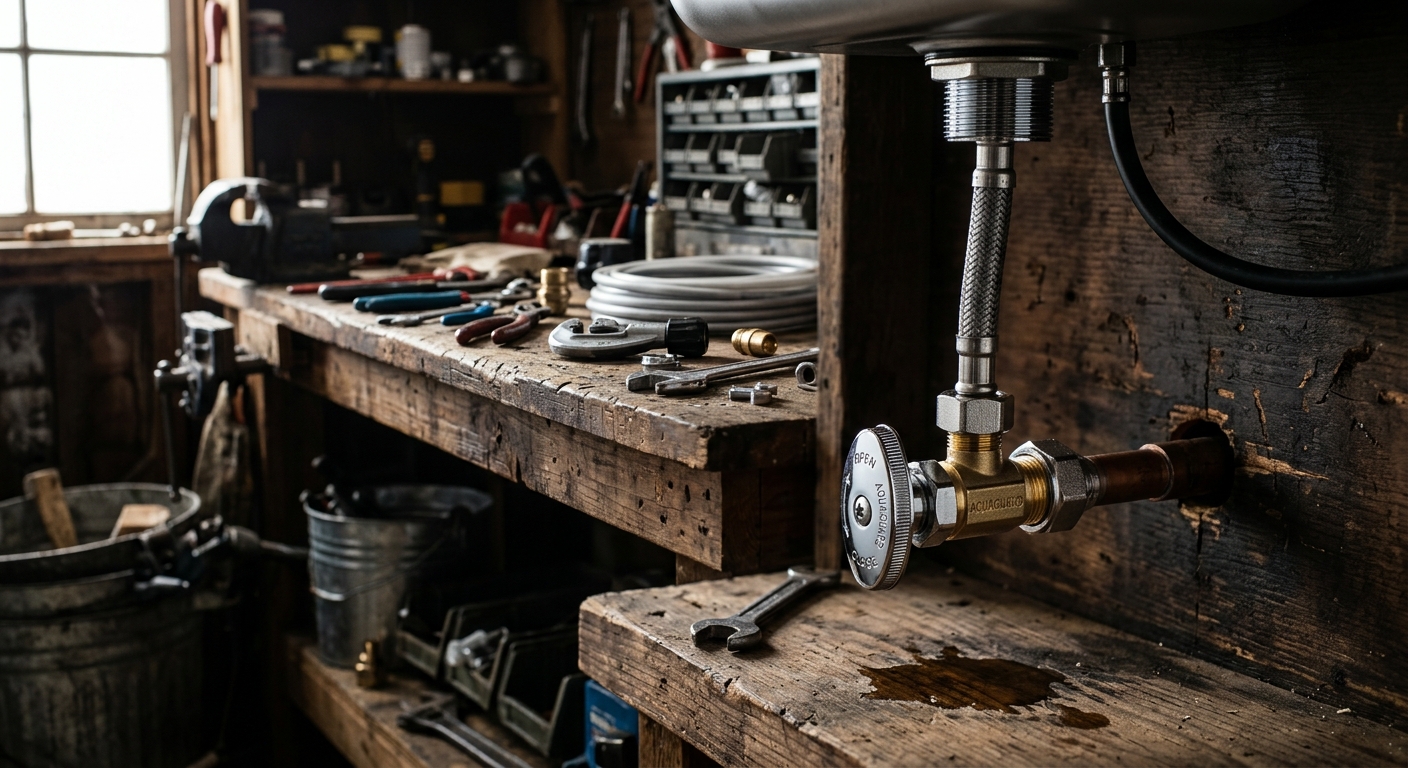
The quarter-turn ball valve under every sink and behind every toilet. The standard residential shut-off for individual fixtures. Quarter-turn ball valves are preferable to older compression-type valves that require multiple turns and often fail to close fully when corroded.
Straight Stop Valves
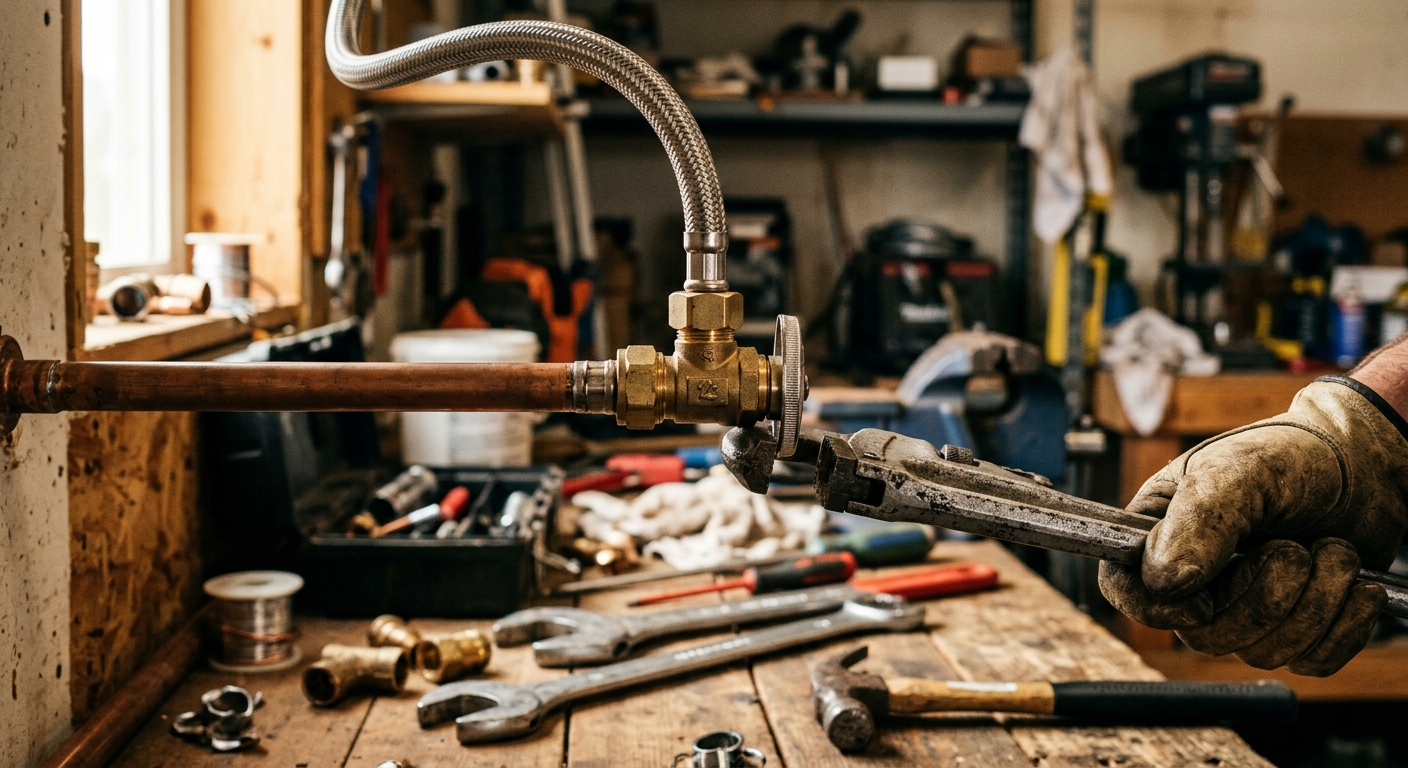
Similar to angle stops but for supply lines running parallel to the wall (straight rather than at a 90-degree angle to the supply stub-out). Less common than angle stops in residential applications.
Our Top Picks
1. Eastman 7234B Braided Stainless Steel Supply Line
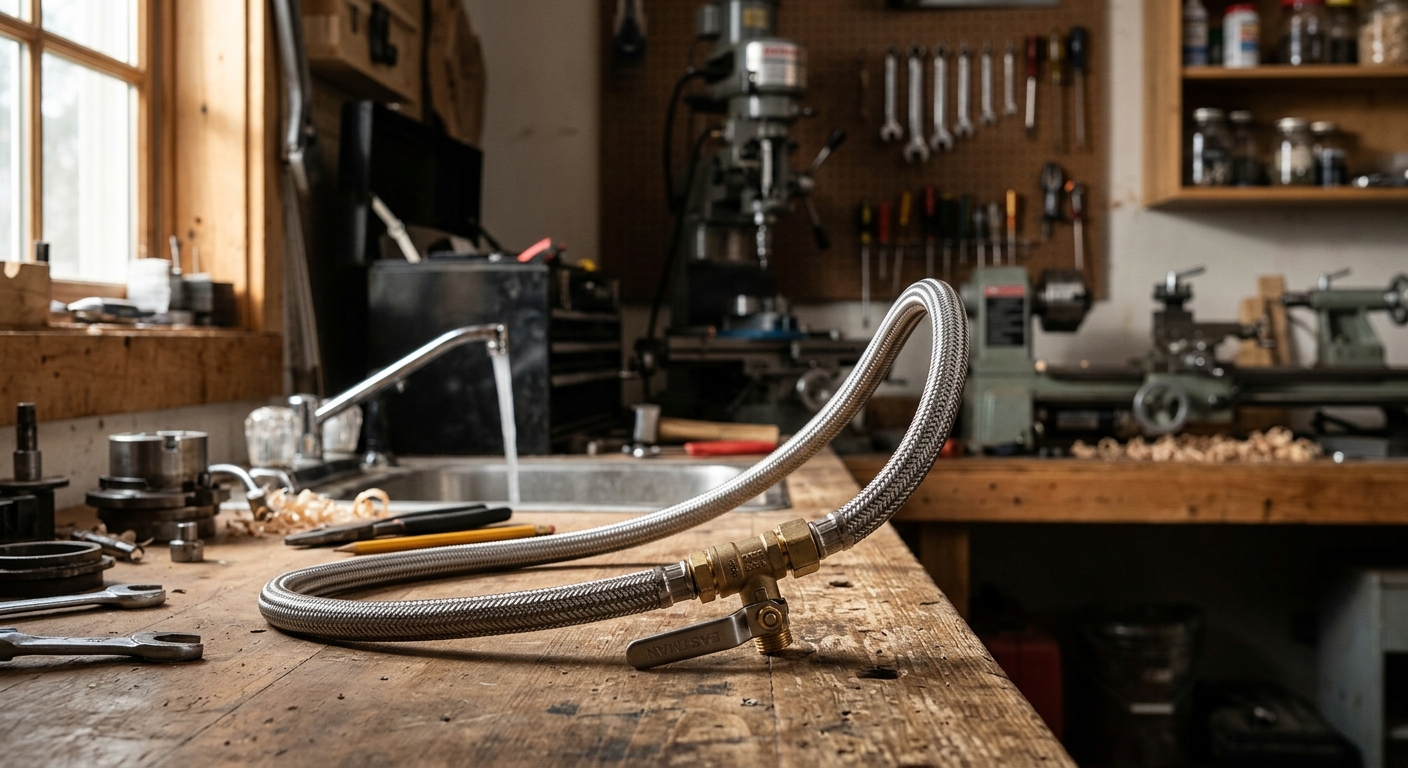
The most widely used residential braided stainless supply hose. Available in standard sink faucet sizes (1/2-inch FIP x 3/8-inch compression) and in lengths from 12 to 36 inches. The standard replacement supply hose for kitchen and bathroom faucet installations. The 20-inch length fits most standard sink cabinet depths.
2. Fluidmaster 9H16 Universal Toilet Supply Line
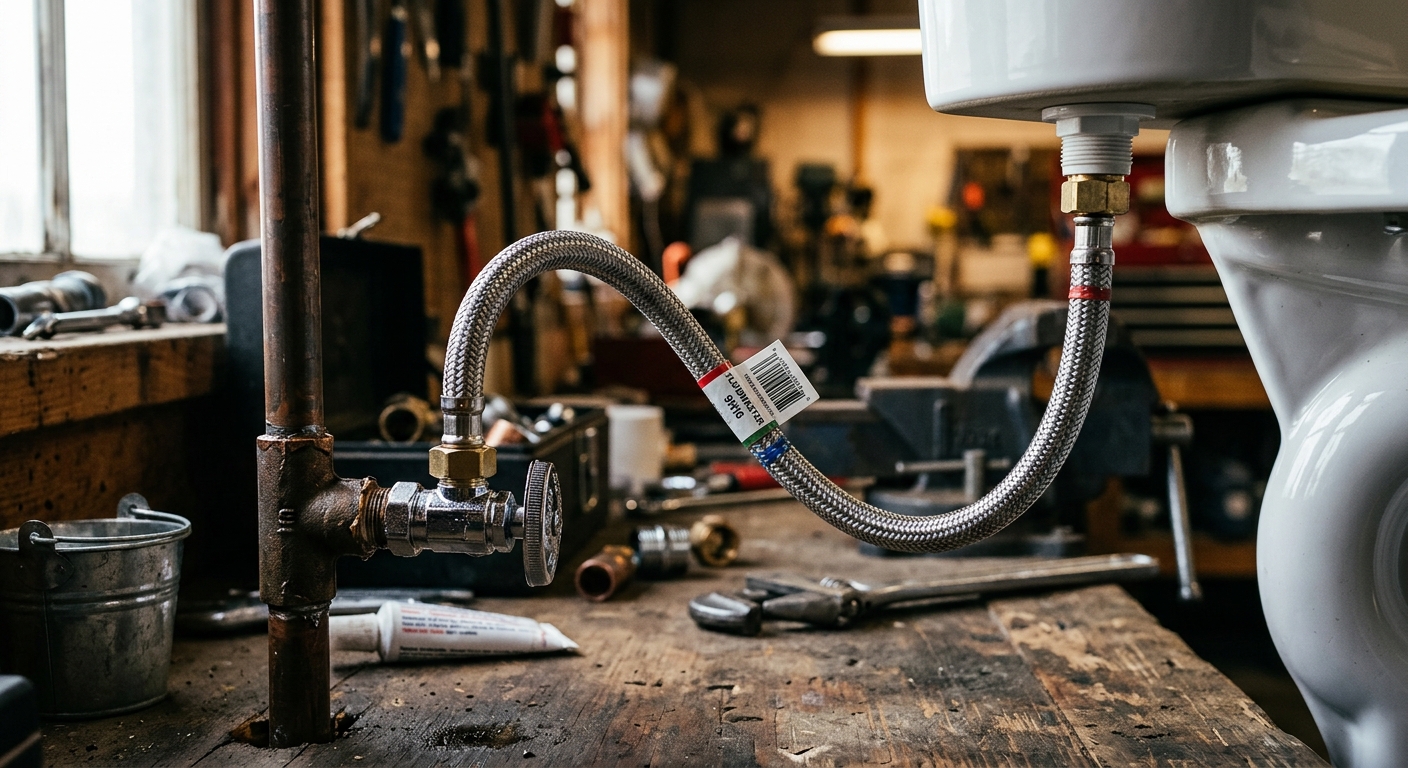
Braided stainless steel supply line for toilet fill valve connections. 7/8-inch to 3/8-inch ballcock connection covers most toilet supply line connection sizes. The 16-inch length fits most toilet installations. The standard supply line replacement for toilet installations.
3. BrassCraft G2L12X C 3/8-in Quarter-Turn Ball Valve
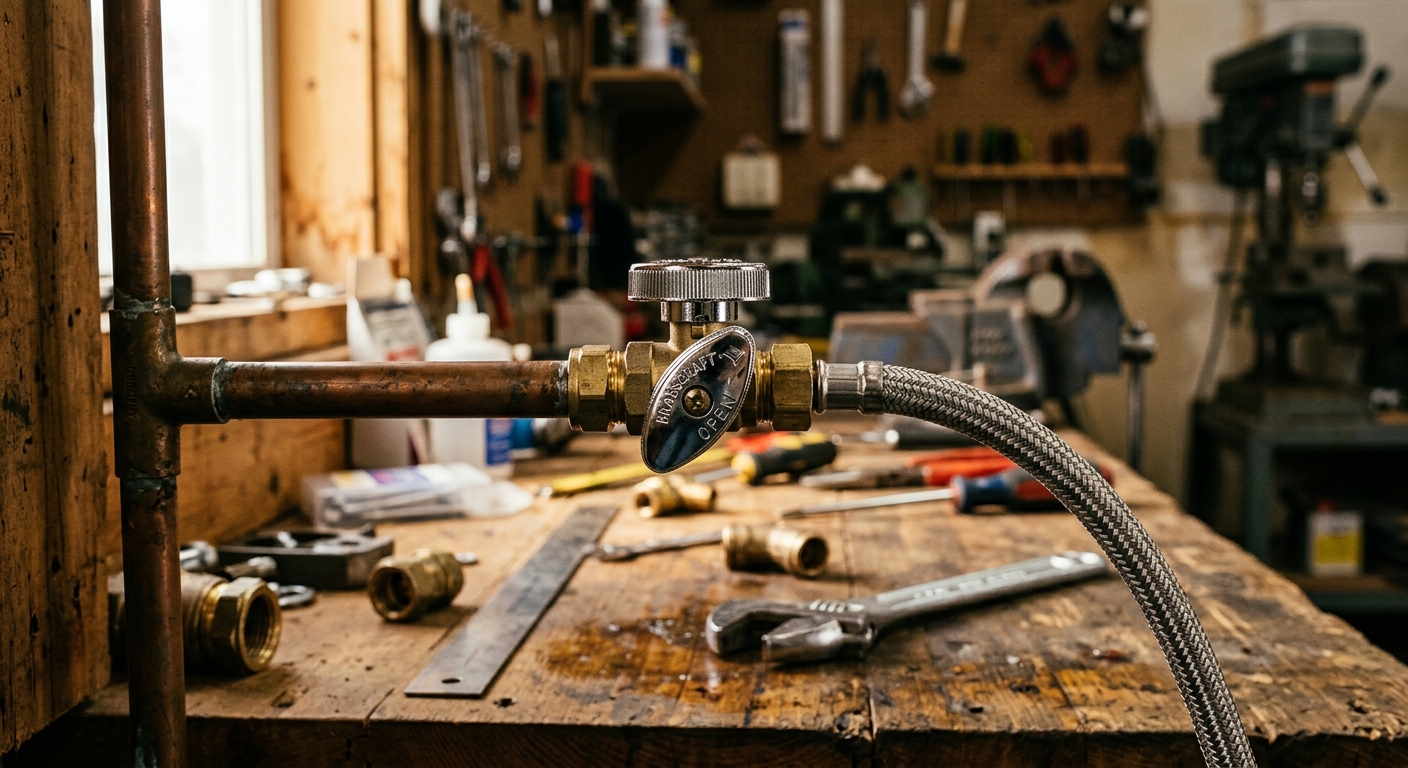
The professional-grade quarter-turn shut-off valve for sink supply connections. The quarter-turn ball valve design operates reliably after years of non-use – unlike older compression valves that frequently fail to close when you need them. Replace old compression shut-offs with quarter-turn ball valves for reliable operation during future repairs.
4. Watts Water Technologies A-116 Angle Shut-Off Valve
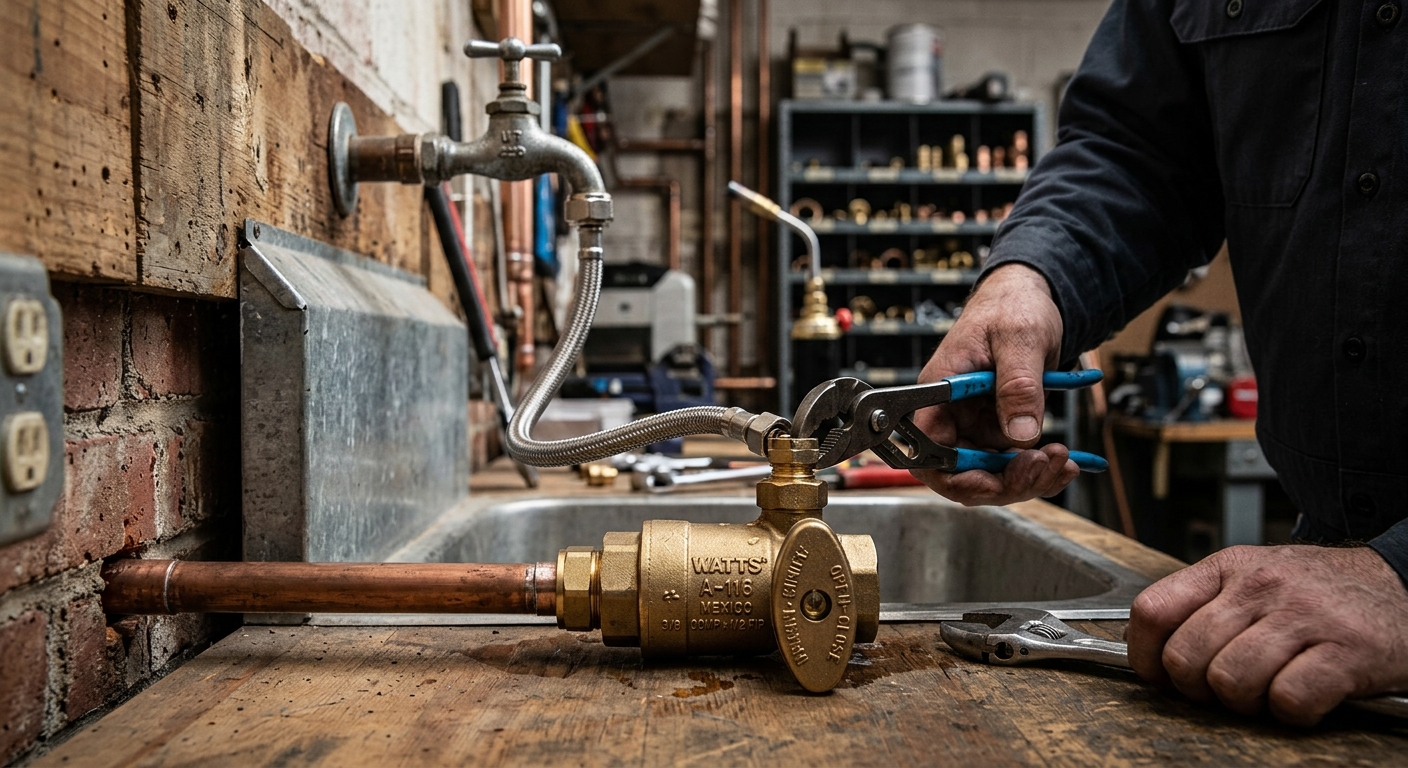
A code-listed quarter-turn angle stop valve for standard residential supply applications. Available in 1/2-inch copper x 3/8-inch compression and other standard sizes. The commercial-grade alternative to hardware store valves for installations where durability and reliability are priorities.
5. SharkBite 1/2-inch Ball Valve
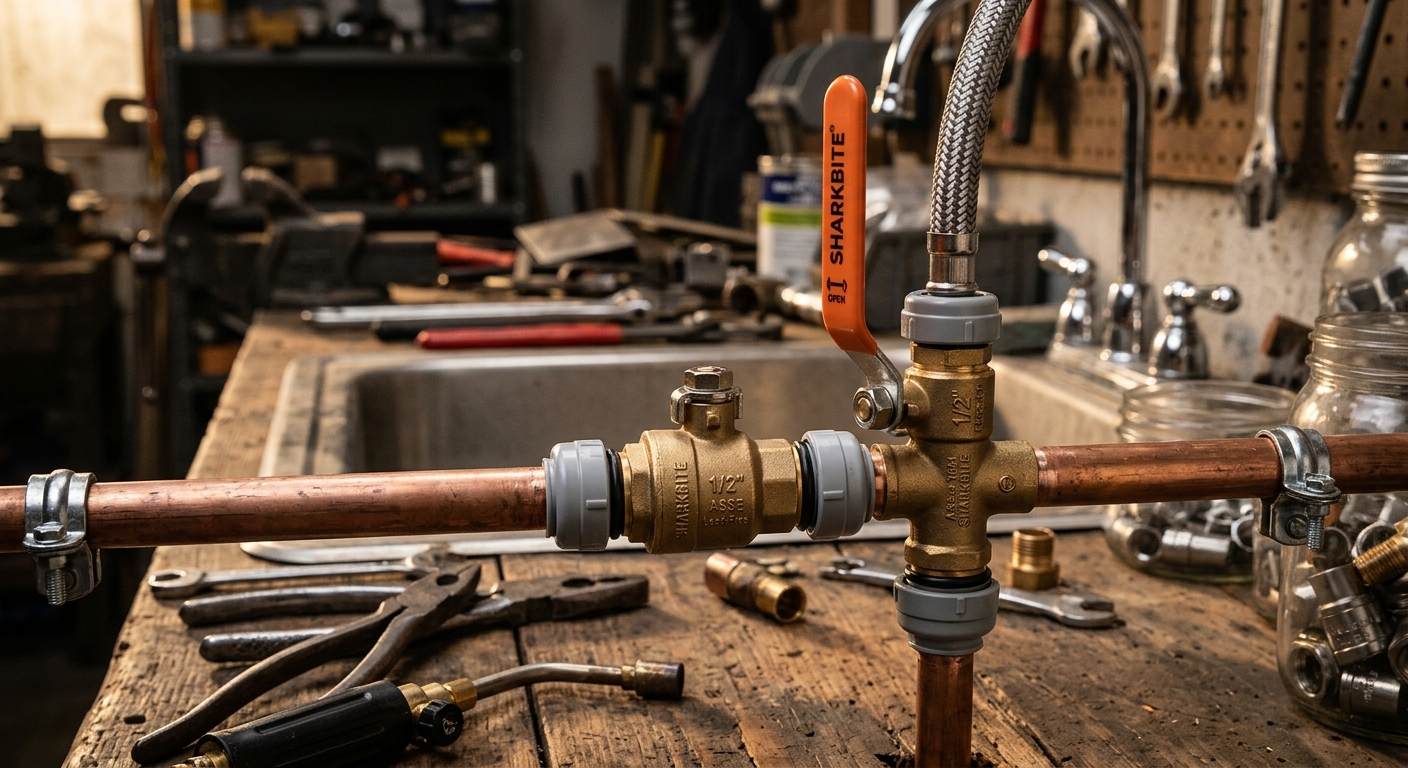
A push-fit ball valve that installs without soldering – ideal for adding shut-offs to supply lines that currently have none. Push onto copper, PEX, or CPVC pipe for an instant shut-off installation. The fastest method for adding a shut-off valve to an existing supply line.
FAQ
How do I know if my shut-off valve is working?
Test shut-off valves annually. Turn the valve to the closed position – water flow at the fixture should stop completely within a few seconds. If water continues to flow when the valve is fully closed, the valve is failing and should be replaced. A shut-off valve that does not close is useless in an emergency – the next step is the main shut-off, followed by a very wet and expensive repair.
Affiliate Disclosure: DIY Arsenal participates in the Amazon Associates Program and other affiliate programs. When you purchase through links on this site, we may earn a small commission at no additional cost to you. We only recommend products we have personally tested and genuinely believe in.