Best Water Pressure Gauges for Diagnosing Plumbing Problems
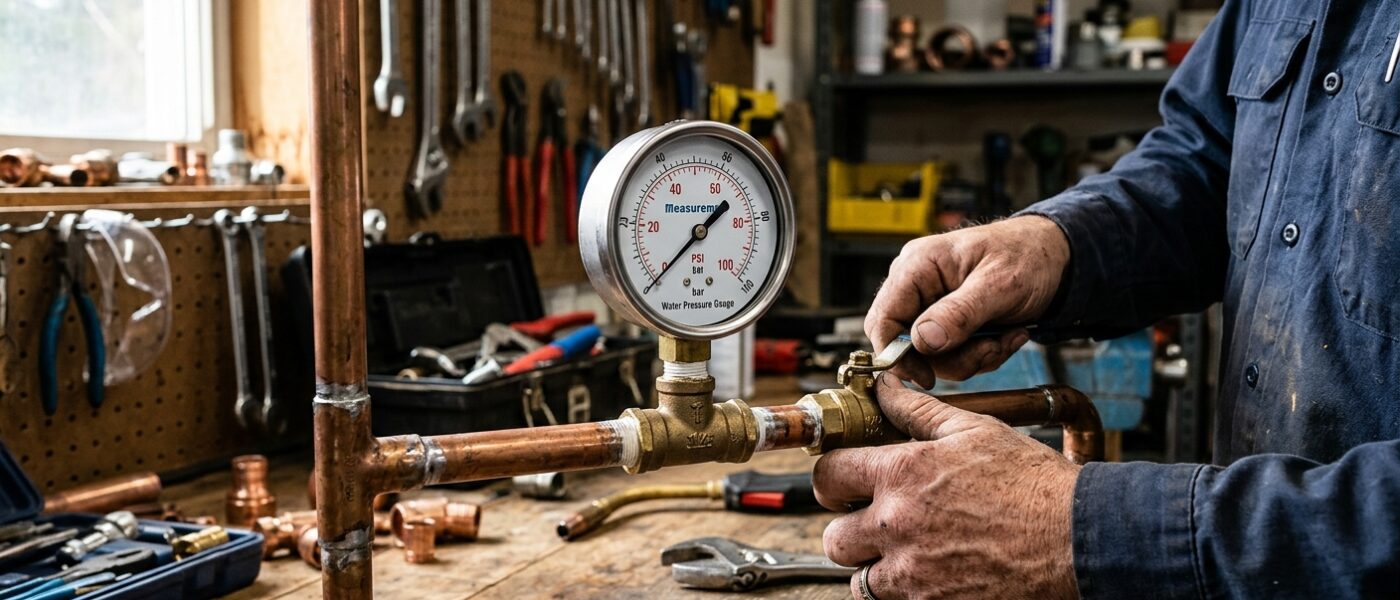
A glycerin-filled gauge with GHT thread is the most useful $15 diagnostic tool a homeowner can own — test pressure before assuming the worst about your plumbing.
As an Amazon Associate, we earn from qualifying purchases.
Know Your Numbers: Why Water Pressure Testing Matters
High water pressure damages appliances, stresses pipe joints, and causes faucets and toilets to run constantly. Low pressure signals supply problems, failing pressure regulators, or hidden leaks. A water pressure gauge is a $15 tool that gives you the data you need to diagnose symptoms rather than guess at causes – and to verify that a pressure reducing valve (PRV) adjustment actually worked. Every homeowner should own one.
Key Features to Look For
- Pressure range: Standard home gauges read 0-200 PSI. Normal residential pressure is 40-80 PSI, with 60 PSI being optimal for most systems. A 0-200 PSI gauge gives you headroom to detect over-pressure situations.
- Glycerin fill: Glycerin-filled gauges dampen needle vibration for a stable, readable measurement – especially important on city supplies where pressure fluctuates. Dry gauges bounce around and are harder to read accurately.
- Connection type: Standard hose bib threads (3/4″ GHT) connect to outdoor spigots. Gauge kits with 3/4″ FIP adapters also work on laundry valves and boiler drain spigots for indoor testing.
- High-pressure indicator needle: Some gauges include a secondary hand that stays at the highest reading – useful for overnight testing when you want to capture peak pressure without watching continuously.
- Body material: Brass and stainless housings outlast plastic in outdoor and high-humidity conditions. Worth the small cost difference for a tool you’ll keep for years.
Top Picks
Measureman 2-Inch Water Pressure Gauge
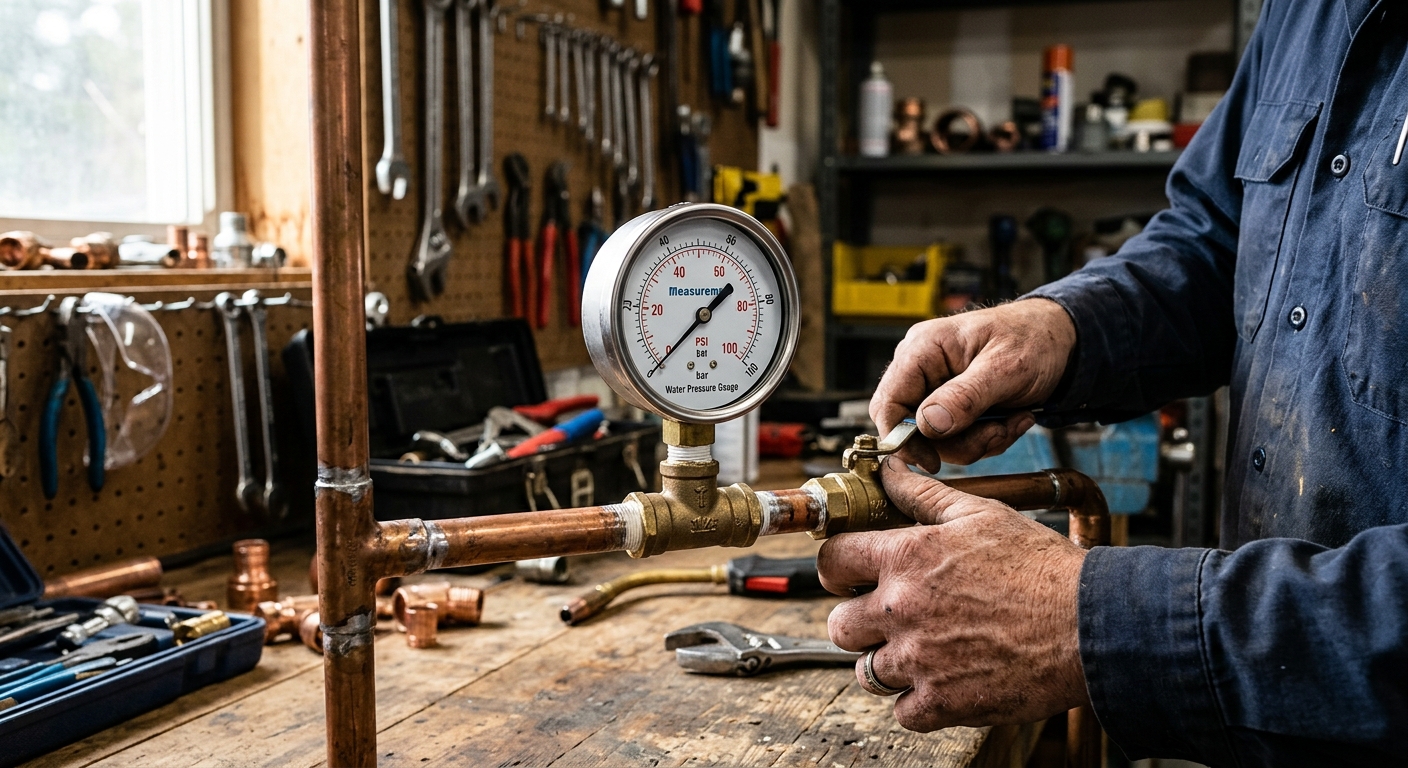
A glycerin-filled gauge with a brass body, 3/4″ GHT inlet, and 0-200 PSI range. The 2-inch dial is large enough to read easily, the needle is stable even on fluctuating city supplies, and the included hex fitting makes tightening onto a hose bib straightforward. This is the workhorse residential pressure gauge that handles the diagnostic jobs homeowners actually need.
Watts 276A Water Pressure Test Kit
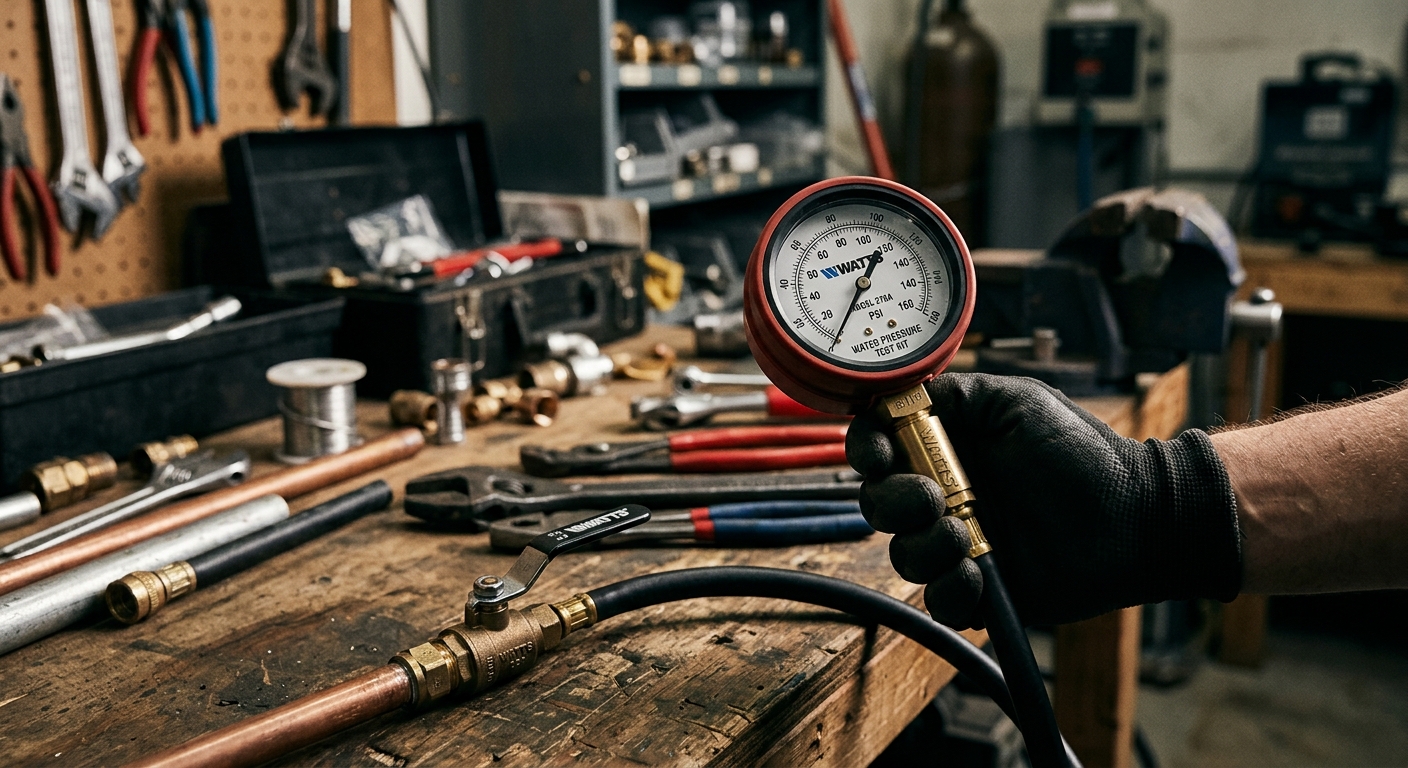
Watts is the name in pressure regulation and their test kit reflects the quality. The kit includes a gauge plus adapters for hose bibs and laundry connections, making it versatile for testing pressure at multiple points in the house. The high-pressure indicator needle is included – a useful feature for monitoring overnight or during high-demand periods.
IRROMETER Soil Moisture and Water Pressure Gauge
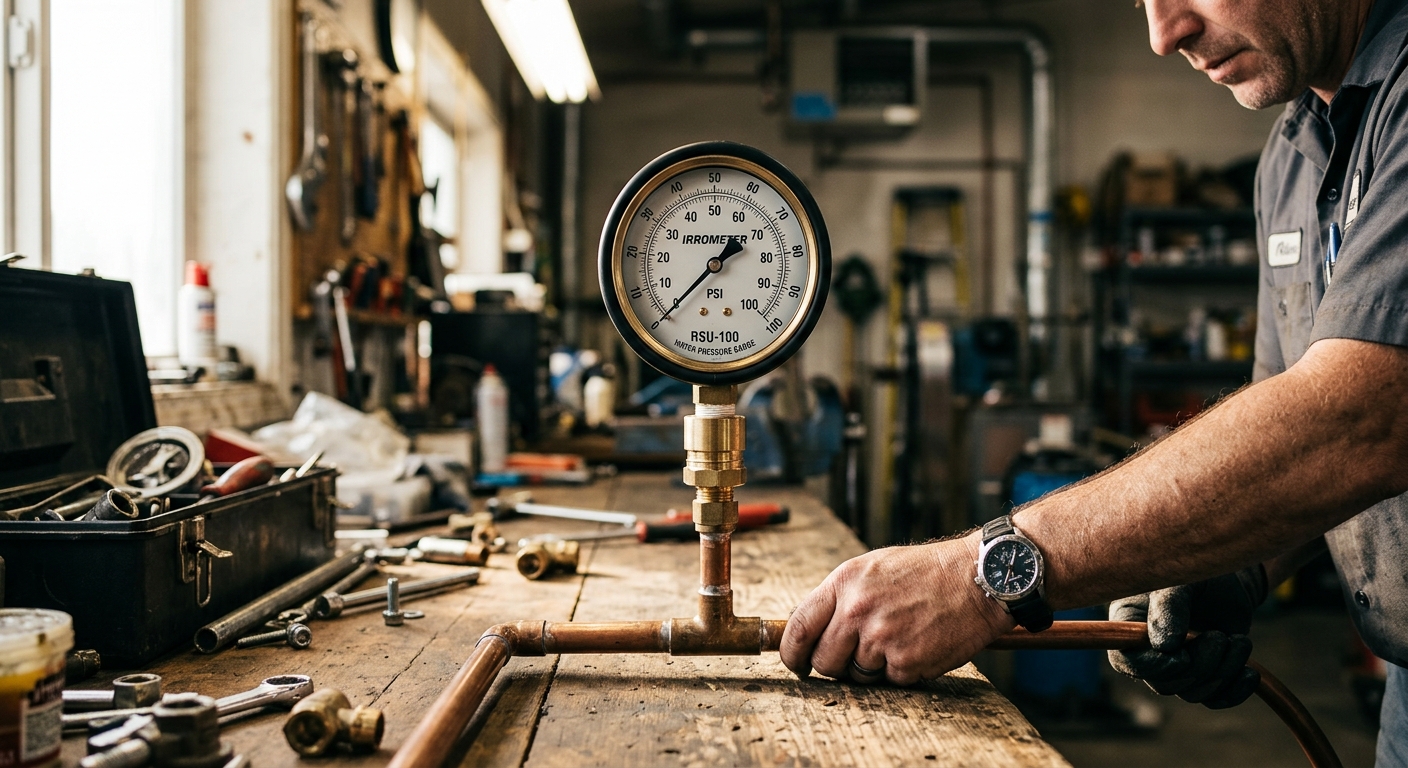
A niche pick for homeowners with irrigation systems who want to test both household pressure and sprinkler zone pressure with one gauge. The dual-scale dial covers both PSI and bar units, which matters if you’re working with imported irrigation equipment. Solid glycerin fill and brass construction at a reasonable price point.
General Tools 11 Pressure Testing Kit
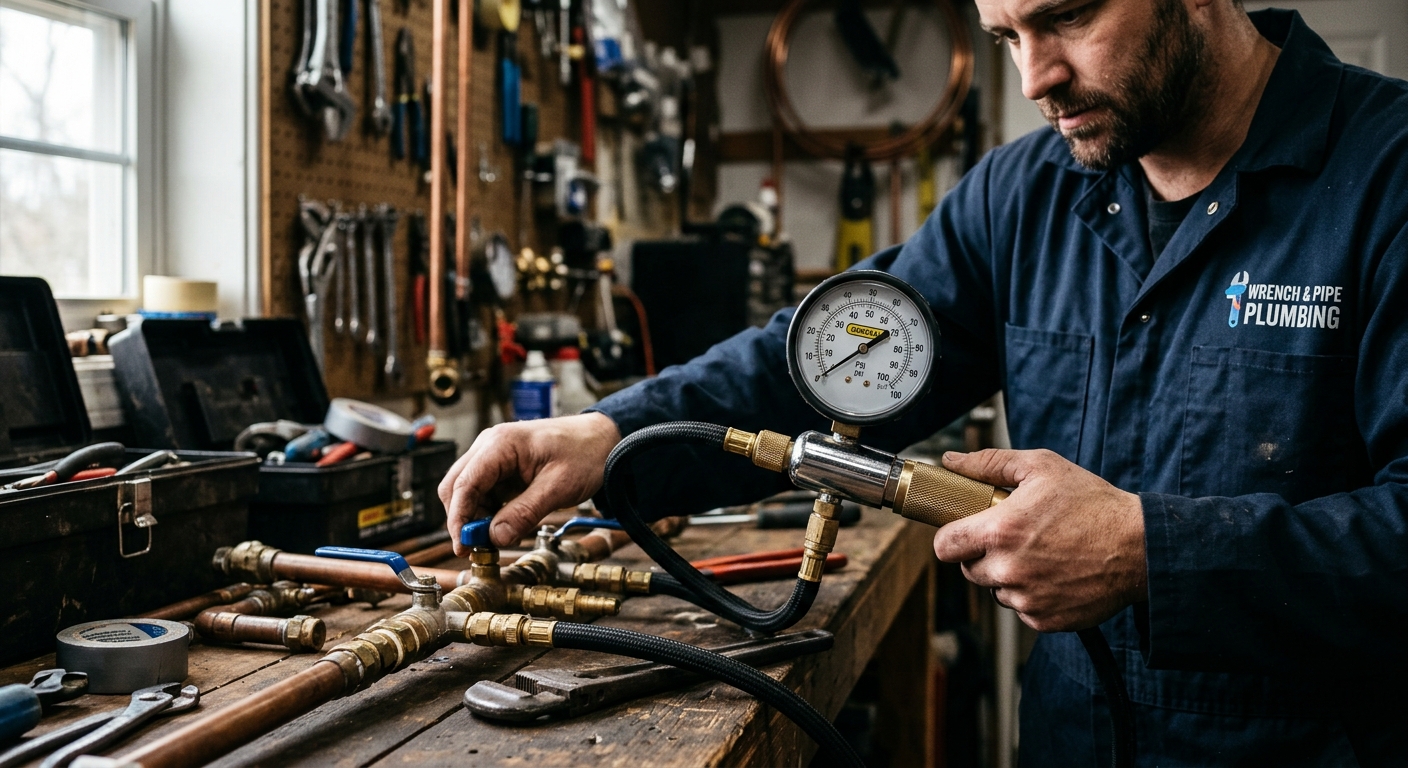
A more comprehensive kit that includes a gauge, hose, and multiple adapters for testing pressure at various points including aerators, refrigerator water lines, and dishwasher connections. If you want to pinpoint where in the house pressure drops occur, this multi-point testing approach gives you data that a single hose-bib test can’t.
Frequently Asked Questions
What is normal residential water pressure?
The acceptable range is 40-80 PSI, with most plumbers recommending 50-60 PSI as the sweet spot. Pressure above 80 PSI strains appliance hoses, toilet fill valves, and pipe joints. Pressure below 40 PSI causes weak shower flow and slow appliance fill times. If you’re outside these ranges, a pressure reducing valve (PRV) adjustment or replacement is the fix.
When should I test water pressure?
Test whenever you notice changes in flow strength, hear water hammer (banging pipes), experience appliance problems, or move into a new home. Testing at the hose bib gives you the incoming street pressure; testing at individual fixtures tells you if there’s pressure loss within the house from restricting valves or partial clogs.
My pressure is fine when I check but appliances still have problems – why?
Static pressure (measured when no water is flowing) can look fine while dynamic pressure (under flow demand) drops significantly. This points to undersized supply pipes, clogged aerators or screens, or a failing PRV. Test with multiple fixtures running simultaneously to assess dynamic pressure performance.
Affiliate Disclosure: DIY Arsenal participates in the Amazon Associates Program and other affiliate programs. When you purchase through links on this site, we may earn a small commission at no additional cost to you. We only recommend products we have personally tested and genuinely believe in.