Best Welding Helmets for Beginners and DIYers
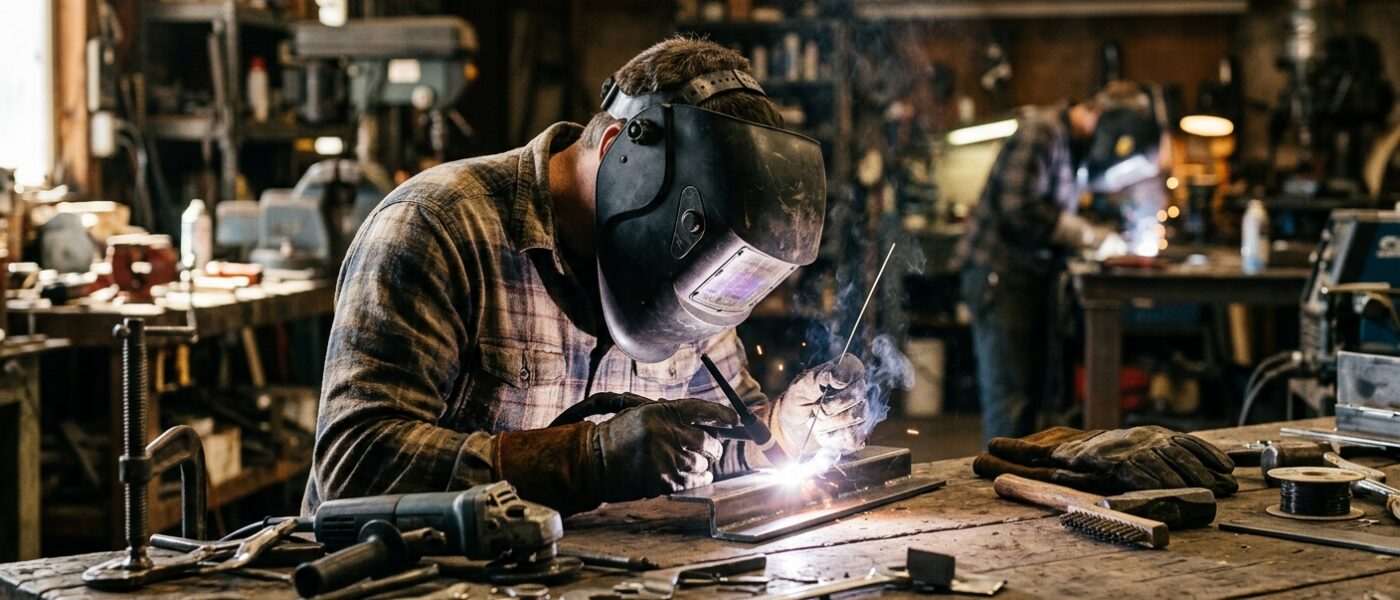
The Antra AH6-260 delivers proper 1/25,000 second switching speed at a beginner-friendly price; the Lincoln Electric Viking 3350 is the professional upgrade with the best viewing area and true-color lens available.
As an Amazon Associate, we earn from qualifying purchases.
Welding without a proper helmet is extraordinarily dangerous – the UV and infrared radiation from an arc or flame is intense enough to cause permanent eye damage (arc eye, also called welder flash) in seconds of unprotected exposure. A welding helmet is the single most important piece of personal protective equipment for any welding task, and the difference between an adequate helmet and a great one directly affects weld quality as well as safety.
Types of Welding Helmets
Passive (Fixed-Shade) Helmets
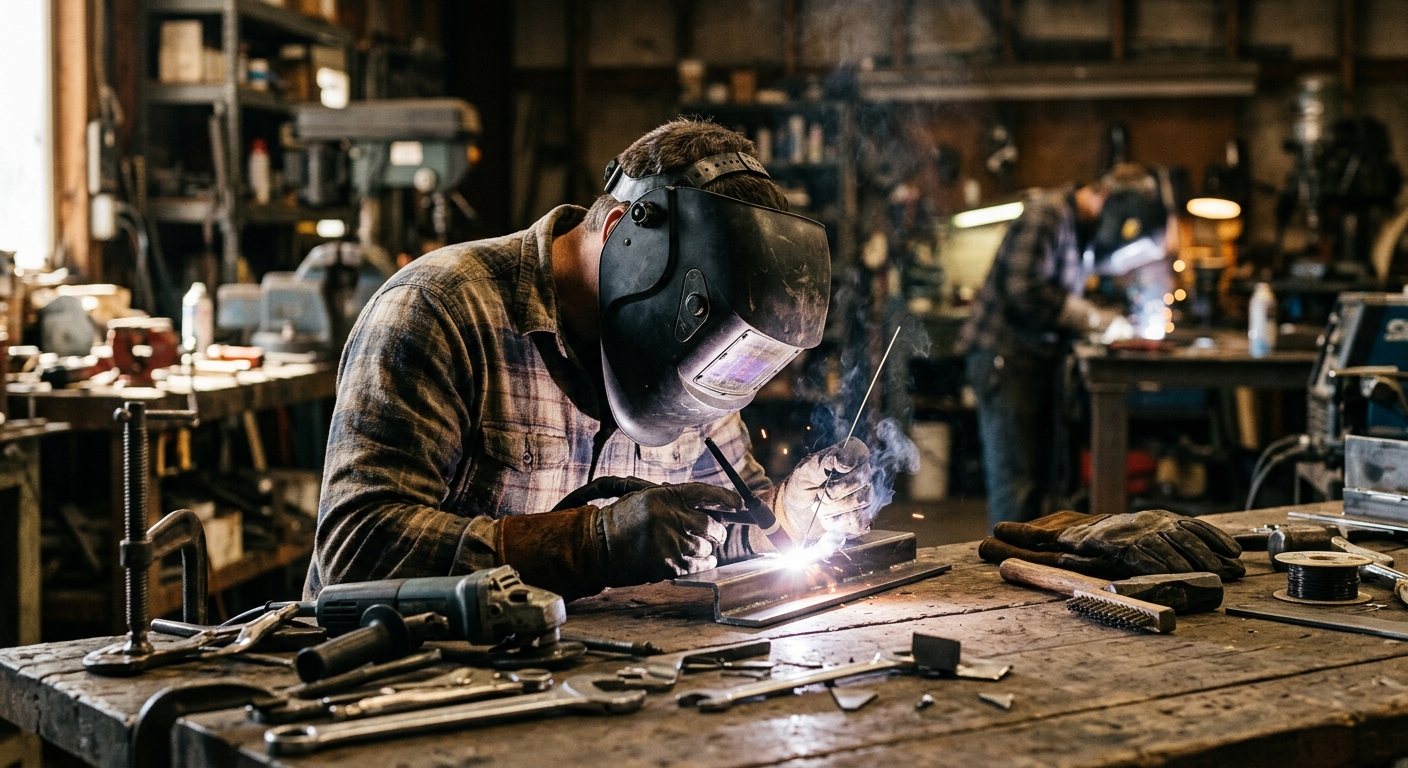
A traditional fixed-shade lens that remains dark at all times. You flip the helmet up to see the workpiece, position, and flip back down before striking the arc. Less expensive than auto-darkening but slower and less convenient. Still used by many professional welders who prefer the simplicity and reliability of no electronics. Shade typically fixed at shade 10 for MIG/Stick, shade 11-12 for TIG.
Auto-Darkening Helmets (ADF)
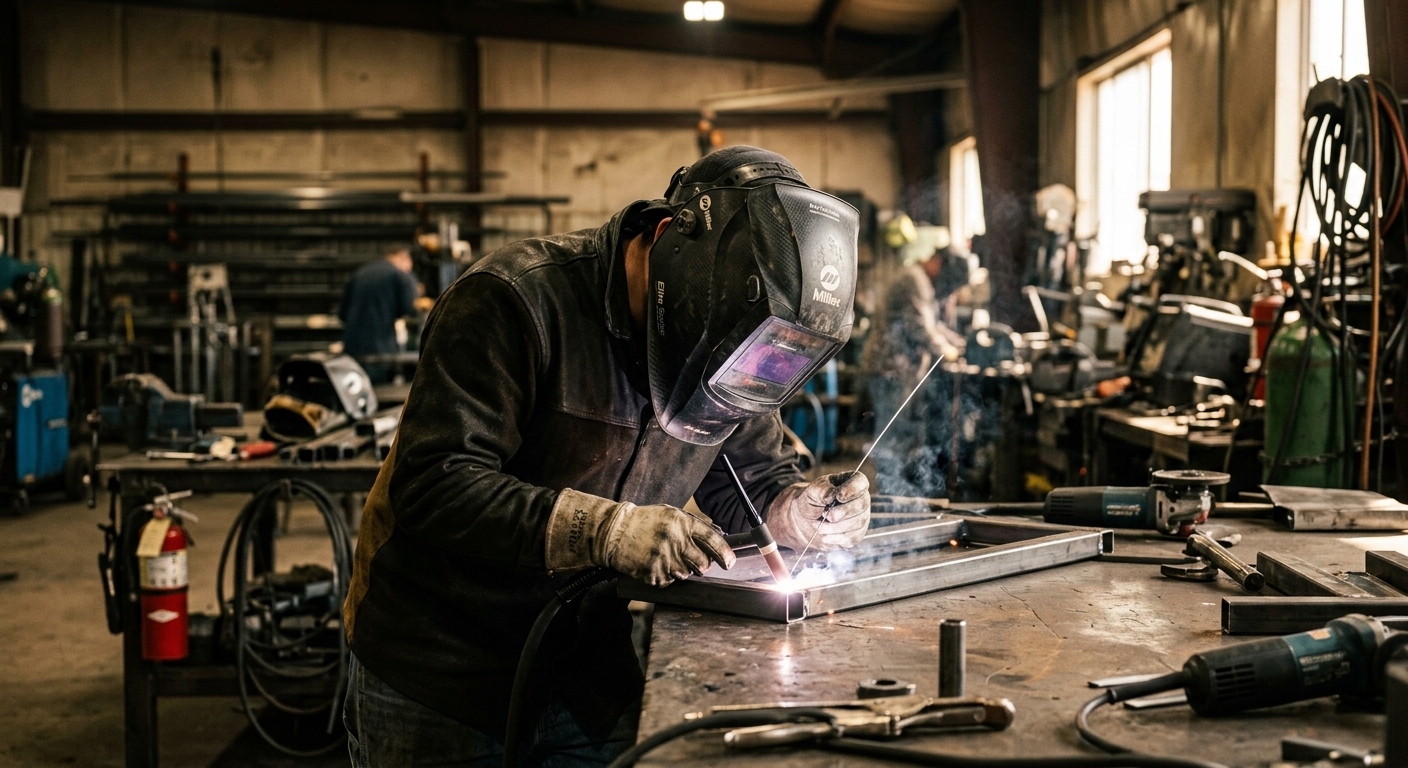
The lens starts in a clear or light shade (3-4) for visibility and automatically darkens when the arc is struck, within milliseconds. You can see the workpiece clearly up to the moment of arc initiation, eliminating the need to flip up and down repeatedly. Dramatically improves weld start quality by allowing precise electrode or gun positioning before the arc. The standard for most modern welders.
Key ADF Specifications
Switching Speed
The most critical safety specification. Expressed in fractions of a second – typically 1/25,000 to 1/30,000 second for quality helmets. At 1/30,000 second, the transition is effectively instantaneous from the eye perspective. Budget helmets may switch at 1/3,600 second – slow enough to allow brief UV exposure at each arc start, which accumulates over time into eye damage.
Shade Range
ADF helmets adjust shade from the light state (3-4) to the dark state (typically 9-13). Different welding processes require different shade levels: MIG welding uses shade 10-12, TIG welding uses 10-11 for most applications, stick welding 10-13. A variable shade range from 9-13 covers all common welding processes.
Viewing Area
Larger viewing areas (4 square inches and above) provide better visibility during welding. Small viewing windows require more positioning adjustments and make it harder to see welds in tight or vertical positions. Many entry-level helmets have small windows; most professional models have large panoramic views.
Solar Cells and Battery Backup
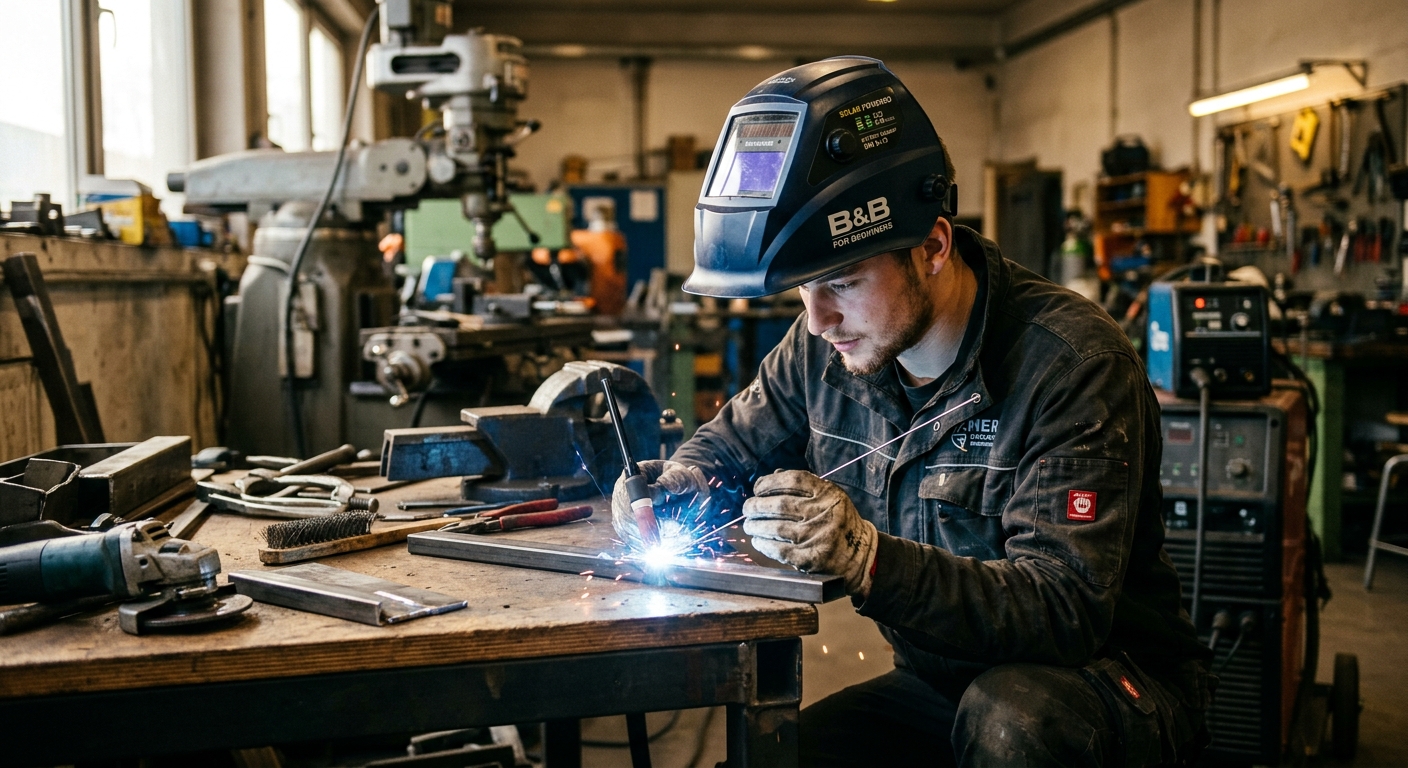
Most ADF helmets use a combination of solar cell charging and battery power. Solar cells extend battery life dramatically. Helmets with replaceable batteries are more reliable long-term – when the battery dies, you replace it rather than the helmet.
Sensitivity and Delay Controls
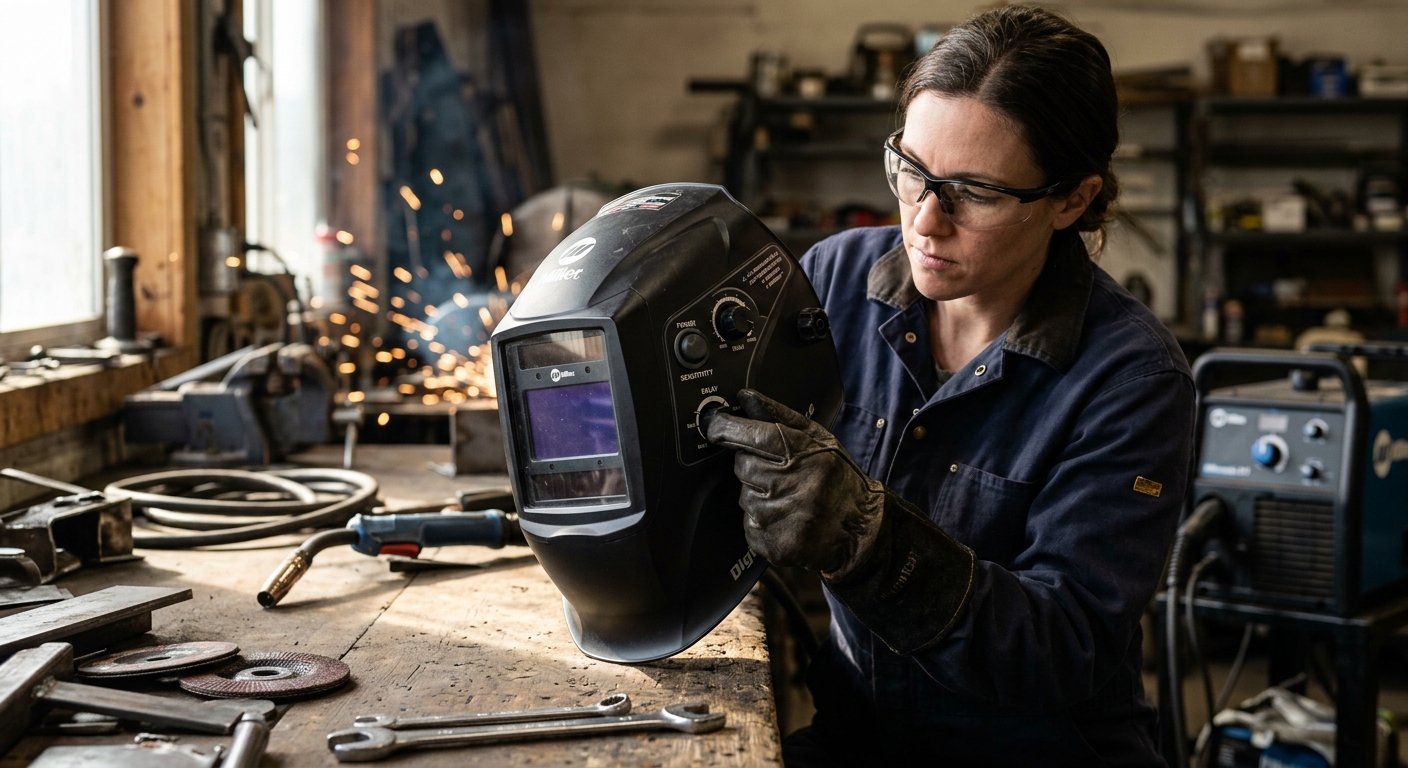
Sensitivity controls how much arc light triggers the darkening. Delay controls how quickly the lens returns to the light state after the arc stops. Adjustable delay prevents bright flash exposure during slag chipping (which can trigger auto-darkening on sensitive settings).
Our Top Picks
1. Lincoln Electric Viking 3350 Auto-Darkening Helmet
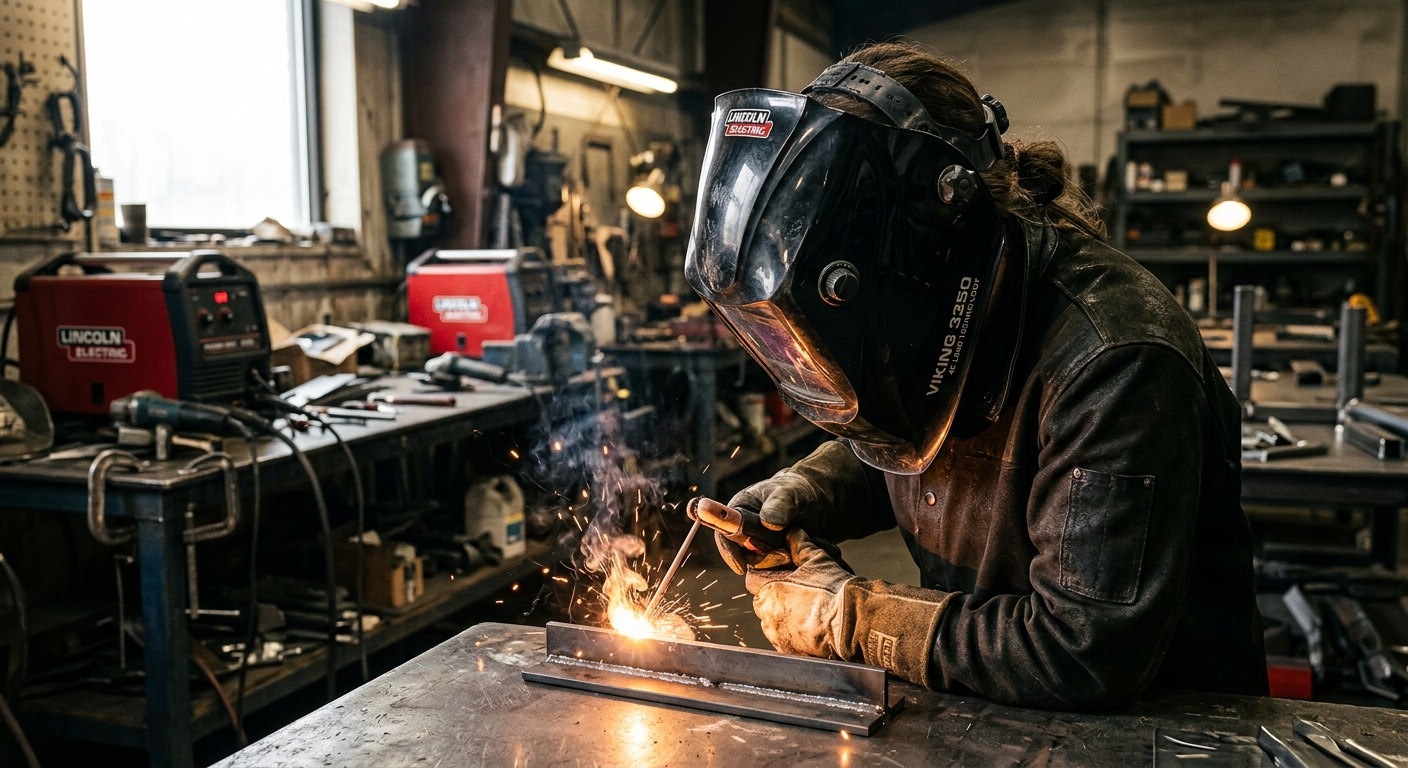
The most recommended auto-darkening welding helmet for intermediate to advanced welders. The 3350 features a very large 12.5 square inch viewing area (the largest in its class), 4C lens technology that eliminates the green tint common in most auto-darkening lenses, shade range 5-13, and switching speed of 1/25,000 second. Comfortable head-gear, excellent build quality, and a wide shade range that covers MIG, TIG, stick, and plasma cutting. A serious helmet at a professional price.
2. Jackson Safety BH3 Auto-Darkening Helmet
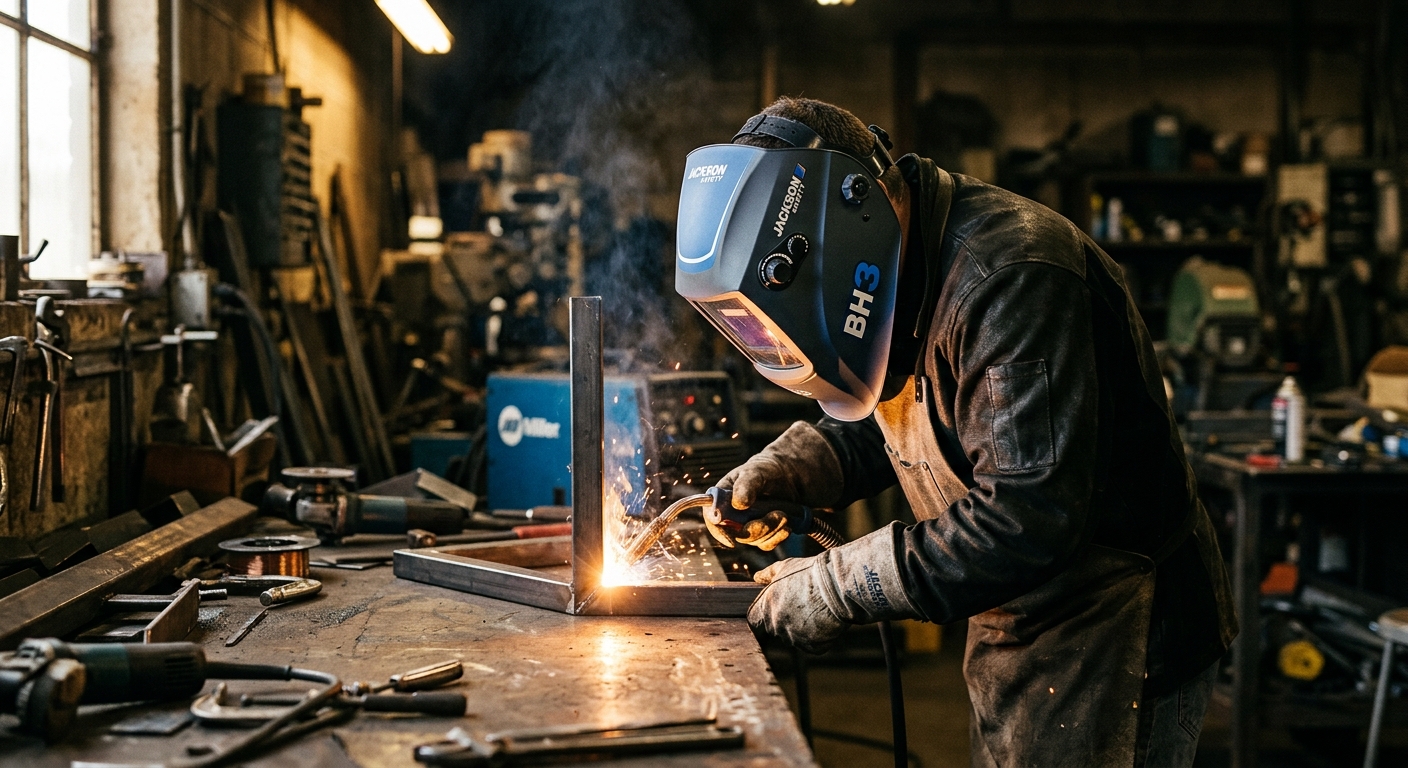
An excellent mid-range professional ADF helmet with a large 9.3 square inch viewing area, shade range 9-13, switching speed 1/25,000 second, and four arc sensors for reliable darkening from all welding angles. Jackson Safety makes professional-grade PPE – this helmet reflects that quality at a more accessible price than Lincoln Electric flagship models.
3. Antra AH6-260-0000 Auto-Darkening Helmet
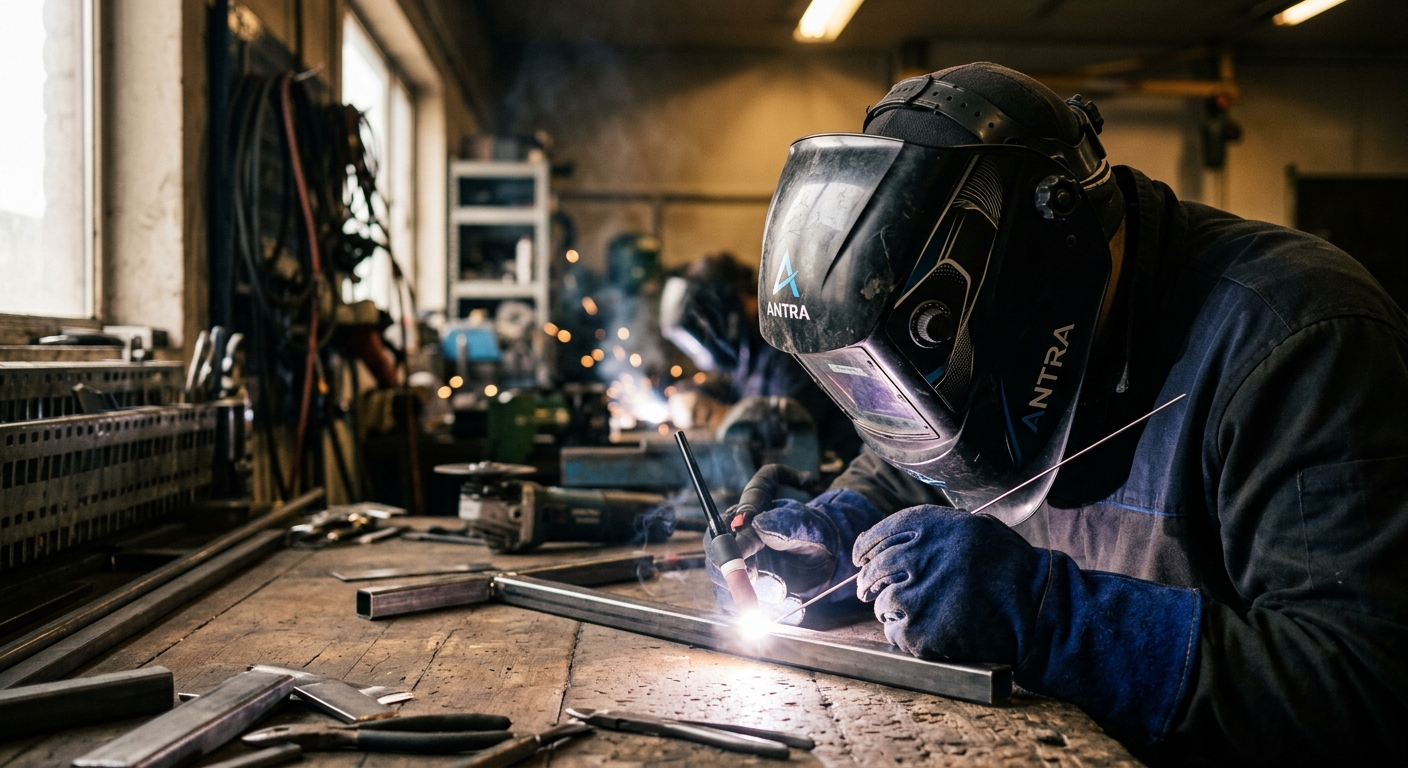
The best budget ADF helmet for beginners learning to weld. The Antra delivers switching speed of 1/25,000 second, shade range 4-13, a 3.94 x 2.36 inch viewing area, and solar plus battery power at a price that makes quality welding protection accessible to anyone. Not as durable or comfortable as the Lincoln Electric, but safe and functional for hobbyist and educational welding.
4. Miller Electric Digital Elite Auto-Darkening Helmet
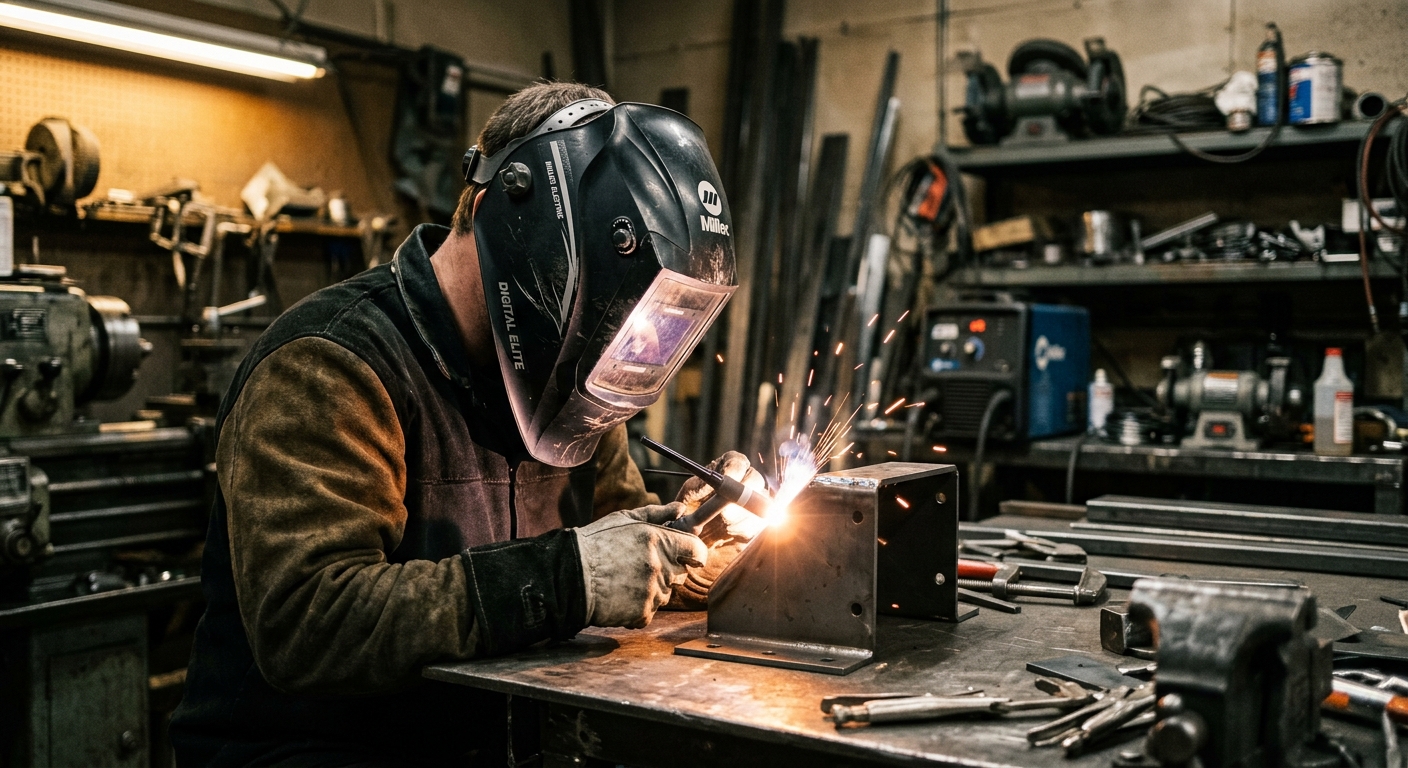
Miller is the other leading US welding equipment brand. The Digital Elite features ClearLight lens technology for excellent color accuracy, a 9.2 square inch viewing area, and X-mode for welding in sunlight where solar interference can cause less sophisticated helmets to false-trigger. The right choice for outdoor and pipeline welders.
5. Hobart 770753 Discovery Fixed Shade Helmet
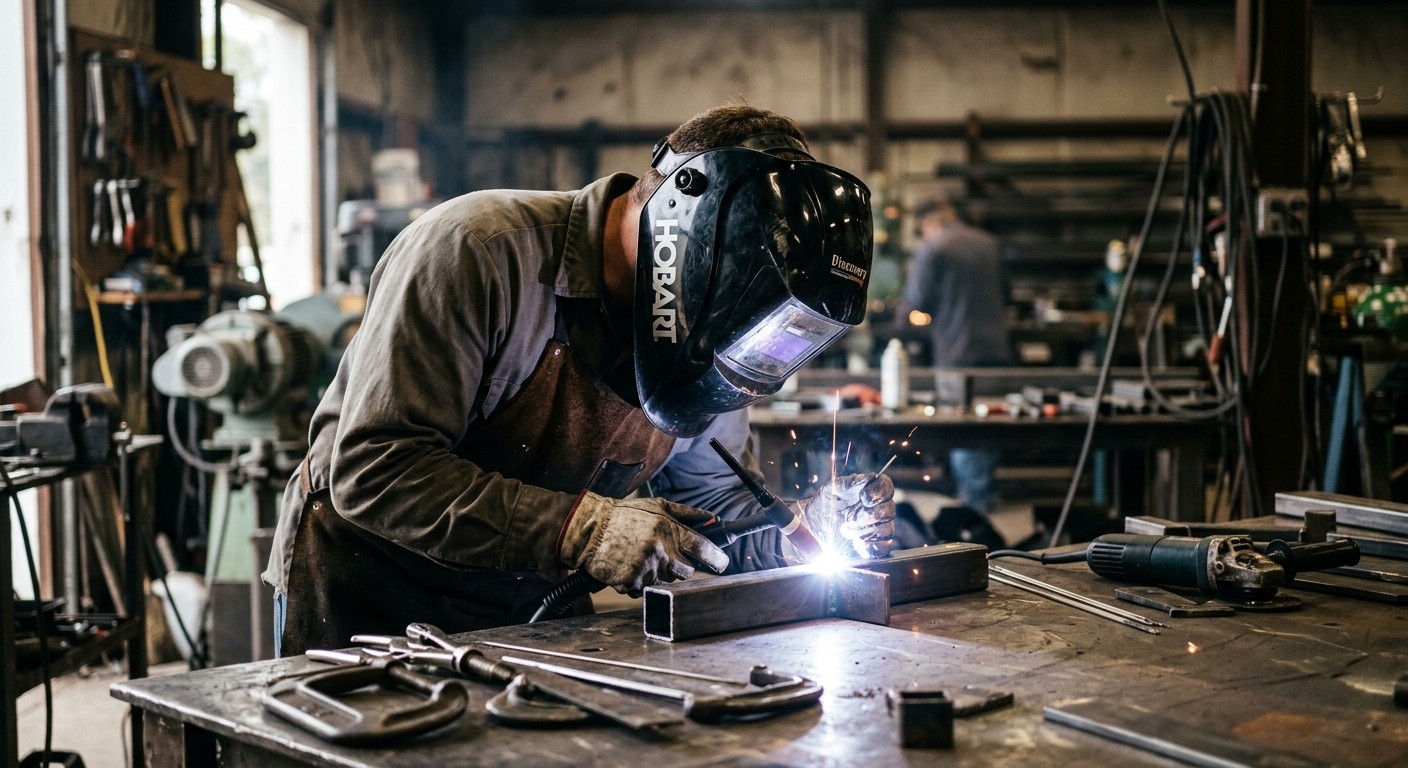
For beginners who want to learn welding fundamentals with a traditional passive helmet before investing in an ADF: the Hobart Discovery is a quality fixed-shade helmet at a very low price. Shade 10 lens, comfortable headgear, and full face protection. A reliable starting helmet while you develop arc starts and basic technique.
FAQ
What shade do I need for MIG welding?
For most MIG welding at typical hobby and light industrial amperages: shade 10 is the standard starting point. Higher amperages (above 200A) and larger wire diameters may require shade 11-12. Start at shade 10 and adjust darker if the arc appears too bright.
Can I grind with a welding helmet on?
You can use the helmet for eye protection during grinding, but only at shade 3-4 (the light state) – do not darken for grinding unless the helmet is specifically rated as a grinding shield. Many ADF helmets include a grinding mode that locks the lens in the light state. Alternatively, switch to a dedicated face shield for grinding.
Why does my weld look different than I expected?
Many beginners using entry-level helmets with green-tinted lenses misread the weld puddle because the green tint distorts color perception of the molten metal. Premium helmets with 4C or ClearLight technology provide near-true color representation that dramatically improves puddle visibility and weld quality awareness.
Affiliate Disclosure: DIY Arsenal participates in the Amazon Associates Program and other affiliate programs. When you purchase through links on this site, we may earn a small commission at no additional cost to you. We only recommend products we have personally tested and genuinely believe in.