Best Knee Pads for Flooring and Tile Work
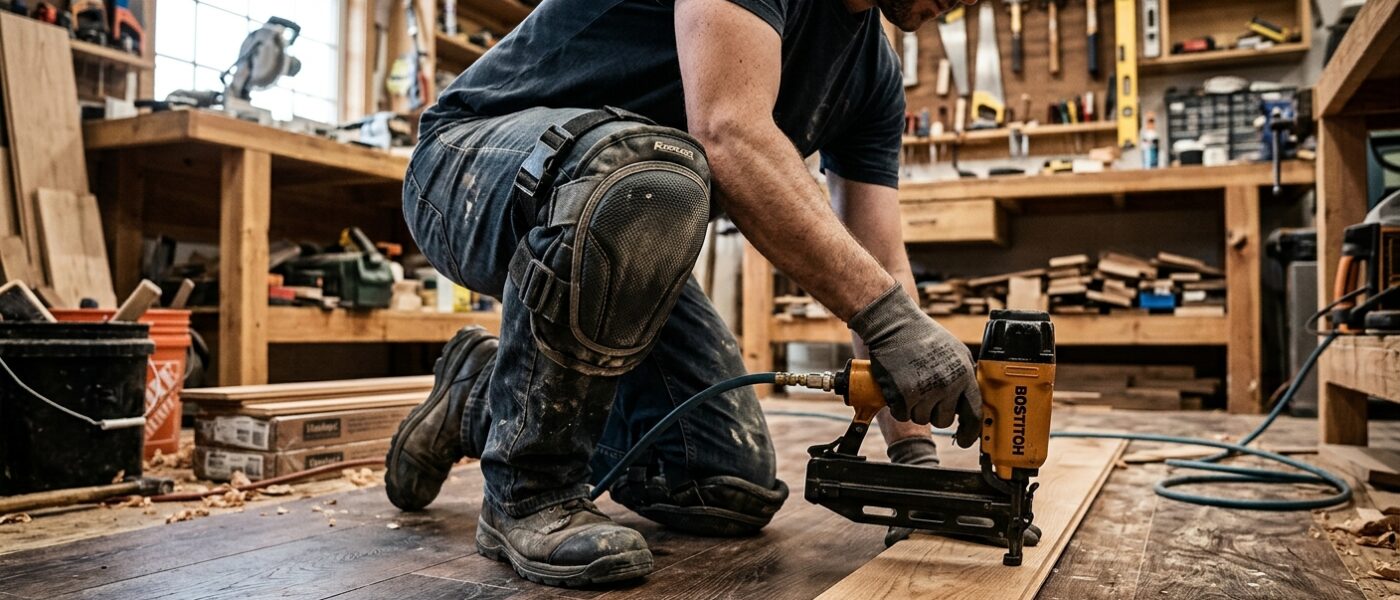
ToughBuilt GelFit knee pads are the top choice for flooring and tile professionals; the NoCry hard-cap pads cover workers who need sharp debris protection on demolition and roofing work.
As an Amazon Associate, we earn from qualifying purchases.
Flooring and tile work are notorious for destroying knees. Hours spent kneeling on concrete, hardwood subfloor, or ceramic tile creates pressure on the patella and kneecap that leads to bursitis, tendinitis, and chronic joint pain. Good knee pads do not just provide comfort – they prevent injuries that can sideline a DIYer or tradesperson for weeks. Choosing pads that balance protection, comfort, and mobility is the key to staying productive on floor-level work.
Types of Knee Pads
Strap-On Knee Pads
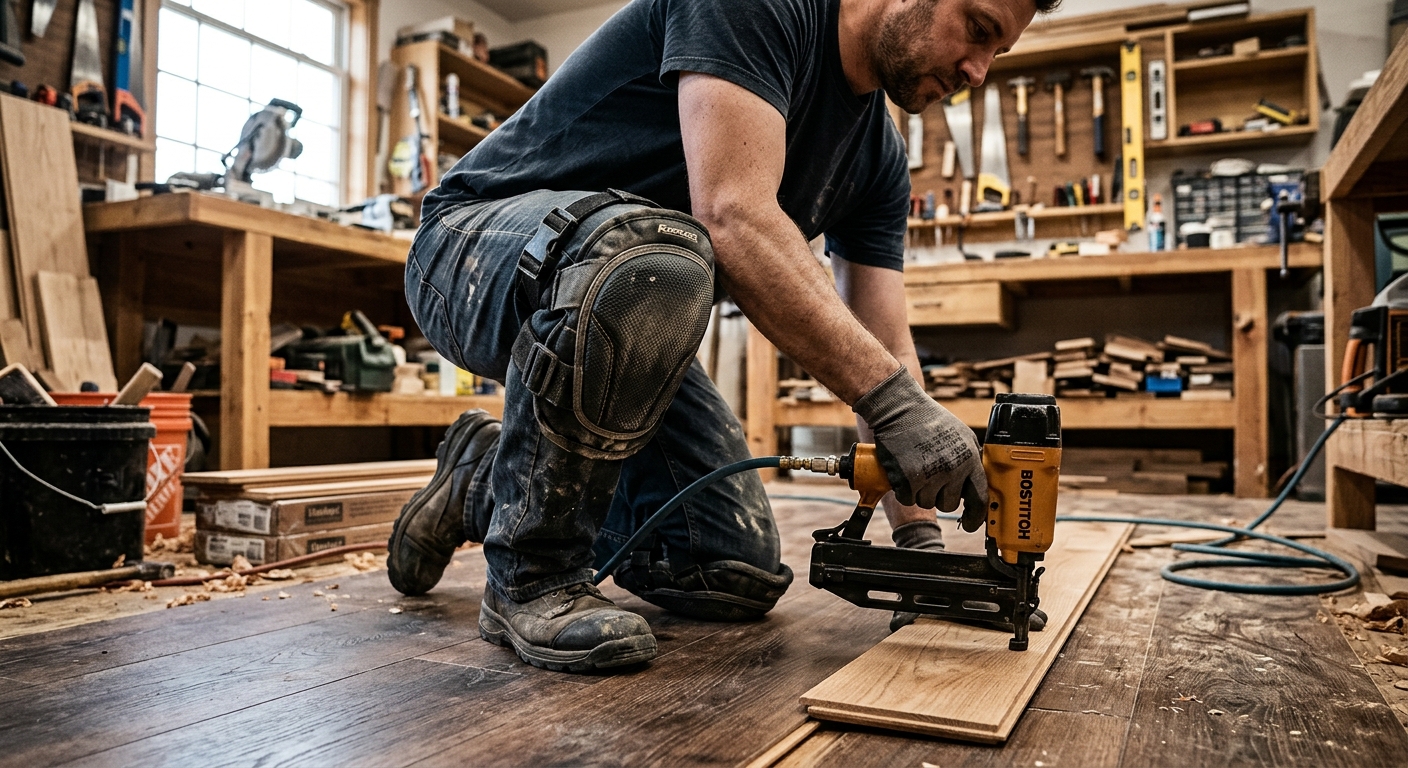
The most common type. Buckle or Velcro straps attach the pad to the knee. Quick to put on and take off, and universally compatible with work pants. Protection depends heavily on pad thickness and cap material.
Slip-On Knee Pads
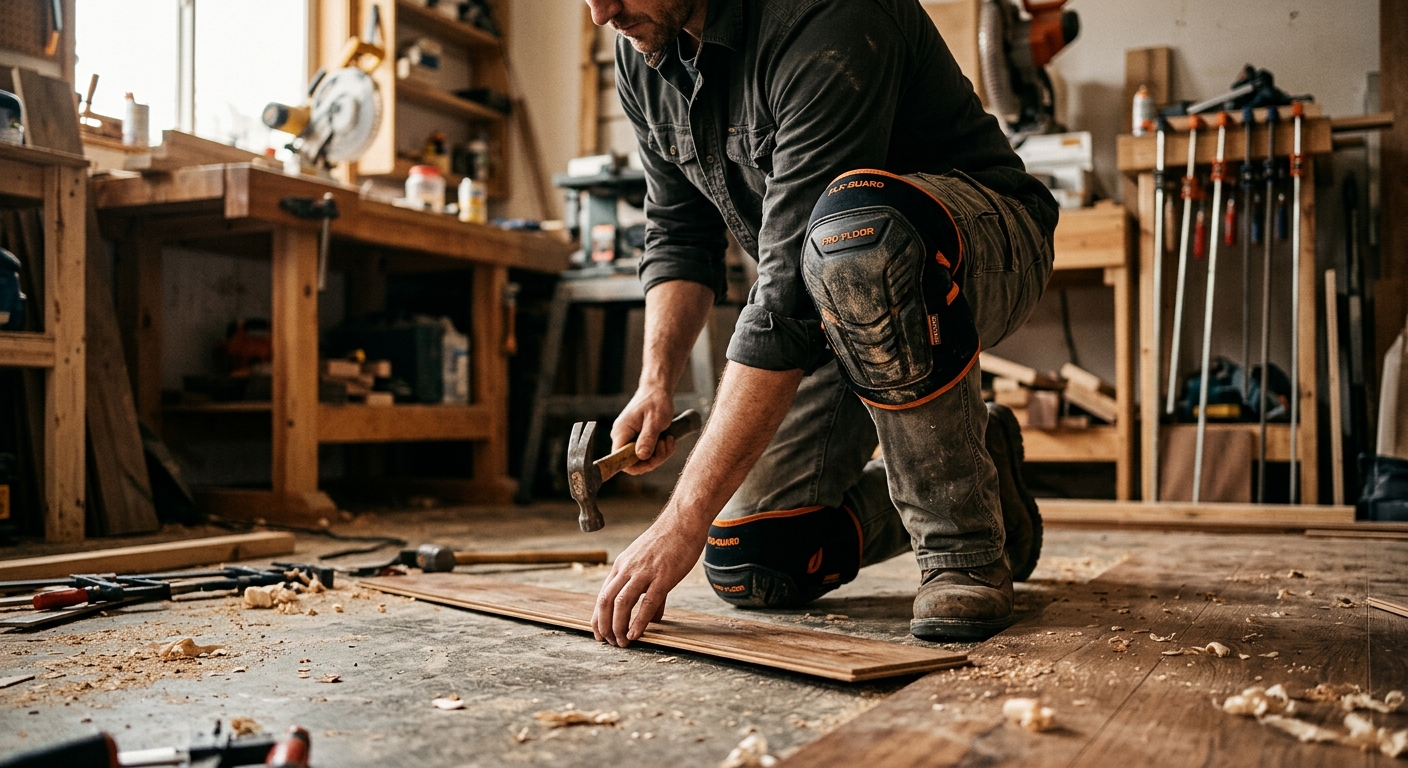
Slide over the boot/shoe and onto the shin and knee like a sleeve. No straps to adjust or pop loose mid-work. Very popular among flooring installers who need pads to stay put during hours of crawling.
Pants-Integrated Pads
Work pants with built-in pad pockets behind the knee. Available from Carhartt, Snickers, Duluth Trading, and others. The most comfortable and secure option for all-day wear. The downside is that protection varies widely by pants model and the pads are generally thinner than dedicated knee pads.
Foam Cap vs. Hard Cap
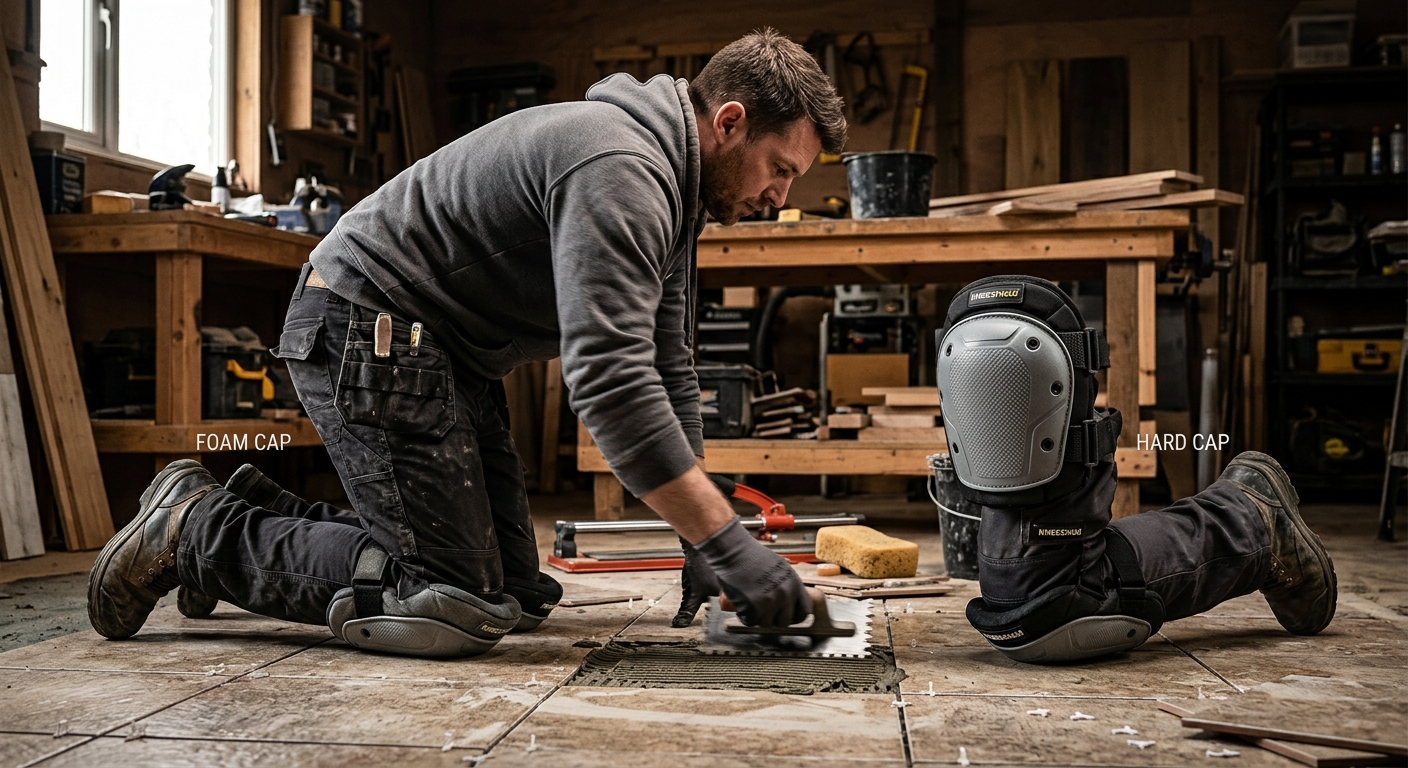
Foam cap pads are softer and more comfortable for prolonged kneeling on smooth surfaces. Hard cap pads (polycarbonate or nylon shell over foam) protect against sharp debris (nails, staples, gravel) and are required for roofing and demolition work where the surface is unpredictable.
Key Features to Look For
Cap Size
Larger caps distribute weight over more surface area, reducing peak pressure on the kneecap. Look for caps that extend above and below the kneecap, not just directly over it.
Foam Density
High-density polyurethane foam (similar to what high-end shoe insoles use) absorbs impact without bottoming out. Memory foam is comfortable on smooth surfaces but compresses too slowly when rising and kneeling repeatedly. Gel inserts are popular but can migrate to the edges of the cap with repeated use.
Strap System
Top and bottom straps should provide separate, independent adjustment. Single-strap designs let pads rotate and slide. Buckle closures are faster than Velcro; Velcro is lighter. Look for non-marring strap materials to avoid scratching finished floors.
Height of Pad
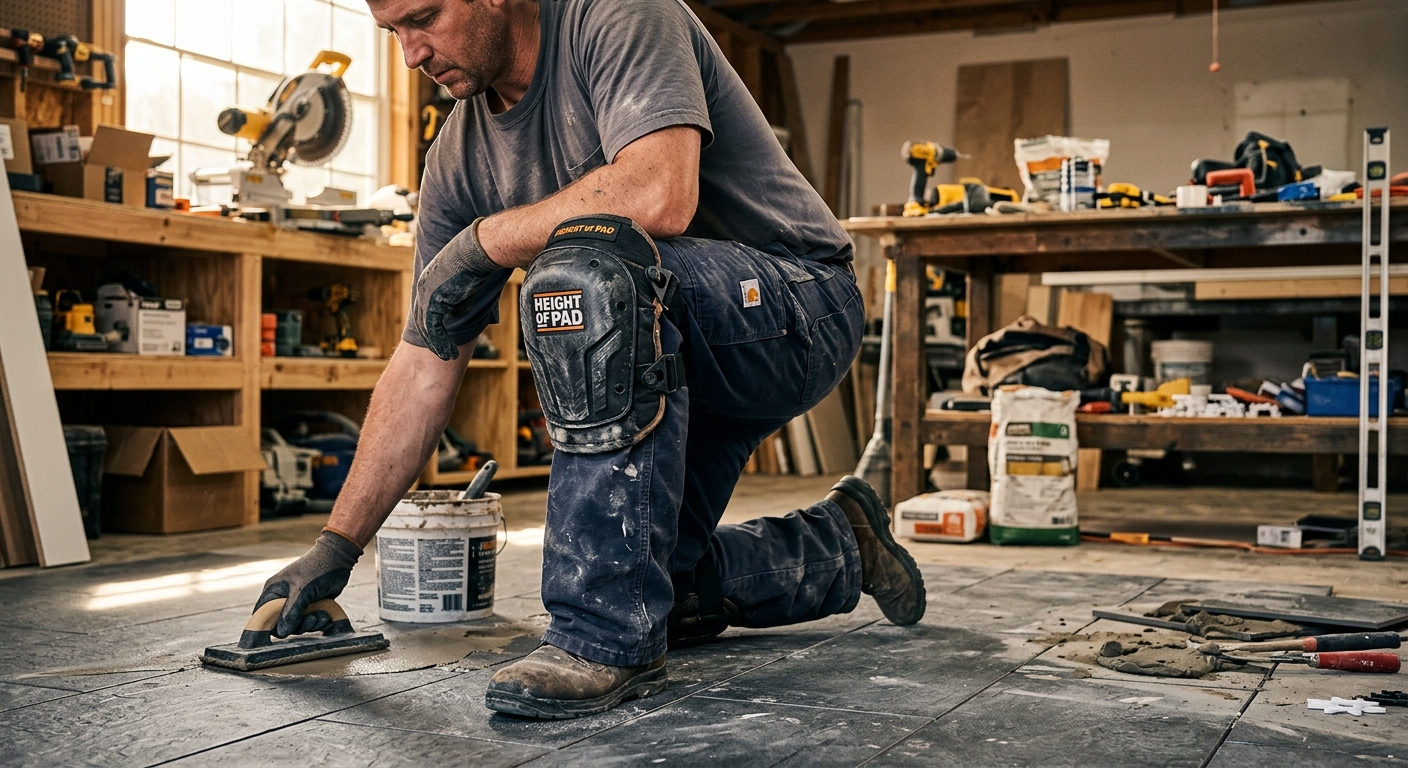
Taller pads extend down the shin to provide a kneeling platform that supports the shin as well as the knee. This significantly reduces fatigue during extended kneeling.
Our Top Picks
1. ToughBuilt GelFit Stabilizer Knee Pads (TB-KP-G2)
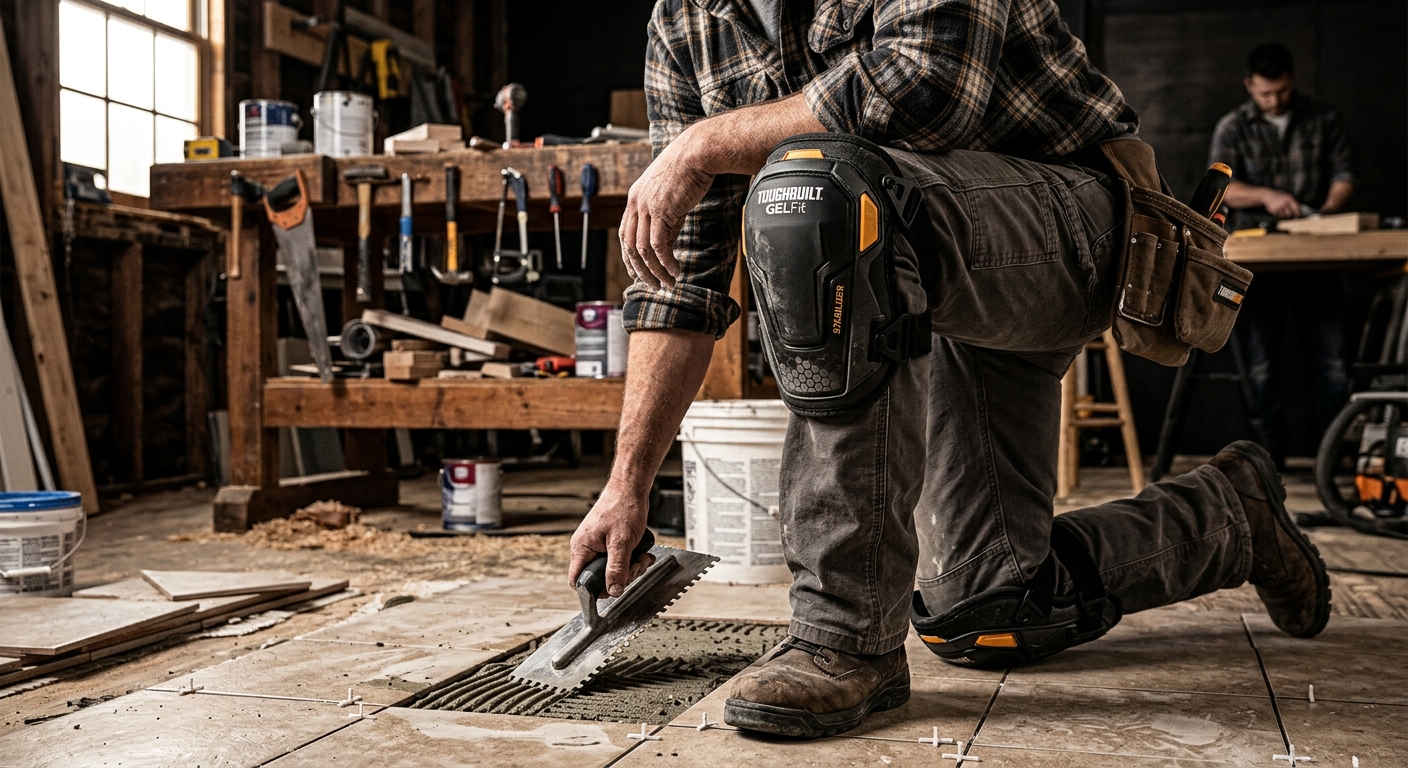
The most consistently recommended knee pad for tile and flooring work. The extended shin platform provides exceptional support during prolonged kneeling, the dual gel cups cushion both the kneecap and lower shin, and the strap system holds position reliably without sliding. The non-marring foam bottom does not scratch finished surfaces.
2. NoCry Professional Knee Pads
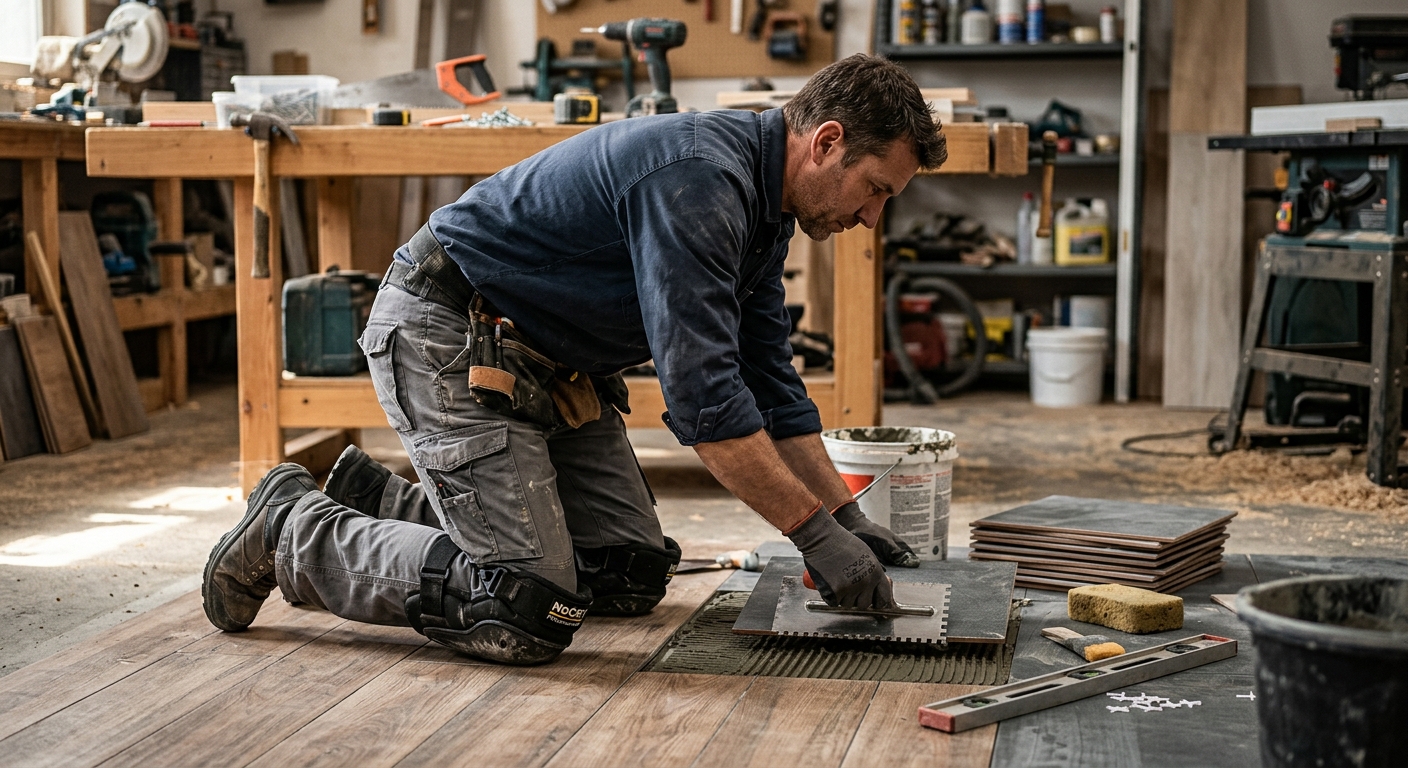
An excellent mid-range option with a hard polycarbonate outer shell (for protection against sharp debris), thick EVA foam inner, and wide Velcro straps that stay secure through a full workday. Comfortable enough for extended wear but rugged enough for demolition and rough concrete work.
3. Makita P-71651 Work Knee Pads
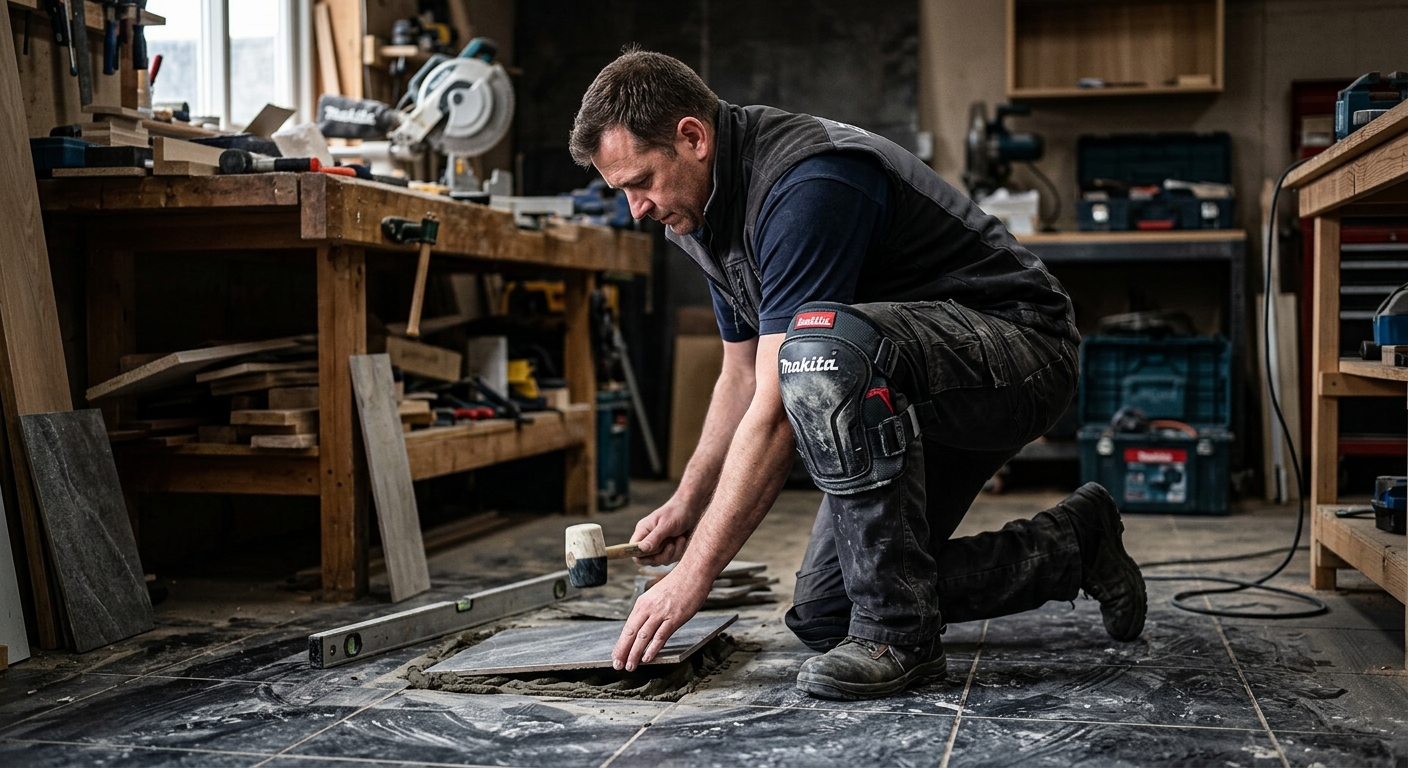
Makita brings their build quality to knee pads. Thick EVA foam, secure buckle straps, and a textured non-slip bottom that stays put on slippery surfaces like polished concrete. Slim profile fits under low cabinet spaces where taller pads will not fit.
4. Klein Tools 60183 Hard Cap Knee Pads
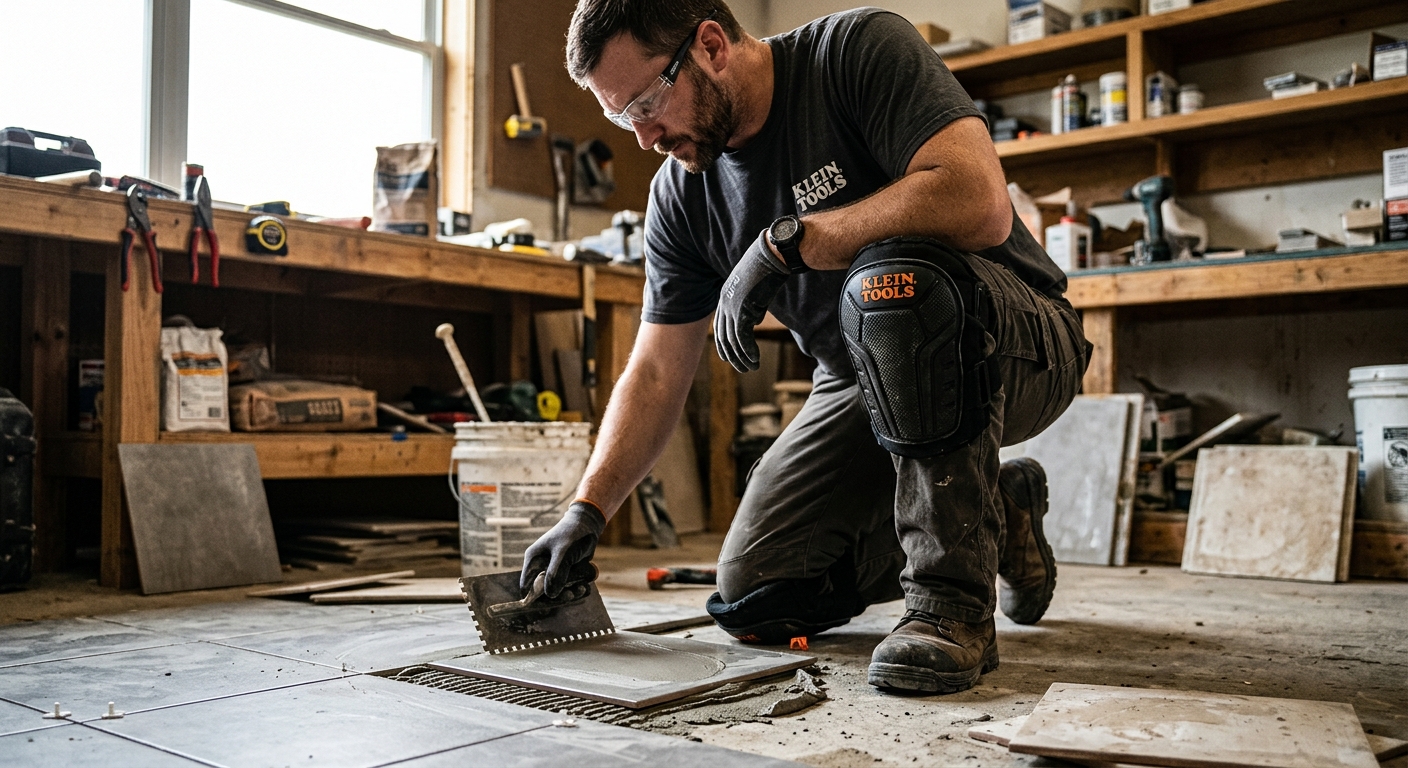
Klein makes these for electricians and HVAC technicians who spend time on concrete. The hard nylon cap and gel insert deliver protection and comfort in equal measure, with a quick-release buckle that allows fast removal when standing. Excellent build quality.
5. Husky Professional Knee Pads
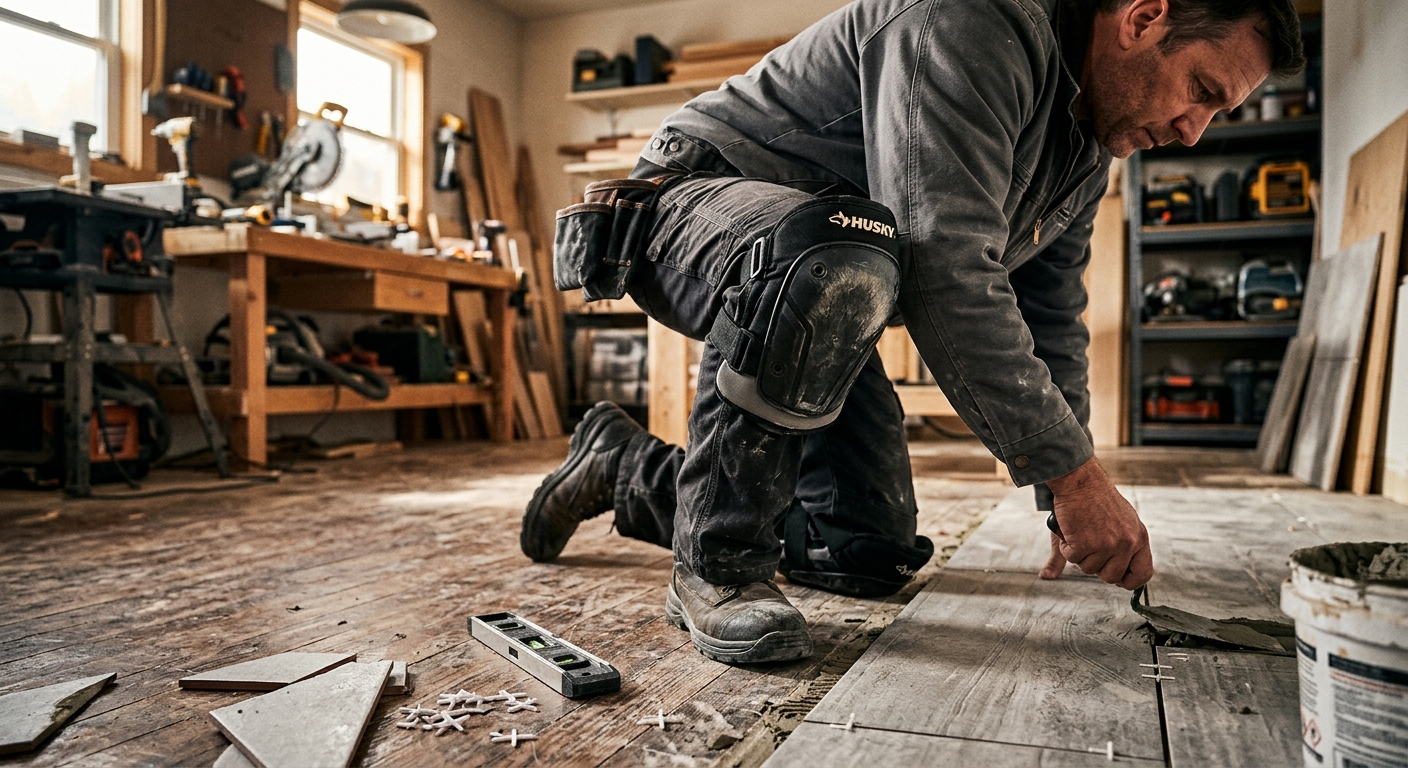
The best budget option for occasional use. Thick foam cap, double-strap design, and comfortable enough for several hours of kneeling. Not as durable as the ToughBuilt or NoCry, but a solid starting point if you only kneel occasionally.
What to Avoid
- Thin single-strap knee pads: Rotate, slide, and provide minimal protection even when correctly positioned.
- Pads with textured rubber bottoms on finished flooring: The rubber can leave marks. Use non-marring foam bottoms on any finished floor.
- Memory foam-only pads for tile work: Memory foam compresses too slowly when you kneel down quickly – you bottom out on hard tile before the foam reacts.
FAQ
How thick should knee pad foam be?
A minimum of 3/4 inch of high-density foam for concrete work. 1 inch or more is better for extended kneeling. Thinner pads bottom out and provide no practical cushioning after a few minutes.
Can knee pads prevent knee injuries?
They significantly reduce the risk of prepatellar bursitis (housemaid knee) and impact injuries from kneeling on hard, irregular surfaces. They do not prevent soft tissue injuries from awkward kneeling positions or from kneeling for hours without breaks. Stand and stretch every 20 to 30 minutes regardless of what knee pads you wear.
Are slip-on or strap-on knee pads better for flooring installation?
Most experienced flooring installers prefer the extended shin platform strap-on style (like ToughBuilt GelFit). Slip-ons are favored by some for their stability, but they can restrict ankle movement during repeated crouch-and-rise motions.
Affiliate Disclosure: DIY Arsenal participates in the Amazon Associates Program and other affiliate programs. When you purchase through links on this site, we may earn a small commission at no additional cost to you. We only recommend products we have personally tested and genuinely believe in.