Best Work Gloves for Construction and Shop Use
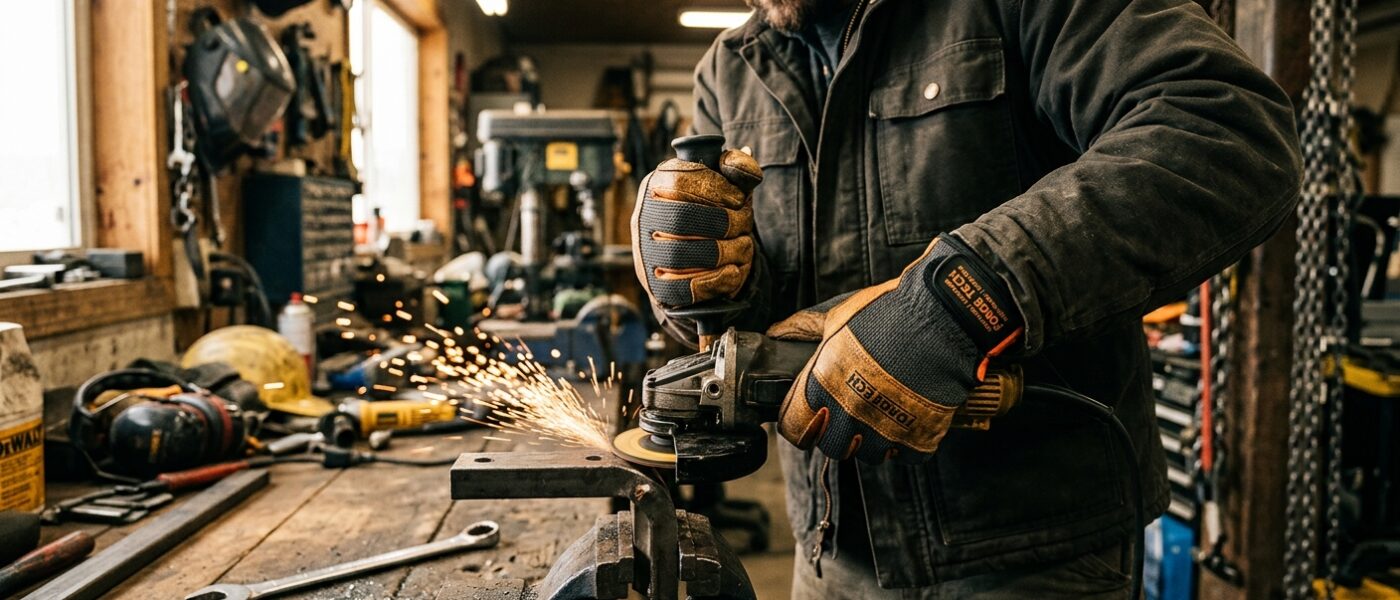
Mechanix M-Pact gloves are the all-around winner for shop and construction work; pair them with Wells Lamont HydraHyde leather for heavy lumber handling and you have both bases covered.
As an Amazon Associate, we earn from qualifying purchases.
Your hands are the most important tools you own, and they are also the most commonly injured body part in the shop and on the job site. The right gloves protect your hands from cuts, abrasions, punctures, chemicals, and heat – but the wrong gloves create their own hazards, particularly near rotating machinery. Choosing the right work glove for the task is as important as choosing the glove in the first place.
When NOT to Wear Gloves
This section comes first because it is the most important. Never wear gloves near rotating machinery: drill presses, lathes, milling machines, and drill bits. A glove caught in a rotating tool pulls the hand in with tremendous force, causing degloving injuries and broken bones. The same applies to belt sanders and drum sanders. When using these tools, bare hands or tight-fitting nitrile gloves are the maximum appropriate protection.
Types of Work Gloves
Leather Gloves
The standard for general construction, framing, roofing, and landscaping. Cowhide and pigskin leather resist cuts and abrasions, conform to the hand over time, and provide excellent grip on rough materials. Full-leather or leather-palm with synthetic back designs both work well.
Synthetic/Knit Back Leather Palm
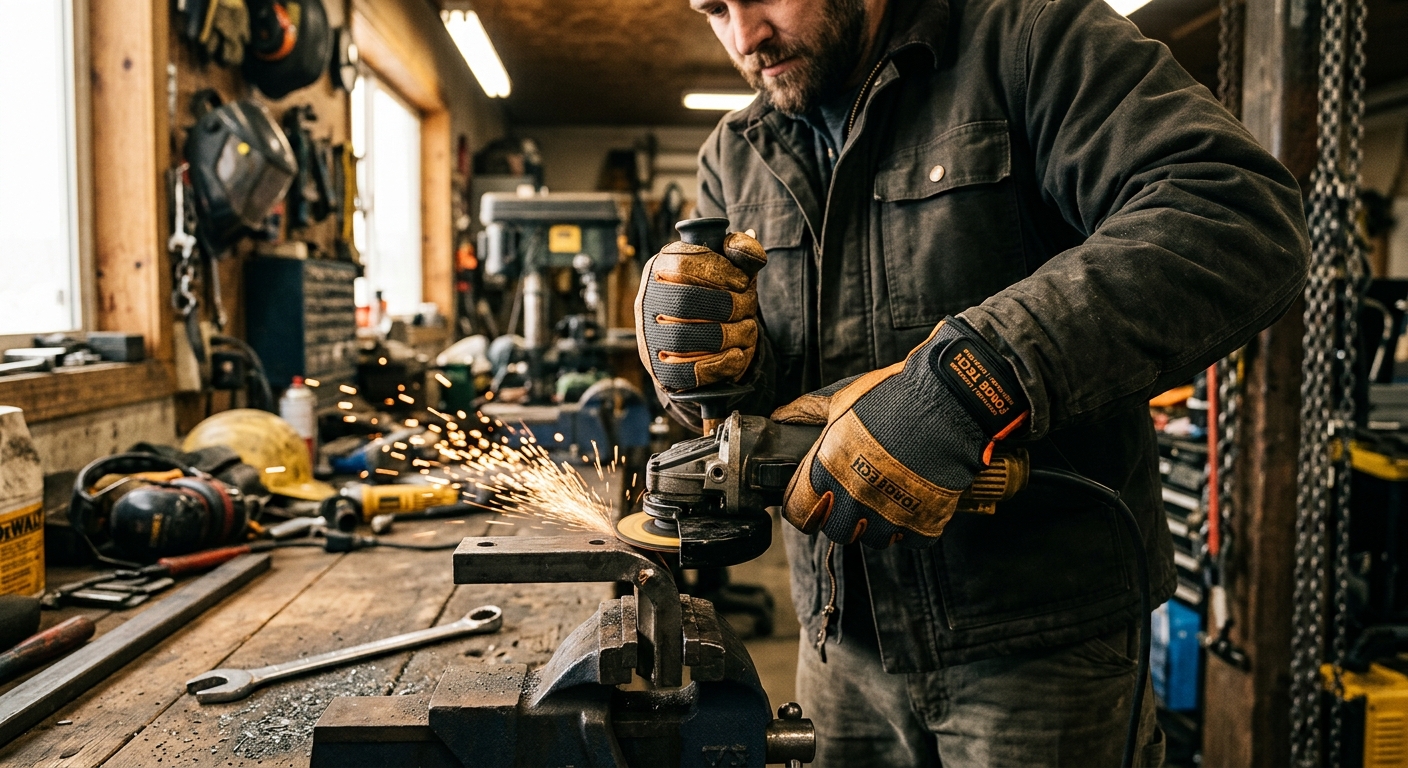
Combines a leather palm for durability and grip with a breathable knit or synthetic back for comfort. Lighter and more dexterous than full-leather gloves. The most popular style for finish carpentry and general DIY.
Cut-Resistant Gloves
Made from high-performance fibers like Kevlar, HPPE (high-performance polyethylene), or stainless steel mesh. Rated by ANSI/ISEA cut level (A1 through A9). Required for sheet metal work, knife handling, and any task involving unprotected sharp edges.
Chemical-Resistant Gloves
Nitrile, neoprene, or latex rubber gloves for handling solvents, adhesives, stains, and cleaners. Coverage in a separate guide – these are not the same as work gloves.
Impact-Resistant Gloves
Have molded TPR (thermoplastic rubber) pads over the knuckles and back of hand to absorb hammer blows and impacts from dropped materials. Essential for demolition, concrete work, and any task with a significant impact hazard.
Key Features to Look For
Fit
Ill-fitting gloves are dangerous. Too large and they bunch at the fingers, reducing dexterity and catching on objects. Too small and they restrict circulation and finger movement. Buy gloves that fit your actual hand measurement.
Grip
Textured palms (silicone dots, rubber coating, leather grain) improve grip on both dry and wet surfaces. A glove that slides on a handle is less safe than no glove.
Touchscreen Compatibility
Modern work gloves frequently include conductive fingertips for smartphone use without removing gloves. A minor feature but genuinely useful when managing plans on a tablet or calling from a phone on a job site.
Wrist Closure
Hook-and-loop (Velcro) wrist straps keep gloves in place and prevent debris from entering the glove. Elastic-only wrists are less secure.
Our Top Picks
1. Mechanix Wear M-Pact Gloves
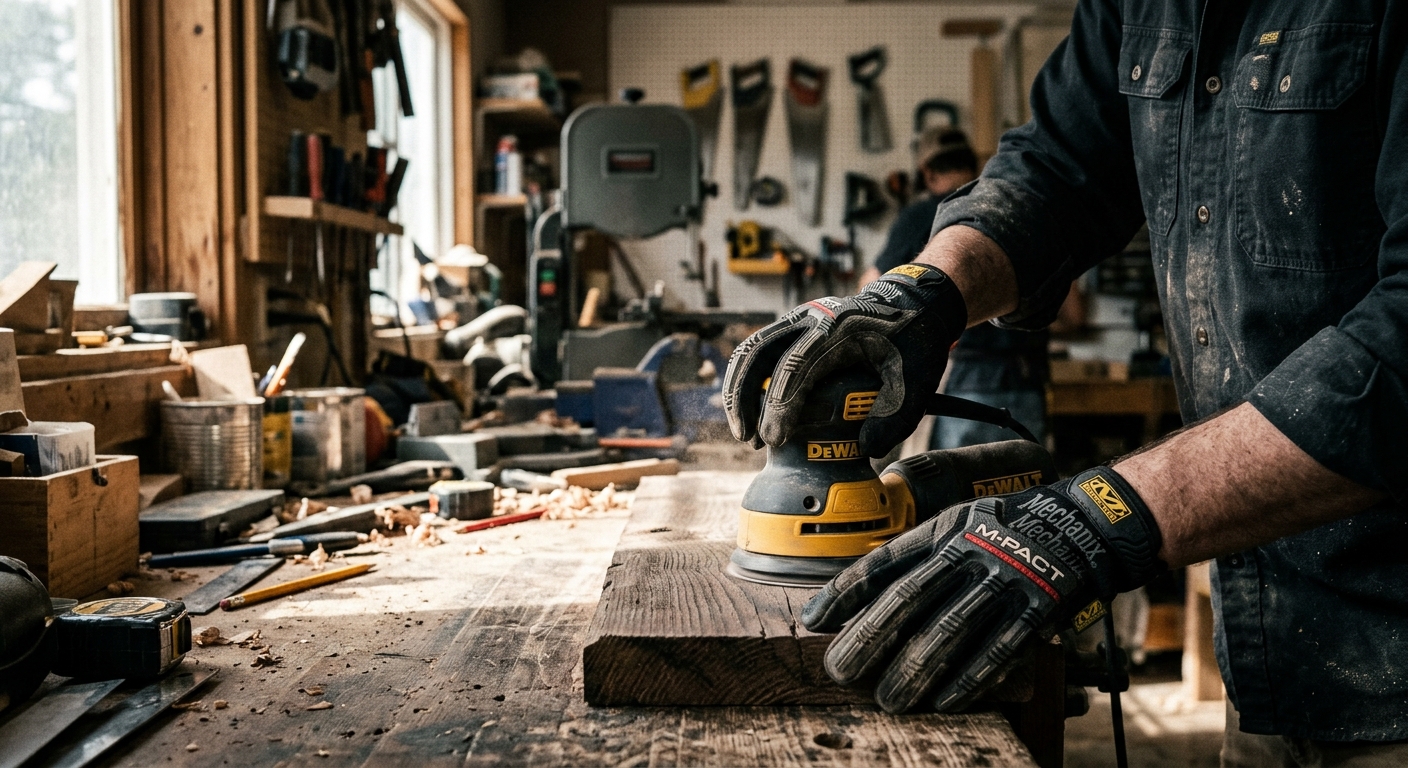
The most popular work gloves among serious DIYers and tradespeople. The M-Pact combines a synthetic palm with TPR impact protection on the knuckles and fingers, a secure wrist strap, and excellent dexterity. These gloves are worn for demolition, assembly, and general construction without the bulk of full-leather designs. Available in dozens of sizes and colors.
2. Wells Lamont Y9290L HydraHyde Leather
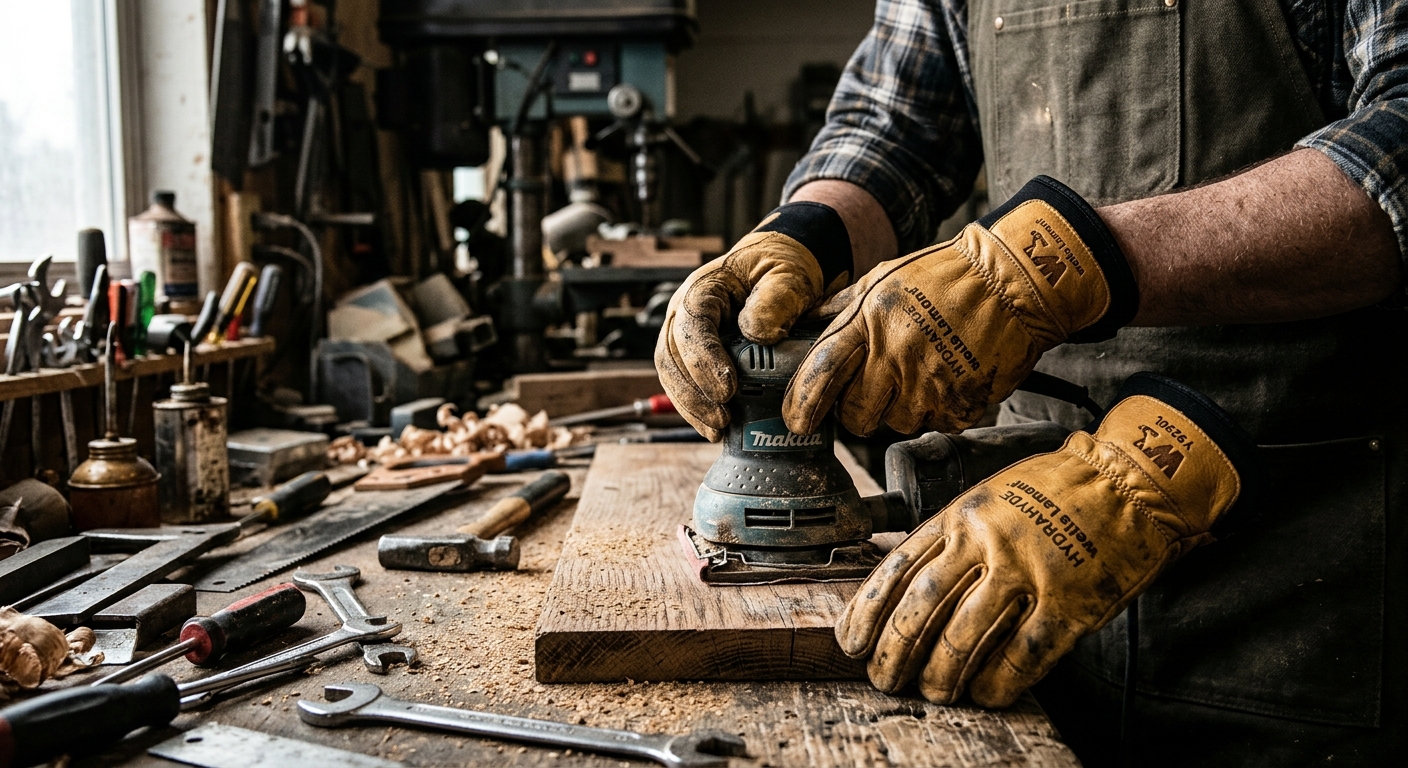
The most recommended full-leather general-purpose glove. HydraHyde leather stays soft even when it gets wet and dries without the stiffening that ruins most leather gloves. The split cowhide palm grips well on rough lumber and tools. An excellent all-day general-purpose glove.
3. Klein Tools 40232 Journeyman Leather Gloves
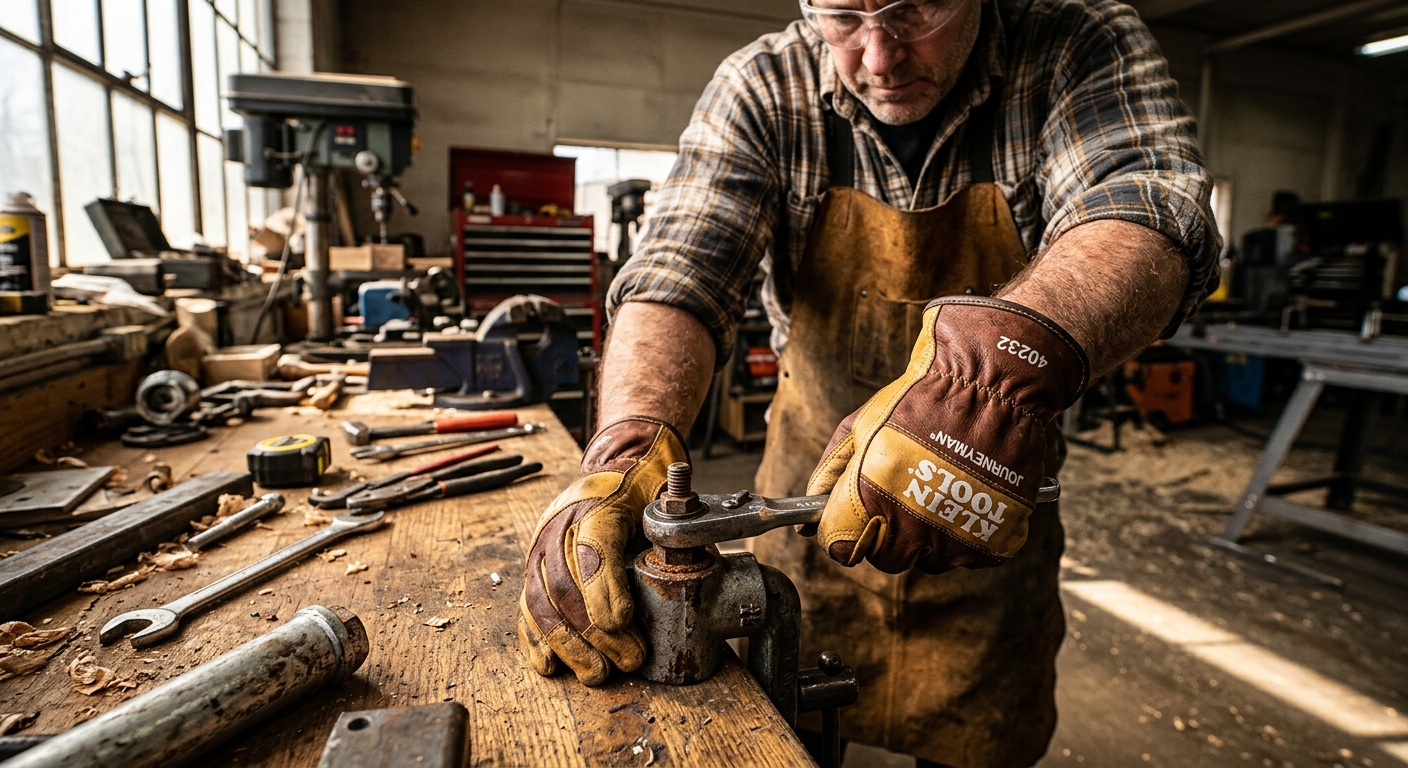
Designed for electricians but excellent for all trade work. Premium leather palm, reinforced thumb crotch (the first part of a glove to fail), and a flexible back that does not restrict hand movement. Klein makes these for professional daily use – they show it in the quality.
4. Milwaukee 48-22-8741 High Dexterity Cut 5 Gloves

ANSI A5 cut-resistant rating for sheet metal work, glass handling, and knife use. Despite the high cut protection, the fit and dexterity are surprisingly good – better than most cut gloves, which tend to be thick and clumsy. Excellent for demolition work where sharp edges are unpredictable.
5. Carhartt A661 Synthetic Leather Framer Glove
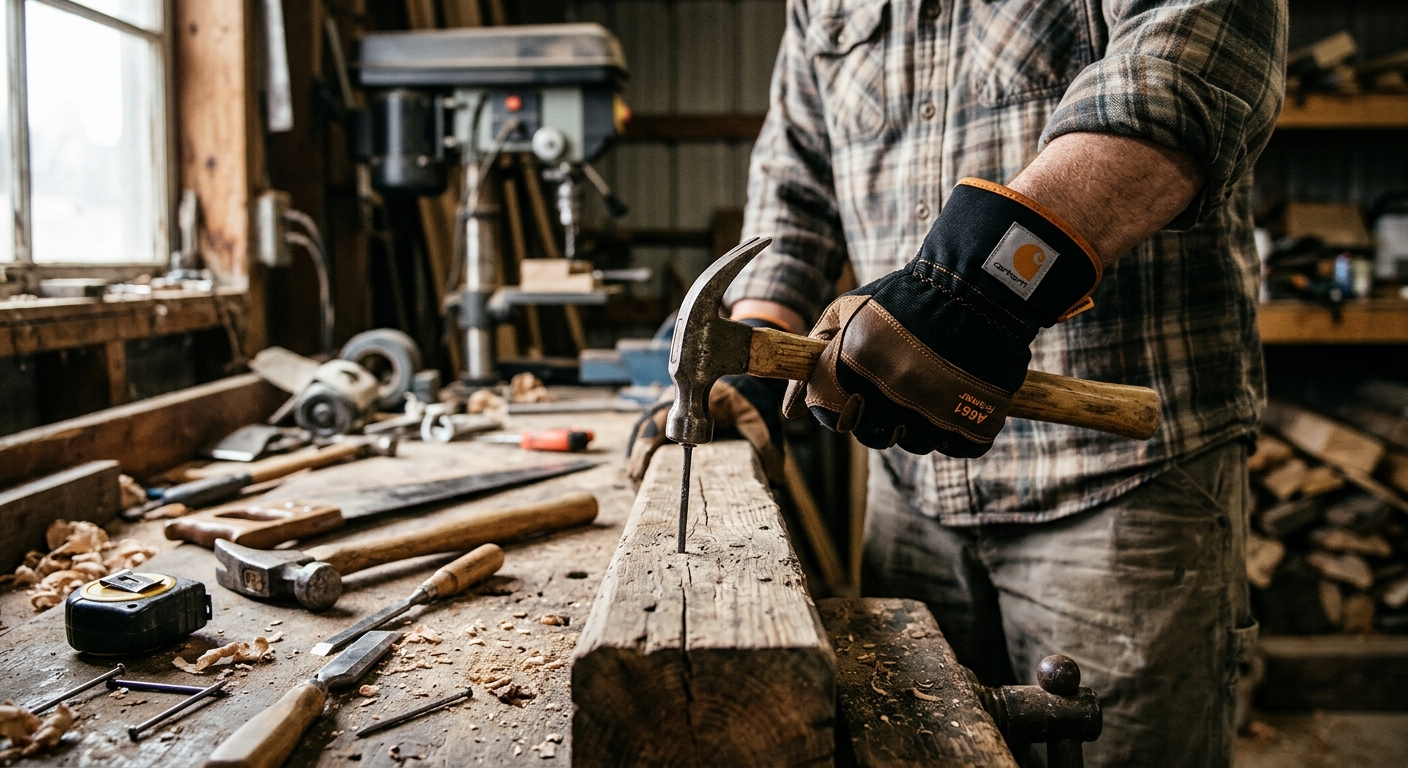
Carhartt builds work gear specifically for the physical demands of construction and farming. These framer gloves use synthetic leather for durability in all weather conditions, a hook-and-loop wrist, and reinforced key contact points. Outstanding cold-weather dexterity compared to full-leather designs.
What to Avoid
- Loose-fitting fabric gardening gloves near power tools: Too easy to catch on rotating parts.
- Rubber-dipped gloves for precision work: Too thick for any task requiring feel – use for heavy lifting only.
- Any glove near a drill press or lathe: See the opening section.
FAQ
Do I need different gloves for different tasks?
Ideally, yes. Keep leather gloves for rough lumber handling and framing, cut-resistant gloves for sheet metal, and chemical gloves for finishing and painting. A two-glove system covers most DIY needs.
How do I size work gloves?
Wrap a tape measure around your dominant hand at the widest point (across the knuckles, not the thumb). The measurement in inches corresponds to glove size: 7 inches = Small, 8 inches = Medium, 9 inches = Large, 10 inches = XL.
How do I break in new leather gloves?
Apply a small amount of leather conditioner and wear them through a workday. The leather will conform to your hand shape. Alternatively, dampen the palm slightly and clench your fist repeatedly – old boot-break-in technique, works on gloves too.
Affiliate Disclosure: DIY Arsenal participates in the Amazon Associates Program and other affiliate programs. When you purchase through links on this site, we may earn a small commission at no additional cost to you. We only recommend products we have personally tested and genuinely believe in.