Best Carpenter’s Pencils and Marking Tools
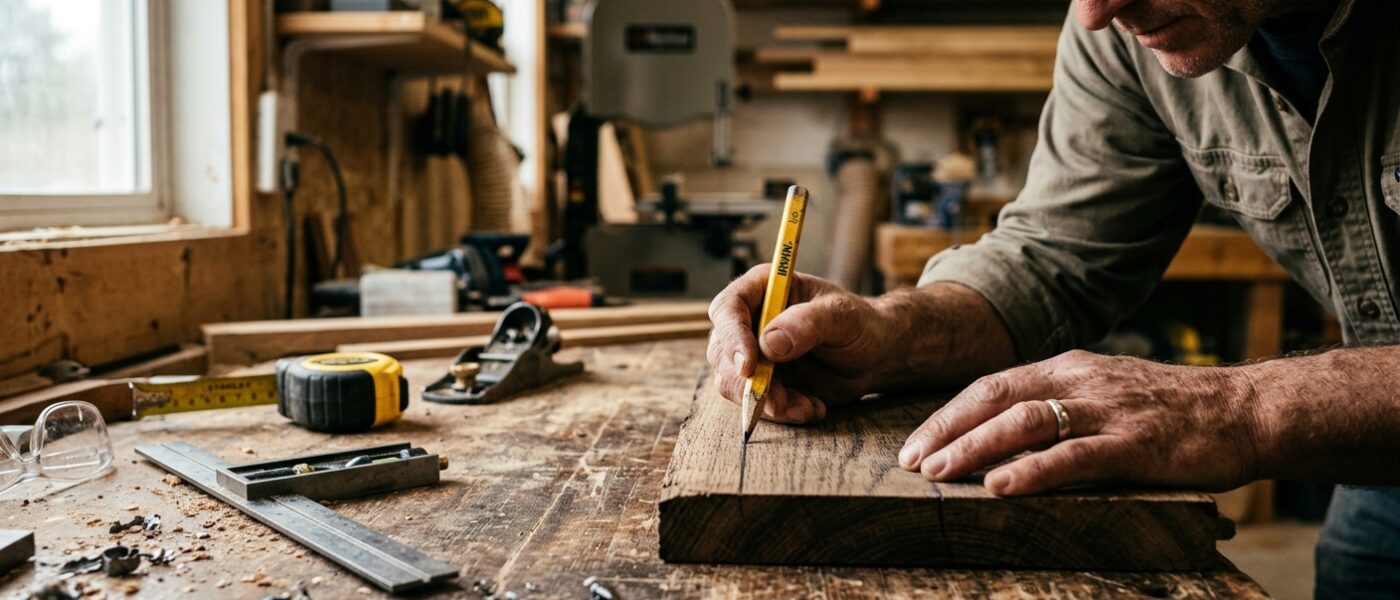
Dixon Ticonderoga carpenter pencils cover everyday marking at nearly no cost; add a Blue Spruce or Veritas marking knife when you move into hand tool joinery.
As an Amazon Associate, we earn from qualifying purchases.
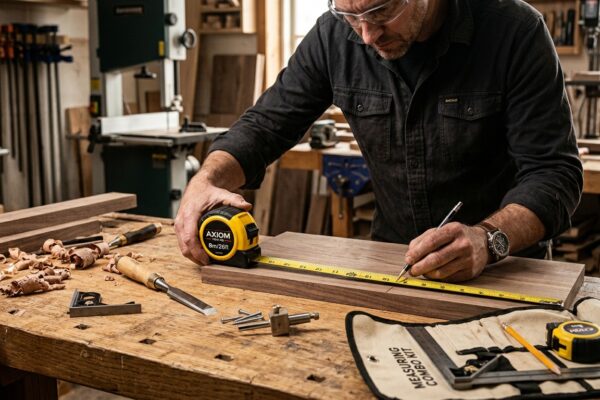
Marking tools are the unsung heroes of the workshop. Before any cut is made, a line must be drawn – and the quality of that line determines the quality of the cut. Carpenter pencils, marking knives, awls, and chalk lines might seem like minor accessories, but they directly affect accuracy. This guide covers the marking tools that belong in every DIY kit, from basic pencils to precision scribers.
Types of Marking Tools
Carpenter Pencils
Flat, wide-bodied pencils with an oval or rectangular cross-section that prevents rolling off surfaces. The wide lead is sharpened to a chisel point for drawing both thick rough lines on framing lumber and thin precise lines in fine woodworking. Indispensable for any carpentry work.
Marking Knives
Leave a thin, precise cut line rather than a wide pencil mark. The knife severs wood fibers on the cut line, producing a crisp reference edge that helps chisels and saws register accurately. Essential for hand tool woodworking and joinery.
Scratch Awls
Pointed tools used to start drill holes (preventing the bit from wandering), mark screw locations, and create reference points. The sharp point leaves a precise dimple rather than the wide mark a pencil leaves.
Marking Gauges
Tools that ride along the edge of a board to scribe a parallel line at a set distance. Used for marking rip lines, tenon cheeks, mortise widths, and rabbet depths. Covered in their own guide in this series.
Key Features to Look For
Carpenter Pencils: Lead Hardness
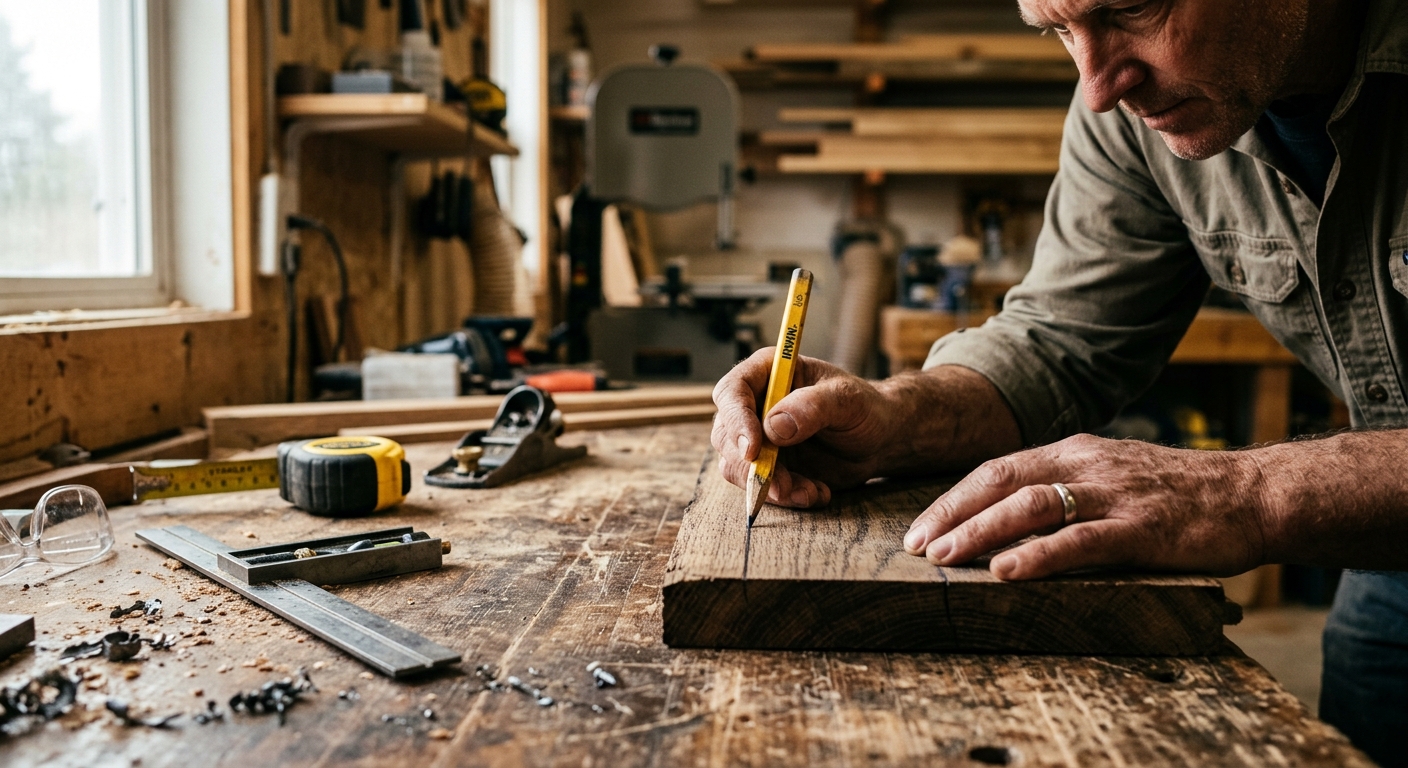
Medium (HB or 2H) leads work best on raw wood – soft enough to leave a visible mark, hard enough to hold a point through rough surfaces. Avoid standard writing pencils; the round body rolls off lumber and the thin lead snaps on rough surfaces.
Marking Knives: Blade Geometry
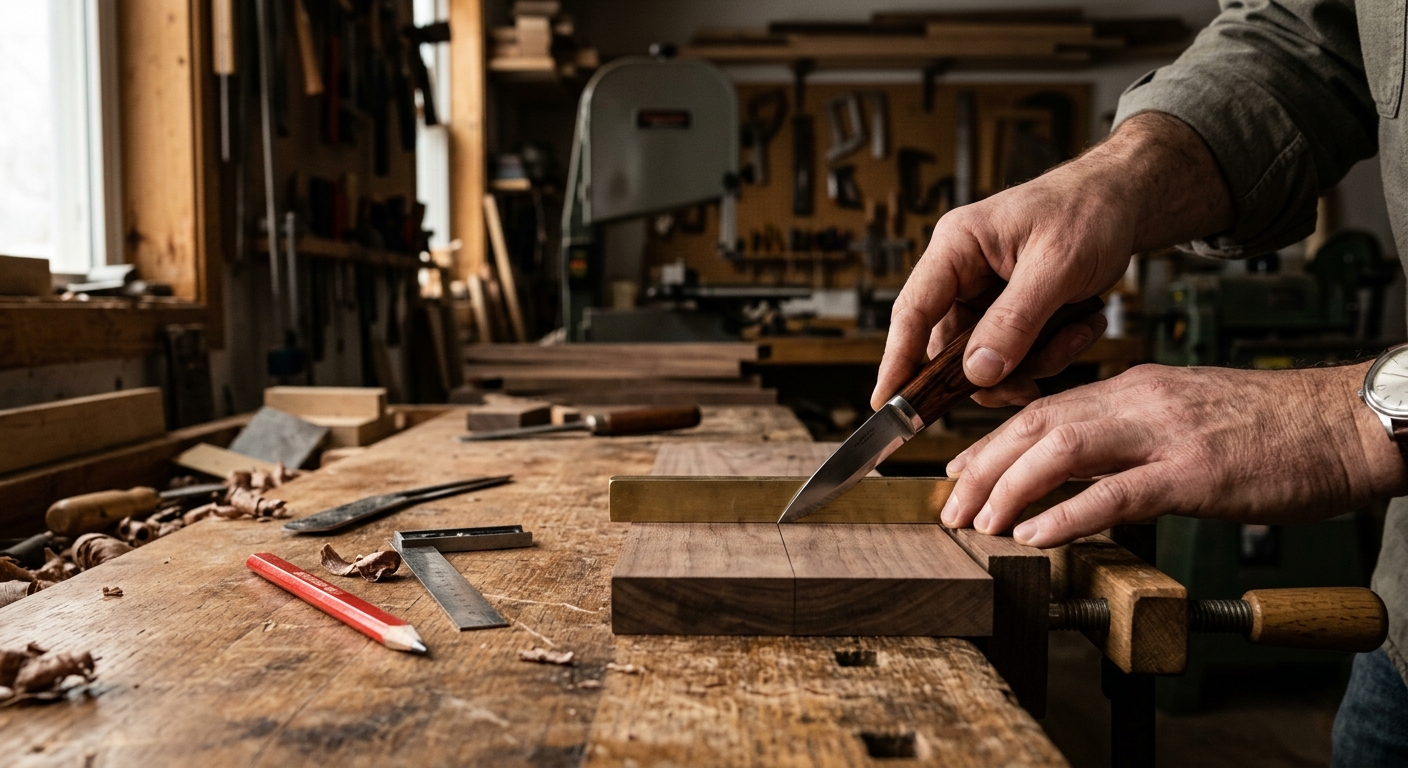
A single-bevel blade (flat on one face, beveled on the other) registers precisely against a square or straightedge. Double-bevel blades are used freehand. For layout work, single-bevel is generally preferred.
Awls: Tip Shape
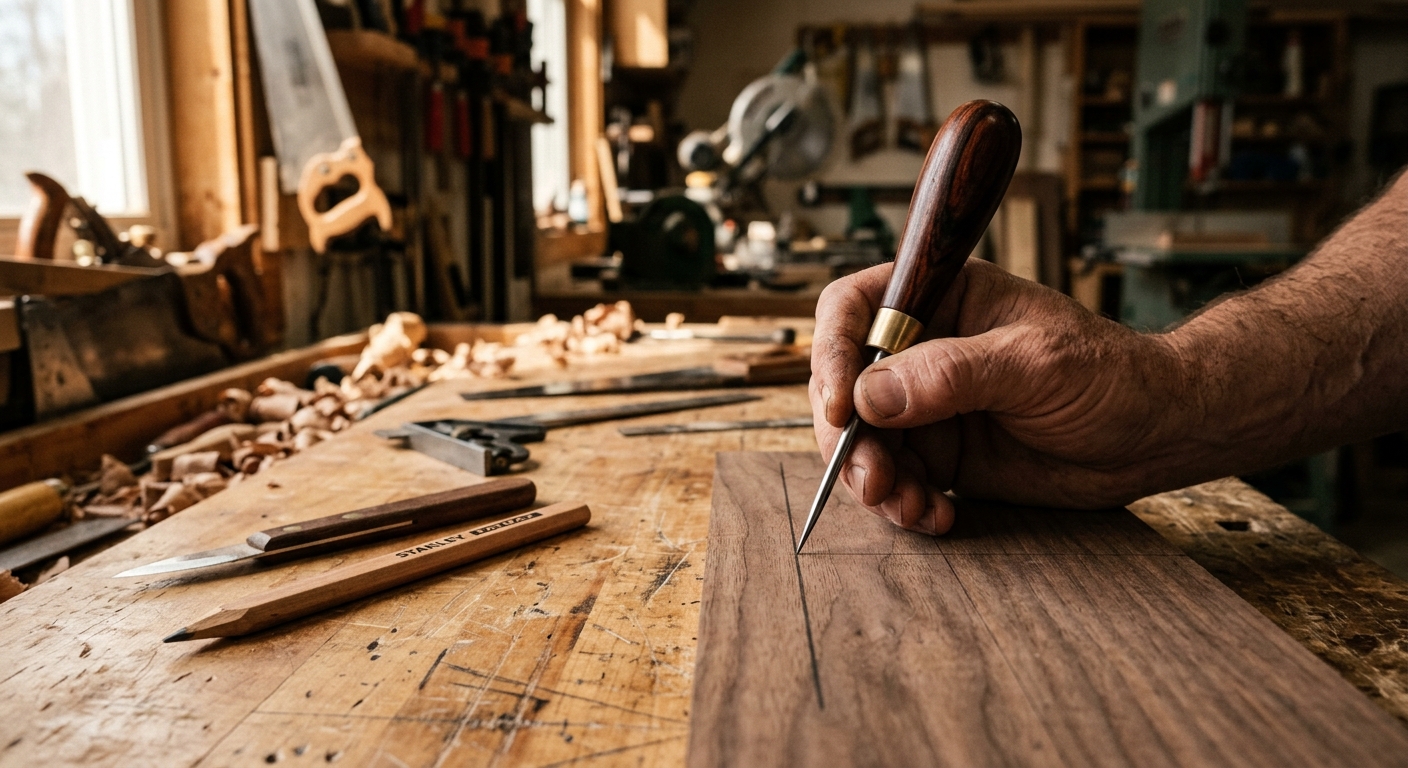
A sharp tapered tip is best for marking; a wider spiral-ground tip is better for starting holes in harder materials. Some awls include both tip options with interchangeable tips.
Our Top Picks
1. Dixon Ticonderoga Carpenter Pencils (12-Pack)
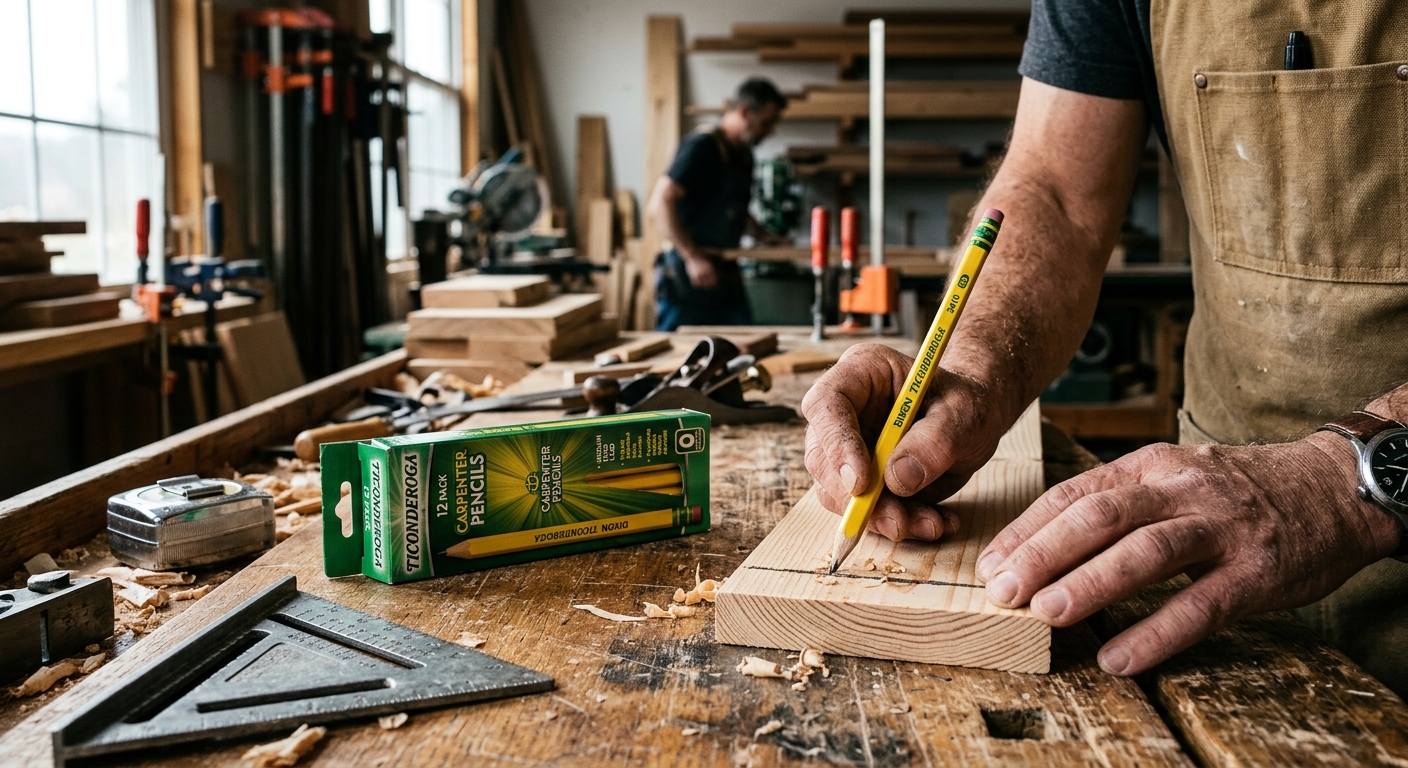
The professional standard for carpenter pencils. Medium lead that sharpens easily with a utility knife, flat body that stays where you put it, and available in bulk at very low cost. Buy two dozen and leave them everywhere – on the saw table, in the apron, at the bench.
2. Irwin Tools Carpenter Pencils with Sharpener
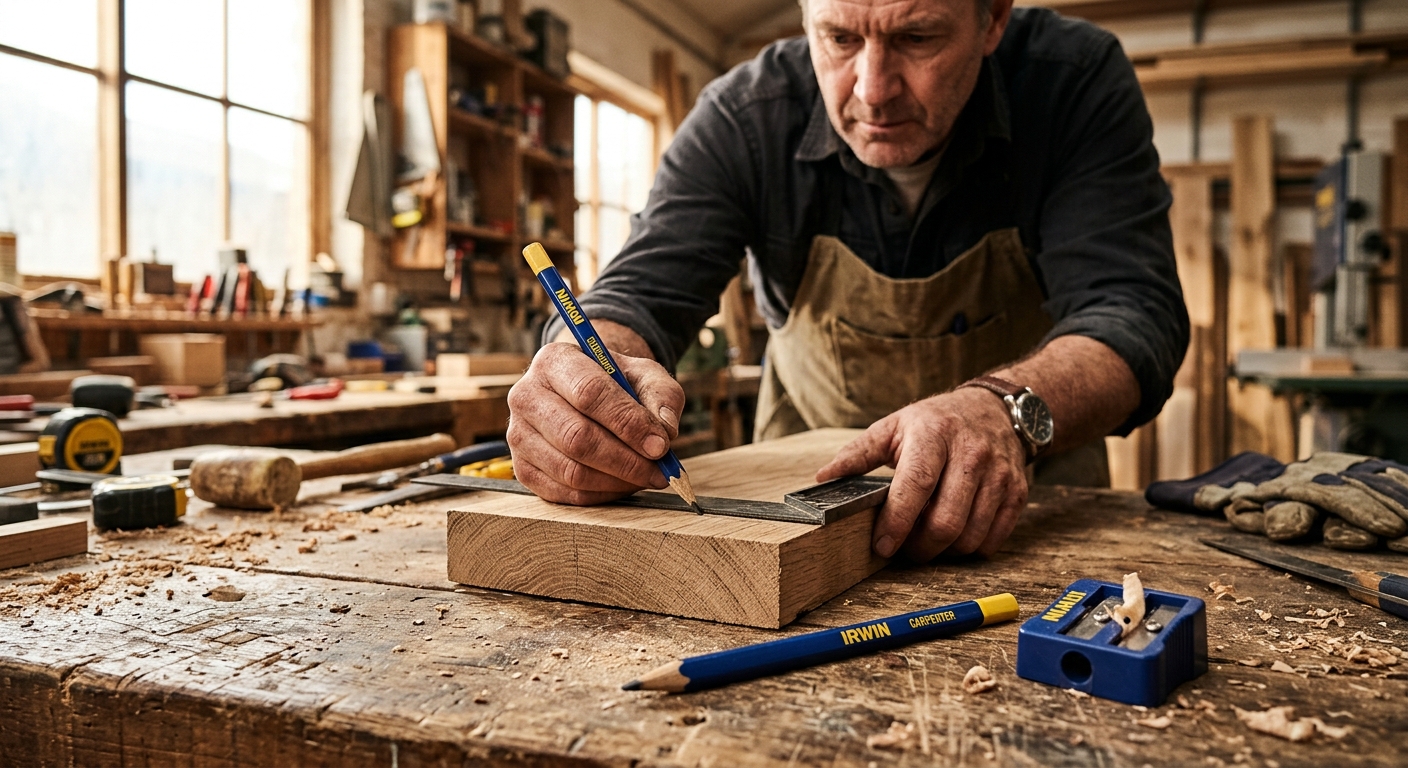
Comes with a purpose-built sharpener that creates a proper chisel point – no utility knife required. A great starter kit for those new to carpenter pencils.
3. Blue Spruce Marking Knife
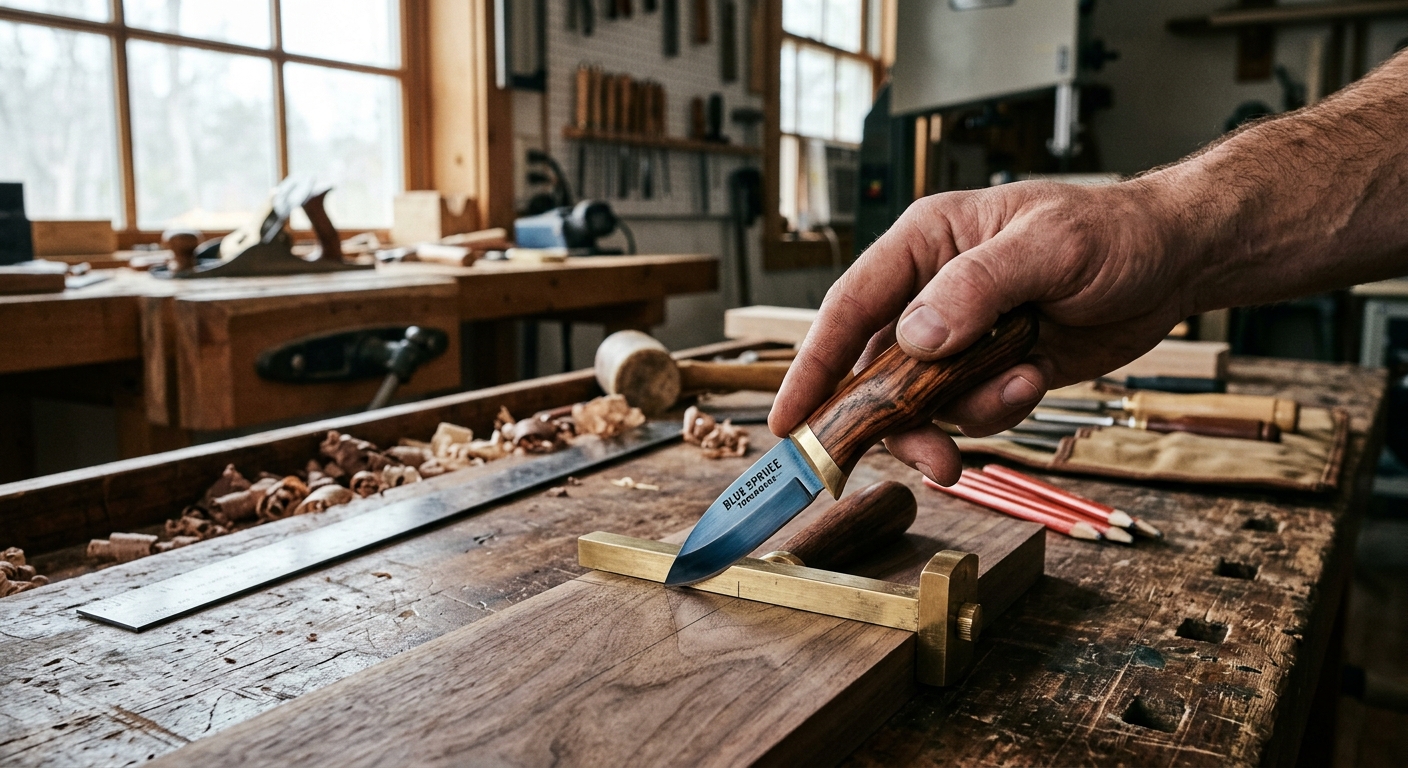
A premium American-made marking knife with a single-bevel O1 tool steel blade and a comfortable figured wood handle. The thin blade profile fits perfectly into scribed lines. An heirloom tool for serious woodworkers.
4. Stanley 69-189 Scratch Awl
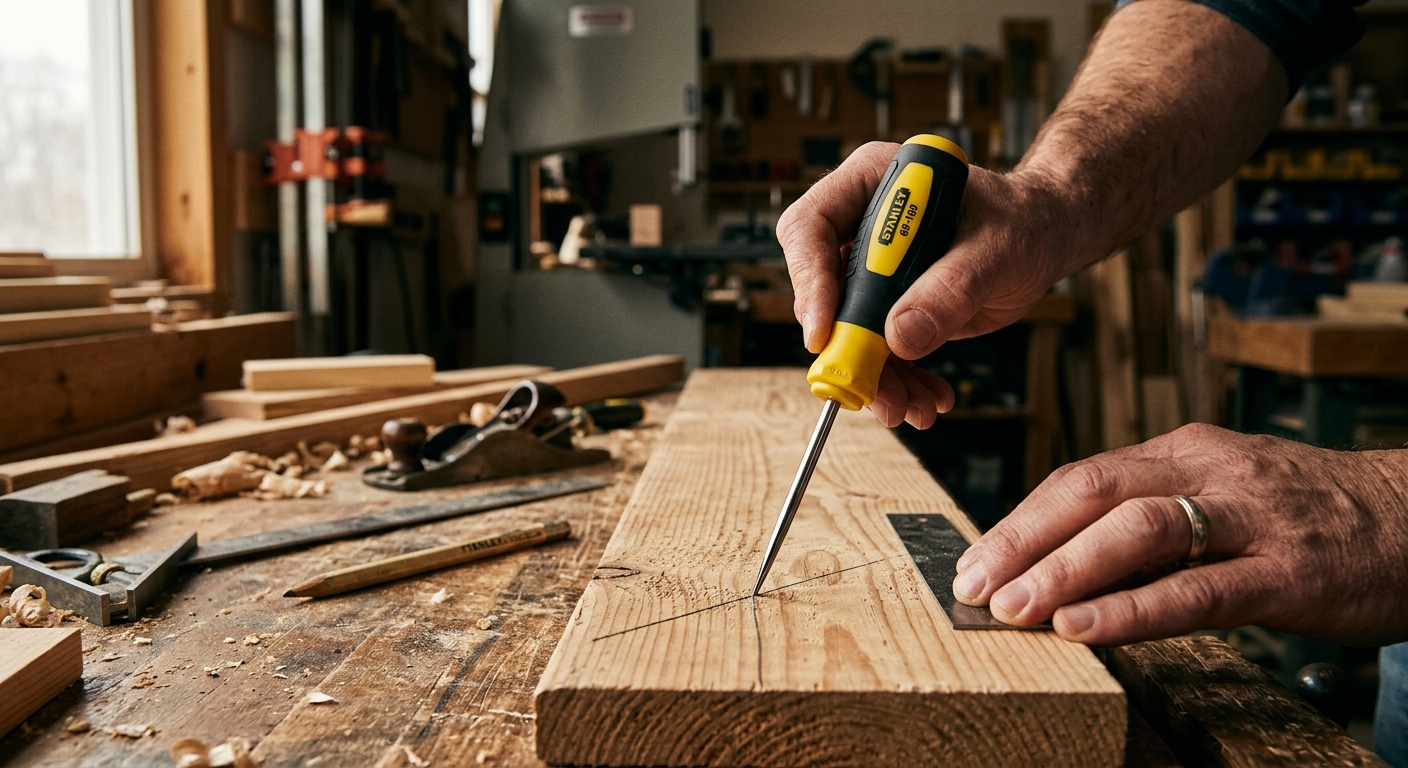
The most commonly recommended scratch awl in workshops worldwide. Hardwood handle, tapered steel tip, and a reliable point that holds up to years of use. Inexpensive and essentially immune to wearing out.
5. Veritas Marking Knife
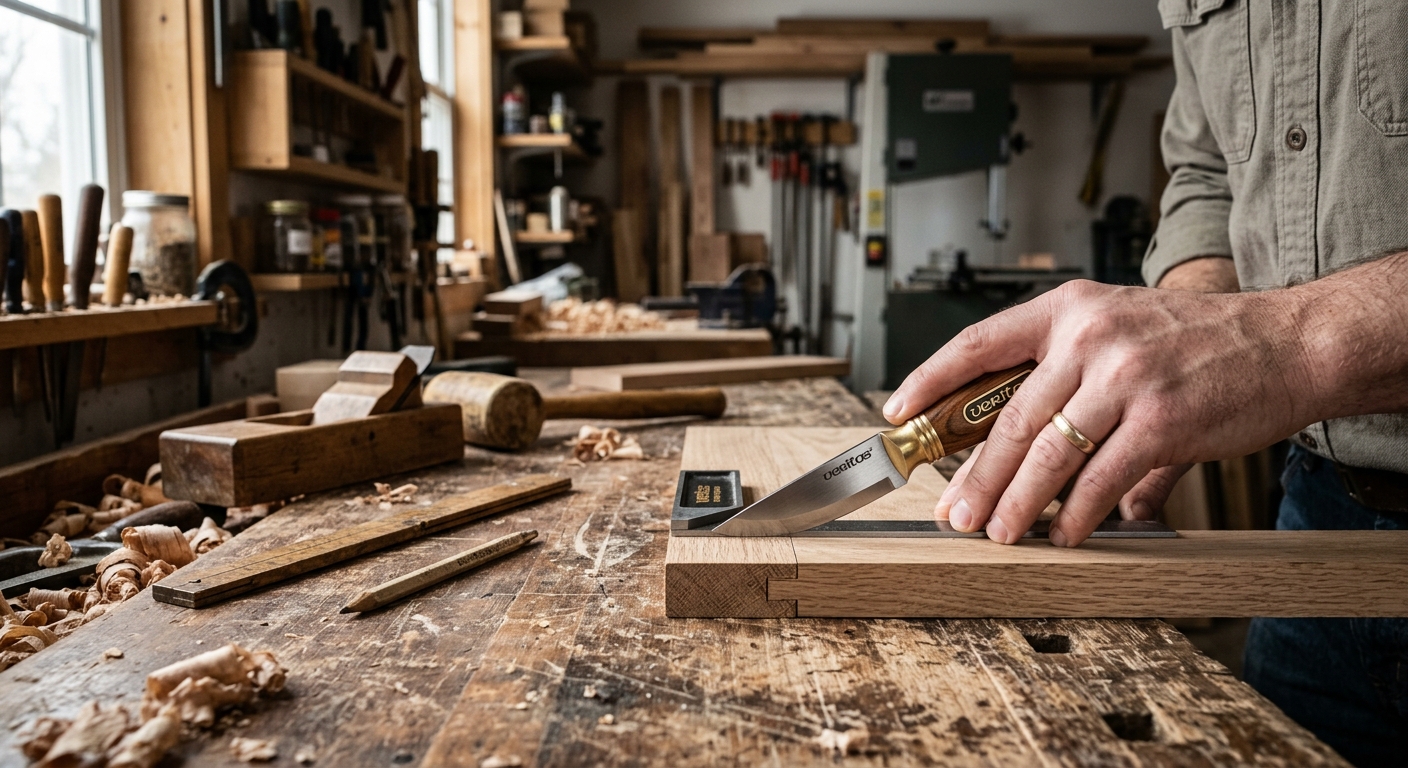
Veritas (Lee Valley) makes exceptional hand tool accessories. Their marking knife features a comfortable handle, a replaceable blade, and outstanding fit and finish. A step up from budget options without quite reaching Blue Spruce prices.
Sharpening Carpenter Pencils in the Field
The traditional method is a utility knife: hold the pencil flat against a hard surface and shave the wood back on one flat face until you expose 3/4 inch of lead, then sharpen the lead to a chisel point on a piece of sandpaper or rough concrete. This takes 30 seconds once you learn the motion.
What to Avoid
- Round standard pencils on lumber: They roll, the lead snaps on rough surfaces, and the marks are too wide for accurate joinery.
- Marking knives with very thin handles: They bite into your fingers during heavy use.
- Awls without proper handles: Bare-shank awls with no handle are dangerous and uncomfortable.
FAQ
Should I use a pencil or a knife for marking?
Use a pencil for rough layout on framing lumber and for marks that will be visible from a distance. Use a marking knife for joinery, dovetails, and any cut where the line itself must be precise and the knife line helps register the chisel or saw.
How do I mark dark wood?
Use a white or silver marking pencil, a chalk line, or a scribing tool. Standard pencil is nearly invisible on dark walnut or ebony.
Can I use a regular pencil for woodworking?
For casual work, yes. For accurate carpentry and joinery, no – the round body rolls, the thin lead snaps, and the point wears too quickly on rough surfaces.
Affiliate Disclosure: DIY Arsenal participates in the Amazon Associates Program and other affiliate programs. When you purchase through links on this site, we may earn a small commission at no additional cost to you. We only recommend products we have personally tested and genuinely believe in.