Best Extension Cords and Power Strips for Workshops and Job Sites
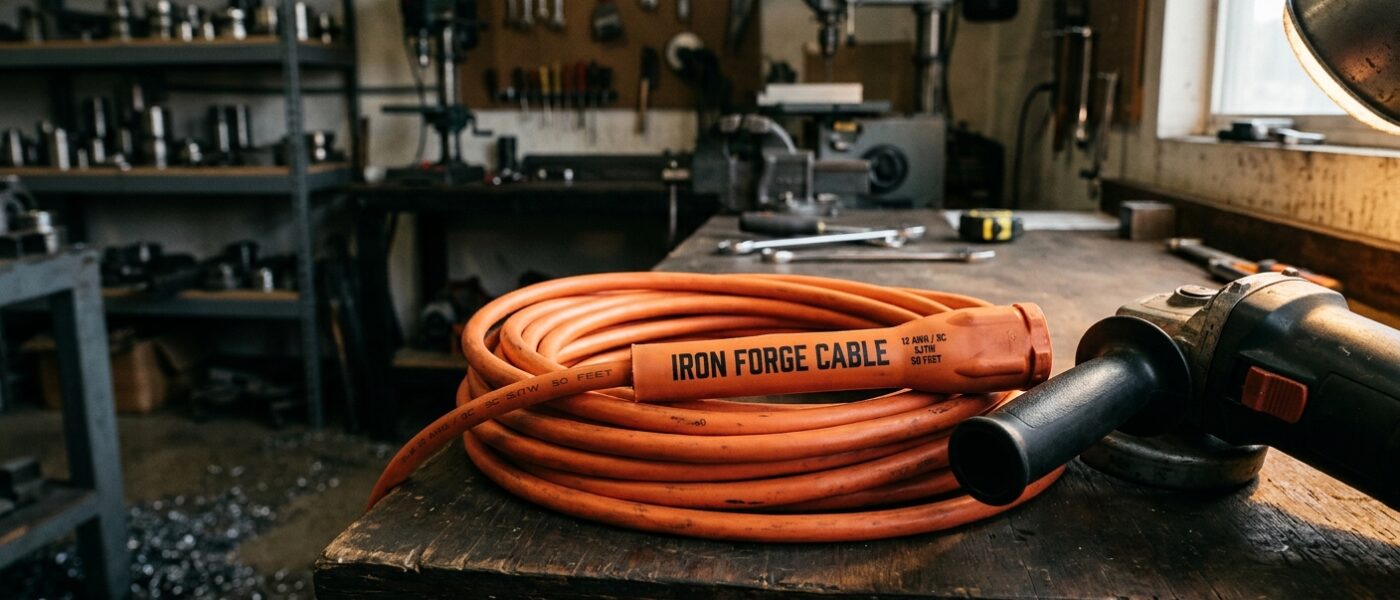
12-gauge 50-foot extension cord with SJTW rating handles all power tools safely without voltage drop
Extension cords and power strips are among the most misused and most overlooked sources of electrical hazards in workshops and garages. An undersized cord causes voltage drop that damages tools; an overloaded power strip creates fire risk; a cord with a damaged jacket in a wet environment is a serious shock hazard. This guide covers the best extension cords for shops, job sites, and outdoor use, plus the best power strips and surge protectors for workshop benches.
How We Evaluate Extension Cords and Power Strips
We tested extension cords for voltage drop under load (critical for power tools), jacket durability, plug and connector quality, temperature rating, and listing (UL or ETL). For power strips, we checked circuit breaker rating vs claimed capacity, surge protection joule rating, outlet spacing for large adapters, cord length, and build quality. An undersized extension cord is a fire and damage hazard that looks completely normal until it’s not.
Top Picks
Iron Forge Cable 12 Gauge 50-Foot Extension Cord – Best Overall
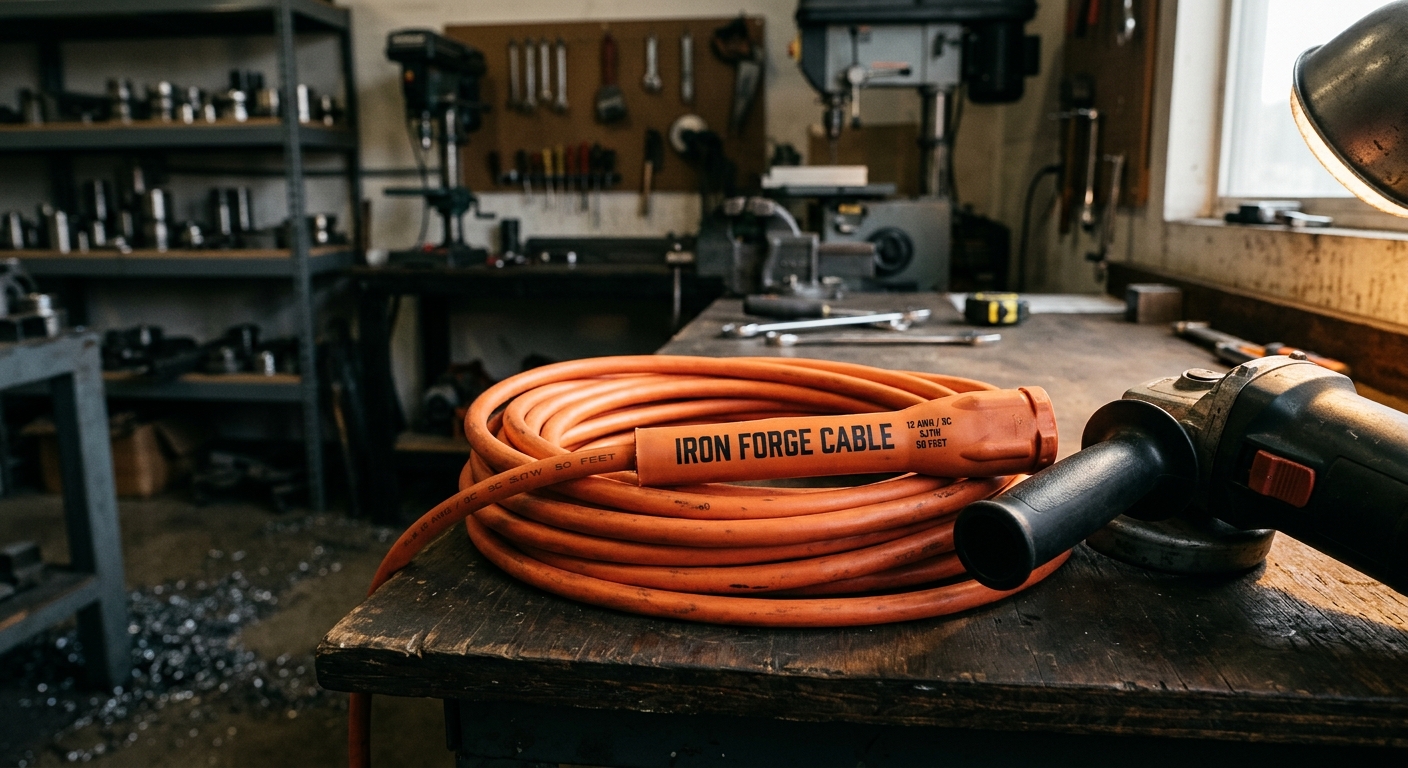
A 12-gauge extension cord is the minimum practical gauge for power tools – 10-gauge for heavy loads at long distances. Iron Forge’s 12-gauge, 50-foot cord handles up to 15 amps at 50 feet without significant voltage drop, the SJTW jacket is rated for outdoor and wet locations, and the molded plug and connector resist pull-out and moisture intrusion. The lighted end shows you at a glance whether the cord is energized. Heavy enough to stay put without tangling and light enough to coil easily.
- Pros: 12-gauge for power tools, SJTW outdoor rated, lighted end indicator, 50-foot reaches most shop situations
- Cons: Heavier than 16-gauge cords, not for 20-amp circuits (use 10-gauge), more expensive than light-duty cords
Southwire 25-Foot 10/3 Heavy-Duty Cord – Best for High-Draw Tools

Table saws, dust collectors, and large air compressors draw 12-15 amps and benefit from 10-gauge cords at any length. Southwire’s 10/3 heavy-duty cord handles up to 30 amps, maintains voltage within acceptable limits even for sensitive motor tools, and uses a reinforced SJTW jacket rated to -40°F for cold garage use. The large plug and connector are grippy and pull-resistant. When in doubt on cord gauge for a high-draw shop tool, go heavier.
- Pros: 10-gauge for high-draw tools, 30-amp rating, -40°F cold rating, reinforced SJTW jacket
- Cons’:’Heavy and stiff (hard to coil in cold), overkill for light tools, more expensive than 12-gauge
Tripp Lite 7-Outlet Metal Power Strip – Best Shop Power Strip
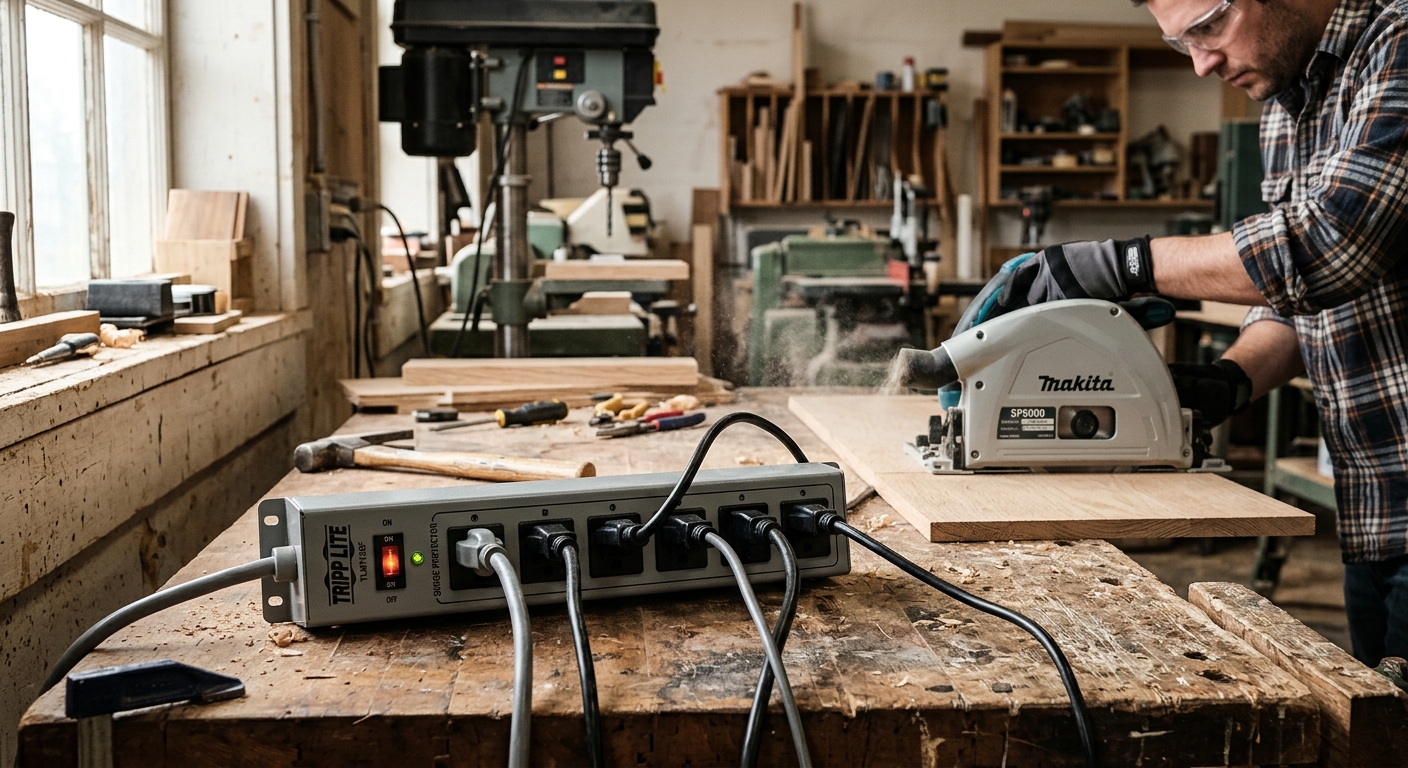
A quality power strip at the workbench keeps tools accessible without daisy-chaining or overloaded outlets. Tripp Lite’s metal-body 7-outlet strip has a 15-amp circuit breaker, widely spaced outlets that accommodate bulky adapter plugs, and 1080 joule surge protection that protects sensitive electronic tools and chargers. The metal body resists crushing under dropped tools, and the 15-foot cord reaches from wall outlet to bench center in most shops.
- Pros: 15-amp breaker, 7 outlets with wide spacing, metal body, 1080J surge protection, 15-foot cord
- Cons’:’Surge protection doesn’t cover high-joule industrial spikes, metal body adds weight
Watt Stopper Outdoor Extension Cord Reel – Best Cord Reel
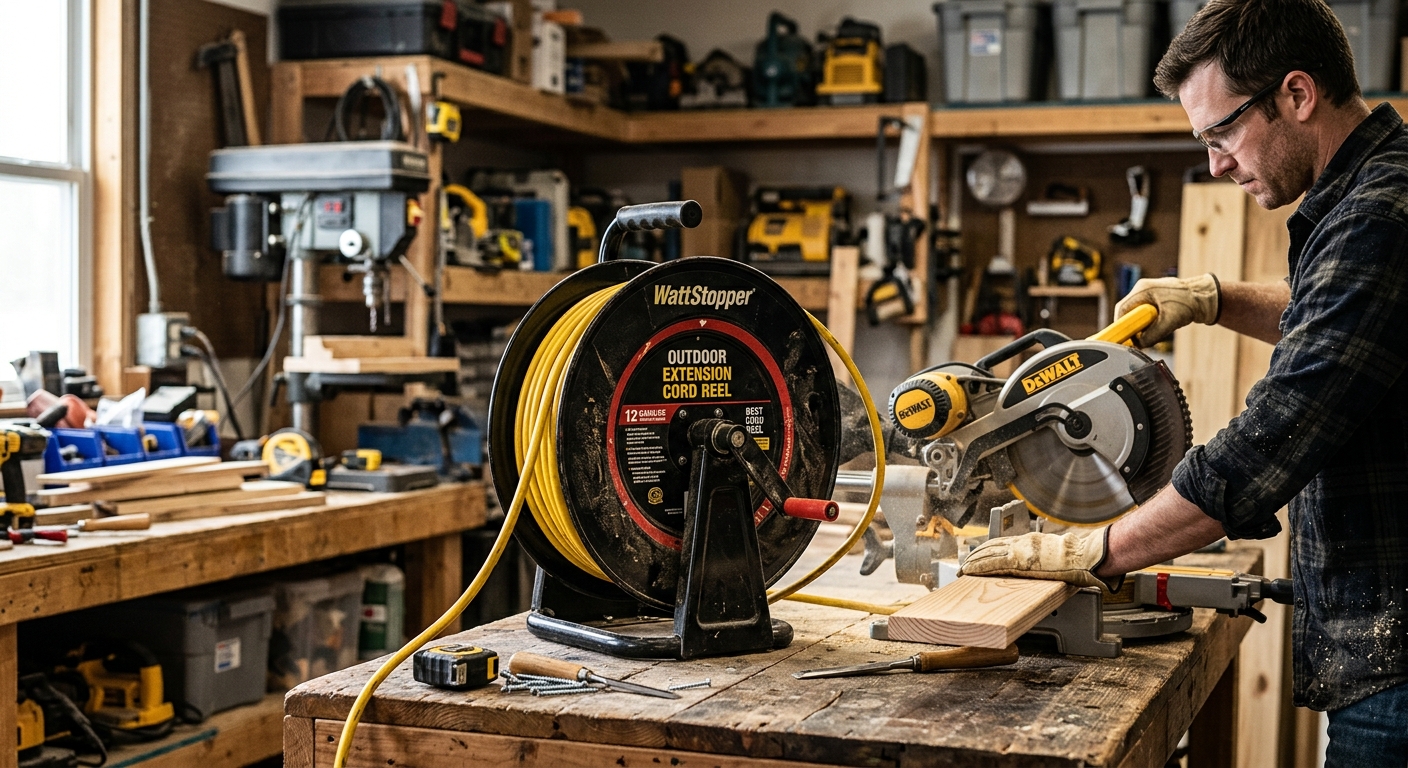
An extension cord reel allows rolling out exactly the length needed and retracting automatically when done – eliminating the tangled-cord management problem of loose extension cords in the shop. Quality cord reels mount to walls or ceilings and feed cord to any location in the shop. Look for reels with 12-gauge cord minimum, a slip-ring connection that maintains full amperage throughout the reel, and a cord-stop function to prevent the cord from fully retracting when partially unrolled.
- Pros: Automatic retraction, no tangling, reaches any shop location, clean cord management
- Cons’:’Wall/ceiling mounting required, 12-gauge reels expensive, some reels only handle lighter gauge cord
UltraProlink UL Listed Power Strip – Best for Battery Chargers
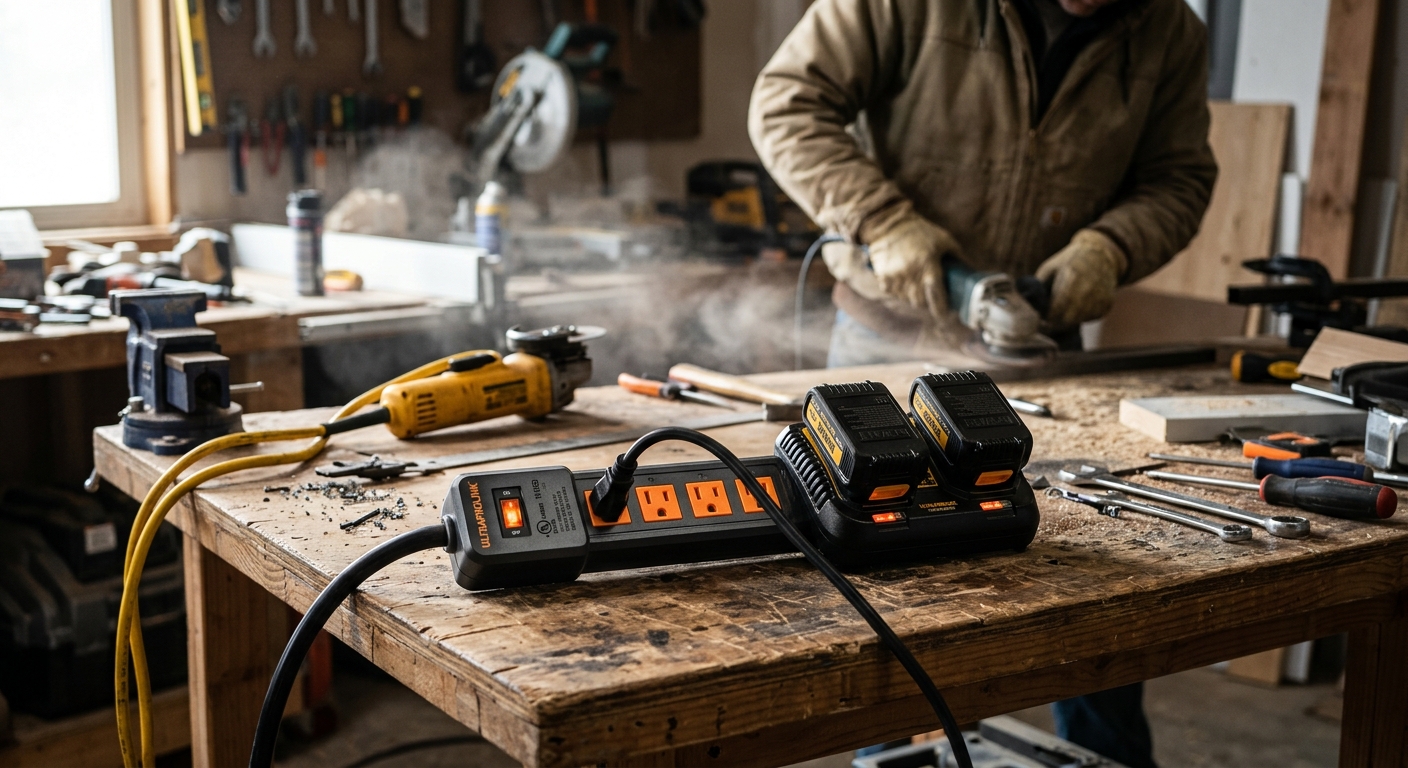
Multiple cordless battery chargers running simultaneously is standard in modern shops – Milwaukee, DeWalt, and Makita chargers occupy outlets for hours at a time. A surge-protected power strip with wide outlet spacing handles battery charger adapters without blocking adjacent outlets. The UltraProlink’s 8 spaced outlets, 4000 joule surge protection, and 6-foot cord make it the ideal bench power solution where multiple chargers are a permanent fixture.
- Pros: Wide outlet spacing for adapters, high surge protection, 8 outlets, appropriate for multiple battery chargers
- Cons’:’Long cord can bunch at wall, surge protection one-time protection (replace after major surge event)
Frequently Asked Questions
What gauge extension cord do I need for power tools? 12-gauge for power tools up to 15 amps at 50 feet or less. 10-gauge for 15-amp tools beyond 50 feet, or for any high-draw tool (table saw, dust collector). 16-gauge is for light loads only (lamps, phone chargers) – never use 16-gauge for power tools.
Can I use an indoor extension cord outdoors? No – indoor cords (marked SJ, S) are not rated for moisture exposure. Outdoor cords (marked SJTW or similar with W) have a jacket that resists moisture without degrading. Using an indoor cord in wet conditions is a shock hazard.
How much voltage drop is acceptable? A maximum of 5% voltage drop is the standard recommendation for power tools. At 50 feet on 12-gauge with a 15-amp tool, voltage drop is approximately 3% – acceptable. At 100 feet on 12-gauge, it exceeds 5% – use 10-gauge instead.
Are cheap power strips safe? Many cheap power strips lack adequate surge protection or internal circuit breakers. Look for UL or ETL listing, a circuit breaker (not just a fuse), and a real surge protection joule rating above 500J. “Surge protected” marketing on unlisted strips may not provide meaningful protection.
Bottom Line
Iron Forge’s 12-gauge 50-foot cord earns Best Overall for its combination of appropriate gauge for power tools, outdoor rating, and lighted end that makes it practical for daily shop use. Never use undersized extension cords with power tools – the investment difference between 12-gauge and 16-gauge cords is minimal compared to the motor damage and fire risk that undersized cords create.
Affiliate Disclosure: DIY Arsenal participates in the Amazon Associates Program and other affiliate programs. When you purchase through links on this site, we may earn a small commission at no additional cost to you. We only recommend products we have personally tested and genuinely believe in.